
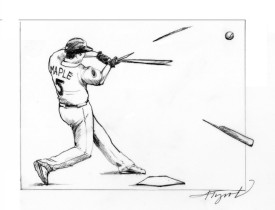
Those of us who enjoy forestry and baseball get a kick out of watching professional ballplayers stride to bat holding little pieces of the northern forest in their hands, though if you’re not a…
June 15th 2012
Bugs, Blight, But Less Bites
Inchworms are one of the few creepy-crawlies I let skulk across my bare skin. Who doesn’t delight in the ridiculous arching of the worm’s body, followed by the exaggerated, full-body…
June 13th 2012
More Parkland for Massachusetts
“Currently there is no environmental ethic focused on meeting wood needs locally and little criticism of consumption behavior. Instead, an anti-logging ethic reigns and degradation of the…

June 11th 2012
A Brief History of the Brown Paper Company
These days, the talk around Berlin, New Hampshire, revolves around what comes next. Politicians and venture capitalists and community groups are hard at work trying to come up with a second act for…
June 11th 2012
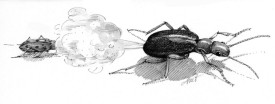
Ground Beetles: In a Pitfall Can Near You
Some ground beetles are big and beautiful: shiny black or iridescent green or bluish. And because many of them are unable or reluctant to fly, they are easily caught; you can get a good long look at…
June 5th 2012
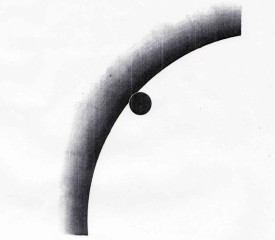
There’s A Little Black Spot on the Sun Today
To the naked eye, Venus is one of the most easily identified planets. It’s the bright evening (and morning) star that you often see plopped in the sky blazing brilliantly next to the moon.…
June 4th 2012
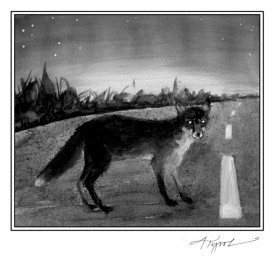
Red Fox, Gray Fox
Route 113 at twilight. The sun’s last gasp now just a smear in the western sky. Early stars over a stripe of asphalt that’s meandering down into Chelsea. My truck upon that road. The…
June 3rd 2012
There’s A Little Black Spot on the Sun Today
To the naked eye, Venus is one of the most easily identified planets. It’s the bright evening (and morning) star that you often see plopped in the sky blazing brilliantly next to the moon.…
June 1st 2012
Why Magazines Still Matter
The conventional thinking in the publishing world is that newspapers, books, and magazines will soon all be produced and distributed electronically. No more inky fingers; everything will be on a…
May 31st 2012
Radical Root
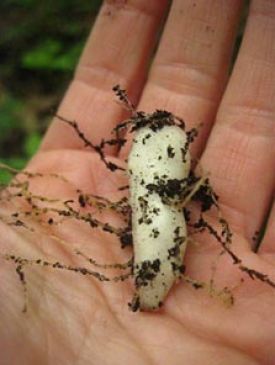
This root was dug up in a Vermont forest. It’s edible, has the consistency of a radish, and is quite delicious. What is it?

May 30th 2012
From the Center
In April, I submitted my resignation to the Center for Northern Woodlands Education board after a great deal of soul-searching and examination of options. Since joining the staff in January 2010,…
May 30th 2012
Wonderful Woodland Ants
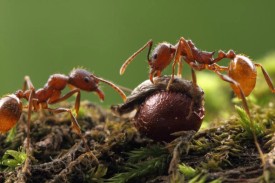
When friends and colleagues hear that we’ve written a book on the ants of New England, their first reaction is always to ask: “I have ants in my ... (kitchen, walls, pants). How do I get…
May 29th 2012
Giant Silk Moths – Survival of the Fattest
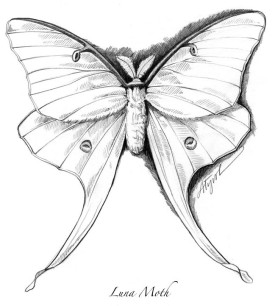
Many years ago, a friend and fellow naturalist encouraged me to raise cecropia moths as a way of increasing the local population, which had become scarce around my home in southern Connecticut. The…
Issue 73: Summer 2012 $6.00
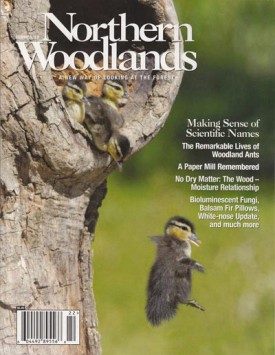
It’s All Latin to You: The Edifying World of Scientific Names The Remarkable Life of the Woodland Ant A Paper Mill Remembered from the Inside Out No Dry Matter: The Facts of Wood Moisture…

May 25th 2012
Editor’s Note
Over the past several months there has been a spate of interesting cases involving media ethics. In January, theater artist Mike Daisey’s one-man show highlighting Apple’s unsavory…
May 21st 2012
Outdoor Palette
Betsey Garand Hark II 17 3/4” x 15 5/8”, Lift-ground aquatint monoprint and monotype, 2010 Hark: v. to listen attentively, to pay close attention. Hark is an apt word to…
May 21st 2012
1,000 Words
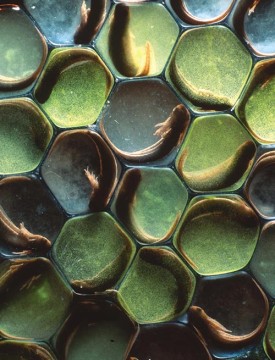
Photographer Frank Kaczmarek captured the small, private world of developing spotted salamanders (Ambystoma maculatum) still in their eggs. The salamanders, which can be found throughout the…
May 21st 2012
New England’s Other Syrup
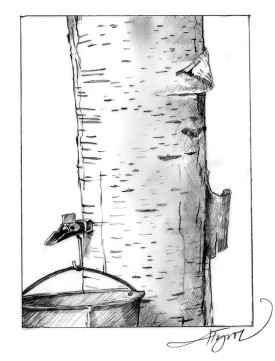
In Leicester, Vermont, up a rutted driveway off Route 7, Kevin New cobbled together a sugarhouse out of an old goat barn and plywood. He boiled a lot of sap this spring, long after most sugarhouses…
May 18th 2012
Name That Sapling
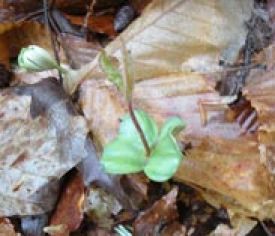
Sure you can identify the five-needle bundles of the white pine, the ribbed leaves of a beech, and the shiny bark of a yellow birch, but what about the wee trees? Can you identify this sapling?