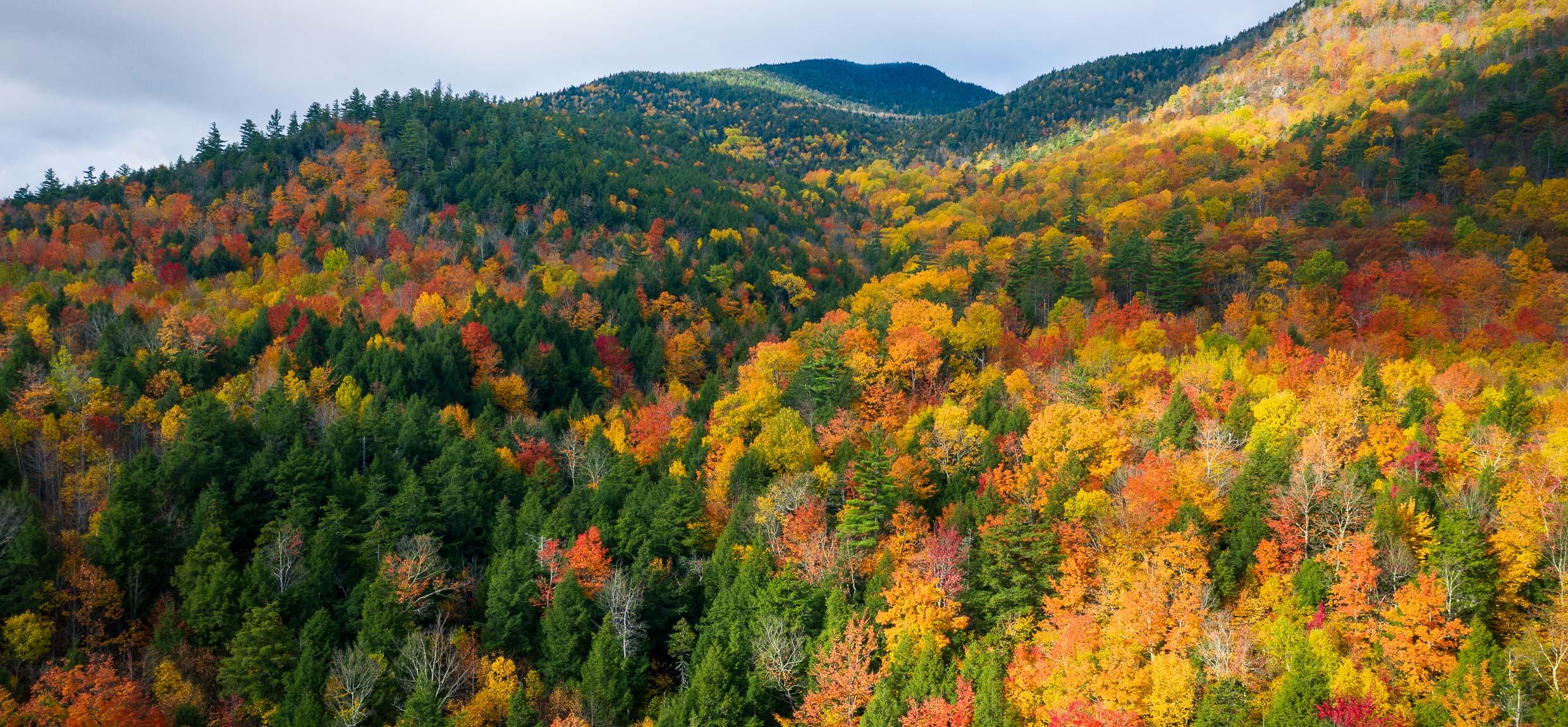

Alpine plants grow where they do because mountain summits are cold, icy, windy, snowy – but also sunlit, dry, and hot. Alpine plants are directly vulnerable to warming temperatures, and…
January 26th 2023
Winter May Not Be the Limit for Blacklegged Ticks
For as long as the blacklegged tick has been expanding its range in the Northeast, many have thought that cold winters limit its geographic range. This belief in part derived from laboratory studies…
January 26th 2023
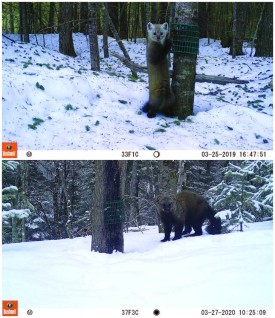
Marten and Fisher Can and Do Coexist in the Maine Woods
The American marten (Martes americana) and fisher (Pekania pennanti) are closely related inhabitants of the Northern Forest region. Both species have been impacted by historical trapping and forest…
January 23rd 2023
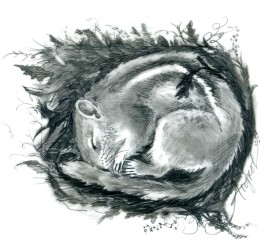
Hibernation: Winter Survival by Chilling Out
Mammals and birds are endotherms, which means they generate their own body heat through relatively high metabolic rates. That high metabolism requires energy, which these animals garner from food. We…

January 17th 2023
Winter Wonder
Atop Cannon Mountain (elev. 4,081 feet) in Franconia, New Hampshire, we spotted feathery white formations growing sideways from trees and the railings of an observation tower at the summit. What is…

January 16th 2023
Into the Woods – by Snowshoe and Canoe – with Bill Novacek
Bill Novacek’s first job out of high school was at a sawmill in the Berkshires. In 1981, he moved north to Coos County in the White Mountains of New Hampshire, where his connection to wood…

January 16th 2023
There’s More to Fur Than Meets the Eye
A flash of orange streaks across the meadow – a red fox, like a starburst in the snow. Its fur shimmers in the early morning light, and I, bundled in my winter layers and still shivering cold,…

January 15th 2023
Green Long-jawed Spiders
Winter rambles often take me to East Woods in South Burlington, Vermont. While birders gaze skyward, I find myself drawn to movement on the ground. Snow cover reduces invertebrate numbers, and those…

January 13th 2023
December 2022
Your December photos included ice bells, fast-flowing meltwater, blaze orange fungi, and winter tree work by beavers and pileated woodpeckers. In Bristol, New Hampshire, Herb D’Arcy discovered a…

January 9th 2023
A Robin’s Winter Habits
One January day, my husband and I set off on a walk around our neighborhood. The temperature was a bone-chilling negative 19 degrees, and although we worked to get our blood pumping, our fingers and…

January 5th 2023
J Cantrell
Director of Finance and Operations
J Cantrell is the Director of Finance and Operations for Northern Woodlands. He has six years of nonprofit experience. You will most likely find him running and biking in the forest. He…

January 4th 2023
January Jack-o-lanterns?
We found what looked like tiny pumpkins balanced on 6-inch stems rising from the forest floor. What are these?

January 3rd 2023
Building Community Through Conservation with Jen Plowden
Jen Plowden grew up in the open spaces of western Maine, along its border with New Hampshire. She helped her father log with horses, explored the fields and forests with her siblings, and participated…

January 2nd 2023
Carolina Wrens Move North
I saw a new bird at my feeder last winter. In mid-December, a small, reddish-brown bird with an upturned tail, a white eyebrow-stripe, and a long, slender, downcurved bill was on the deck below our…

January 1st 2023
Creating a Climate-Resilient Forest at Tug Hill
Just east of Lake Ontario and west of the Adirondacks lies the Tug Hill Plateau, a chunk of sedimentary rock that rises from an elevation of 250 feet at its base near the lake to 2,100 feet on its…

January 1st 2023
Mount Washington Observatory: Measuring the “World’s Worst Weather”
Rising to an elevation of 6,288 feet, Mount Washington caps New Hampshire’s Presidential Range and is the highest peak in the Northeast. On a clear summer day, hordes of visitors flock to the…

January 1st 2023
Waxwings: Itinerant, Unpredictable Winter Jewels
Jays, chickadees, titmice, nuthatches, juncos, cardinals – these are the staple birds of winter, familiar to nearly all feeder watchers in the Northeast. In some years, nomadic finches such as…

January 1st 2023
Black Bears Giving Birth
Sometime between the last half of January and the first part of February, black bears give birth to between one and five (usually two) tiny, blind, almost hairless cubs. Measuring about 9 inches long…

January 1st 2023
Working Lands Aid At-Risk Species
How Private Lands Can Provide Critical Wildlife Habitats
Back in the 1980s, I began a long-term project with New England cottontails to explore the causes of their regional decline and how that situation could be reversed. I found that cottontails were…

December 31st 2022
Sawmill Thrives in Challenging Times
In 1974, Cliff Allard opened Allard Lumber Company, a hardwood sawmill, on the site of his family’s former dairy farm in Brattleboro, Vermont. The outfit was a simple, four-man operation with a…