
A few years back, I saw a very cute ad that featured a photo of a couple of toddlers. The script read, “Come see what we saw.” I wondered what it was that they might have seen, and then I…

September 1st 2006
Literature of Place: Dwelling on the Land before Earth Day 1970
“With all the Web sites and links, with the near infinity of information available, who has time to – who wants to – read?” Melanie Simo poses this guilt-inducing question at…

September 1st 2006
For Love of Insects
Each of the 10 chapters in this book begins at a beginning, with the author discovering a new insect or other arthropod or a behavioral quirk of a previously known one. Then we are off, following…

September 1st 2006
Mushrooms of Northeast North America: Midwest to New England
Lone Pine’s entry into the regional mushroom literature is a solid performer, treating just over 600 species found in eastern Canada, the Great Lakes states, and New England. (It ought…
September 1st 2006
Start Your Chainsaw Safely
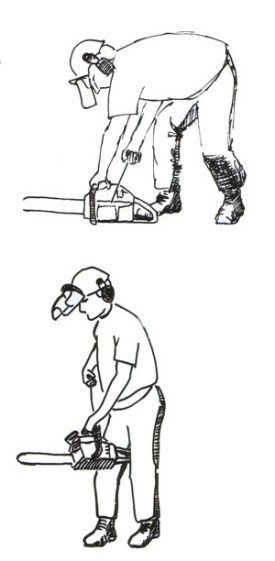
One of the primary principles of safe chainsaw operation is to have control of the saw at all times, including while starting the saw. Because one of your hands must be pulling the starter cord rather…
September 1st 2006
Mill Prices
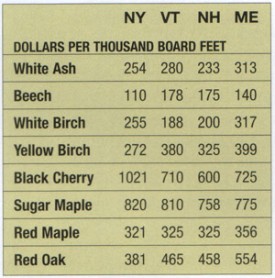
The prices reported here are those that log buyers—mostly sawmills and wholesalers—are paying for logs. Because these are prices paid for delivered wood, landowners need to adjust the…
September 1st 2006
Extra Calcium Boosts Maple Health
The results are in from a long-term study that has been measuring the response of sugar maples to calcium addition at the Hubbard Brook Experimental Forest in New Hampshire. They confirm…
September 1st 2006
Chasing the Carbon
A new study conducted by The Heinz Center, a national environmental and economic think tank, analyzes greenhouse-gas emissions from magazine and lumber production – from tree to final product to…

September 1st 2006
Orange Is In
While many of us shy away from the sunlight’s ultraviolet (UV) rays, male raptors may rely on that light to find their mates. Research by Francois Mougeot and Beatriz Arroyo from the Center for…
September 1st 2006
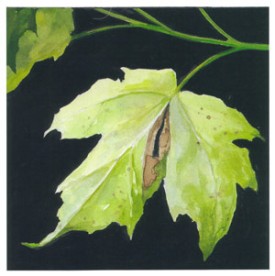
Maple Trumpet Skeletonizer, Epinotia aceriella
In late July, I spent some time watching maple trumpet skeletonizers under a microscope. At that time they were tiny, just an eighth of an inch long, wispy, and translucent. The “trumpet”…
September 1st 2006
Green Building Materials Designation Needs Rethinking
Green building programs have been developed over the past 10 to 15 years with the objective of shifting the built environment toward more sustainability. As the influence of these programs grows, it…
September 1st 2006
From the Center
The forests of New England and northern New York are among the most diverse and intricate ecosystems on the planet. With mind-boggling numbers of plant and animal species living in complex natural…
September 1st 2006
What is a Climax Forest?
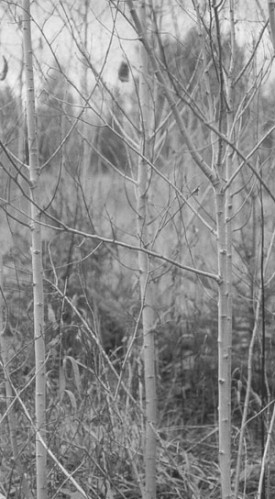
A climax forest is a good place to start an argument with an ecologist. To some, it is a nice name for forests that have escaped disturbance by outside forces like storms or diseases or logging long…
September 1st 2006
Tick or Treat
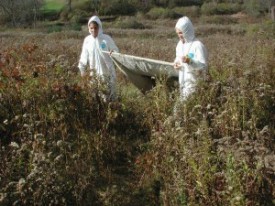
Last Halloween, biology students at U-32 High School in Montpelier, Vermont, got all decked out – not to go trick or treating – but in a search for deer ticks. They donned Tyvek protective…
September 1st 2006
Maul vs. Axe
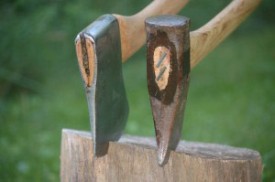
If you want to identify yourself as someone who knows nothing about the subject, announce that you’re headed out to the woodshed to chop some firewood. Chopping firewood went out of style with…

August 27th 2006
Monarchs Fly Far to Lose Hitchhikers
Nearly a billion monarch butterflies from the eastern United States and Canada migrate to the mountains of Mexico each year, and this year’s migration is already underway. This has long been…
August 20th 2006
Fall Foliage Reveals a Changing Environment
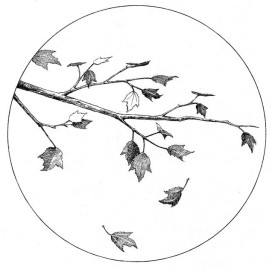
With autumn rapidly approaching, we in hilly New England are fortunate to witness spectacular displays of fall colors as the deciduous trees lose their leaves for the winter. This remarkable process…
August 13th 2006
Sundews, Pitcher Plants, and Bladderworts: Carnivorous Plants in our Midst
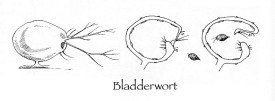
Some have teeth, some a sticky, entrapping liquid. Others have one-way tunnels leading to pools of digestive juices and are said to exude a paralyzing perfume. All of which are good reasons to beware…
August 6th 2006
Indian Pipe and Other Thieves
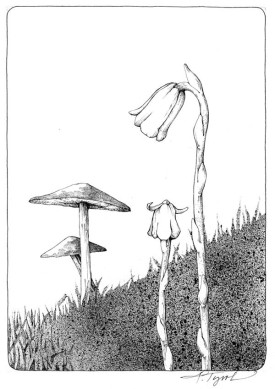
An oddity in the plant world is the roughly one percent of plant species that do not manufacture their own carbohydrates via photosynthesis. Instead, these plants are parasites, stealing carbohydrates…
July 30th 2006
A Penny for Your Watery Thoughts
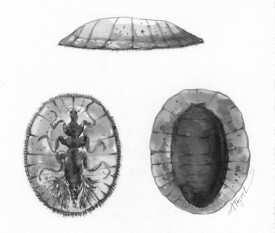
To see a stream’s smallest inhabitants, lie on a flat rock and duck your head underwater. A mask and snorkel help. You’ll be assailed by the effervescence of rushing water, the sibilance…