

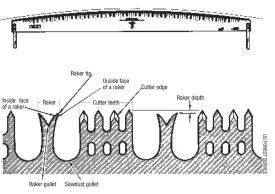
Not that long ago, in the days before chainsaws, work in the woods was done with an axe and a crosscut saw. While this era is only 50 years behind us, crosscut saws are now viewed by most as a…
Tricks of the Trade
May 26th 2009
Essential Equipment for Staying Safe
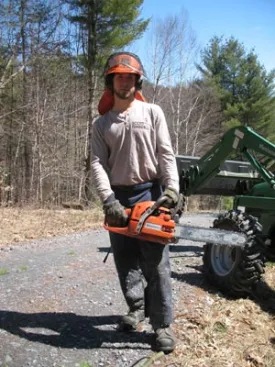
Cutting wood is inherently hazardous work. Even if you’re using state-of-the-art techniques and practices, stuff still happens, as the saying goes. A quick word on chainsaw injuries and…
May 7th 2009
Peeling Logs
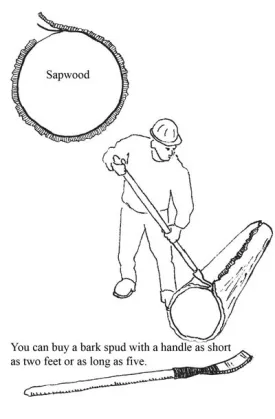
If you’re building a log cabin or some other sort of log structure, your instructions will likely tell you to peel the logs first. Peeling the bark off logs increases the longevity of…
January 13th 2009
Chainsaw Body Positioning for Less Fatigue
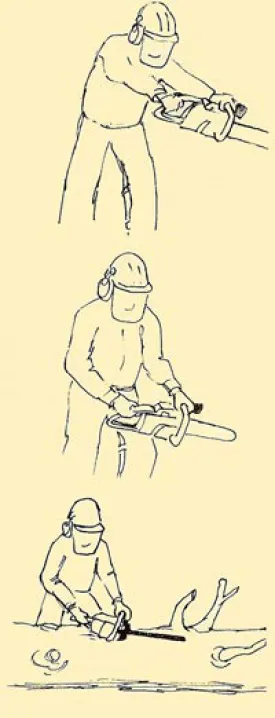
While chainsaws have evolved over several decades to become safer, there is no mechanical solution to the problem of fatigue. Since fatigue is a major contributor to chainsaw accidents, an…
October 23rd 2008
Determining a Tree’s Lean
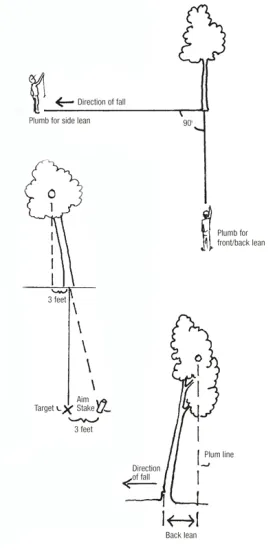
Since only a very few trees grow absolutely vertically, determining and adjusting for the lean of a tree is an important skill for any sawyer preparing to fell a tree. For the sake of…
June 1st 2008
Measuring Wood Volumes
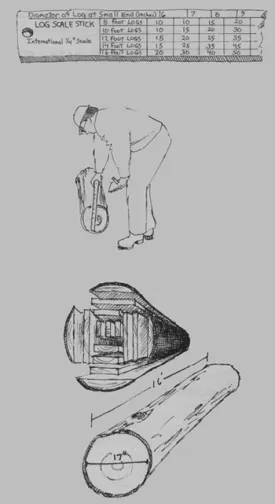
An important skill for any woodland owner who is preparing to sell some wood is understanding how wood volumes are measured. There are ways to measure live wood “on the stump” that…
March 1st 2008
Safety by Design
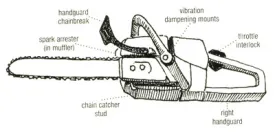
Modern chainsaws are the product of 40 years of evolution. Manufacturers’ continued focus on safety and productivity has produced saws that have a number of safety features that might…
December 1st 2007
Tending Wild Apple Trees for Wildlife
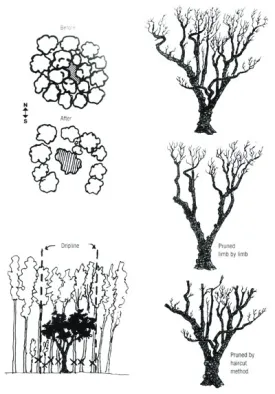
We’ve all seen it before: hidden in a thicket is a lone apple tree that hasn’t made more than a bushel of apples in the past 10 years. We know the deer, bears, turkeys, and…
September 1st 2006
Start Your Chainsaw Safely
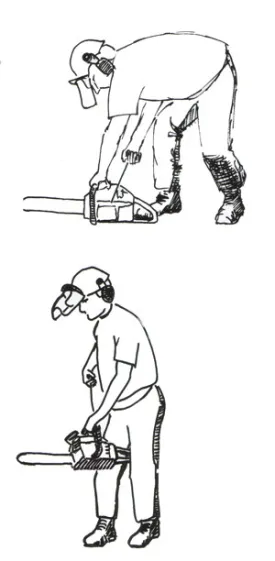
One of the primary principles of safe chainsaw operation is to have control of the saw at all times, including while starting the saw. Because one of your hands must be pulling the starter…
June 1st 2006
Chainsaw Guide Bar Maintenance
One often-overlooked component of the chainsaw is the guide bar. If it is not properly maintained, it will decrease the saw’s efficiency and damage the chain. Most guide bar problems are…