

Wood-splitting is a rural pastime rooted in tradition and experience – experience that’s often measured in broken axe handles and creative curses directed at knotty chunks of…
Tricks of the Trade
August 19th 2014
Tricks of the Trade: Peavey Proficiency
In the last installment of Tricks of the Trade, we examined the venerable peavey, and offered several modifications to make an already invaluable tool even handier. Now it’s time to head…
May 22nd 2014
Tricks of the Trade: Building a Better Peavey
While the mighty axe rightly receives credit for felling most of the timber of the eighteenth and nineteenth centuries, it was the peavey that took the work out of moving these logs, on both…
November 22nd 2013
Coppicing for Firewood
Of all the silvicultural techniques available to forest owners, perhaps no method is more underused than coppicing. Coppicing is a reproduction method where a tree is cut back periodically to…
October 9th 2013
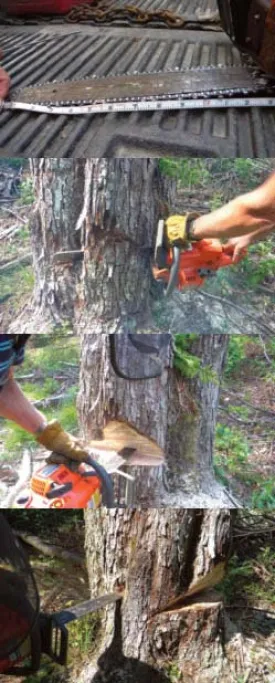
Big Tree, Small Bar
Is longer better when it comes to chainsaw bars? Personally, I like a shorter bar. It allows me to use a saw with a smaller engine, which reduces overall strain on my back and muscles. Plus,…
August 21st 2013
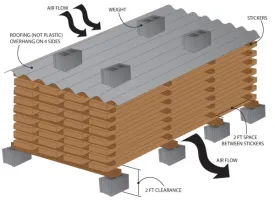
Building a Lumber Pile
The demise of the local sawmill has been closely followed by the rise of the sawyer with a portable bandsaw mill. Usually the sawyer will come to your house, set the mill up parallel to your…
February 22nd 2013
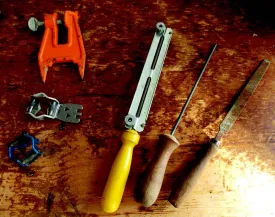
Saw Sharpening Tips
Chainsaws, despite their blunt appearance, are precision tools that need to be carefully maintained to work properly. The chain is no exception to the rule. There are two parts to maintain on…
February 14th 2013
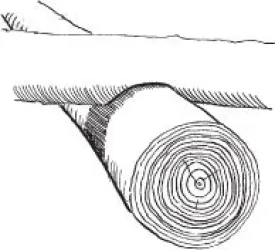
Scribing a Saddle Notch
If you’re considering building a log structure, you’ll need to learn to scribe logs. In most cases, you’ll be scribing for a saddle notch, used to join two logs…
August 24th 2012
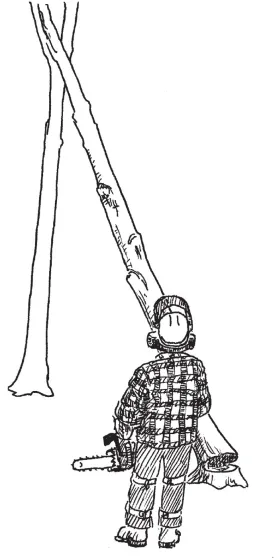
Tricks of the Trade: Freeing a hung tree
When felling trees, Plan A has the tree falling right where you want it to go. Once you hang one up, though - and even the best of us do - the game changes and it's time for Plan B. If…
August 7th 2012
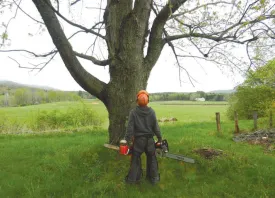
Buying a Chainsaw
Chainsaws are powerful tools, and you’ll work more quickly, safely, and efficiently if you own a good one. But with all the options out there, buying a chainsaw can be an overwhelming…