
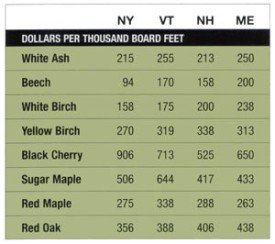
The prices reported here are those that log buyers—mostly sawmills and wholesalers—are paying for logs. Because these are prices paid for delivered wood, landowners need to adjust the…
December 1st 2007
What Do Tree Roots Do in Winter?
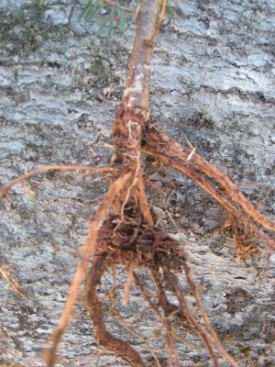
Tree roots are inscrutable. While their importance to the aboveground parts of trees and forests is well appreciated by forest scientists, tree roots have always been notoriously difficult to study,…
December 1st 2007
Tending Wild Apple Trees for Wildlife
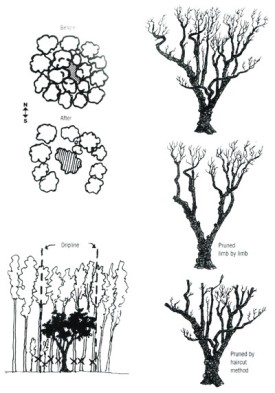
We’ve all seen it before: hidden in a thicket is a lone apple tree that hasn’t made more than a bushel of apples in the past 10 years. We know the deer, bears, turkeys, and partridges…
December 1st 2007
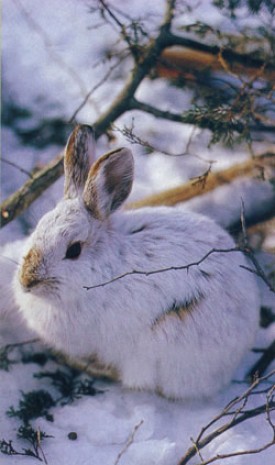
Thinned Thickets Lose Hare
Until a recent study, little was known about the effects of intensive forestry practices on snowshoe hares in northern forests. After studying hare populations following precommercial thinning (PCT),…
December 1st 2007
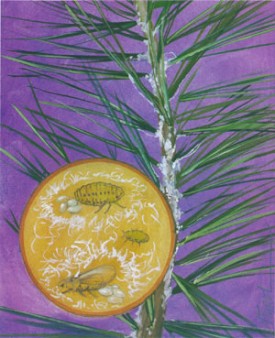
Pine Bark Adelgid, Pineus strobi
The bark of older and larger white pines is crusty and ridged, but before that, in youth and adolescence, a pine’s bark is smooth, interrupted only by whorled branches, and is usually a deep…
December 1st 2007
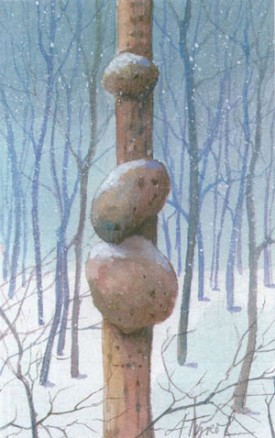
White Spruce, Picea glauca
During the most recent ice age, the Great Plains were part of a white spruce forest that existed in a broad, transcontinental band south of the tundra, which in turn extended north to the southern…
December 1st 2007
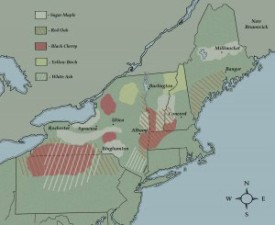
Where the Trees Grow Tall and Straight
In the kitchen cabinet trade, hard maple is king these days. Also widely used for flooring and trim, hard maple is highly valued for its durability and light-colored sapwood. As Dave Clements and I…
November 26th 2007
Don’t Feed the Deer
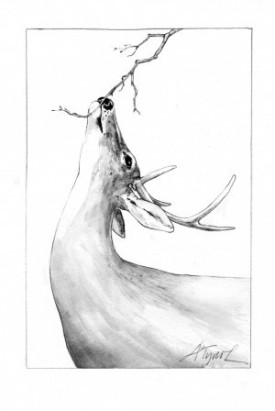
Feeding deer is something of a time-honored tradition in New Hampshire and Vermont. The hardship of winter moves some well-meaning people to set out food for deer, while more-pragmatic souls believe…
November 19th 2007
Is Wood the “Greenest” Kind of Heat?
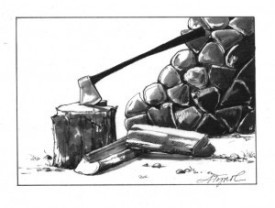
We’ve taken down the window screens and fired up our two woodstoves now that more seasonable weather has settled in. We burn about six cords of wood each winter on our farm, a fact that I have…
November 11th 2007
Waiting for Wolves
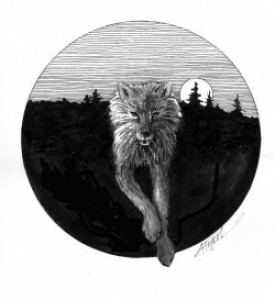
In October 2006, Charlie Hammond, a resident of Troy, Vermont, shot what he thought was a coyote in a field. Turns out, the animal weighed 90 pounds, about twice as much as the average Vermont coyote.…
November 4th 2007
Eels on a Slippery Slope
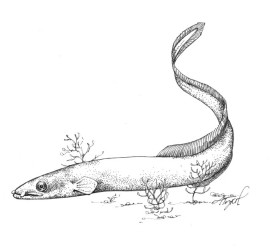
American eels were once an important food source for the Abenaki peoples of New Hampshire and Vermont. When autumn arrived eels were captured in stone weirs as they migrated down river. Traps…
October 28th 2007
Woodland Artillery
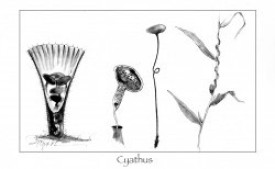
We’ve been transforming a small wilderness behind our house into a rock garden. Clearing away litter revealed a tiny, unusual fungus I’ve wanted to find for years. The Greek word for cup,…
October 21st 2007
Feels Like Ticks
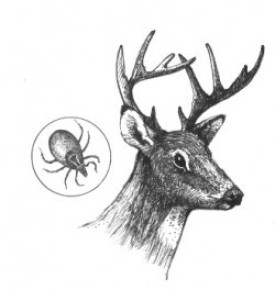
With two daggers extending from each foot, ticks are well armed. And they are endlessly patient. Swaying on a blade of orchard grass, a tick extends its questing legs and waits. Night and day, through…
October 14th 2007
In Honor of Dead Trees
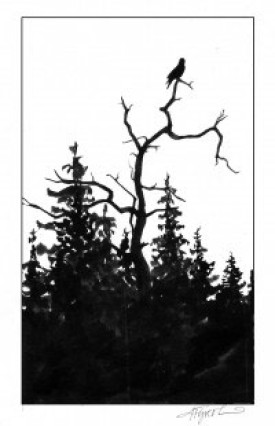
A friend of mine told me about a hedgerow he liked to visit that was a short distance from his home. It was a spot he checked regularly with his binoculars, searching for the many birds he knew he…
October 7th 2007
Common Ways that Plants Deter Our Meddling
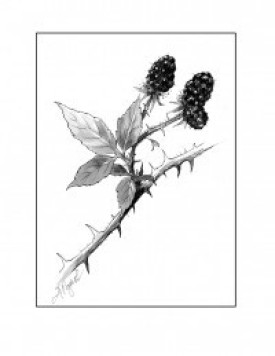
The next time you wander into a patch of stinging nettles, or contract a bad case of poison ivy, try to see things from the plant’s point of view. Our green neighbors get picked, eaten,…
September 30th 2007
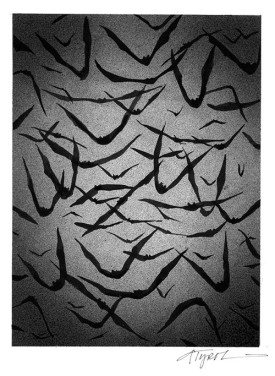
The Bat Swarm
I am sitting in the dark at the mouth of a cave. My knees are drawn up, and my heels are hooked over a slab of a rock to stop me from tumbling forward on the steep slope. If I stretched out my arms,…
September 23rd 2007
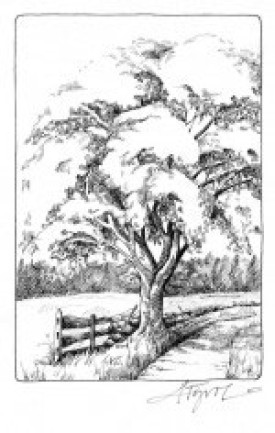
American Elm Revival
For shade, for stature, for sheer physical grace in the tree world, nothing beats an American elm. The first colonists in New England took notice of this native hardwood tree’s qualities and…
September 17th 2007
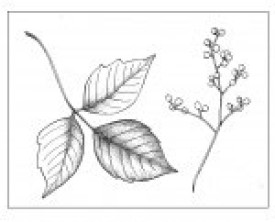
Poison Ivy
“Leaves of three, let it be.” What elementary school child doesn’t know this couplet, about one of the most dreaded plants in our New England landscape, poison ivy? At this time of…
September 9th 2007
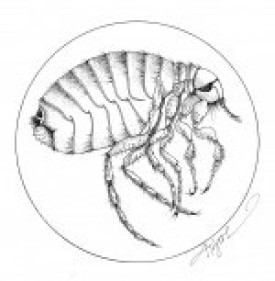
A Flea for You and Me
Imagine that you live in a dense forest of rough, dark trunks rising to an outside world you cannot see. You travel endlessly through this monotonous jungle, feeding when hungry on nourishing fluid…
September 2nd 2007
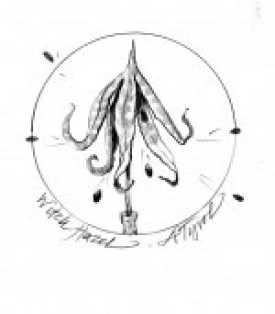
Explosive Seeds and Spores
Q: Why did the witch hazel cross the street? A: To grow on the other side. Of course shrubs can’t really cross the street, but their seeds can. The seeds of witch hazel are shot out of capsules…