
Plants are not often thought of as predators. They’re the nice guys. With over 300,000 species known to exist, only a small fraction are known to be meat-eaters. In our northern bogs, for…
August 23rd 2013
Serious Slime
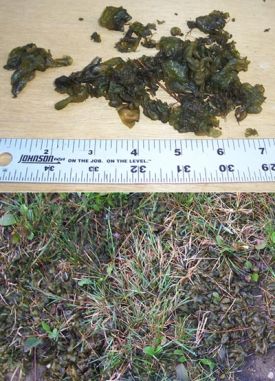
This mysterious green slime was found growing outside Bill Peberdy’s woodshop in Corinth, Vermont. What is it?
August 23rd 2013
Huckleberry Picking
My grandfather on my father’s side came from Dutch/German/Irish stock who settled in New York’s Shawangunk Mountains several hundred years ago. If you’ve never been to the…
August 21st 2013
At Work Cutting Wood with Paul “Butch” Reed
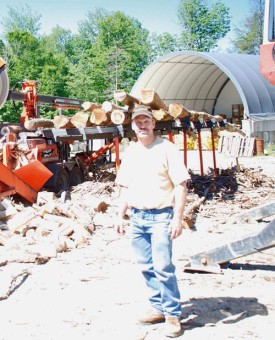
At age 12, Paul Reed plunked down $275 for a new Jonsered, his first chainsaw. The boy’s father ran a small sideline firewood business, and while dad had spare chainsaws, of course, Paul wanted…

August 21st 2013
Editor’s Note
I went to Northeastern Wyoming a few weeks back; vague childhood memories of Devil’s Tower and Yellowstone did nothing to prepare me for just how different the landscape is out there. There are…
August 21st 2013
Building a Lumber Pile
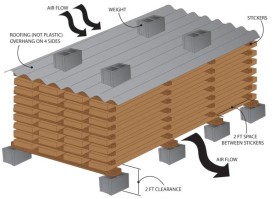
The demise of the local sawmill has been closely followed by the rise of the sawyer with a portable bandsaw mill. Usually the sawyer will come to your house, set the mill up parallel to your log…
Issue 78: Autumn 2013 $6.00
One for the Ages: Hurricane of 1938 Life in Your Logs Paying for State Wildlife Conservation Getting to the Bottom of the Scrape and much more
August 19th 2013
Lessons in Planting Tree Seeds
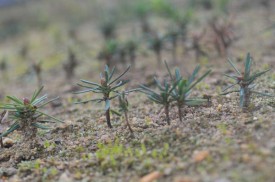
If you’ve ever tried to grow a tree from a single seed, and failed, you’ll probably want to know how the New Hampshire State Forest Nursery manages to grow about a quarter of a million…
August 19th 2013
Wings that Sing
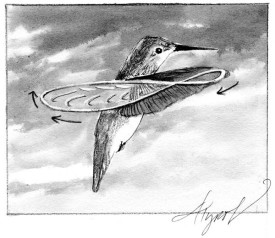
As the summer bird chorus wanes, we might remember that song can arrive in unexpected ways. Drumming heads, clacking bills, and dancing feet create nonvocal sound. Even flight, that foremost avian…

August 15th 2013
Sudden Eden
Intensely personal poetry only works if readers can recognize something of themselves, or some universal truth, or something fun or beautiful in the prose. If it’s there, the poet and reader…

August 15th 2013
Peak Experiences: Danger, Death, and Daring in the Mountains of the Northeast
There’s something about wilderness rescues and mishaps that seems to bring out the voyeur in many of us. Are we drawn to the cautionary tale, fascinated by the raw power of nature and the…

August 14th 2013
Outdoor Palette
Craig Mooney is a master of atmospheric perspective. He manipulates his oil paints to reflect the effect that weather, atmosphere, and shifting light have on the appearance of a place. Mooney paints…
August 13th 2013
Butterflies Take Note Before Taking Flight
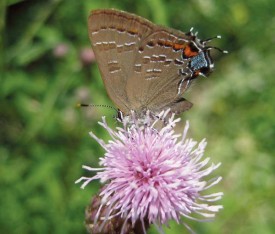
Climate change is affecting a wide range of wildlife, from plants and bees to birds and trees. A new study led by biologists at Boston University adds butterflies to the list, finding that…
August 12th 2013
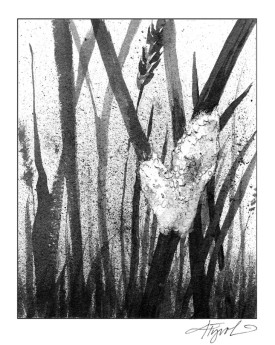
Spittle Bug – A Jumping Champ in a Bubble Bath
On the lower levels of the food chain, danger is rarely out of spitting distance. Risk from predators has spurred the evolution of many clever adaptations – camouflage coloring, speedy retreat,…
August 9th 2013
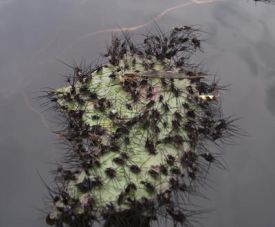
A Prickly Mess
Reader Paul Fillion submitted this picture that his daughter Renee took in central New Hampshire. What is it?
August 9th 2013
The Peak
If summer were a weeklong vacation, mid-August would be Friday afternoon. You’re not packing your bags to come home yet, but there’s an awareness that there’s more behind you than in…
August 5th 2013
With the Grain: A Craftsman’s Guide to Understanding Wood
For cabinetmakers, both professional and amateur, the name Christian Becksvoort will have the same kind of resonance that Babe Ruth or Mickey Mantle will have for a baseball fan. Becksvoort has been…
August 5th 2013
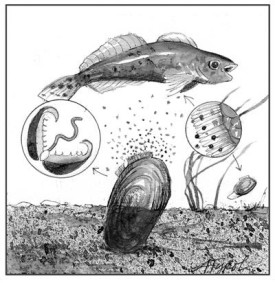
Dwarf Wedgemussels: Fishing for a Ride
Last week my eight-year-old nephew, Romeo, got on an animals kick. He's an inquisitive kid who's fascinated by things like white blood cells and he absolutely loves sharks. So, knowing that I…
July 29th 2013
Soil: Can It Take the Heat?
Soils throughout the world store more carbon, in the form of organic matter, than all of the vegetation and atmosphere combined. Microorganisms in the soil – bacteria, fungi, protozoa,…

July 29th 2013
A Rugged Pair of Genes
A project to map the genes of spruce and pine trees has revealed that the genome of conifers has remained pretty much the same for more than 100 million years. This stability explains why…