
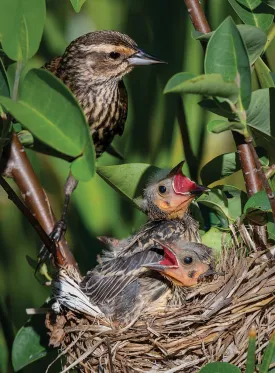
Mere hours old, a comical procession of 12 downy puffs drop one by one from their nest cavity 30 feet high in a white ash snag. Scrambling to keep up with their mother, a female wood duck,…
Magazine Series
June 1st 2023
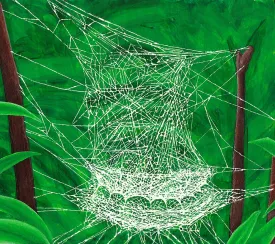
Beyond the Orb: A Summer Spiderweb Sampler
While orb webs – with their appealing spiral geometry – are the most familiar, spiderwebs take an amazing diversity of forms, each an ingenious fit for its maker’s hunting…
June 1st 2023
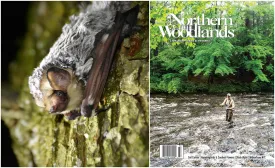
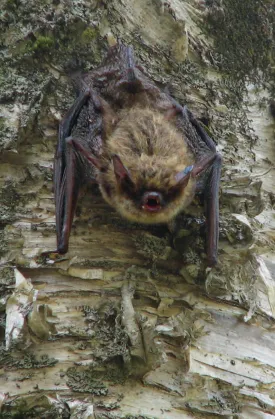
Summer Bat Habitat
Two of the regular columns in the Summer 2023 issue of Northern Woodlands magazine are related to northeastern bats. Forest Insights describes opportunities to promote summer bat habitat in…
June 1st 2023
Managing Forests for Bats
I’ve seen some bats flying around the edge of my woods, and I’d really like to help them because I know that they’ve been hit pretty badly by white-nose syndrome. Where are…
June 1st 2023
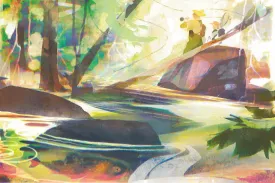
What the Old Ones Show Us
Noah moves ahead of me in the streambed, walking through a green tunnel, the rest of the world walled off. In July, the woods are thick with leaves, and the rhododendron that crave water grow…
June 1st 2023
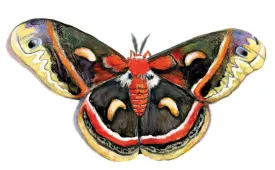
Cecropia Moths
Twenty-five years ago, a student brought me a dead, tattered specimen of a moth. Its prodigious wingspan, colorfully banded fuzzy body, and spectacular wings were unmistakable: cecropia moths…

June 1st 2023
Wild Strawberries
As a science teacher, I love strawberries not just for their flavor, but also for their DNA. I use strawberries to show high school students how to extract DNA from living tissue. A quirk of…

June 1st 2023
From the Center
I’ve tended to think about deer over-browsing in forests as primarily a tree regeneration problem, because that damage is easy to see. In my own woods, the sad, scraggly remains of…

June 1st 2023
Behind the Pages
Approximately 50 people contribute to the words and images in each issue of the magazine. Here are some of our Summer 2023 contributors. {image2} Todd Davis (“What the Old Ones Show…
May 30th 2023
still pond
all-day rain a tentful of ghost stories evening paddle a great blue heron pulls me upriver still pond a turtle pokes his nose through a cloud hemlock shadow — a trout sips a fly