
Site Discussions
Break this down by state please. New England includes Connecticut, Rhode Island, Massachusetts as well as Vermont, New Hampshire and Maine. I want to see just how much each state has contributed to this alleged “loss.” 78% of Vermont, that is 4.46 million acres, is forest. In Vermont, EVERY taxpayer contributes to fund the Current Use program agricultural and forest preservation program. The poorest-of-the-poor kick in to subsidize the property taxes of the richest-of-the-rich who own acres and acres of land (that the poor can’t afford.) Be honest and put the blame where it lies. It’s NOT in Vermont.
From "Building a Movement" »
Thank you. I will have more fun with watching squirrels. Any reason to add to their resources?
From "Tracking Tips: Putting Food Up" »
Complicating our desire to keep our own forests and fields free from development are the rapidly increasing property taxes that seriously burden retirees like us who live on a fixed income. We can’t possibly keep up with rising costs yet don’t wish to sell off our development rights. No win situation for us or the country.
From "Building a Movement" »
Christiana in CT. In Northampton, Mass, William Edwards used water power for grinding the bark instead of using horse power. That was his first innovation. After that, the application of heat to the tanning process sped up the process. He invented and patented a copper heater as well as a rolling machine used to finish the tanned leather. These advancements stood as the standard for many years and were the first innovations in the tanning trade for centuries.
From "Hemlock and Hide: The Tanbark Industry in Old New York" »
David,
That’s great to hear. Hurray for coexistence!
From "Gonzo Goshawks" »
This captures so much because it comes from deep within…I would only add that September really begins that mid-August evening when you sense a chill in the night air and start up the wood stove for the first time since spring.
From "On September" »
Awesome story Elise! Brings back memories. You will be happy to know the pair have nested further away and no longer terrorize the family. We still see them hunting in the distance but no more dive bombing. Coexistence achieved.
From "Gonzo Goshawks" »
I want to take cuttings of a wild grape vine where I work, and try to grow if at my cabin. I’m wondering, when is “late winter” to take the cuttings? Is it calendar based, or weather based, or counted back from when I’ll be ready to put them out in the spring?
From "Harvesting the Wild Grape" »
This is a beautiful painting. I am also a plein air artist and can appreciate the time and work involved for creating such a nice piece. Greens are so hard to get right. And in wc no less! Good job!
From "Outdoor Palette: Susan Bull Riley" »
We have a little female American Goldfinch all by herself who feeds at our thistle sock many times a day. I’ve never seen one here before and wonder about no male anywhere around. She has been here for 5 or 6 weeks. It’s outside my kitchen window & she watches me inside as long as I don’t make sudden moves - then she flies away.
From "American Goldfinch: a Common Bird with Uncommon Habits" »
I agree with you, K, that deer hunts are a false solution in most areas, simply because they’re (the deer populations are) so elastic. If the habitat is good, deer will recolonize an area. In an experiment along these lines conducted in a town in New Jersey in the early 2000s, the town removed roughly half of its deer herd, and it appeared to have no effect on the number of ticks. But it’s not accurate to say that humans would fill the void left by deer. It’s not so much the blood meal that makes deer crucial to the tick’s life cycle, it’s the fact that they serve as a kind of singles bar that facilitates tick mating. For humans to play that role we’d have to be alright with ticks crawling all over our bodies, mating, feeding on us, falling off. I can’t imagine anyone being alright with that.
From "A Plague of Ticks: Scientists Search for Solutions" »
I spent time hiking in the protected forests of the northern Adirondacks this summer, and in the old growth forests that have been saved from logging for over a hundred years, there is no tick problem. No signs warning you of ticks in on all the trailheads like we have in Northern New England where constant logging is the norm. I went thru wet Meadows and scrubby fields where I would have been covered with ticks if I were in NH or VT. Plenty cold where I live, doesn’t slow the ticks at all. The habitat fragmentation is what gives this plague the edge.
From "A Plague of Ticks: Scientists Search for Solutions" »
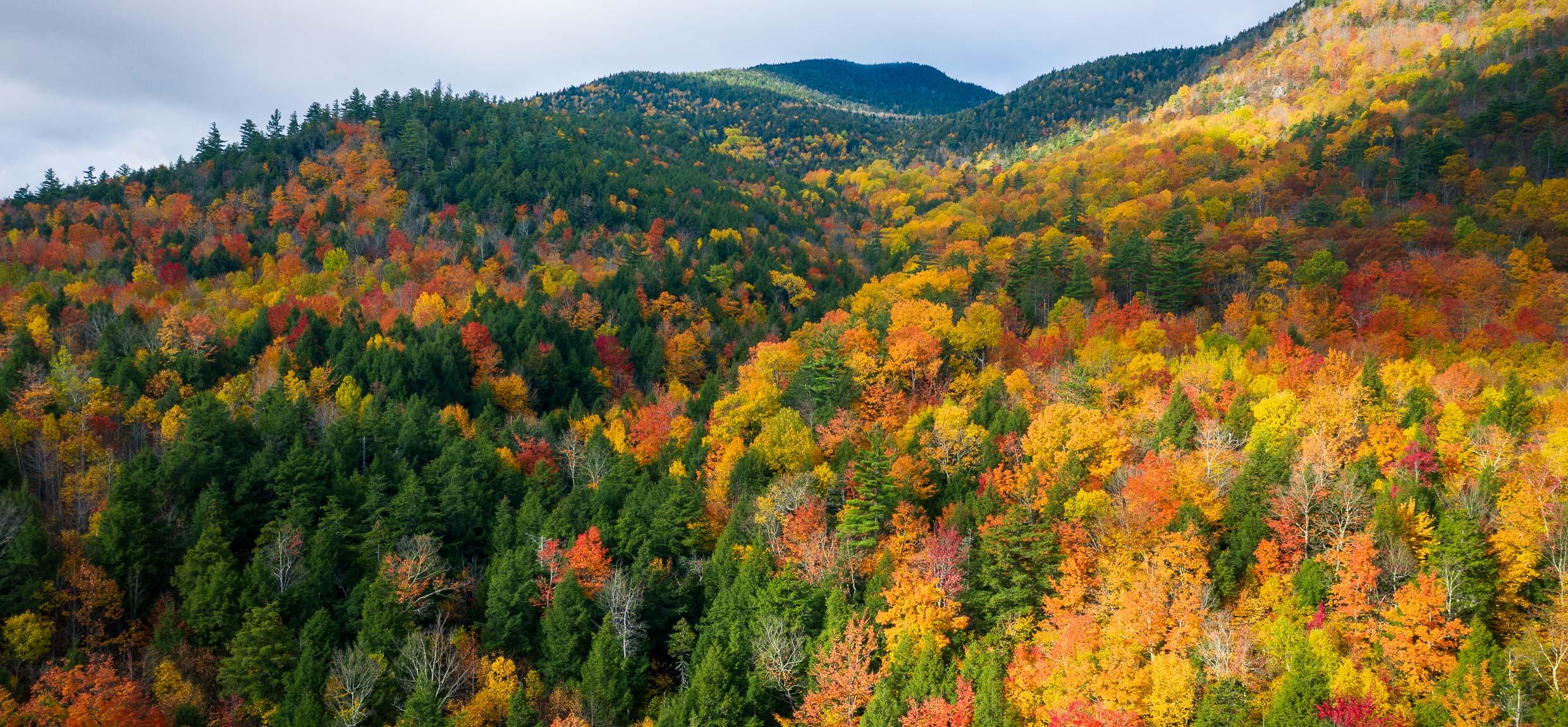
It could be tar spot, Phil—a fungal disease that especially affects Norway maple: http://ccerensselaer.org/resources/tar-spot-of-maple
From "The Causes of Fall Color" »
Does anyone know why maple trees, here in Vermont, are dropping black foliage leaves?
From "The Causes of Fall Color" »
Lyme disease is another human health issue worsened by current human behavior, i.e. unbridled development. Deer hunts are a false solution since human hosts will fill the “large mammal” void due to a smaller deer population.
From "A Plague of Ticks: Scientists Search for Solutions" »
A timely reminder to take extra precautions when in the woods. Thank you for this article.
From "A Plague of Ticks: Scientists Search for Solutions" »
Richard,
I always had wild grapevines on my property but no grapes. Every year I would cut them down to the ground. Last year I was lazy and didn’t bother on the upper side of my property. So a vine emerged and covered a 15’ Frazier Fir tree. My Frazier Firs have a fungus on them so I sprayed my trees this year with a fungicide. That included this 15’ tree with the grape vine covering it. Surprise - I just picked 2 1/2 gallons of wild grapes from about 8’ down to the ground. Tonight I’ll be climbing a ladder to get the rest because the bunches from 10’ up look even better (more sunlight). I guess what I’m trying to tell you is that a little fungicide may go a long way. Trimming would help as well.
I also grow grapes, blackberries and a few fruit trees. 4 years ago I started making wines with the excess fruit. I’m really looking forward to see how this batch of wild grape turns out. I’m going to call it Foxy.
From "Harvesting the Wild Grape" »
I was in Granby CO visiting friends when we walked outside on a cold clear winter morning. I looked up to see four crows flying overhead at about 100 feet. I called in three sharp caws as they disappeared out of my sight because of some buildings. within ten seconds one had left the group and glided down and reappeared behind me at about 15 feet in height, gave me the “hairy eye” and rejoined the group. I must have “said” something correct cause it sure got a rise out of him.
From "Crow Communication is Cawfully Complicated" »
Articles like this drive home the importance of good observation to test assumptions. They remind us that there are usually many factors at work at the same time.
From "A Plague of Ticks: Scientists Search for Solutions" »