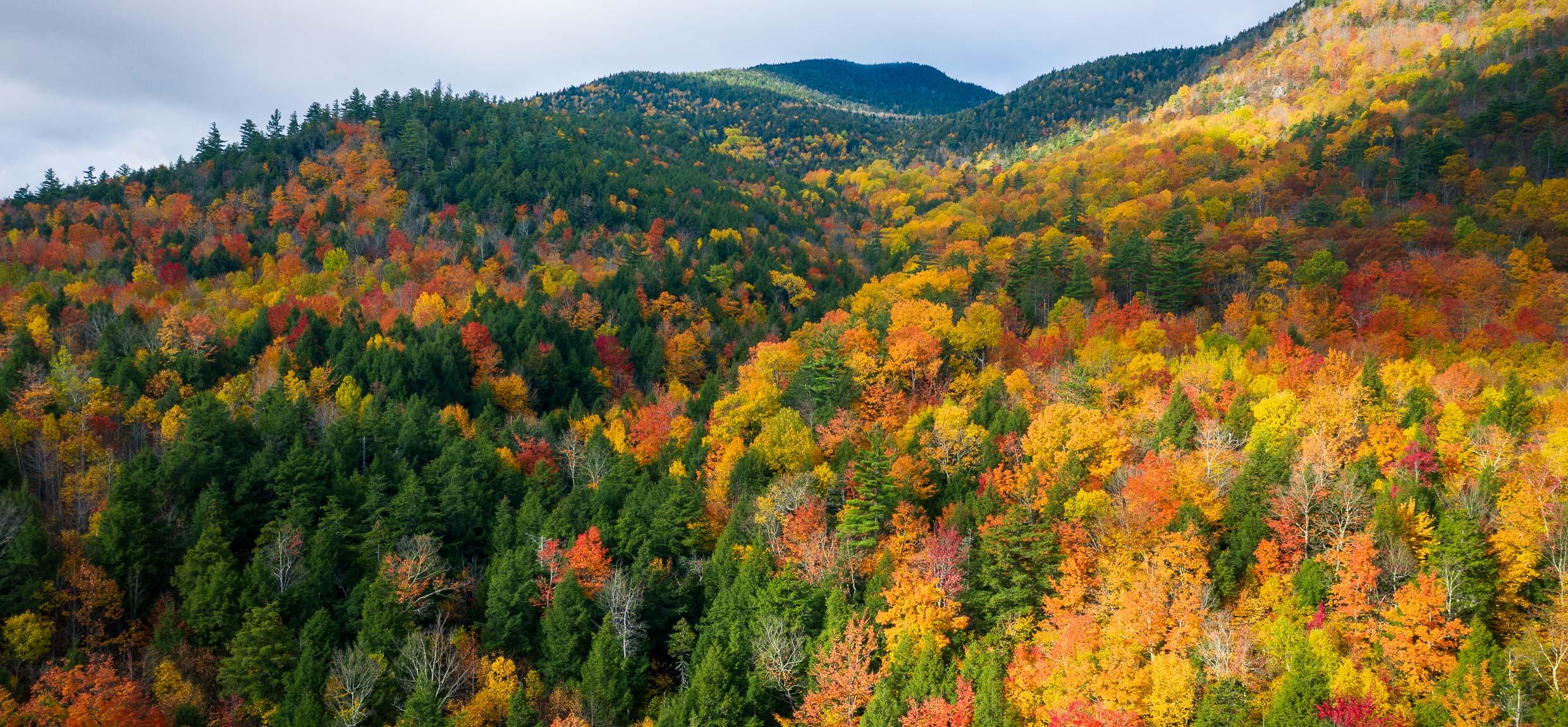

On my family’s 80-acre Christmas tree farm in Vermont’s Northeast Kingdom was a large swamp populated by northern white cedar trees. The swamp was at the base of Mount Monadnock,…
Magazine Series

February 1st 2023
Art Review: Carolyn Egeli
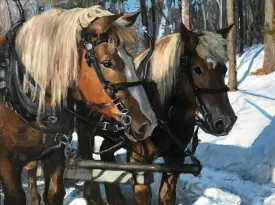
Carolyn Egeli is a painter’s painter. As the daughter of two successful artists, she was classically trained at home from a young age, as were her four siblings. But Egeli notes that for…
February 1st 2023
Eidolon
in memory of George MacArthur I stared at a lone white cedar this morning, astonished, so few of that height and girth left standing from when they were hewn by hand for railroad ties by…

January 15th 2023
Green Long-jawed Spiders
Winter rambles often take me to East Woods in South Burlington, Vermont. While birders gaze skyward, I find myself drawn to movement on the ground. Snow cover reduces invertebrate numbers, and…
January 1st 2023
Creating a Climate-Resilient Forest at Tug Hill
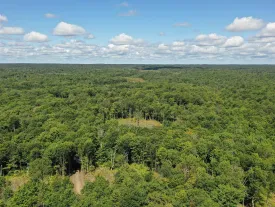
Just east of Lake Ontario and west of the Adirondacks lies the Tug Hill Plateau, a chunk of sedimentary rock that rises from an elevation of 250 feet at its base near the lake to 2,100 feet on…

January 1st 2023
Mount Washington Observatory: Measuring the “World’s Worst Weather”
Rising to an elevation of 6,288 feet, Mount Washington caps New Hampshire’s Presidential Range and is the highest peak in the Northeast. On a clear summer day, hordes of visitors flock…

January 1st 2023
Waxwings: Itinerant, Unpredictable Winter Jewels
Jays, chickadees, titmice, nuthatches, juncos, cardinals – these are the staple birds of winter, familiar to nearly all feeder watchers in the Northeast. In some years, nomadic finches…
January 1st 2023
Working Lands Aid At-Risk Species
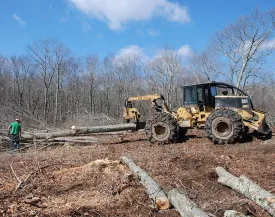
How Private Lands Can Provide Critical Wildlife Habitats
Back in the 1980s, I began a long-term project with New England cottontails to explore the causes of their regional decline and how that situation could be reversed. I found that cottontails…

December 1st 2022
What’s This Tool For? A Look at Logging Tools of Yesteryear
Axes and crosscut saws have survived in the American mind as evidence of our utilitarian relationship with forests. Most of the crosscut saws I see today are hung above mantles or serve as a…
December 1st 2022
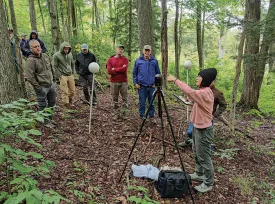
Using Terrestrial Lidar for Accurate Forest Carbon Inventories
The world’s forests are an essential site of carbon sequestration and storage. As nations work to achieve “net zero” emissions in the coming decades, detailed estimates of…