
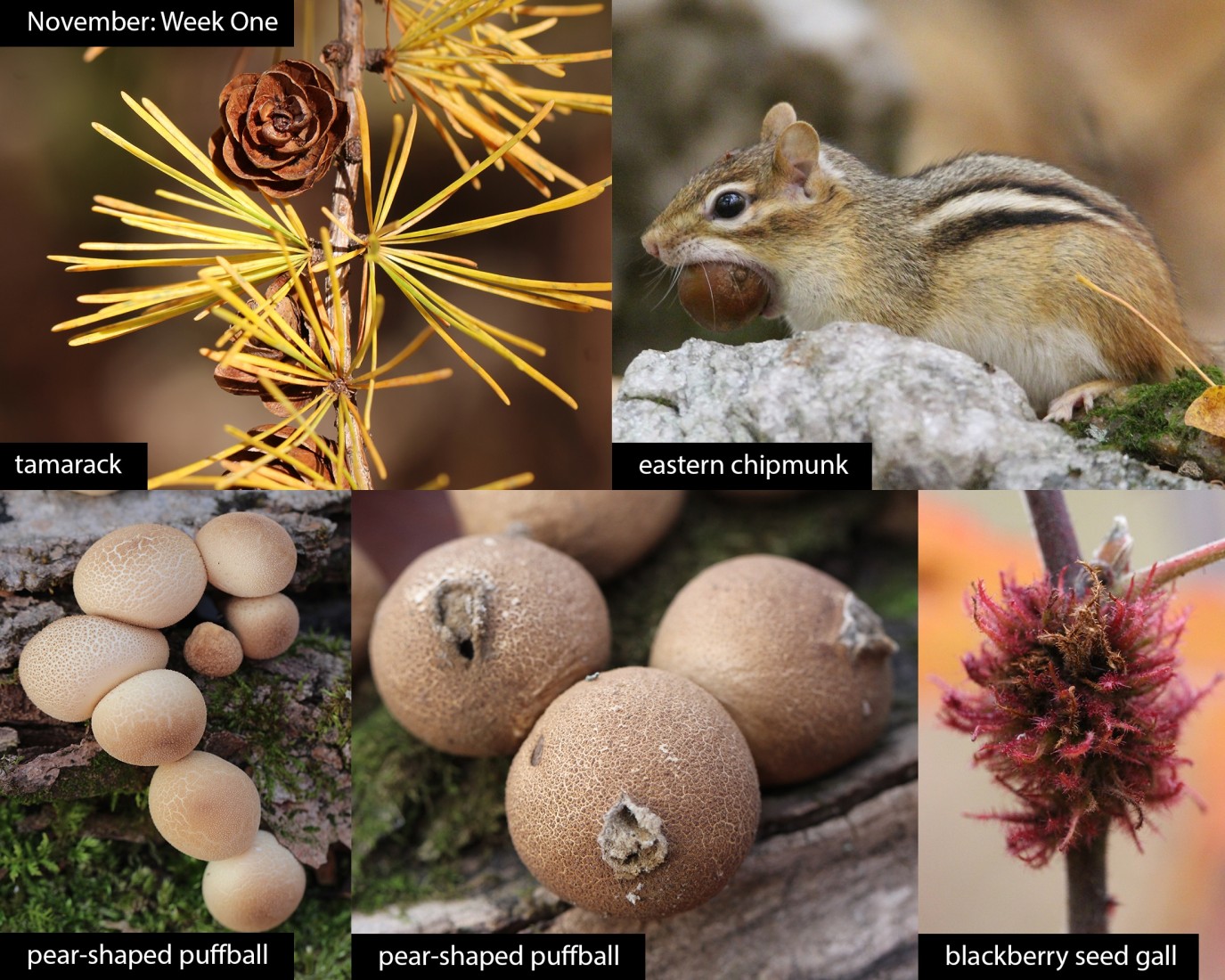
This week in the woods, the tamaracks – those famously deciduous conifers – give us a last, golden show of autumn color before winter sets in. As Forest Insights columnist Ali Kosiba writes in the Autumn 2026 issue, tamarack (also known as eastern larch) avoids the typical evergreen’s winter desiccation, snow loading, and the need to invest in thick, waxy coatings for enduring harsh winter conditions; as a result, it has soft, lightweight needles. Soon, only pine, spruce, and fir needles and the persistent dead brown leaves of oaks and beech will remain.
We may not have seen a mast year for oaks across all of Vermont and New Hampshire, but acorns still drop, providing protein, fat, and calories for numerous avian and mammalian species. Chipmunks like this one use their acute sense of smell to find seeds, which they store near their shelters and live on over the winter, alternating between torpor and eating.
A single decaying log in Vershire hosted clusters of both young and ripened pear-shaped puffballs. As they mature, the fruiting bodies darken, open holes, and release millions of spores with rain, wind, or other stimuli, including from humans and animals.
A single blackberry seed gall wasp larva overwinters in each of the dozens of spined, hollow gall that form this cluster on a blackberry cane. The hairy masses begin yellow-green and turn brownish red with time. If the tiny wasps survive, they will emerge in the spring.
What have you noticed in the woods this week? Submit a recent photo for possible inclusion in our monthly online Reader Photo Gallery.