
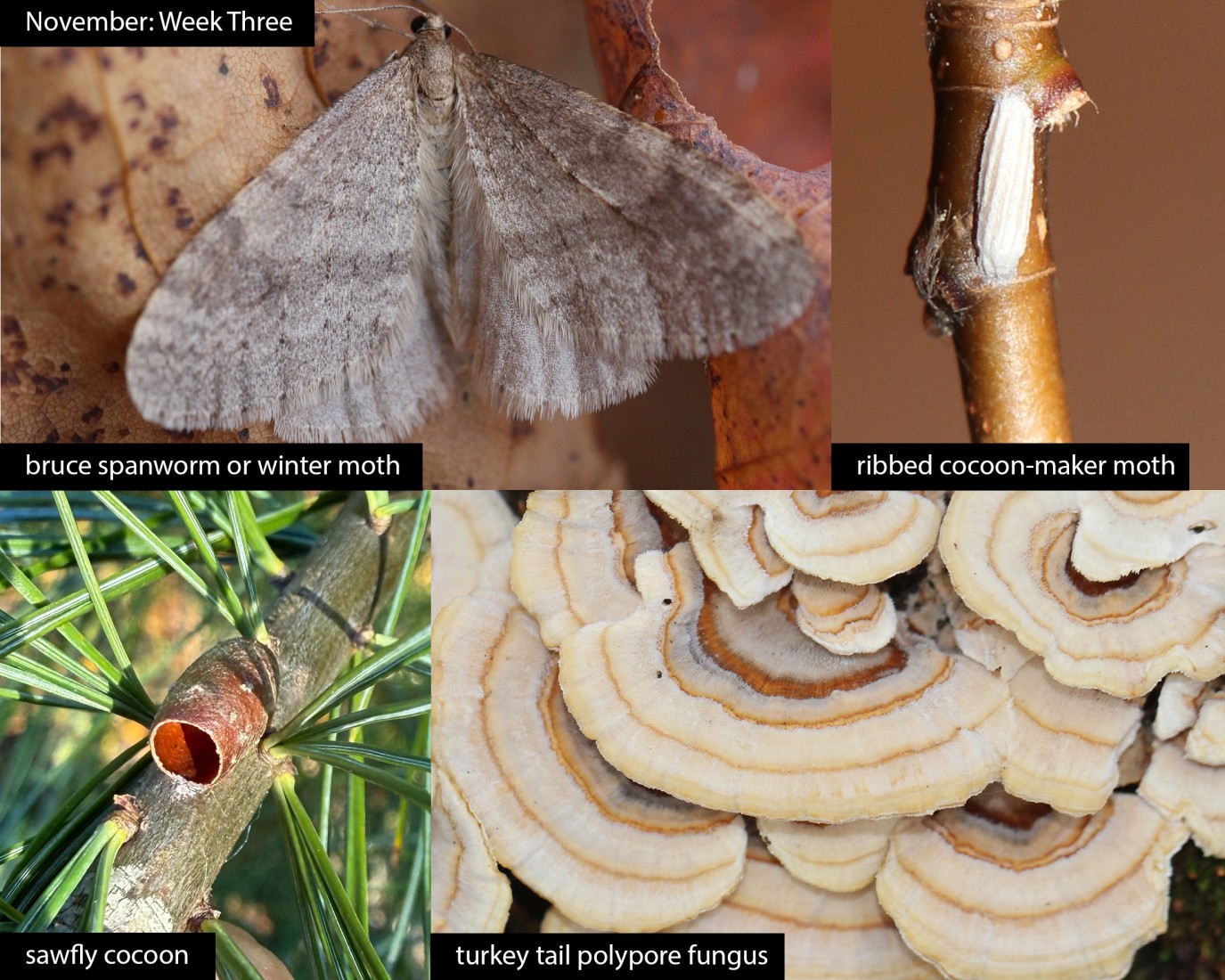
This week in the woods, the nearly indistinguishable bruce spanworm (a native pest) and winter moth (a non-native one) cruise about the forest, long-antennated males in search of flightless females. These gray, tan, and brown moths, which we also wrote about last year, emerge in late October and November, when other moths and butterflies have almost all transitioned to their overwintering states.
As Kenrick Vezina writes in this Outside Story article from our archives, Lepidoptera have a variety of strategies for facing the winter. Monarchs, of course, and a select few other species migrate south, but the vast majority stay put. Eastern tent caterpillar moths lay glycerol-laden eggs on cherry or apple twigs; some caterpillars, like those of tiger moths (also known as wooly bears), crawl beneath leaf litter or into log piles; and mourning cloaks survive as adults, in crevices in bark and human structures.
A ribbed cocoon-maker moth (one of many species in the Bucculatricidae family) has, for one, made its distinctively elongated, lined cocoon on a beech twig. An adult would have emerged from this sawfly cocoon in the spring, but many much like it but with pupae inside now stick to branches and sit in the soil throughout the forest. As an earlier This Week in the Woods reports from Charley Eiseman and Noah Charney’s Tracks & Signs of Insects and Other Invertebratesa single short-haired shrew may consume as many as 23,000 pine sawfly cocoons annually.
Turkey tail polypore fungus flushed in clusters on a log earlier in the month and will persist year-round. These fan-shaped, toenail-textured polypores can serve as a clue to understanding a landscape’s history; as naturalist Tom Wessels reports in his ever-popular Reading the Forested Landscape, turkey tails’ presence on wood suggests that the tree died at least three years ago.
What have you noticed in the woods this week? Submit a recent photo for possible inclusion in our monthly online Reader Photo Gallery.