
Site Discussions
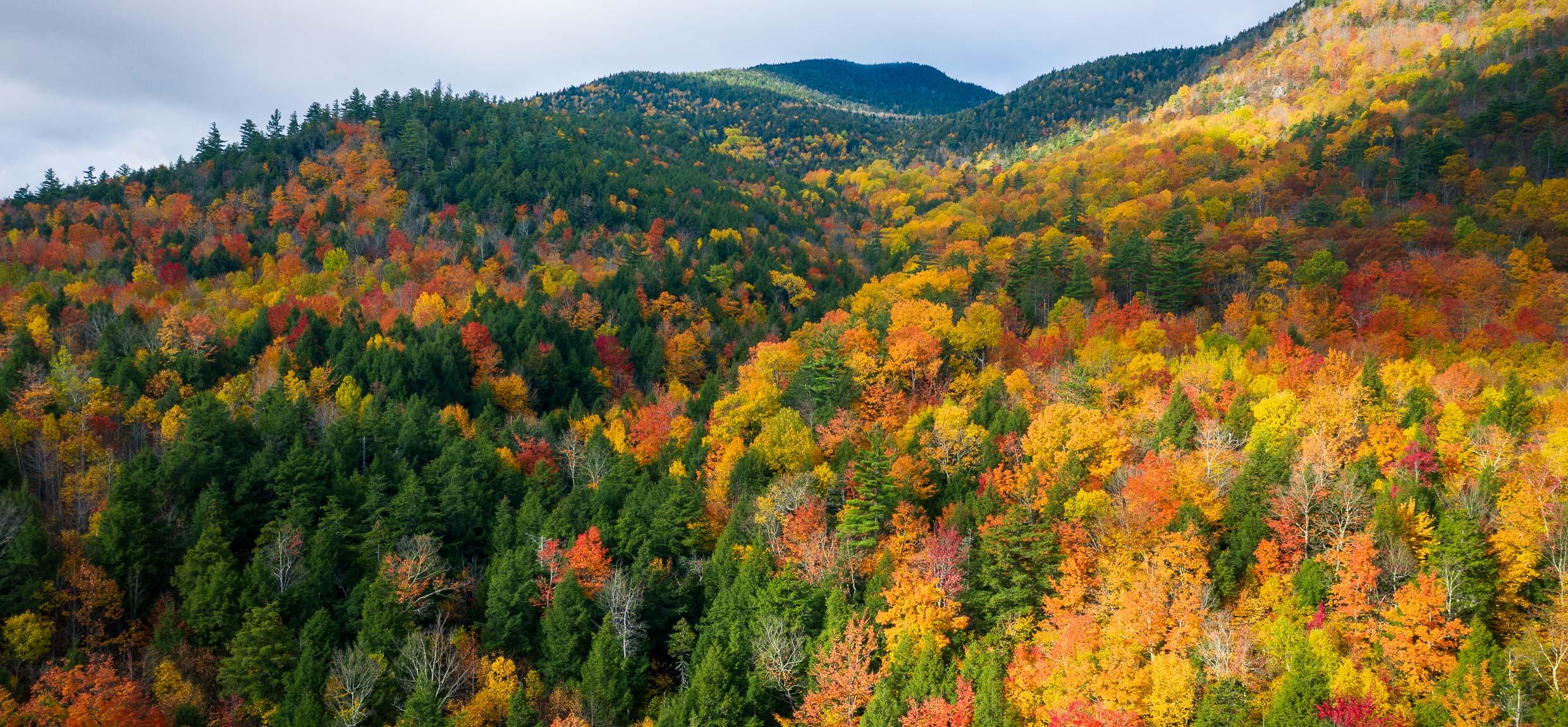
This is an awesome theory of maple decline. I am in full agreement. And I love the use of Manion’s decline concepts.
From "Scientists Challenged by Sugar Maple Decline" »
It may be easy to judge in review about what this hunter did, but it was apparent from the start that he didn’t have much knowledge of guns and scopes. He fell, twisted his knee, pounded his rifle on a rock so hard as to bust his stock and thought that everything would be hunkydory? Not only was his knee twisted, so was his rational thinking. When he saw that sow at the base of the tree with two cubs, right then he should’ve gave her the benefit of the doubt and let her go. If it was a mortal wound, so be it. If it wasn’t, she would live to raise another family of cubs. I won’t even get into him limping out into an impending storm with a 5 year-old, his grandfather, an inadequate, unfamiliar weapon, with darkness approaching and no compass to boot. But the next morning, he made no effort to to search again with friends or family? It might’ve been a difficult, inconvenient experience for him, but I bet it wasn’t fun for those bears either.
From "Dispatch from Deer Camp, 2017" »
This is indeed a string of unfortunate decisions. However, the entire episode - doesn’t speak well for the hunter but one incident does not define hunting. One shopper in the grocery store to buy factory farmed animals doesn’t speak ill of all meat eaters. It’s not really that cut and dry.
Nature will self-regulate but it’s sometimes ugly. Over population contributes to horrible deaths by starvation, disease, animal/vehicle accidents and other issues. I personally think it’s better to harvest a bear to feed my family than allow Maine’s too-high bear population increase.
A single drop of blood from a bear is not a reliable indicator of a poor shot. A thick layer of fat will quickly and efficiently seal a wound. The bear might bleed out and die without leaving a blood trail. This sow might have been found in a search the next morning.
I hope she’s denned up, with or without her yearling cubs that are old enough to be on their own, and healing. They’re tough creatures with incredibly strong bones. Maybe she’ll survive.
From "Dispatch from Deer Camp, 2017" »
Whatever the writer was trying to say in this essay, he failed at, but I will give him points for the attempt. T was obviously not a very competent hunter, as having no compass illustrates. I could go on from there, but “Woody” has already said much of it. As a lifelong highly successful hunter, I found this simply a portrait of an unprepared and all-too-typical one.
From "Dispatch from Deer Camp, 2017" »
Thank you for this complicated story. This is my second year as a deer-hunter, the first I’ve seen a legal buck. I don’t come from a hunting tradition, so I’m learning from anyone I can. Yes, I enjoy the sunrise; no, I don’t know if I will pull the trigger. If I do, I want to be sure to kill, not wound, my quarry. So why do it? I’m compelled by some primal force to learn how to be in the woods as a huntress; I want to eat the wild landscape; ingest the land.
From "Dispatch from Deer Camp, 2017" »
A good reading story. We now have coyotes in our neck of the wood. I suppose they have been here for some years, but I was unaware of it. In the last year or so, more and more signs of them, and their nightly howls. I have now spotted a few, and their territory, the woods behind my house is being dozed down for a new housing project. The coyotes, plus the deer, squirrels and rabbits, and other wildlife and birds will have to move on or die. It has meant so much to me and my family to watch and learn over the years of the animals that lived in and around our backyard…
From "Coyotes Prepare for Winter" »
Very complicated subject, hunting is
Like religion and politics, never going to change the mind of those who see the world differently than u
For me, the predator class of animals u leave be, via territorial and food and mate requirements, they self regulate their populations and help optimize the health and diversity of the rest of the plants and animals they share terrain with
My take
Rick
Meril
From "Dispatch from Deer Camp, 2017" »
Let us count the ways—the succession of poor decisions/choices in this account—from continuing to hunt with a damaged rifle; to, apparently, not being sure of his shot; to then shooting (with the rifle that he thought was “off”) at one of three bears (maybe not the one he’d already wounded); to taking a five-year old on the search for the wounded bear; to not having a functional compass; to ...
This entire account does not speak well of hunting but, unfortunately, it’s far from the worst possible situation.
From "Dispatch from Deer Camp, 2017" »
Thank you for this very thoughtful essay.
From "Dispatch from Deer Camp, 2017" »
Hey Susie, what a beautiful piece of writing and sentiment. Amazed you learned all you know growing up in Brooklyn.
From "Coyotes Prepare for Winter" »
Tom beat me to it. Go howl, they often howl back.
From "Coyotes Prepare for Winter" »
You just made my morning Susie. As a northerner, a parent and a neighbor to an eastern coyote myself, I very much connected with this writing. Thank you for an educational and insightful article. Happy Thanksgiving!
From "Coyotes Prepare for Winter" »
Hey Susie: Go ahead and howl at the coyotes…they may howl back!
And its very therapeutic.
From "Coyotes Prepare for Winter" »
I just read the article Susie Spikol Faber wrote, “Coyotes Prepare for Winter,” and loved it! Natural history presented in this way is both enlightening and enriching: The reader learns about the subject at hand and the information is reinforced through the author’s personal story and anecdotes. That, to me, makes the material all the more memorable. Her last sentence brings a smile to my face and fun image to mind each time I read it. Thank you for this excellent article by an excellent writer.
From "Coyotes Prepare for Winter" »
Hi Graham,
The fridge should be fine in the workshop. I keep both fridge and freezer in an unheated garage and have never had a problem.
From "Lessons in Butchering Venison" »
Do all mammals, including aquatic, become “long in tooth” (a.k.a. receding gums) with age? Same question extended to include all modern dentates?
From "Mammal Teeth" »
Don’t know if it’s just me, but Jim Roth looks a lot like actor Cliff DeYoung. I thought they could be brothers or at least cousins. Google it and see.
By the way, you guys are awesome and your craft is phenomenal! Thank you for all you do.
From "The Treehouse Guys" »
In anticipation of using a frig to execute the dry aging process, I recently moved an extra fridge (we redid our kitchen) into my detached and unheated workshop. I even bought a small fan.
My question is, will freezing temperatures ruin the fridge, esp., if it’s not running?I wasn’t planning on turning it on until I had a deer hanging?
From "Lessons in Butchering Venison" »
Wonderfully informative. A pleasure to read and re-read..
Thank you.
From "Shrew or Mole? Mouse or Vole?" »