
When Walter Kersch saw the sign announcing “400 acres for sale” across from his driveway back in 1971, he worried about what would happen if someone purchased the property and decided to develop it. He and his wife Theresa loved the rural character of Plank Road, which sits on Rensselaer Plateau, a high, forested stretch halfway between Poestenkill and Berlin, New York, about a half hour outside of Albany.
The Kersches lived on 10 acres of old pasture across the road from the wooded stretch for sale. Walter was the principal at Berlin Central School at the time, Theresa was working as a chemist, and they were raising their two daughters. They were busy, and neither of them knew much about forestry or managing a woodlot.
Walter had grown up on a dairy farm in Wyoming County in western New York. He became interested in trees in middle school when his father got a job doing reforestation around Erie, Cattaraugus, and Wyoming counties. Walter would tag along and help out when he could. “Together we planted around 100,000 seedlings per year by machine,” Walter said. “I can go back now, and those plantations are 65 to 75 years old, and now some of the larch and Norway spruce are large and mature.”
By 1971, the idea of owning forested land excited Walter and Theresa – despite their lack of forest management experience – and they put in an offer on the property across the road. Within a day, they got a call letting them know the property was theirs. There was a small house on the parcel, which they sold, along with 7 acres, to cover some of the purchase cost.
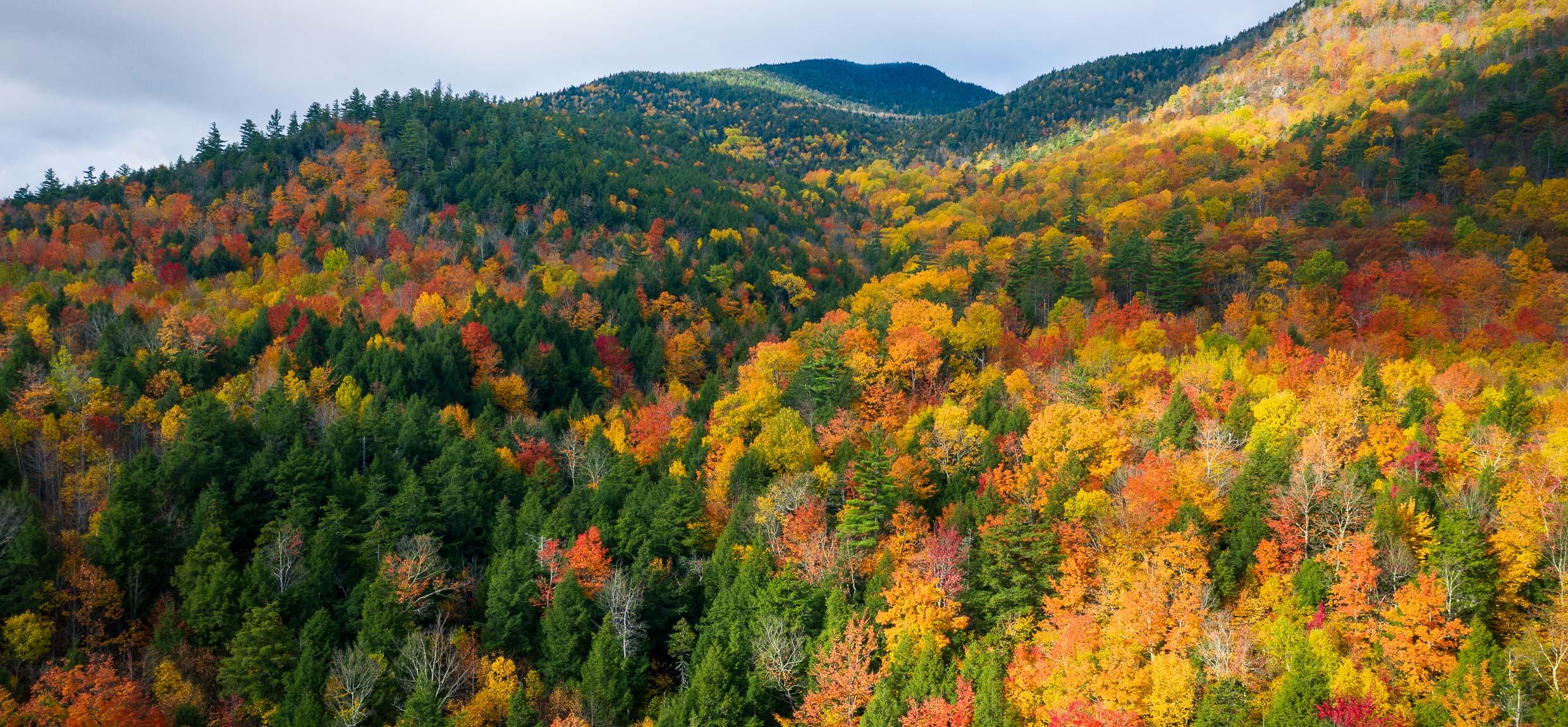
The rest of the 400 acres are mixed hardwood forest, with lots of sugar maple and black cherry and some white ash. The parcel has 350 feet of elevational difference, offering a variety of terrain and habitat. In low areas, hemlock and red maple are dominant, and the clay soil holds a lot of water. Poestenkill Creek runs through the property, and there are about 12 acres of wetlands along it. The highest point is a little more than 1,750 feet in elevation and offers views of the Taconic Mountains and Mount Greylock, Massachusetts’ highest peak.
The first few years after purchasing the land, the Kersches didn’t pursue any active management of the property, content to simply enjoy the knowledge that their rural life could continue here. In the mid-1970s, they enlisted a forester from the state Department of Environmental Conservation (DEC) to lay out a timber stand improvement plan, which called for thinning trees in poor health and eliminating crowding around the best, healthiest trees. “At the time, I was thinking about future timber harvests, which we never ended up doing – in the end, I just managed for firewood,” Walter said. He noticed how the biodiversity – especially birds – increased after thinning, and that the trees that were left seemed much more robust.
“That was the beginning of when I started thinking about forest management,” Walter said. “I started going to New York Forest Owners Association (NYFOA) meetings, going on woods walks, and reading everything I could find.” When they first purchased the land, the Kersches heated with wood, burning 20 cords a year in the outdoor boiler. As Walter harvested firewood, he thinned out undesirable species, such as beech, and removed unhealthy trees in the process. “Just doing that helped to open up good trees and improve the woods,” he said. It inspired him to start a long-term test plot, where he continues to open up the same quarter-acre area as needed by thinning trees to use for firewood and leaves a plot of equal size with similar species composition untouched.
In 1978, they purchased a contiguous tract of 20 acres, and later, an additional 60 acres, boosting the parcel to 480 acres. “We started thinking about what we were going to do with it,” Kersch said. “We wanted to share our land – but how?”
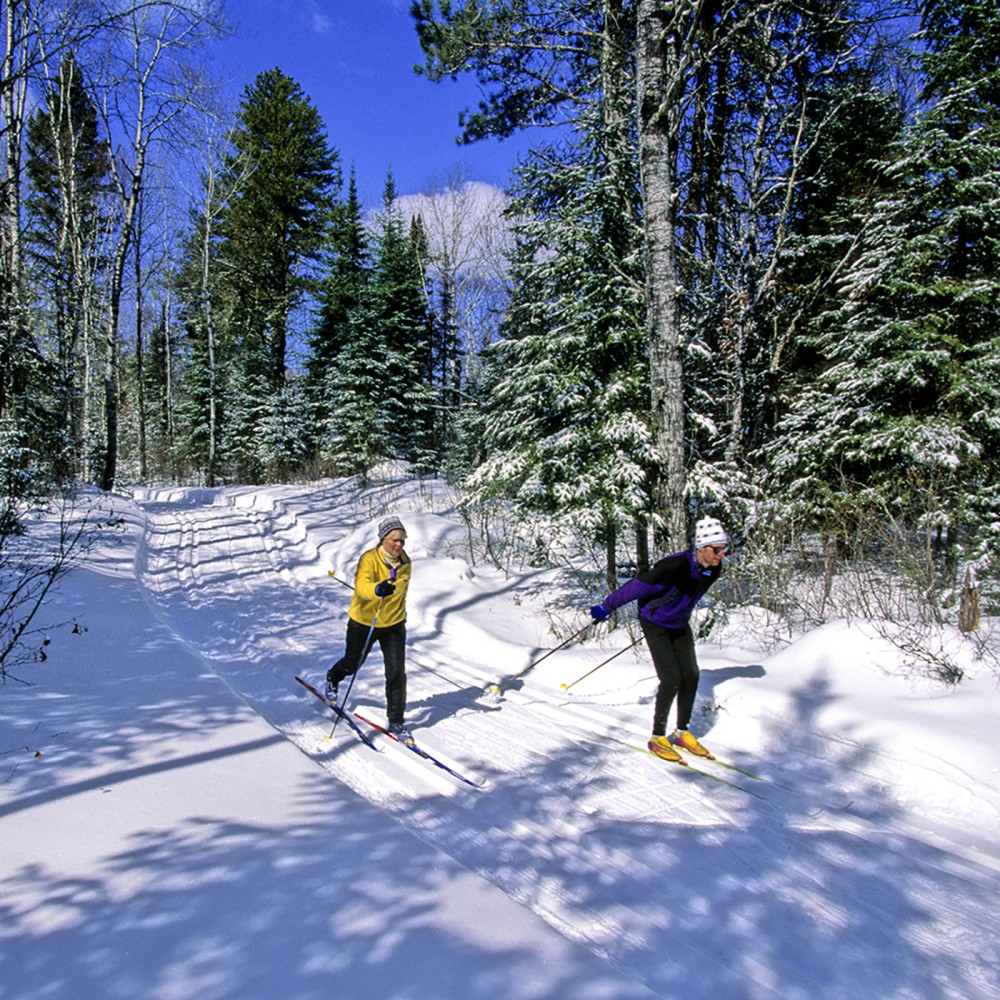
In 1980, the family visited a small cross-country skiing area west of Albany. They rented skis and had such a fantastic day out in the winter woods that on the drive home, they decided they wanted to do something similar with their property. Walter, who had been a downhill ski instructor while working in schools, started planning immediately, and four years later, they opened Pineridge Cross-Country Ski Area, which they continue to operate today.
The 480 acres they started Pineridge with had been almost entirely cleared in the late 1800s for charcoal production, to fuel Burden Iron Works in nearby Troy. A series of small farms existed during that time, and by the time the Kersches bought it, the old pastures had become a second-growth, even-aged forest.
Walter has found signs of the past: old charcoal burn pits, stone walls, foundations from past structures. Some of the white pines that grew out in pastures now have trunks that measure three or four feet across. He thinks a few escaped the intensive harvesting and are several hundred years old. Old skid trails and a stagecoach road – about 500 feet into the woods and running parallel to the paved road – serve as the foundation of the current ski trails.
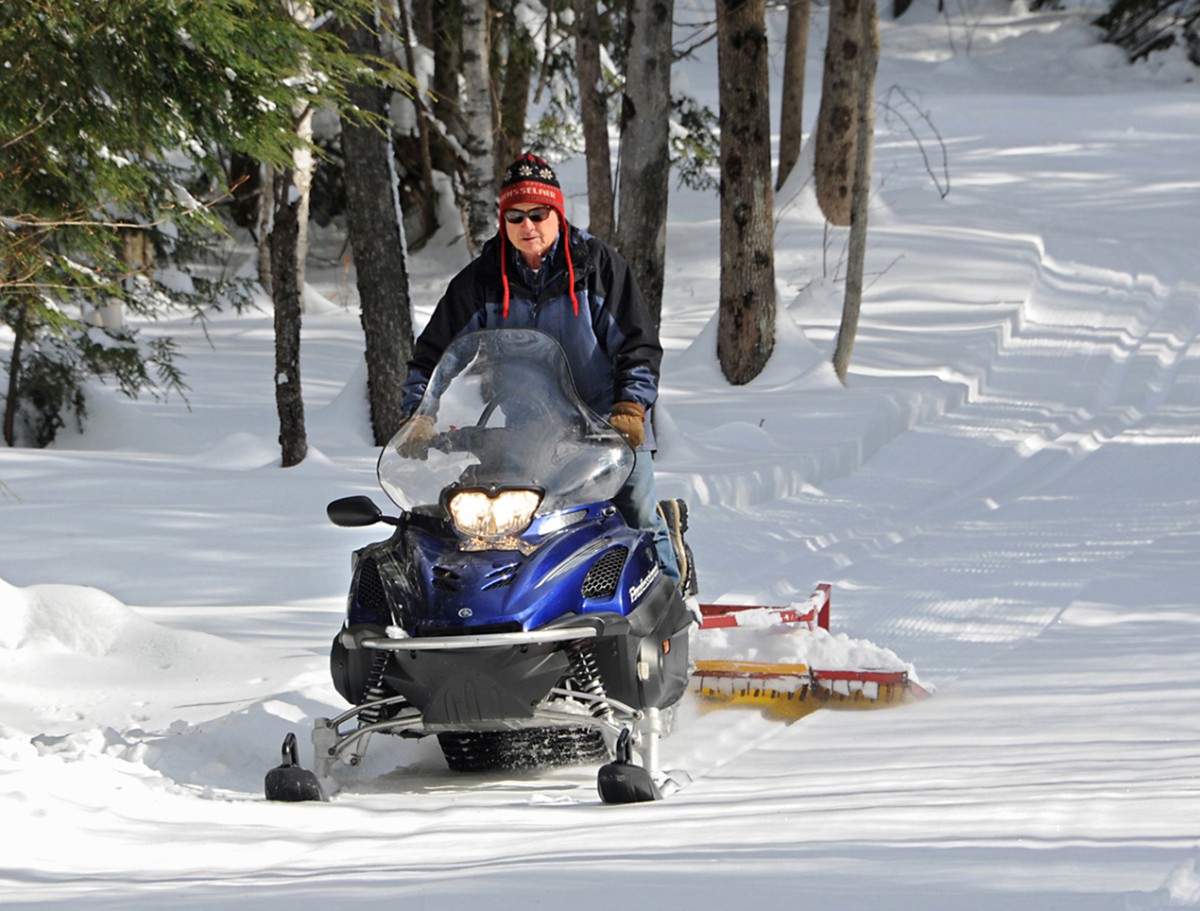
“I had some old roads to work with, and then it was a case of figuring out loops and looking at the woods and thinking, What do I want people to see and what kind of experience do I want them to have?” Walter said. He has designed intentionally with thought not only to make the routes exciting but also to highlight beautiful parts of the forest.
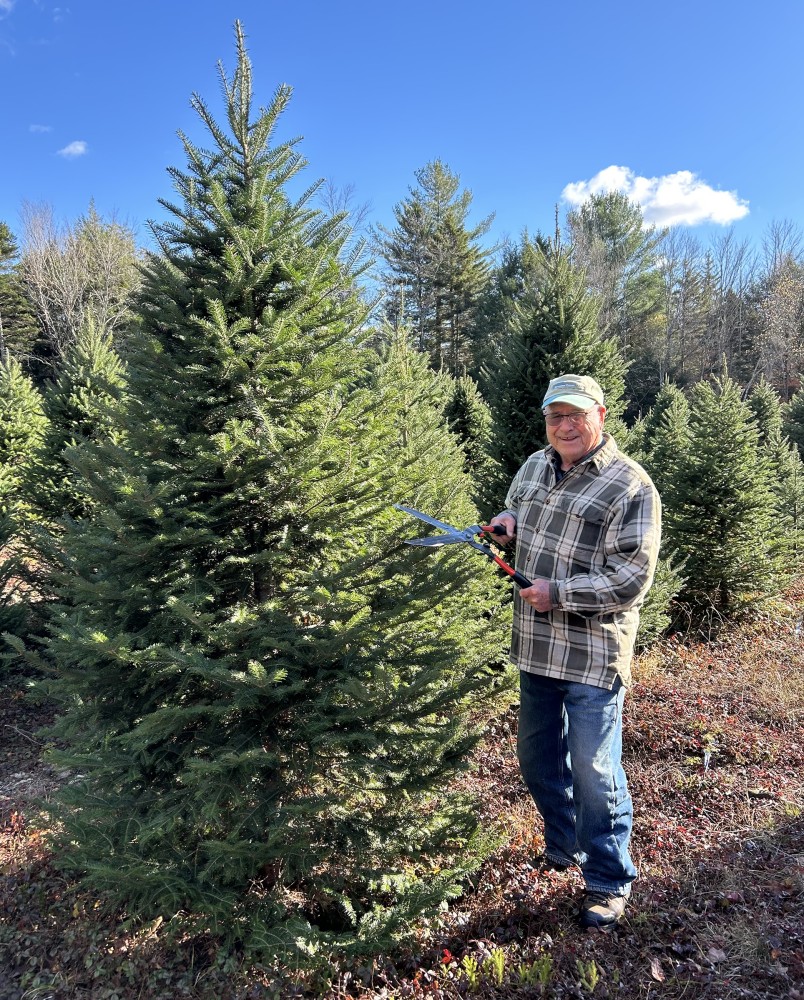
Beginning in the mid-1990s, the Kersches expanded the ski area to a former gravel pit across the road, initially purchasing a 120-acre lot, then adding three more parcels. They now own a total of 770 acres, and almost all of it has trails. There are 35 kilometers of ski trails, including 25 kilometers of groomed trails and 10 kilometers of ungroomed backcountry trails. There are also 15 kilometers open for snowshoeing and 1 kilometer where pets are welcome. They employ about a dozen people during the ski season and have a dedicated team of volunteers who help care for the property in the off-season – mostly by clearing the trails of fallen trees and branches. Beyond skiing, the Kersches also have 7 acres of balsam and Frasier firs they tend and market as cut-your-own Christmas trees, which Walter prunes and manages.
Pineridge has a lodge with a woodstove that’s open to visitors, and the ski area offers rentals and lessons. The Kersches also host larger events here for local and regional organizations such as the Capital District Orienteering Group, Albany Running Club, and Dion Snowshoes, which has organized snowshoe runs on the property. Walter and Theresa pride themselves on providing a community space for all kinds of gatherings: from meetings and children’s birthday parties to weddings and informal get-togethers.
Recognizing Pineridge’s role as a community hub, Walter began to see it as an ideal location for forest education as well. After teaching on the slopes and in classrooms, Walter decided to expand into the woods; in 2007, he trained to be a Master Forest Owner (MFO) at Cornell University Arnot Teaching and Research Forest. He has served on the Cornell Cooperative Extension board and is a founding member of Rensselaer Plateau Alliance (now Hudson Taconic Lands), which conserves land throughout the county. “I’ve always had this idea to go out and help other people understand about how to best manage their forest – and, well, that helped me learn a lot, too,” he said.
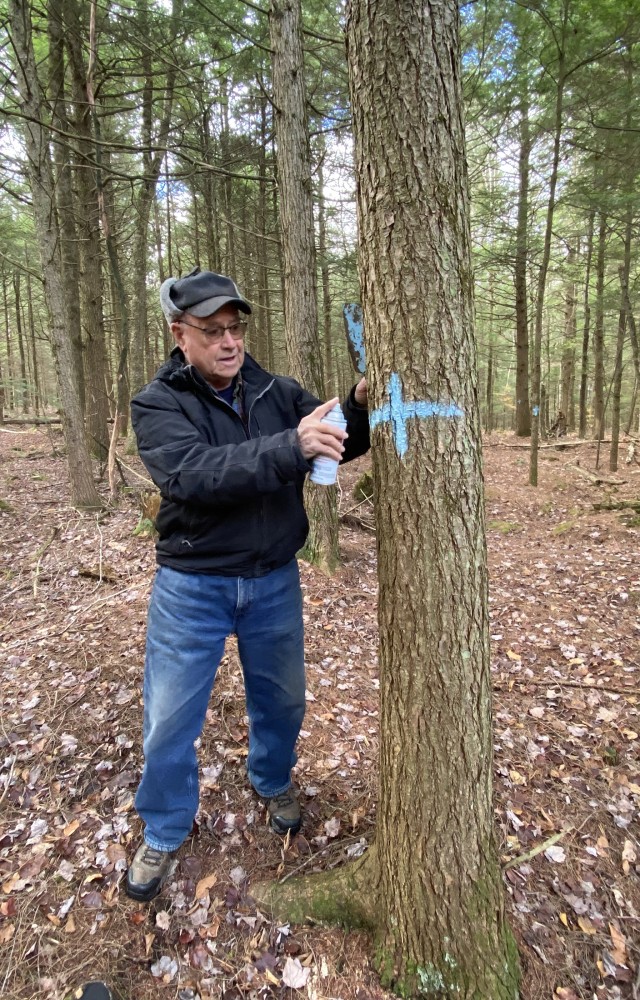
Walter has offered programs to local schools, a yearly guided walk for Hudson River Ramble, and regular programming for Hudson Taconic Lands, MFO students, and the Capital District chapter of NYFOA. He has taught about topics such as tree identification, forest regeneration, Christmas tree plantation management, beech management, and the land use history of the property. He especially likes leading charcoal drawing walks – participants gather charcoal from the old burn pits and then draw the landscape at different points on the property – and silent walks, where he guides people to quietly enjoy the woods together.
He also loves showing the long-term cut and not-cut plots to people on woods walks – usually new forest owners and MFO candidates – to demonstrate the impact of creating space for trees. “The visuals are important for people to see – the trees are much bigger in the thinned plot,” Walter said. He thinks that of all the programs he does, this one is most powerful, especially for new forest owners, who may be hesitant to cut or not fully understand – or believe – the benefits of doing so until they see it with their own eyes.
When Poestenkill Creek flooded during Tropical Storm Irene, taking out bridges and culverts and damaging the ski trails, the city of Troy and the towns of Poestenkill, Grafton, and Brunswick began thinking about the importance of flood mitigation. The community came together to apply for a grant from DEC’s Hudson River Estuary Program, with Rensselaer Plateau Alliance taking the lead. The funding allowed them to study the entire creek – starting in Dyken Pond and ending in the Hudson River – and to develop a flood resiliency plan. As a member of Rensselaer Plateau Alliance, Walter began attending meetings and getting involved in the project. Because the creek runs for about a mile through the Kersches’ property, they decided it was important to be involved.
“They told me [flood mitigation is] about having wetlands that can absorb and discharge the water,” Walter said. The Kersches offered one of their small wetlands – about 7 acres – along the creek as a study site. Hudson River Estuary Program has been recording flow rate measurements there for about four years now. “It’s another educational thing to show people – and just think about what this project can do for savings downstream, and all the communities affected,” Walter said. A different grant provided trees to stabilize the stream and to slow water flow, so Walter enlisted local schools to come out and help plant willows and alders.
As far as the future of the forest, Walter is concerned by the lack of sugar maple regeneration, and the intensity of deer browse limiting seedling growth for numerous different hardwoods. “There’s so few saplings that the deer have even turned to eating beech,” Walter said. He allows hunting on the property, but deer pressure is still high. He’s finding that it’s almost entirely beech and spruce that are able to come back, which has been slowly changing the character of his woods. Another forest stand has been gradually overtaken by beech, and this past year he estimates that he’s had about 10 acres of 100 percent tree mortality from beech leaf disease. He’s worried about emerald ash borer, too, but several of his trees are still looking healthy, so he’s inclined to let them keep growing and see if they’re resilient.
Despite the challenges, Walter finds hope in visiting other properties and learning from other forestland owners, and he continues to teach on his property. While there are places to do stand improvement, at this point, Walter is content to let the forest change on its own terms. He prefers to do targeted, small-scale interventions, such as drilling holes to inject herbicides into individual beech trees or girdling a single white pine to let it die in place, rather than cutting or removing trees.
“I’m leaning more toward letting the forest take care of itself now,” he said. These days, Walter uses an ATV to get around on his property and to keep an eye on the woods and the ski trails. “I just love to go out on the trails. Every day is different; the forest is constantly changing,” he said. “It’s the shadows, the colors, the sunlight coming through the trees, the small streams – it’s all beautiful.”