
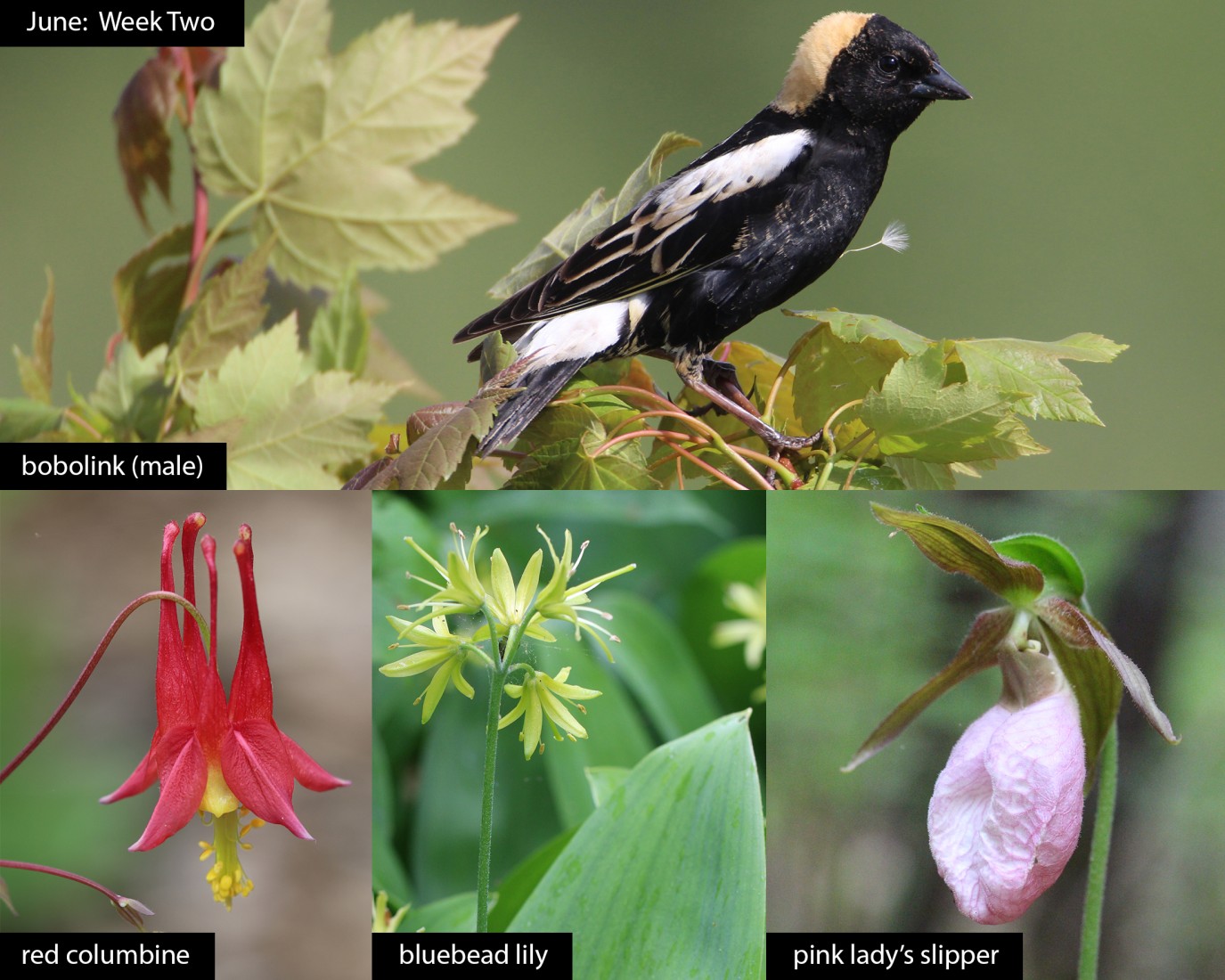
This week in the woods, this male bobolink – the harlequin of the hayfield – gave its bubbly, android-like song from atop a red maple. The young tree growing where field and forest meet seemed to signal the woods’ encroachment upon the grassland bird’s preferred habitat. Reforestation of fields in the Northeast, along with increasingly intense agricultural practices and parcelization across North America, have led to an estimated 63 percent bobolink population drop in the past 60 years; grassland bird species as a whole have become one of the most imperiled avian groups. Ground-nesters, bobolinks breed between mid-May and mid-July – a process sensitive to disturbances as minor as dog walking. Numerous conservation programs have long encouraged land managers to adapt a delayed mowing regimen in order to avoid disrupting the nesting cycle and feeding of young. However, new research complicates the matter, showing that delayed mowing can allow invasive plants to seed, spread, and outcompete grasses needed for nesting and foraging. Best practices continue to develop and are worth following; Colby Galliher covers the matter in our Summer 2026 issue.
A perennial of variable habitat, red columbine began blooming in April, peaked in mid-May, and should keep blossoming through the end of the month. Nodding on slender, rigid stalks that emerge from sets of three neatly scalloped leaflets, the spur-like, five-petaled flowers grade from scarlet into yellow at their openings and long stamens. The highly sugary nectar resides deep inside the tubular flower, and only specialized insects like long-tongued sphinx moths, beetle and bumble bee species willing to bite through the petal, and the ruby-throated hummingbird tend to access it.
Another species with blooms around now and flexible soil, moisture, and sun requirements, bluebead lily puts up long stalks terminating in clusters of drooping, yellow or greenish-yellow flowers with protruding stamens. The shiny, marble-like, navy-blue fruits that give the plant its common name will peak in late July.
Both bluebead lily and pink lady’s slipper have half-foot-long, glossy, oval basal leaves with pointy tips, but the lady’s slipper has deep ribs running parallel to the prominent central vein. The solitary flower, which appears late May through late June, has a long, veiny, pouch-like pink lip that hangs pendulously below slender, purplish-brown sepals and petals. Unlike showy or yellow lady’s slippers, which have ovular openings, this orchid species has a narrow central fissure in its lip. Only bees – attracted by bright color and sweet scent – can muscle their ways through this slit. Inside, they find no nectar and can only exit along another, predetermined path: past the stigma, where they deposit any pollen from a visit to another flower, and then the anther, where they pick up new pollen. Because bees learn that this flower contains no nectar food reward, they eventually stop visiting the species, making germination all the more infrequent. Like the two other late-spring, early-summer perennial flowers discussed above, pink lady’s slippers occur in a wide variety of forest habitats – from dry coniferous or mixed hardwood forests to the edges and hummocks of peatlands.
What have you noticed in the woods this week? Submit a recent photo for possible inclusion in our monthly online Reader Photo Gallery.