
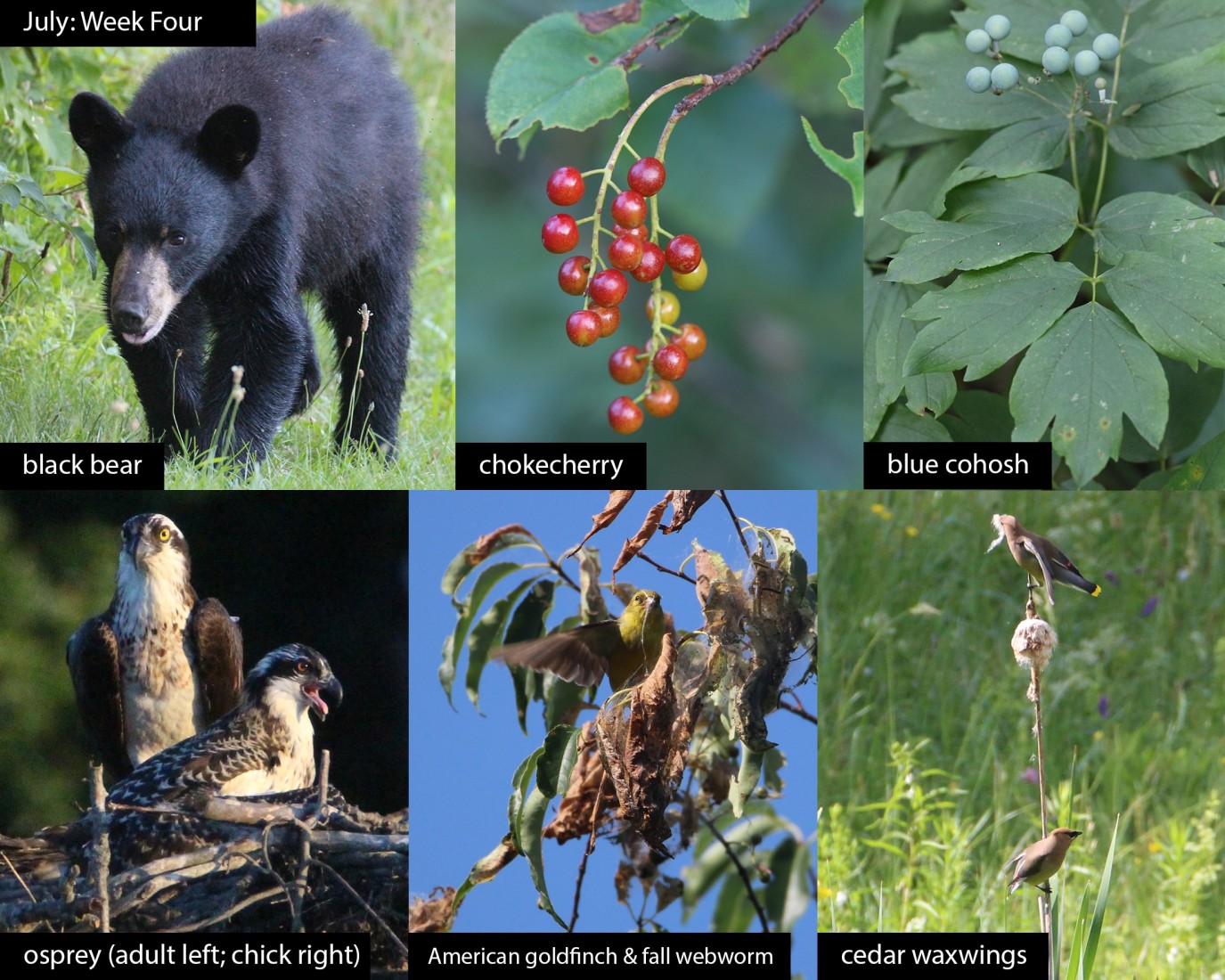
This week in the woods, a black bear sauntered through a blackberry patch. Bears’ wild summertime foods include the roots of jack-in-the-pulpit, berries and other fruit (such as chokecherries, ripening about now), and young deer and moose. By the end of this month, as they store up energy for the winter, they may eat up to 24 hours a day.
Blue cohosh fruit has begun to ripen – and does not suit as bear or deer food, given its toxicity, but does feed frugivorous birds and some small mammals.
Ospreys add material to their bulky platform nests with each annual visit. Chicks hatch with dark blue eyes, which change to reddish orange (like the bird pictured on the right), then to bright yellow in adulthood (like the parent to the left).
Fall webworms make nests around foliage at the ends of branches high in sunlit trees from late summer through autumn. Here, an American goldfinch plucks webworm silk for use in its own nest. These birds do not eat webworms or any other insects and instead eat seeds almost exclusively, nesting later in the summer so as to have better access to such food sources for their young.
Cedar waxwings, too, nest later in summer – perhaps later than any other bird in North America, sometimes initiating nests in early August. Pairs look for their first nest site together, but the female chooses and does most of the nest building. The male helps with the year’s second nest, as seen here with this couple collecting cattail fluff.
What have you noticed in the woods this week? Submit a recent photo for possible inclusion in our monthly online Reader Photo Gallery.