
This week in the woods, north-facing slopes still hold some snow cover, but rising temperatures have melted almost all snow on many south-facing slopes. If they haven’t already, the first spring ephemerals will soon show their blooms, and in the meantime, the clearing ground has begun to show what snow and ice have covered up through the winter.
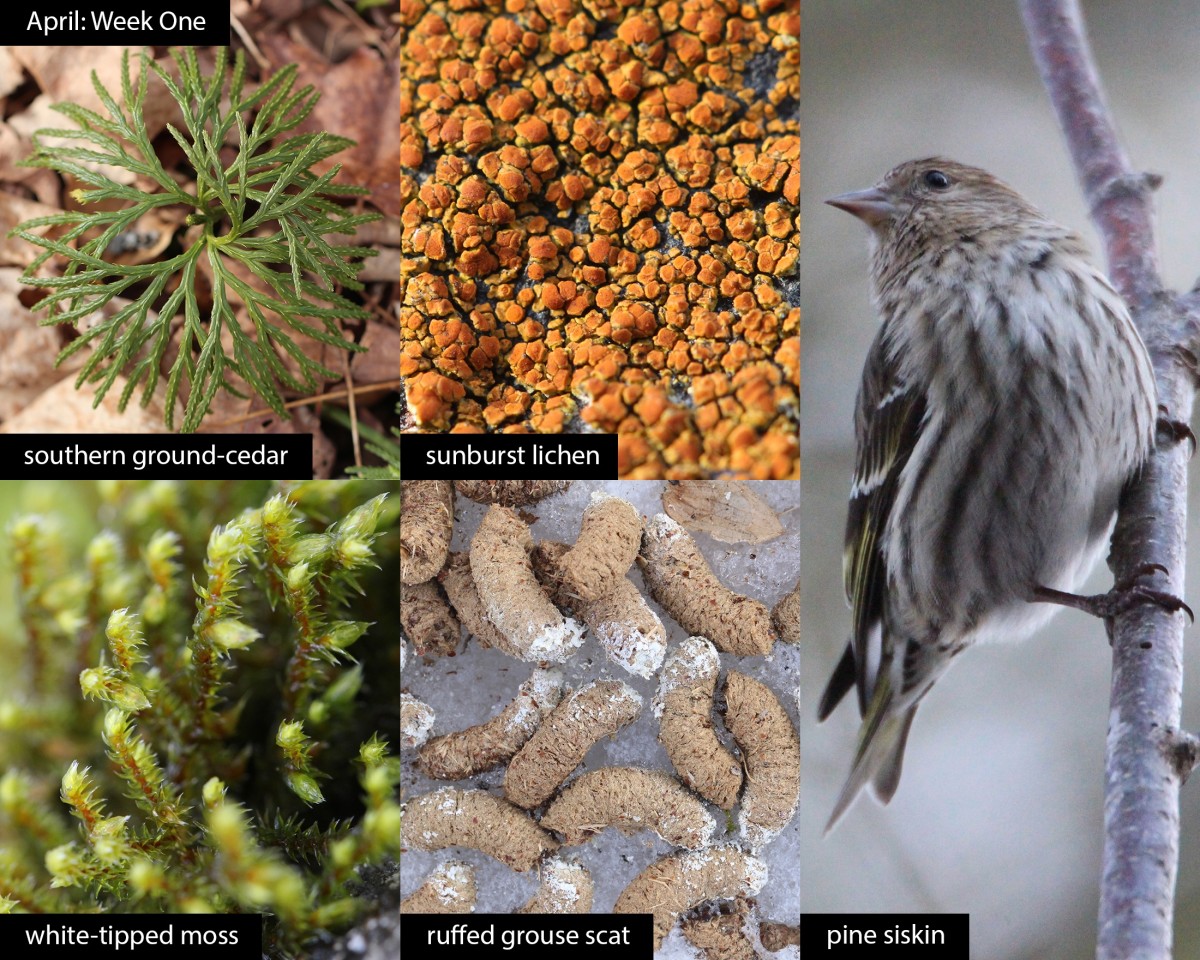
Southern ground-cedar – Diphasiastrum digitatum, a clubmoss also known as fan clubmoss, crowsfoot, and running cedar – has remained evergreen beneath the snow and can take immediate advantage of the lengthening, snow-free days, especially before the canopy closes. According to Native Plant Trust, this ground-cedar, the most common in New England, tends to occupy not only forests but also more open areas, including human-disturbed habitats. As Susan Shea explains in an Outside Story article from this past December, clubmoss species that colonize such disturbed areas can prevent erosion, preserve moisture, and contribute to nutrient recycling with their dead leaves and stems; the growth of other, “higher” plants can happen because of this maintenance and improvement of the soil.
Back in successional time, lichens and mosses have vital roles in building that soil in the first place. After volcanic activity, landslides, or (most relevant in our region’s recent geologic history) glacial retreats, lichens and mosses pioneer exposed, soil-free sites of bare rock and sand. With lichens more often establishing first, the rootless organisms break down inorganic material, die, and decay, and their structures collect wind- and waterborne dust and nutrients; in the process, they build up a layer of organic matter. Snowmelt – like a little glacial retreat in miniature – reveals them doing what they’ve done on bare rock in New England since the Laurentide Ice Sheet retreated 20,000 years ago. Pictured are sunburst lichen (one of several possible species) and likely white-tipped moss (or ciliate hoarmoss) – both of which prefer stone substrates.
When the roofs melt off, we can see ruffed grouse scat left by the bird while sheltering in its snow roost (which we wrote about last winter). Fibrous evidence of the grouse’s winter diet of hardwood tree buds, catkins, and twigs shows up in these Cheeto-like pellets. As we explain in the answer to this past month’s What in the Woods Is That? quiz, the woody diet also gives the droppings their yellowish color, and uric acid makes one end white. With snow cover diminished and less powdery, grouse relocate from older, deeper woods to thickets and stands of young, dense trees for cover.
Among other bird matters in the approach to breeding season, you may have heard more of the zippery, ascending trill of the pine siskin, many of which have remained with us through the winter and might even stay through the summer. These small, brown sparrow-like finches with notched tails irrupt under certain conditions every few years, often with the usual boreal winter cohort of pine and evening grosbeaks, red and white-winged crossbills, and redpolls.
What have you noticed in the woods this week? Submit a recent photo for possible inclusion in our monthly online Reader Photo Gallery.