
Site Discussions
Great article on Dave. Was lucky enough to meet him in his environment, taste his pizza, try my hand at working a cherry bowl on his lathe, fish alongside, and see and hear about some of his canoe adventures. He is one of the great outdoorsmen and a great example of what one man can do if he puts his mind to it along with a partner who enjoyed doing much of it with him. Keep it going STRONG Dave!!! Steve
From "Dave Brown Carves Bowls (and a Full Life) From the Forest" »
Great article, thanks for all the useful information.
To @Andrew, I’ve also seen burls that have grown around insects, and the burl itself was a crumbly mess. It was in an English walnut tree, I believe, and the nsrct was some sort of large, pale-colored grub that I never even knew we had around here.
I had also thought of using resin to hold the burl together, but it basically disintegrated in my hands.
In case you’ve never heard of the process, look up a technique known as “stabilization”, which uses a vacuum to allow thoroughly dedicated material to wick water-thin epoxy into itself. Once the epoxy cures, the material can be turned, cut, drilled, chiseled, and even polished to a mirror finish. Stabilization also renders the material basically impervious to the expansion and contraction normally caused by environmental factors, like getting it wet, or too hot.
This technique has seen much use as of late for creating knife scales (handles), fountain pen barrels, and plenty of other stuff. Somr of my favorite examples are knife scales made from corn cobs, and also pine cones.
I have a box full of flower petals from my daughter’s wedding that I plan on turning into something special some day soon, most likely using a fairly-easily home-made vacuum chamber, and a brake bleeding hand pump, or my buddy’s actual vacuum pump.
From "Go Figure: How Tree Burls Grow" »
Grew up in the Mohawk Valley. Visited the ADK MUSEUM a few years ago and learned about these men called hermits. I became fascinated with this history. Noah being my favorite. My sister-in-law grew up in Ti and now lives on LG. When visiting her I look for more info on “hermit history”. Thank You
From "Adirondack Hermits: Solitary Life in the Northwoods" »
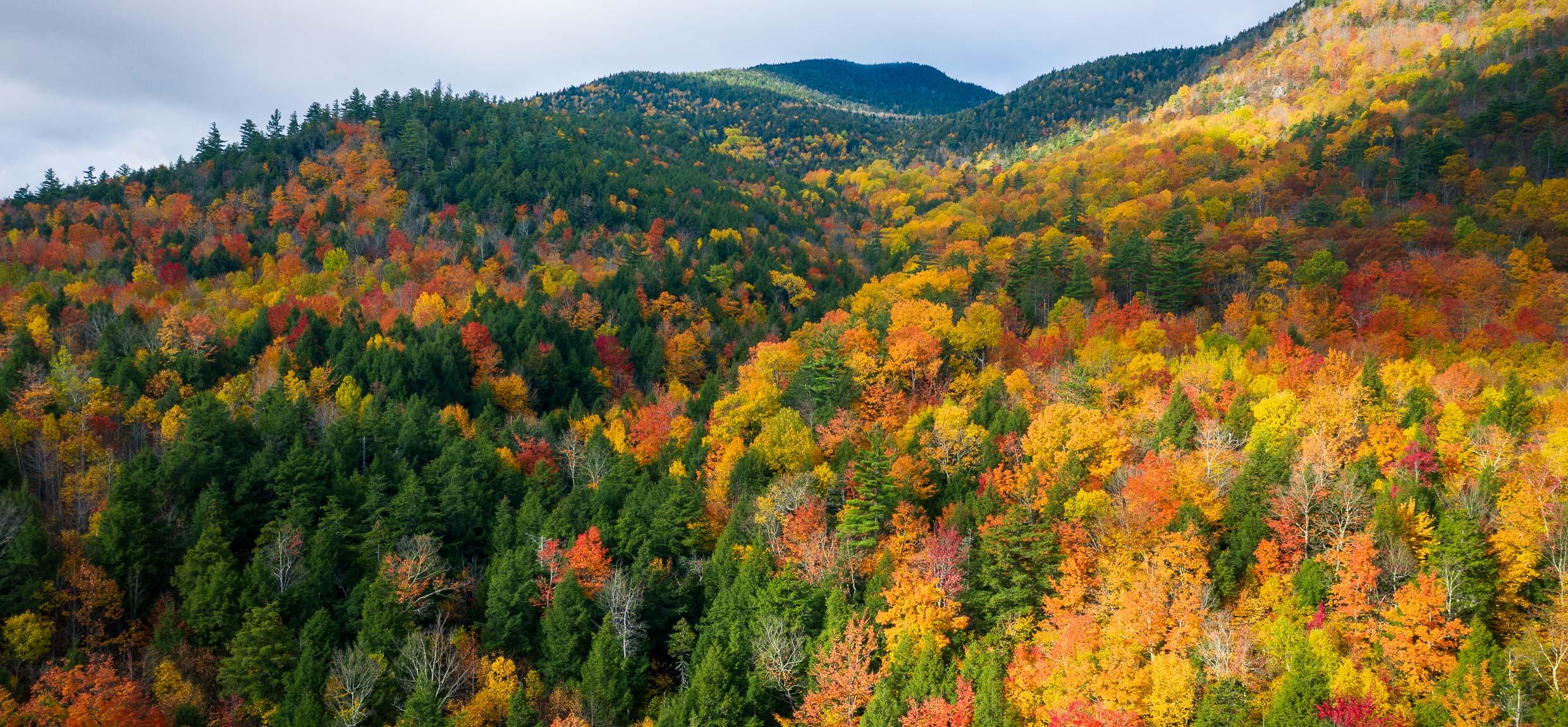
When leaves start maturing they begin making additional pigments. Some of these molecules can give leaves the yellow and red colors you see in the fall.
From "Why Do Leaves in Spring Sometimes Appear More Red Than Green?" »
Anyone know why a one year old female deer is suddenly not with her mother and brother? They come through everyday, and were all here 3 days ago, but for the last 2 days the female 1 yr old deer is gone (and she’s always with them).
Did she run off with a male deer, or on her own…or did she die? How could that happen suddenly (broken leg, coyote,etc?) It’s the not knowing that is hard. She was our favorite, with loads of personality, unlike an average deer!
From "Fawns Hide In Plain Sight" »
My 8 year-old daughter just discovered these all over one of our trees. We searched the internet and found this site with a great explanation! Thanks for the interesting facts. As we are currently at home due to the COVID-19 pandemic, this was a great science lesson! Thank you!
From "The Fireflies of February" »
I have a small causeway connected island off Nova Scotia and have spent much time observing and learning from the fox family who resides there. There are usually two kits (a male and a female) and it is always traumatic for me when the little boy leaves in late fall. Fortunately the female stays another year.
From "From Yips to Shrieks, Fox Talk Runs the Gamut" »
What a wonderful story. I have been lucky enough to have spied a pair of pileated woodpeckers in my neighborhood. I love watching their flight pattern and of course their tropical like calls. Love these birds.
From "Pileated Woodpeckers: Winter Excavators" »
Your articles are wonderful. We live on the edge of approximately 500 acres of conservation land. Lots to listen to at night. It’s an amazing conversation - sometimes between the owls -sometimes its the coyotes.
Thank you for all your articles
From "From Yips to Shrieks, Fox Talk Runs the Gamut" »
Just saw this post Geoff, after reading the wonderful piece by Susie Spikol. How neat to see this interview. I hope you are well!
From "Geoff Dennis Follows the Birds" »
I’m so lucky. Sitting by my wood stove while it’s snowing here in West Peterborough and reading this lovely piece while the world has recently become so scary.
From "From Yips to Shrieks, Fox Talk Runs the Gamut" »
Very much enjoyed your essay on the thistle. I have fought them in my yard for years, but also appreciate them for the gold and red finches they bring to my bird feeders. I also think those bristly cones provide beauty in themselves. Thus given an assignment in a recent photography class, I used the thistle as my object of interest and would send you a copy of the picture, but am not sure how to attach it to this note.
From "Thank a Thistle" »
Yes, I know I’m commenting years after this was published. I discovered we had this invasive monster during a fight with greenbriar and Virginia creeper that was all over the trees and fences, having crossed over from an area full of pines and dead-fall that sits beyond our back fence. It’s a sort of alley break between us and the suburgatory neighborhood behind us. Our wood fence had blown over in a storm and been replaced.
I went out to start removing greenbriar I had spotted in a corner of our yard before it had too much chance to recover from winter and discovered that what I had thought was some sort of evergreen shrub was actually this crazy vine growing every which way and thick as tree trunks in places. Not only was it already attacking the new fence mere months after installation, it had also grown through and engulfed parts of the rear chain link fence to the point I was leery of cutting it free for fear that there would be holes where it passed through.
So I started hacking away at it. As I started removing the ones, sprouting from the ground, I realized that the roots of the things were extending 10-20 feet into the lawn area. The more I pull and cut, the more bare ground I clear. It seems to have made the soil where it is this bizarre grey stuff with what looks like sand crystals in it. This thing appears to be one massive plant that started in the dead-fall and grew both up and downward, giving itself several tree-sized bases to grow from. One of its bases is in our yard. I’ve cut it back severely enough and taken enough roots from around it that it should soon be unable to provide the larger plant with anything and die off eventually.
Where I haven’t been able to rip out the deeper/thicker roots altogether, I’ve chopped them up as much as, possible cutting them off from nutrients. This appears to make them shrink and die. At that point they can be pulled more easily. I believe one of those aerator tools with the multiple spur wheels on it would be very beneficial in chopping it apart in situ.
I really hate to totally kill the thing because I know the birds, rabbits and squirrels eat it, but it’s so difficult to control/remove, I don’t think I’ll have a choice. I guess I’ll need to find some spindly native plants of some sort to give the birds back their roosting spots and other things to put into the planned wildflower zone where I’ve cleared it out that are edible for them.
I agree that a lot of people have no idea things in their yards are invasive. The previous home owners made no efforts to remove the three vines destroying the fences. It’s taken me about 3 years to finally start making headway in keeping them out of the yard.
From "Bittersweet Battles" »
Though skunks don’t hibernate, they can burrow in their dens during especially cold spells. This means you would see them most before and after long periods of snow cover.
From "The Winter Life of the Skunk" »
Loved reading about the fire towers. I grew up in Maine in the fifties when my dad, Fred Holt, was the supervisor of forest fire wardens in the organized towns. He became Deputy Forestry Commissioner and then Commissioner before retiring in the 1970’s. He took me with him on many visits to the wardens and I climbed many towers. What a thrill.
From "On the Lookout: A History of Fire Towers in the Northeast" »
Skunks are nocturnal, usually active from early evening through the night. They usually spend their days sleeping in dens, although during the warm months they may bed in vegetation. Dens are usually below ground but may be found in a stream or pond banks, lumber piles, or beneath porches or in crawl spaces.
From "The Winter Life of the Skunk" »
Having taught 9th grade Environmental Science and having spent a sabbatical tracking coyotes under Numi Mitchell in and near Newport, R.I., I agree that high school students are much more open to multiple perspectives and are excellent interviewers of people with stories of coyote interactions. Numi’s GPS collars allowed us to get hourly data points and figure out who was feeding coyotes and hence habituating them. Immigrants kids from New Orleans after Hurricane Katrina could figure out why this was bad way faster than resident adults. I think your work in Vermont will open a lot of people’s’ eyes to best management practices and science study protocol. Howl on! Otter
From "Coyote Stories with Joshua Morse" »
Spoke to my grandmother who lives in Esenada Baja California and she informed me that in Valley where she lives that is thousands of woolly bear’s everywhere.
From "The Pearl Fishers of the Winooski River" »