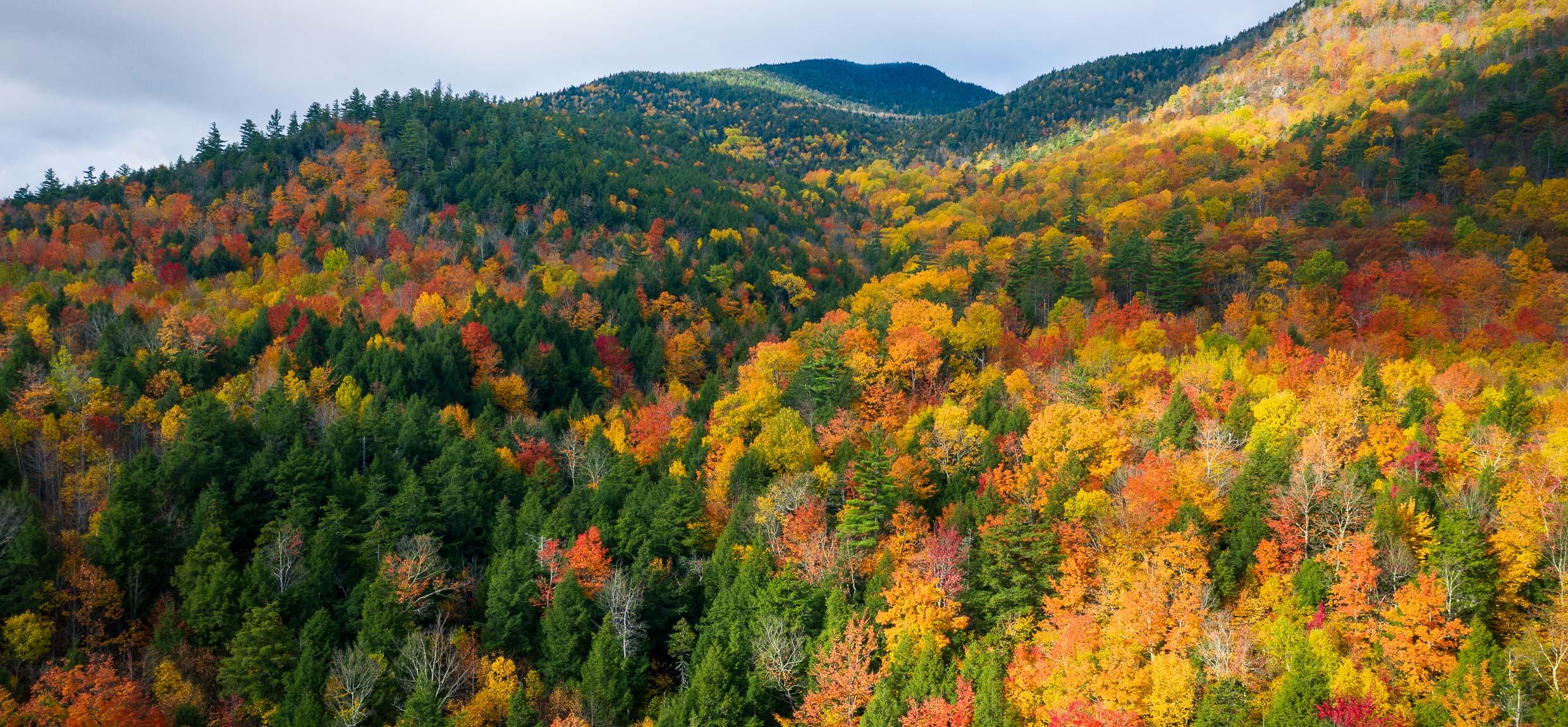

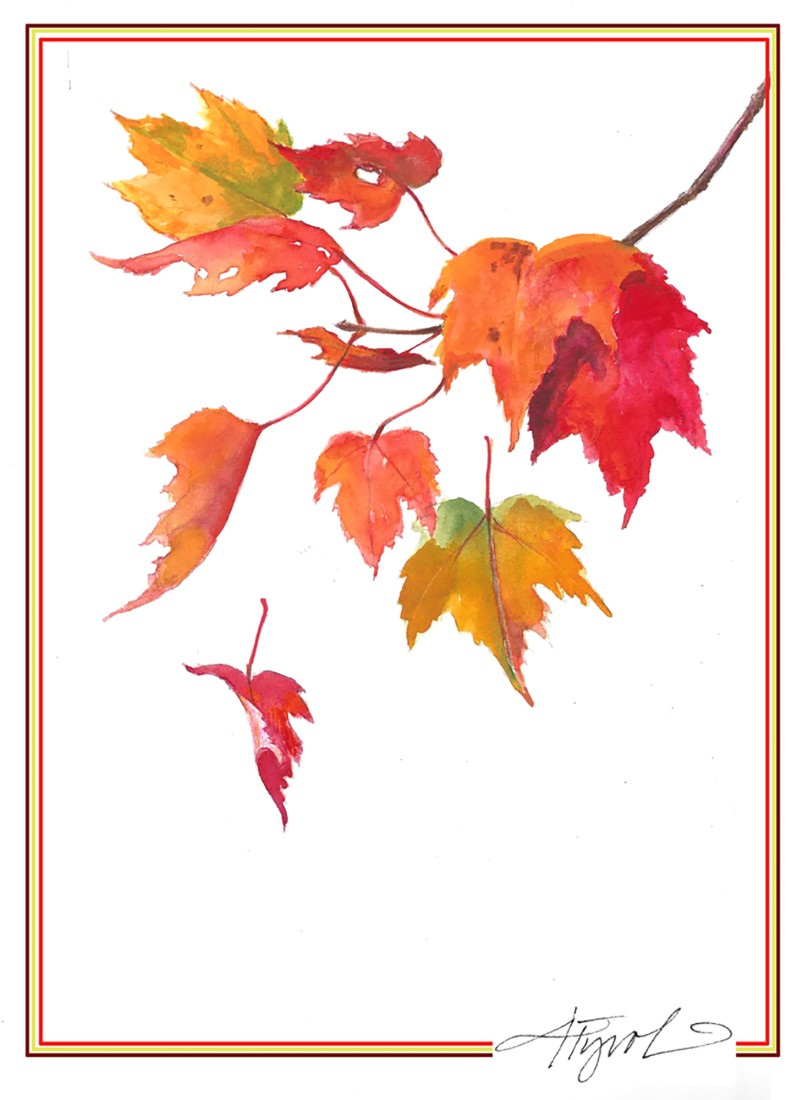
In autumn, the quilt of color covering the northern woodlands attracts people from around the world. As a retired naturalist, I have found that observing falling leaves brings more depth to enjoying autumn, because I have the opportunity to see the familiar colors with the new lens of watching the motion of falling leaves. This kind of close observation can add another dimension of pleasure to this special phenomenon.
Over the years, I have enjoyed watching red maple, black oak, and black cherry leaves falling in my backyard. While many leaves fall in an unremarkable manner, others fall in an acrobatic or gymnastics-like way. As a leaf falls, it may jitter, or somersault, or rotate while tracing a graceful, dance-like performance to the ground before coming to rest. Not all leaves have such routines, but by paying attention, I have learned to see patterns in the movements.
Deciduous leaves that are simple and relatively symmetrical, such as black cherry leaves, fall to the ground quickly under non-windy conditions. Because of this, leaves should land under, or near, the tree so nutrients can be reabsorbed. Such reabsorption is ideal, as trees lose 40 percent of their assimilated carbon during leaf fall. But lobed leaves, such as white oak and red maple, glide for longer than unlobed leaves typically.
Physicists at the Weizmann Institute of Science researched the paths of falling leaves in the 1990s and determined that there are two typical types of motion: fluttering, where leaves shift from side to side as they fall, and tumbling, where leaves turn over as they fall. Longer leaves are more likely to flutter, while shorter ones tumble, though other characteristics can impact how a leaf falls.
One of the factors that can impact the aerodynamics of a leaf is the length of the petiole, or leaf stem. Longer petioles result in a longer falling time, as the petiole acts similarly to a rotor blade on a helicopter, catching the air as the leaf falls. Aspens have long petioles, and therefore their leaves drift more slowly to the ground than the leaves of other tree species with shorter petioles.
In real life, though, many environmental factors affect the path of a falling leaf. Insects can severely damage leaves by chewing holes and creating more irregular edges, which increases the likelihood of a leaf falling further from the parent tree. The drying of a leaf can make it more buoyant, because as it loses moisture it becomes lighter and catches the air more easily.
And of course there is the wind itself! Even under calm conditions, a falling leaf encounters resistance against the air. Changes in air resistance can alter the trajectory of the leaf many times during its descent. The best time to watch falling leaves is on a still day, though it can be enjoyable to watch the wind scattering leaves as well.
I have watched red maple leaves, with their long petioles, pirouette as they fall, the petiole pointing down while the leaf rotates in tight circles like a ballerina in a tutu. In contrast, a black cherry leaf seems to descend with the “fluttering” motion, moving back and forth similar to the jitter action of a jitterbug fishing lure pulled through the water.
In addition to fluttering and tumbling, I’ve added my own descriptors to falling leaves. I see some fall in a whirlpool-like motion, where the petiole points down and the leaf turns in broad circles as it falls. Others corkscrew through the air, twirling more tightly. Some float like a feather, some glide like going down a slide, and some just fall.
Spending time watching a single leaf fall among the foliage can give you a deeper appreciation for autumn. After you’ve taken in the gorgeous colors over the next few weeks, take some time to focus on an individual leaf falling and notice the path it takes. Does it flutter or tumble? Does the wind change its course? Has it dried out or does it have any visible damage? This close observation can give a greater understanding of how leaf qualities and environmental conditions impact falling patterns and a sense of pleasure in tracing the path of a single leaf falling.