
In the dim light of a floodplain forest along a river, thick ropes of grapevine with shaggy bark hang from tree branches and the hairy stems of poison ivy wrap around tree trunks. These woody vines are impressive climbers, an ability that enables them to reach sunlight with a minimum investment of energy. Vines are plants with a growth habit of trailing or climbing stems. By using a tree as a support, they don’t need to expend energy to develop supportive tissue.
Vines use a variety of methods to climb, depending on species. Some, such as hops or morning glories, twine, winding their shoots around a support in a helical fashion. Some twiners always grow clockwise, others counterclockwise. Other species, such as grapes, have tendrils, side shoots that curl tightly around a branch, trellis, or other prop, without a set growth pattern like twiners. The tendrils of Virginia creeper even have adhesive pads. Other vines use thorns or hooks to anchor themselves to a support. Poison ivy vines cling to tree trunks with adventitious roots (roots that arise from a stem). Other root climbers secrete adhesive substances and take advantage of fissures in tree bark or crevices in cliffs to ascend.
Charles Darwin was fascinated by climbing plants and discovered circumnutation, a plant’s ability to bend and rotate its stem as it explores its environment. Though all plants circumnutate, climbing vines do so dramatically. The upper shoot extends out parallel to the ground, then sweeps around in increasingly large circles, searching until it comes into contact with a support and starts to climb.
Vines are most abundant in tropical forests, where scaling trees helps them rise above the deep shade and access sunlight. It also reduces browsing of their leaves by ground herbivores. Northeastern forests and other habitats have fewer vines, but where they do grow, vines increase ecosystem complexity, creating a multilayered canopy. Vines can bridge gaps between trees and serve as pathways for small mammals, frogs, and insects. Tangles of vines make good nesting habitat for birds.
There are a number of native woody vines in the Northeast, including several species of grapes, honeysuckles, and greenbriers. Vermont and New Hampshire have two common grape species: river grape, with sweet-scented flowers, which grows along streambanks and in floodplains, and summer grape, with little to no aroma, which prefers dry, gravelly soil at the bases of cliffs. The region also is home to two species of Virginia creeper, a prolific climber that grows on walls, fences, old buildings, and dead trees. While both species are identifiable by their five-fingered leaves, one species climbs via branching tendrils and the other by discs on its tendrils and aerial rootlets. Poison ivy’s growth habit is variable. It can grow as a low shrub or a low vine, trailing over stumps and stone walls. If growing near the base of a tree, it may mount it, gripping the bark with hair-like rootlets.
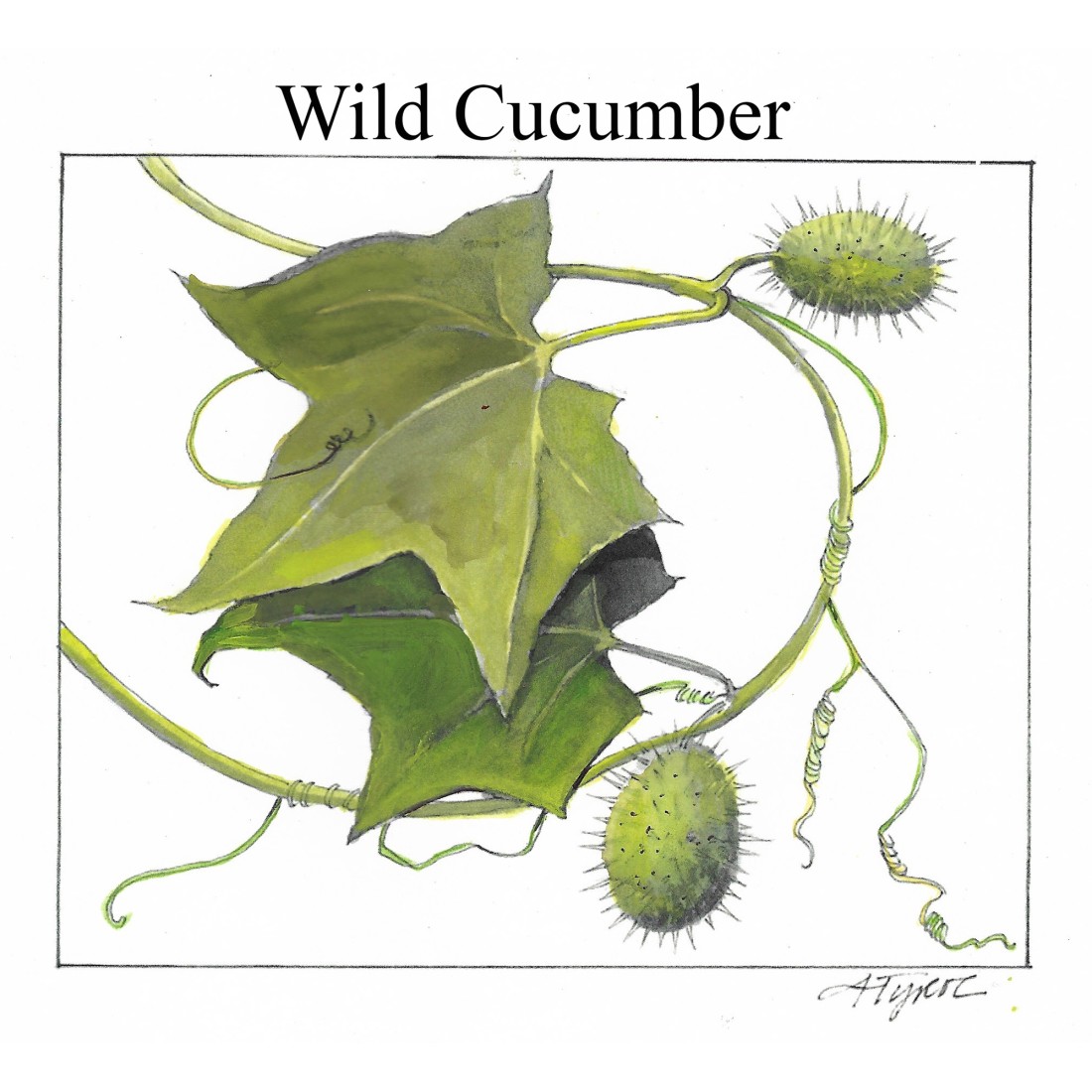
Although native woody vines can damage trees and shrubs by blocking sunlight and adding significant weight, a number of them – including grape, Virginia creeper, and even poison ivy – bear fruit that provides excellent bird food. Non-woody, or herbaceous vines, such as wild cucumber and virgin’s bower, are also native to our region. Invasive, non-native vines such as Asiatic bittersweet and swallowwort are also common, and their rapid climbing or trailing habit can make them quite aggressive.
Whether native or invasive, woody or herbaceous, there’s a good chance that vines are growing in your backyard. A leafy tapestry of Virginia creeper decorates one side of our old chicken shed. Another creeper persists in wrapping its tendrils around the branches of our large lilac bush, although it’s been removed several times. Grape vines are suspended from trees behind our deck; their fruit attracts foraging birds. Wild cucumber appears in a different place in our yard each year, developing spiny, green pods. In winter, I collect the dried, lacy pods to decorate our Christmas tree. The next time you encounter one of these amazing plants, examine it closely to see if you can figure out which method it uses to climb.