
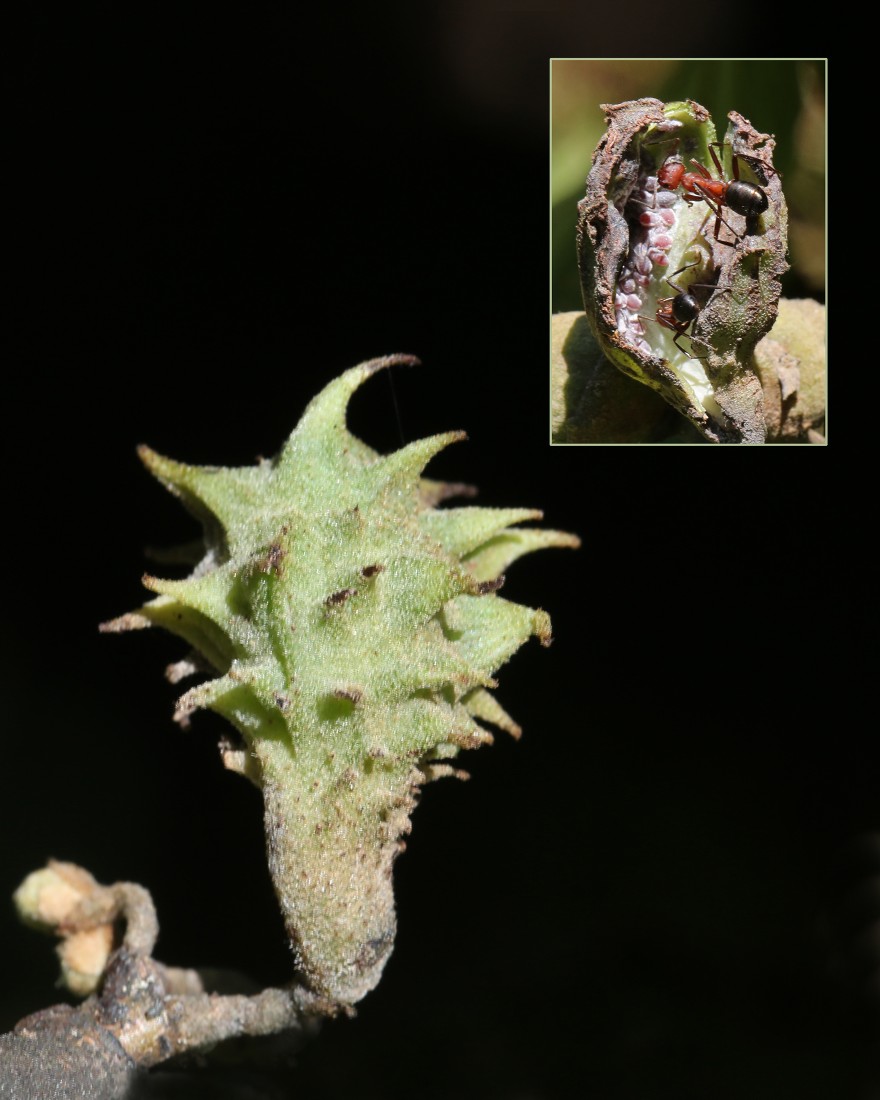
In addition to its bright blossoms that appear in autumn, witch-hazel (Hamamelis virginiana) also hosts two very interesting galls, or abnormal plant growths caused by insects, fungi, bacteria, or viruses: the witch-hazel cone gall and the spiny witch-hazel gall (shown here). The spiny witch-hazel gall is home to aphids (Hamamelistes spinosus), which trigger gall growth as they feed on witch-hazel’s flower buds. The galls provide aphids with food and shelter until they move onto birches as the next host in their two-year life cycle. When the gall matures and splits open, as seen in the inset photo, ants can access the aphids. Ants use their antennae to stroke the resident aphids, stimulating the production of droplets of tasty “honeydew” from the tips of their abdomens. Honeydew is a waste product for aphids, the result of eating plant sugars, and ants find it irresistible. In return, ants protect aphids from predators.