
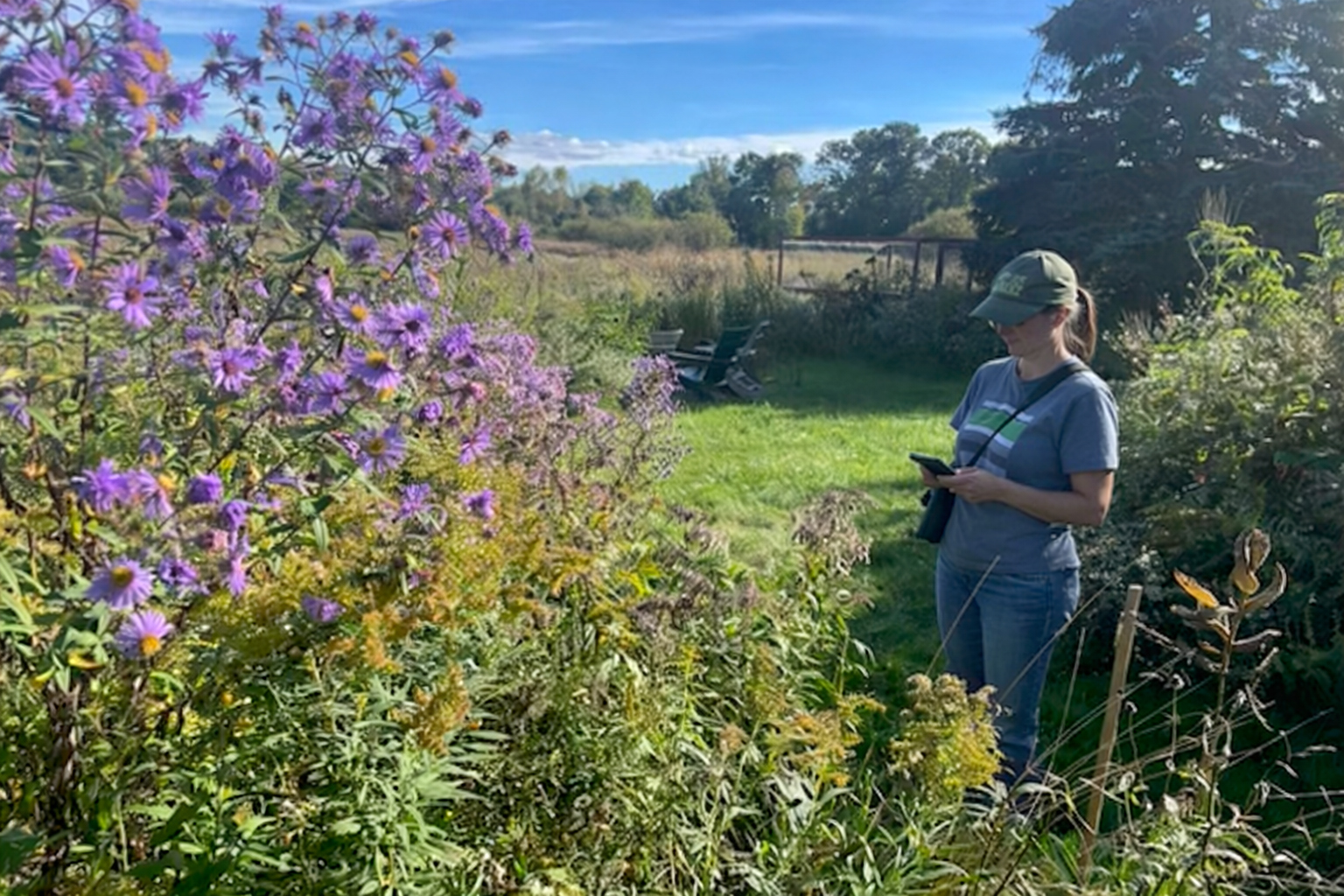
In 2016, after retiring from her work as a veterinarian, Sabina Ernst and her family moved north to Jericho, Vermont. She and her husband, Justin Goggin, purchased a home and 10 acres within sight of Mount Mansfield. Ernst first became interested in native plants 20 years ago, and while living in New Jersey, she completed a Master Gardener training and was a member of the state’s Native Plant Society. She was excited by the prospect of having an expansive native plant garden at the new property.
“When I thought about ‘land,’ I thought about backyard habitat,” said Ernst, who was born in New York City and lived in the New York metropolitan area for most of her life. “The scale of that really changed with moving to Vermont.”
The land in Jericho was once pasture for a farm down the road. Ernst keeps most of it as meadow, filled with Joe Pye weed, milkweed, goldenrod, and boneset. A nearby hedgerow of mature red spruce provides shelter and food for wildlife; kestrels perch at the tops when they hunt over the meadow in the warmer months, pine grosbeaks and common redpolls flock to eat spruce seeds some winters, and cedar waxwings roost in the branches in all seasons.
The house was built in the 1980s, and around it, Ernst started her native plant garden, with geraniums, honeysuckles, violets, roses, and many other wildflower, sedge, and grass species. The open meadow adjacent to this garden has created incredible habitat for birds and pollinators, Ernst said, which is exactly her intention. Her interest in ecology began with a field ornithology class in college, where she got into birding. When she learned how important native plants were to birds’ diets, her horticultural interests took on more meaning.
“I realized I needed to be thinking about plant-insect relationships, too, and then I started realizing everything else is also connected,” Ernst added. Her native plant garden in Jericho has grown to cover one acre.
After moving to Vermont, Ernst wanted to expand her foundation in native plants to forest ecology. She enrolled in trainings through the Vermont Master Naturalist program and Vermont Coverts and learned more about land management. She knew her neighbor was interested in selling a 50-acre parcel adjacent to their land, and she began to imagine what she could do with it. “In the beginning, it was just sort of a fantasy to think about owning the land,” she said. But in 2020, it became a reality, as Ernst and her husband purchased 35 acres of woods and 15 acres of wetlands and early successional habitat.
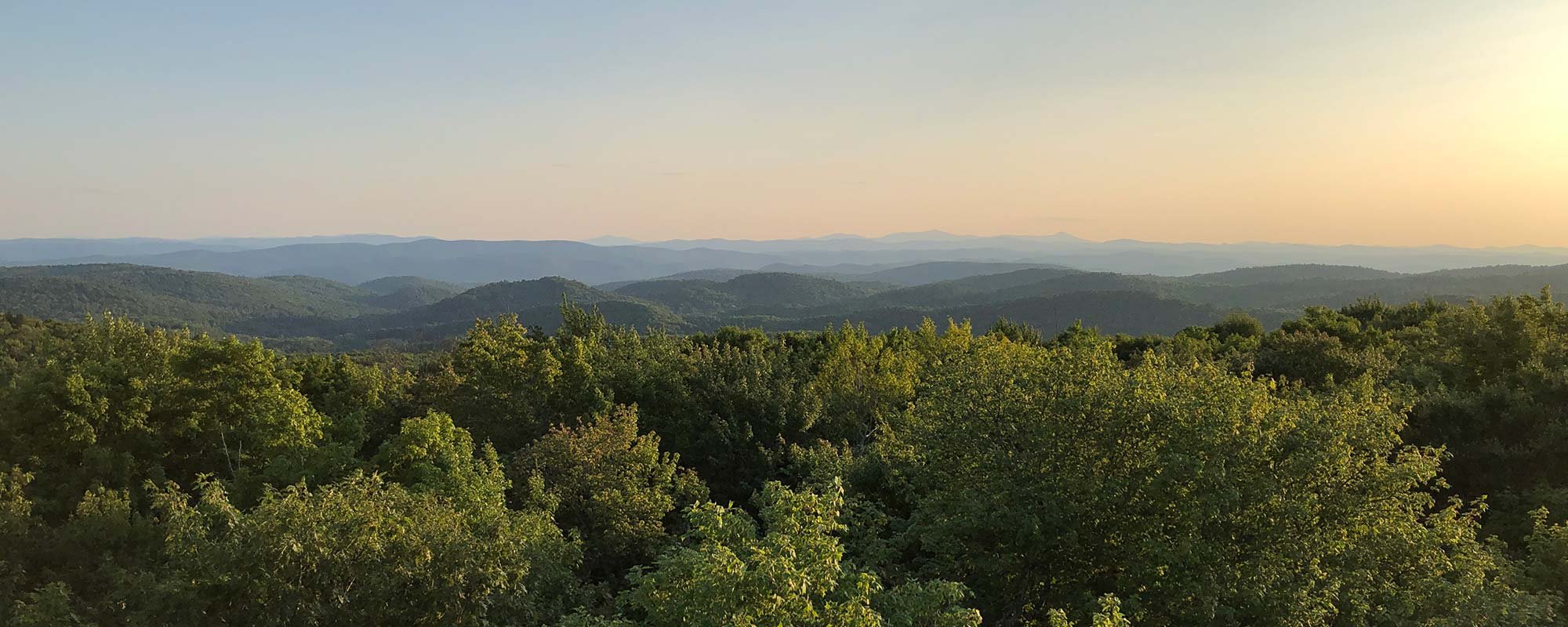
The woods are even-aged second growth comprising white pine, hemlock, sugar maple, beech, bitternut hickory, and hophornbeam. Rockier, higher-elevation woods slope down to the wetlands – about a 200-foot difference. From the wetlands, water drains into a stream, which feeds into the Winooski River about a mile away. Ernst’s woods are surrounded on three sides by other forested parcels – mostly privately owned – and the slope continues up to a ridgeline that Jericho Underhill Land Trust conserves.
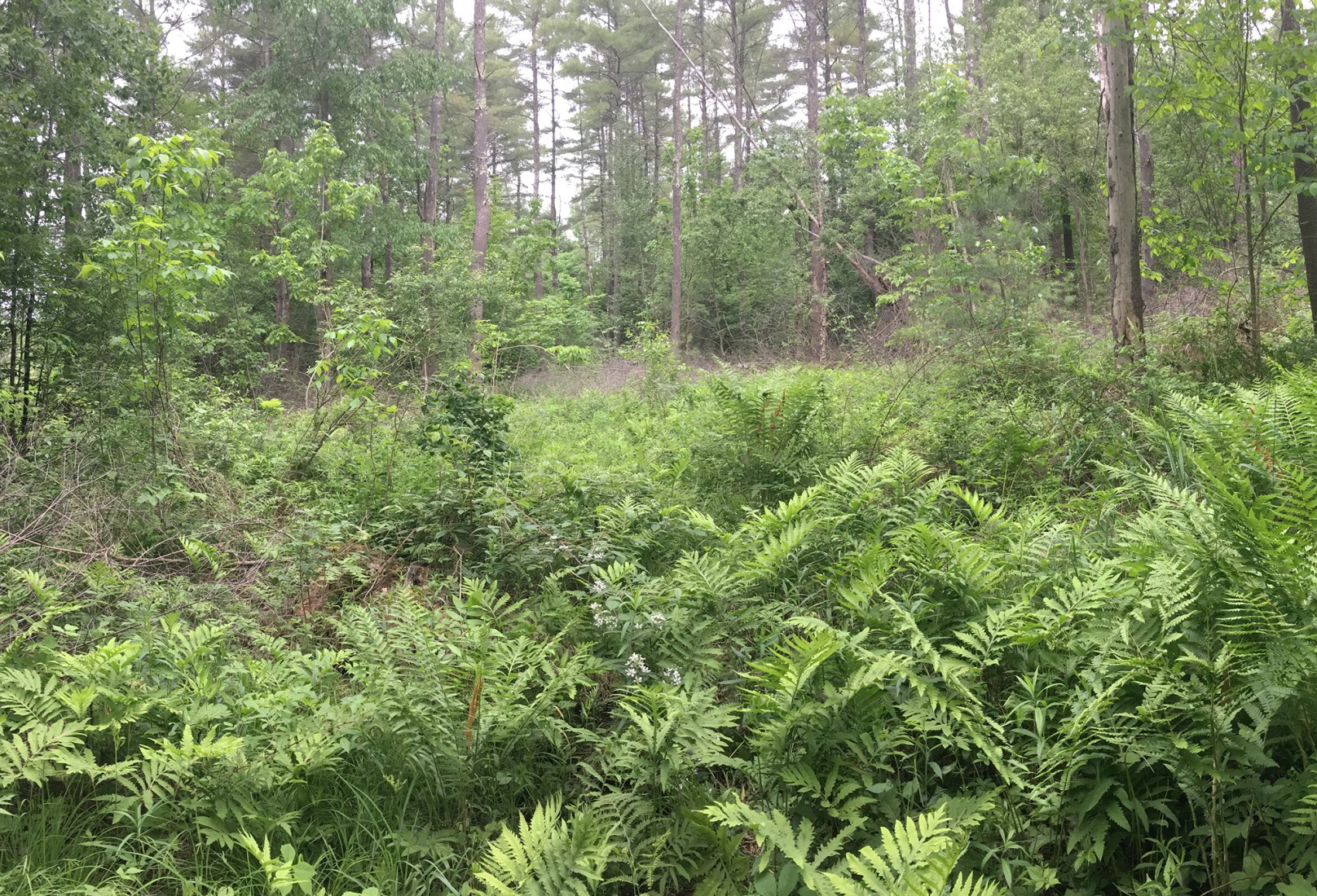
Ernst’s management priorities are wildlife habitat and biodiversity, which require battling invasive plants. The last timber harvest was in 1990, and Ernst doesn’t plan for more harvesting, beyond opening the canopy around old apple trees, which she hopes will increase their yield for wildlife. “I want to let the land recover from the harvest and come in with an ecological mindset,” she explained. Remnant logging roads provide easy walking access, and Ernst recently installed water bars on a steep section of the road to minimize erosion.
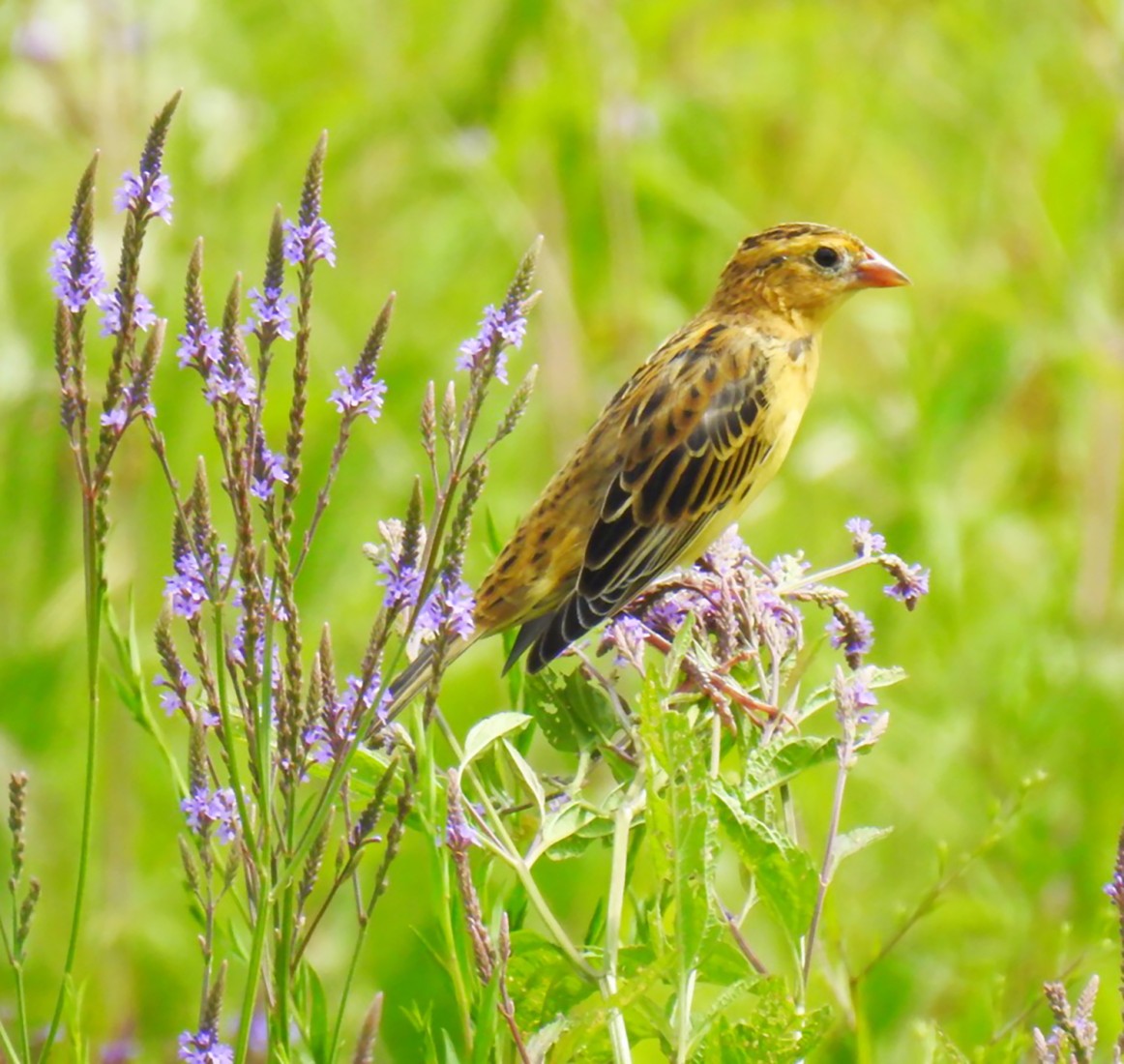
The early successional habitat around the wetlands is full of shrubby species such as nannyberry, winterberry, willows, dogwoods, and serviceberries. Ernst is working with Michael Brown of Birdseye Forestry in Moretown, Vermont, to maintain this habitat for wildlife, particularly songbirds. “It’s great to walk from the bottom to the top of the property, because it transitions through all these different habitats,” Ernst said. “It’s amazing to see all the bird species from one end to the other.”
While she has seen abundant wildlife on the property – deer, bear, bobcat, mink, and birds of all varieties, including turkey, grouse, and woodcock – over-browsing by deer is threatening plant biodiversity by diminishing native species’ regeneration and allowing numerous invasive species to dominate the understory in the forest.
“It’s like there’s a buckthorn forest inside the forest,” Ernst said. While the buckthorn – both common and glossy – is the worst, barberry, bittersweet, multiflora rose, and honeysuckle also grow throughout the woods. “Ultimately, it’s a never-ending story, because the seed bank is constantly being replenished and invasive species are in the woods on all sides,” Ernst said. Still, she continues her efforts to subdue it.
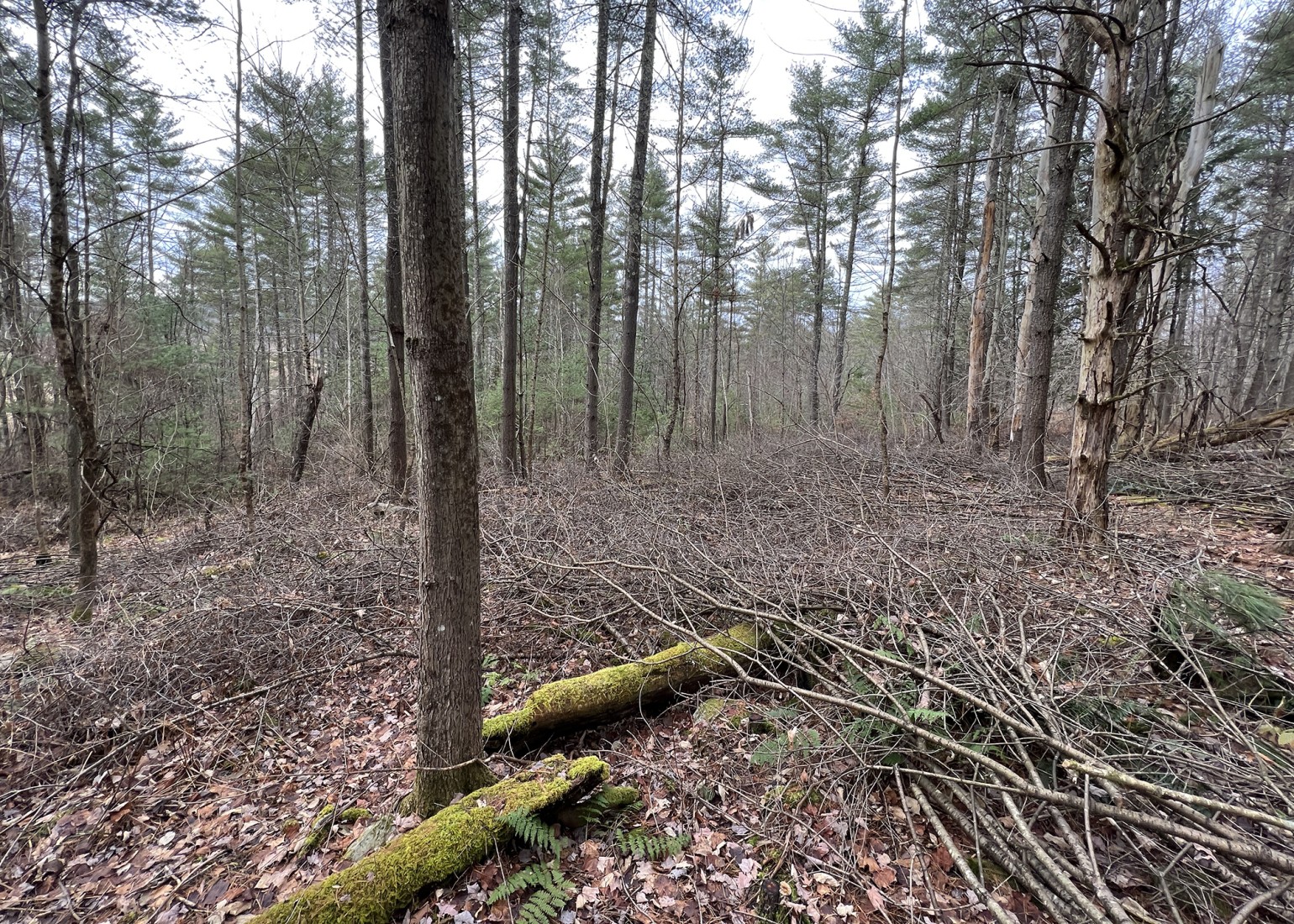
“I learned the hard way that [buckthorn] comes back 10 times stronger,” Ernst said. Initially, she just cut the buckthorn and left it at that. Eventually, she needed to hire someone to recut large sections and chemically treat it. Now, she and Goggin have learned how to do cut stump treatment with glyphosate themselves. She feels that – slowly – she’s beginning to make a dent in the buckthorn dominance. “New things are starting to regenerate, so that’s rewarding,” she said. “I feel like I’ve made a difference.”
In the future, Ernst hopes to set up a deer exclosure experiment. She thinks even a 10-by-10-foot exclosure would allow her to see how tree regeneration rates in a fenced-in area compare to regeneration in the rest of the forest. “It would be great to see some oaks and maples and be able to enable them to survive past their infancy,” Ernst said. But for now, she said, “I’m taking a slow-and-steady approach to management. My philosophy is definitely ‘Do no harm.’ It can be paralyzing to think about the things that can go wrong, and the ways that new invasives can be introduced through equipment and people, so I try to take things one-project-at-a-time and be mindful.”
Ernst serves on the board of Vermont Coverts and Jericho Underhill Land Trust and volunteers on the Jericho Conservation and Planning Commission. She does outreach work with the land trust, talking to neighbors about conserving their land and about handling human-beaver conflicts. She’s also engaged in educational opportunities – both as a student and a leader – through Vermont Coverts, including leading a summer workshop on the wildlife value of native shrubs. She’s noticed how active pollinators are around the willows in early spring and wants to encourage other people to plant those in their hedgerows.
Ernst’s land is enrolled in the Current Use program, a tax-incentive initiative in Vermont that allows agricultural and forested land to be appraised at lower tax rates to encourage conservation over development. She’d like to place the property in a conservation easement down the line. “I want to make sure the land is kept as part of this connectivity corridor that follows along the nearby ridgeline,” Ernst said. “Being close to the Winooski River and Mount Mansfield, even though this is a little portion of land, it feels very important as a part of the larger ecosystem.”
The wildlife habitat and native plant biodiversity are most important to Ernst. She values knowing that her stewardship work helps the ecosystem function, which in turn helps all of the wildlife. “I feel a lot of gratitude when I see tracks or evidence of wildlife out there using the land as they should,” she said. “It makes me smile to know the stewardship is having the intended effect of preserving habitat for them.”