
Recent news on North American bird populations has been largely negative. Two studies published in Science – one in 2019 estimating the loss of 3 billion birds (a 30 percent decline) since 1970 and another in 2026 showing that bird declines are accelerating, particularly in agricultural regions – underscore the severity of the trend. Against this backdrop, a 2025 study in Biological Conservation offers a rare positive signal for forest birds in Maine.
Between 2021 and 2022, researchers from Tufts University, University of New Hampshire, and three Maine nonprofit organizations resurveyed the avian community of a 238,000 hectare (about 588,000 acres) commercial forest landscape first studied in 1992 and 1993. Using identical methods, they estimated bird densities across nine forest habitat classes that combine elements of forest type (hardwood/softwood percentages), age, and tree density – from clearcuts of any forest type to mature softwood, hardwood, or mixed-wood forests – and examined whether population changes tracked shifts in forest composition. They also assessed whether bird population trends varied by species’ foraging behavior (for example, foliage-gleaner, ground-forager, generalist), nest-site location (such as cavity, shrub, ground), or migratory strategy (for example, resident, short-distance migrant, long-distance migrant).
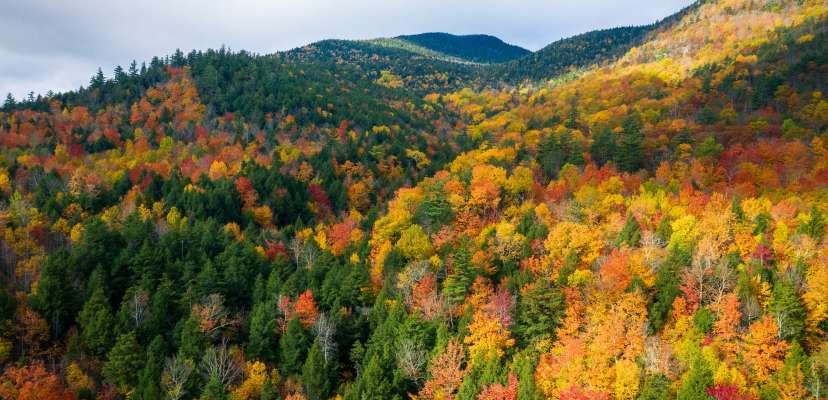
The authors noted that over the past 30 years, forestry practices in the study area – and across Maine more broadly – have shifted away from large clearcuts toward partial harvesting systems that retain canopy structure and increase stand complexity. As a result, the authors found that early successional forests within the study area have expanded, late successional forests have declined, and regenerating stands have become denser and more structurally diverse as previously harvested areas – clearcuts and especially partially harvested forests – regrow.
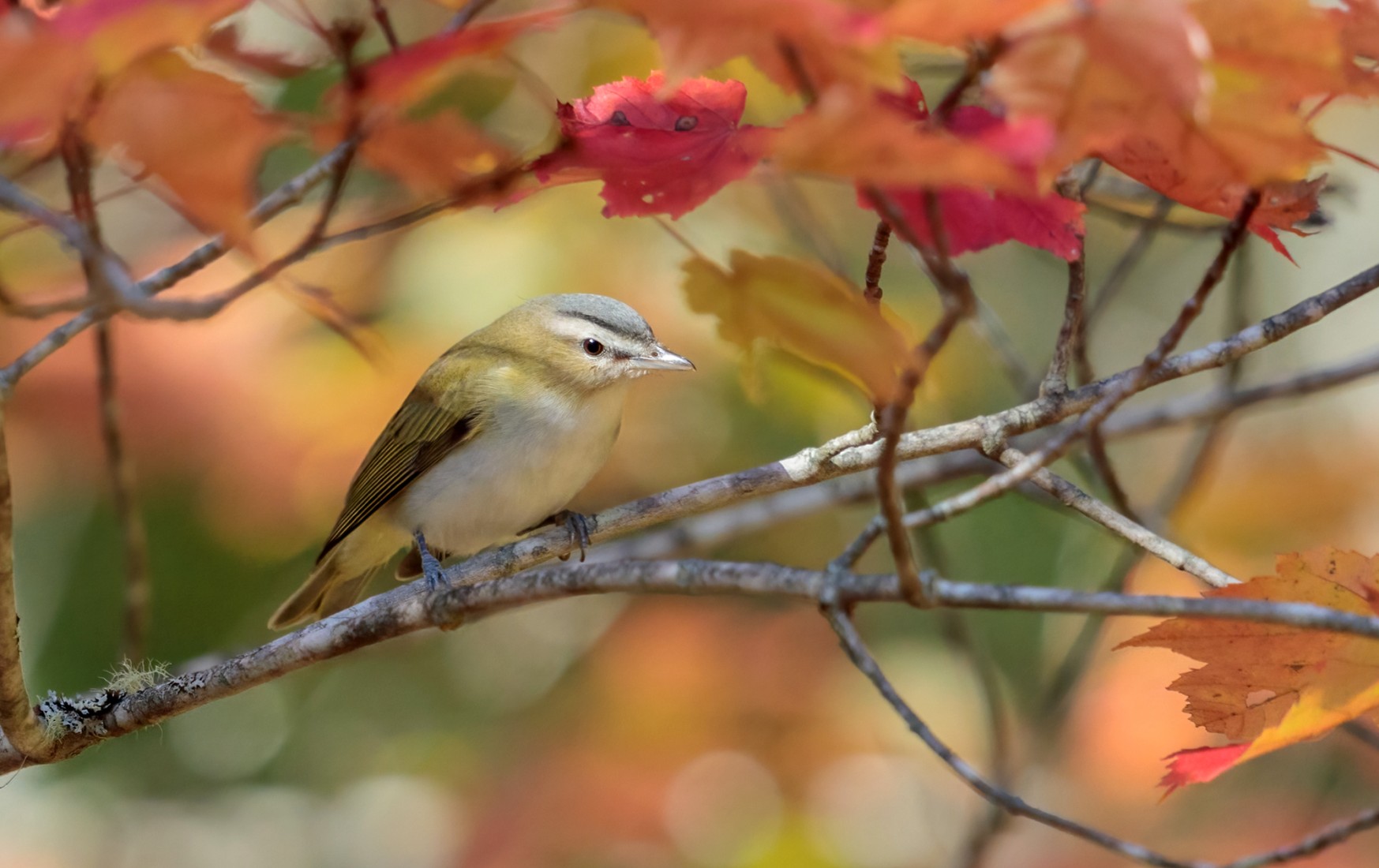
In the face of this changing forest landscape, most bird species exhibited significant population increases: 26 of 47 species increased, 13 remained stable, and 8 declined. Population trends were not linked to foraging style, nest site location, or migratory strategy. Instead, increases generally reflected shifts in density both within and among forest habitat classes. The authors initially expected that changes in species’ abundance would reflect changes in preferred habitat class area over time, but instead found that most increases in abundance were the result of one or both of the following: the bird’s density increased within its preferred habitat(s) (and those increases exceeded any loss of area of those habitats) and/or the bird’s density increased in “new” habitats in which it was formerly rare. The latter pattern points to a level of behavioral and habitat flexibility that has been underappreciated in forest birds, and that may provide some hope for species facing declines in their preferred forest habitat.
The authors suggest that multiple reinforcing mechanisms likely drove the increases in bird abundance. Improved food resources may have played a central role, as the shift from clearcutting to partial harvest appears to support more stable insect populations, especially caterpillars that fuel bird breeding success. At the same time, social dynamics may have accelerated growth: birds often settle where others of their species are already present, so increasing populations can attract even more individuals through conspecific attraction and dispersal. Structural changes to the forest also matter; regenerating stands became denser and more complex, potentially offering higher-quality habitat even for species typically tied to older forests. Finally, changes in tree composition, such as shifts from mid-aged spruce stands toward balsam fir and increases of yellow birch in mature hardwood stands (fir and birch are often faster to regenerate in cleared areas than other trees), likely altered foraging opportunities in ways that may favor a greater number of species.
In addition to providing some positive news about birds, this study highlights the potentially beneficial role of partial harvest forest management in mitigating some of the widespread bird declines occurring across the continent.