

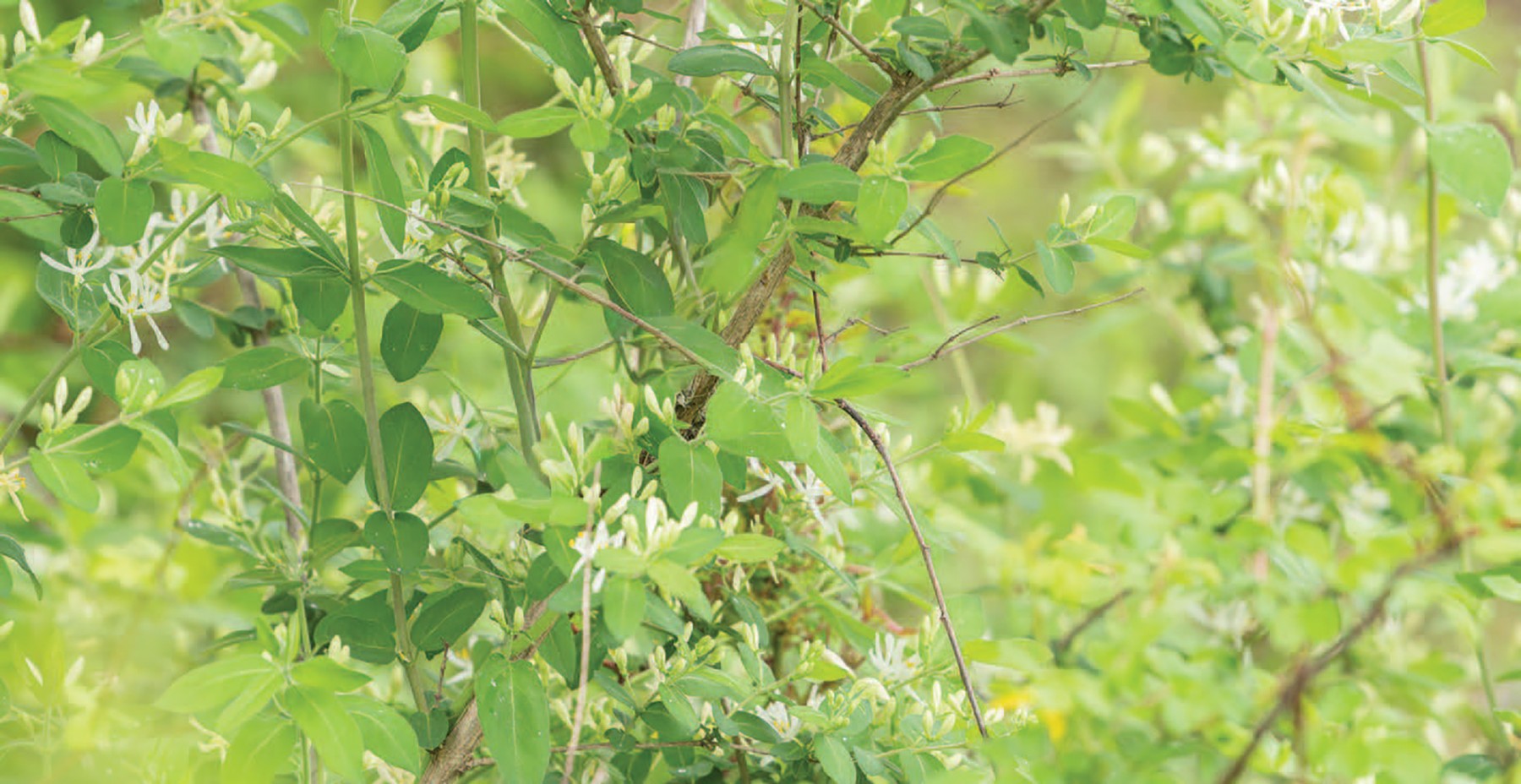
One of the prevailing theories explaining why invasive species do so well in their new homes is that they leave behind most – or all – of their natural predators and pathogens, allowing them to gain a competitive advantage. Additionally, over time, invasive species may adjust how they allocate resources, putting less energy into costly defenses against no-longer-present enemies and more energy into growth and reproduction. This resource trade-off provides invaders with an even greater competitive advantage over native species that are forced to invest more heavily in defenses. Scientists call this the “enemy release hypothesis,” and many ecologists believe escaping enemies plays a key role in the success of many invasive species.
An international group of researchers led by Jason Fridley at Clemson University wanted to look more closely at how invasive plants were responding to conditions in their new ranges. Once established in their new range, were these plants in fact investing fewer resources into defenses, or was something else going on? Fridley and his collaborators measured nine leaf traits tied to herbivory defense – ranging from toxic alkaloids and cyanogenic glycosides to leaf nitrogen, protein content, fiber, cell wall mass, and specific leaf area. Researches quantified these traits for 27 invasive plants – spanning both woody plants and herbaceous species – across their native (home) and introduced (away) ranges in France, Japan, and the United States. They also measured the same traits in co-occurring native species (of similar taxonomy and characteristics to the invaders whenever possible) in each region. Researchers then compared trait values of each invasive species to the average trait value of the native communities from their home and away ranges.
The key finding, published in the June 2025 issue of the journal Ecology in a paper titled “Joining the locals: Plant invaders shift leaf defenses to match native neighbors,” is that for seven out of the nine traits the researchers examined, the invasive plants’ leaf traits had shifted from their original values in the home range and now matched those of their new away communities. On average, when native plants in the away range had thin, nitrogen-rich leaves, invaders shifted that way, and when natives in the away range had tough leaves or low protein content, invaders converged on those values. These sorts of changes occurred across continents, growth forms, and habitats.
The authors describe this as a “join the locals” pattern. Rather than evolving away from defense because their enemies are gone, invasive species appear to adjust their leaf traits to match the environmental and functional context of the away community. In this view, defense traits are not independent parameters that invaders freely modify, but rather components of integrated leaf economic strategies shaped by soil fertility, light availability, climate, and other regional constraints.
The result is a reframing of invasion success, from a story of plants escaping constraints to one of rapid ecological alignment. In many cases, the most successful invaders may be those that can adapt most quickly to the conditions in their new ranges.