
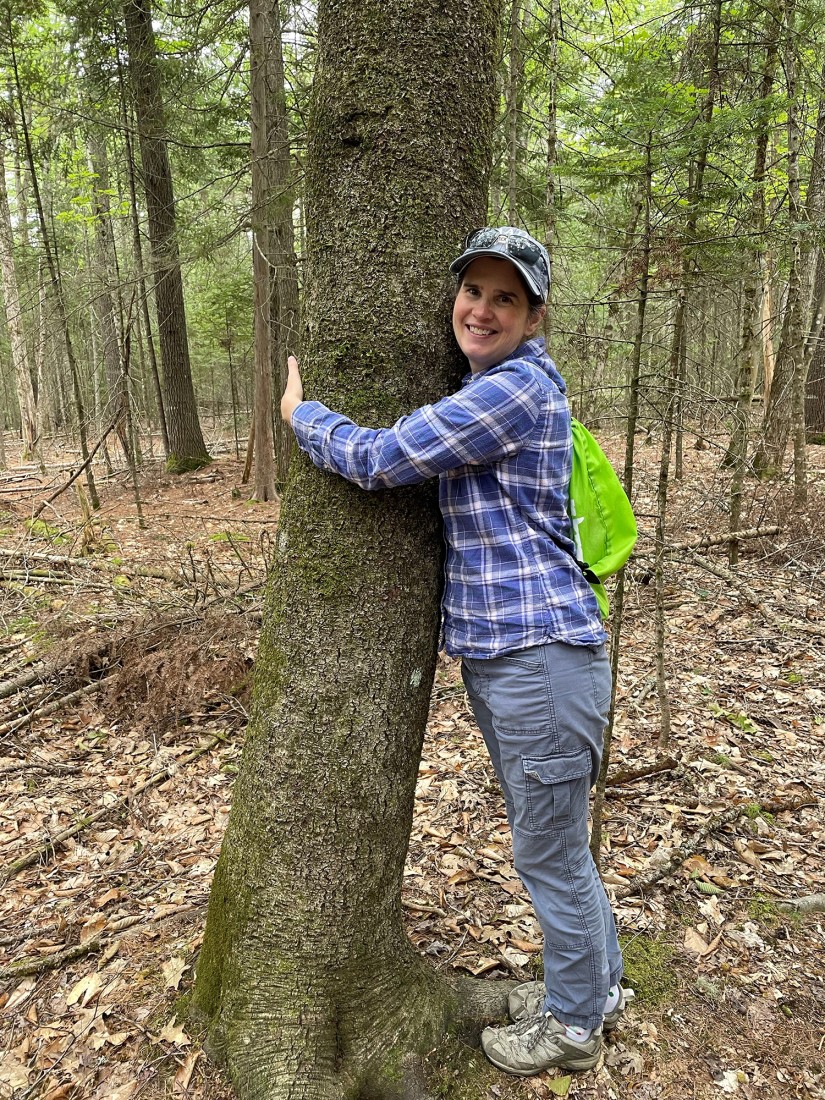
Laura Kenefic is a silviculturist and scientist in Maine, where she works for the U.S. Forest Service as a research forester and team leader. Originally from New York state, Laura studied at SUNY-Binghamton and SUNY-ESF before completing a PhD in forest resources at University of Maine. With more than 30 years of experience at the Forest Service, Laura oversees long-term research at the Penobscot Experimental Forest and elsewhere in the Northeast. Outside of work, Laura enjoys spending time with her family and friends, searching for historical artifacts on the old farm she and her husband own, and exploring forests and wetlands on their woodlot.
I’m from the little town of Cropseyville, New York, not far from the place where Vermont, Massachusetts, and New York all meet. My family lived in an 1800s farmhouse in a very rural area, and our yard just sort of turned into the woods. My dad was very outdoorsy, but my mom was from a city. We didn’t really spend time camping or backpacking as a family, but my mom would send us outside to play as kids, so my sister and I spent a lot of time in the woods, just playing Barbies in the forest. The woods were an important context for my early life, though I didn’t think about forest science until much later.
In high school, I had to do a project for a science fair, and I got really interested in acid rain. This was the 1980s, so acid rain was a big emerging topic. My mom was a chemist, and she helped me come up with a project studying the impacts of acid rain on plants. I was selected to go to the New York State Science Fair, then to a summer science program at Brookhaven National Laboratory. Those experiences inspired me to pursue a career in science, and I decided that I wanted to go into environmental studies. I went to SUNY-Binghamton and graduated with my undergraduate degree in 1992.
In college, I took a class in forestry that had the message “we need to save the forests,” so I decided I would go on to save the forests. I went right to SUNY-ESF to get a master’s in forest resource management. Once I got there, I was dropped into an environment that, at the time, was less about saving the forests and more about using the forests for production. It was a real swing of the pendulum from one side to the other, and I ended up solidly in the middle. I started to think about how my house growing up was heated by a wood furnace – my dad was always cutting down trees and splitting firewood. I started to really appreciate that we need to make things out of wood. It was kind of an awakening that wood is a sustainable resource.
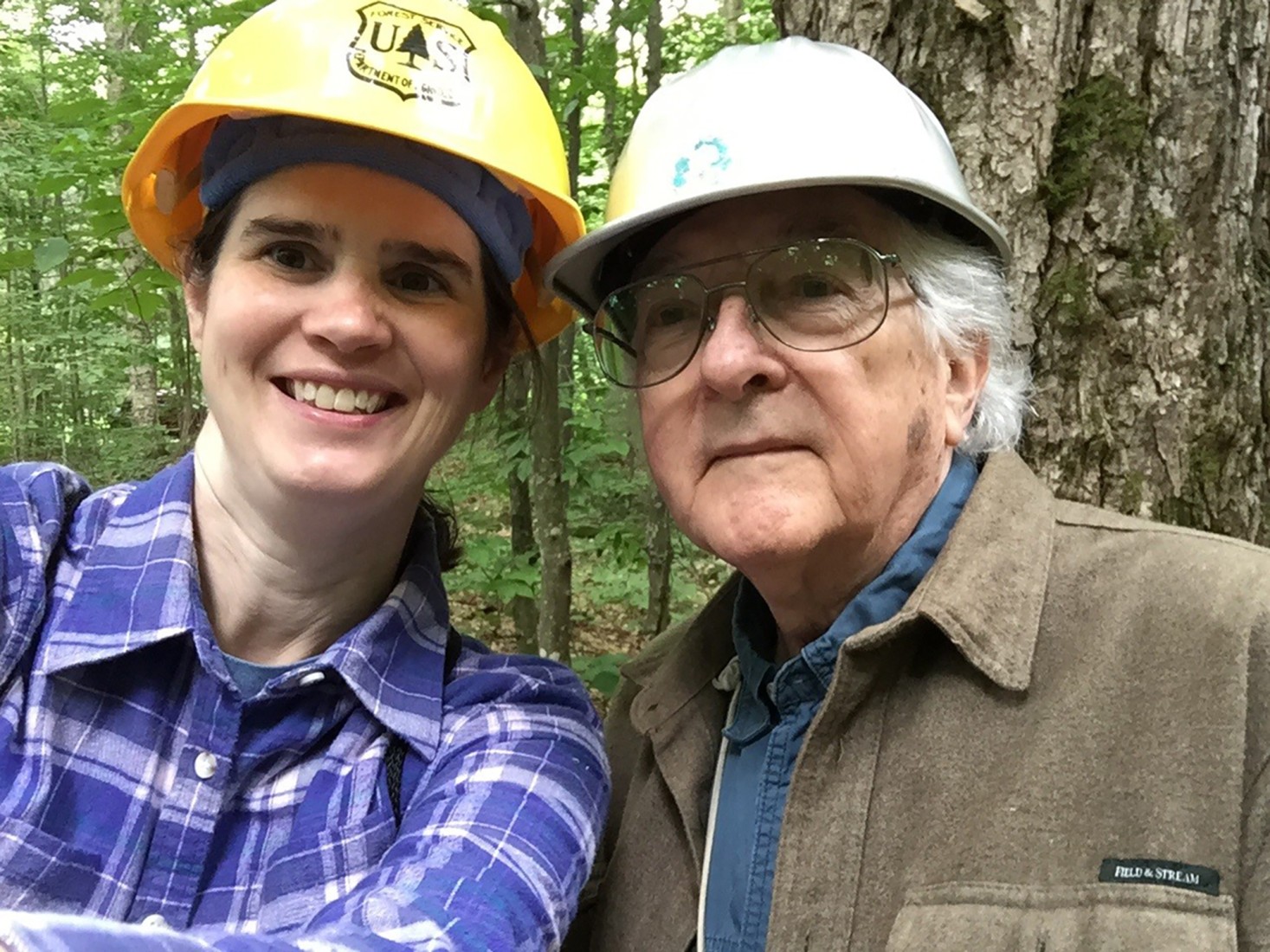
I landed in silviculture, which is the art and science of managing forests to get outcomes that we want. Harvesting trees is part of that but not the sole objective; the approach is asking, “What do I want for this place in the future?” and then managing to accomplish that. I had a really great mentor in my master’s program, Ralph Nyland, who is one of the leading silviculturists in the world. I was so fortunate to work with him; he really shared his passion for silviculture with students, and he continues to be a mentor to me today. He was very supportive of my path and gave me a strong recommendation for doctoral programs. My application to University of Maine was shared with the U.S. Forest Service, and they offered me a position in what was then called the Cooperative Education Program. It meant that the Forest Service would pay for my education and I would work for them as a scientist trainee.
In 1994, I started my PhD at UMaine, studying complex stands – ones with mixed species and age classes – and how to achieve sustainable production there while also prioritizing things like structural diversity. I was stationed at the Penobscot Experimental Forest in central Maine, which is 1 of 81 experimental forests across the country. Experimental forests are unique in that they’re designated by the Forest Service for long-term research. The Penobscot was established in 1950 with a strong focus on silviculture. By the time I arrived, there had already been 45 years of management there. The silviculturist that had been in charge of the long-term studies since the 1960s retired soon after I got there, so my role pretty quickly transformed from doctoral intern to scientist. I was the one doing the silviculture prescription writing, overseeing timber marking, analyzing outcomes, sharing results, and writing papers.
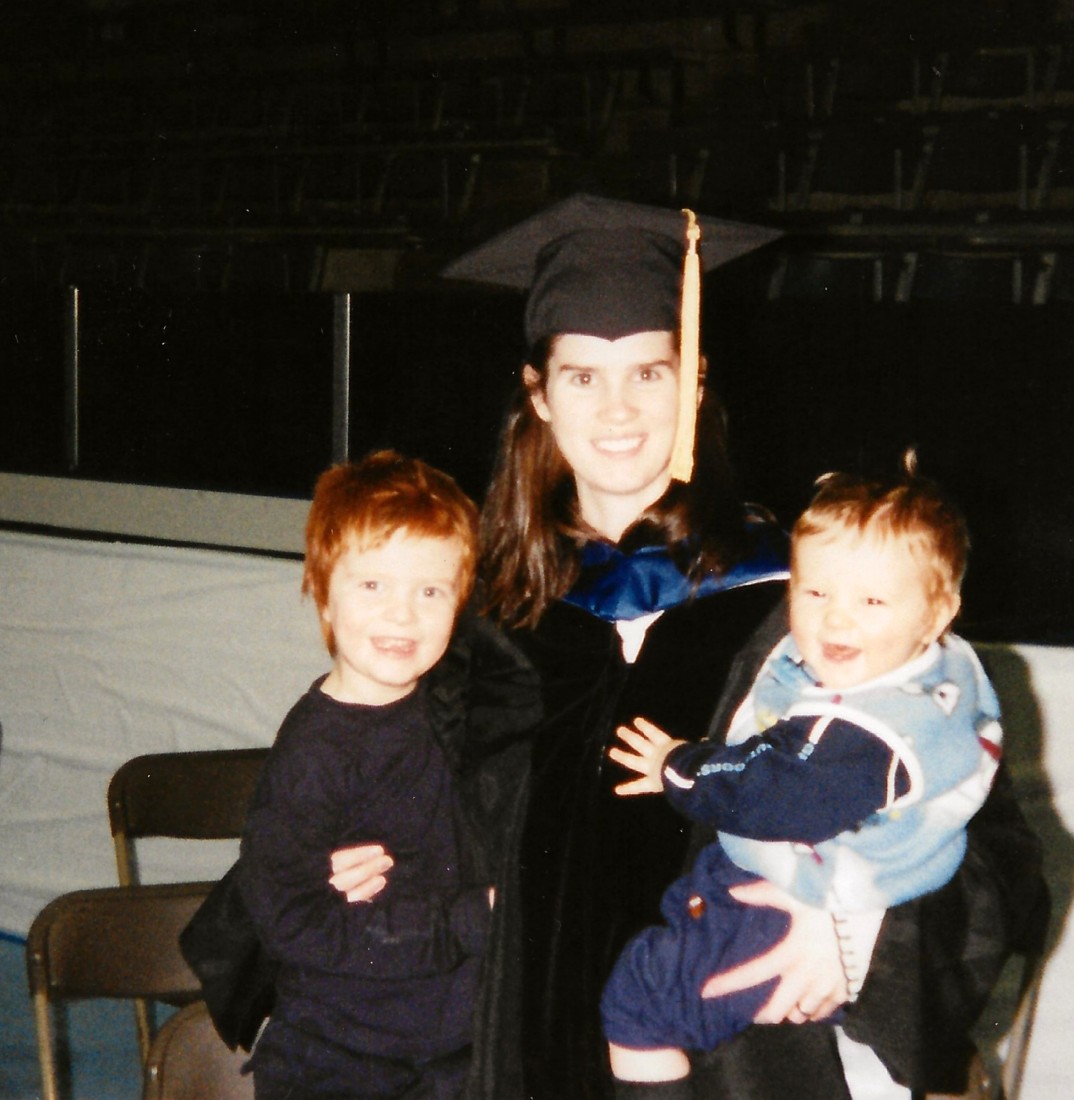
When I finished my PhD in 2000, one of my sons was 1 and the other was 4. I’m proud that I managed to finish my PhD and raise them at the same time! I knew I would be staying at the Forest Service, because in return for the agency paying for my education, I committed to a certain number of years of service. A lot of the other Forest Service scientists in Maine had retired or transferred, so I was the last one. The Forest Service was a bit concerned about me being so early in my career and on my own at the Penobscot. Fortunately, that experimental forest is unique in that the University of Maine Foundation owns the land, and the university has a strong interest in collaborating on research, education, and demonstration. The dean offered to provide me an office on campus with the forestry faculty. It was great to get to stay in Maine, especially because I had young children and didn’t want to uproot our lives. I later became the lead scientist at the Penobscot, which is the role I’ve been in ever since.
At the Penobscot, we have more than a dozen active long-term experiments. I’m really proud that we’ve been able to maintain foundational research without a break, despite a lot of changes over the years. The biggest study we have is the Compartment Management Study, which includes more than a dozen different silvicultural treatments – everything including clearcutting, shelterwood cutting, thinning, selection cutting, and exploitative harvesting methods such as diameter-limit cutting. We have examples of things that we know are not going to give us the best outcome from a forest sustainability perspective; this is important because we want to document and share those findings. This particular study is really the heart of the experimental forest and where I’ve put a lot of time and effort over the years.
At experimental forests, we are keeping generations of work going; these studies are scientifically important and important to me personally. It is my responsibility as a Forest Service scientist to maintain the long-term experiments for the future. Having many different stands that started out at the same but were treated differently means we can show people the outcomes right next to each other; seeing it is incredibly impactful. We also have potential to use the long-term work to answer new questions. For example, maybe an experiment started in the 1950s wasn’t set up to look at amount of carbon storage or wildlife habitat, but because we have long-term studies, we can go out and measure those outcomes now. In that way, the experimental forests are a foundational source of information for the forestry community at large. We really appreciate the many people across the region who have let us know how much they rely on the outcomes of the research. One of the reasons the experimental forest has been so successful is that so many people value and support the work.
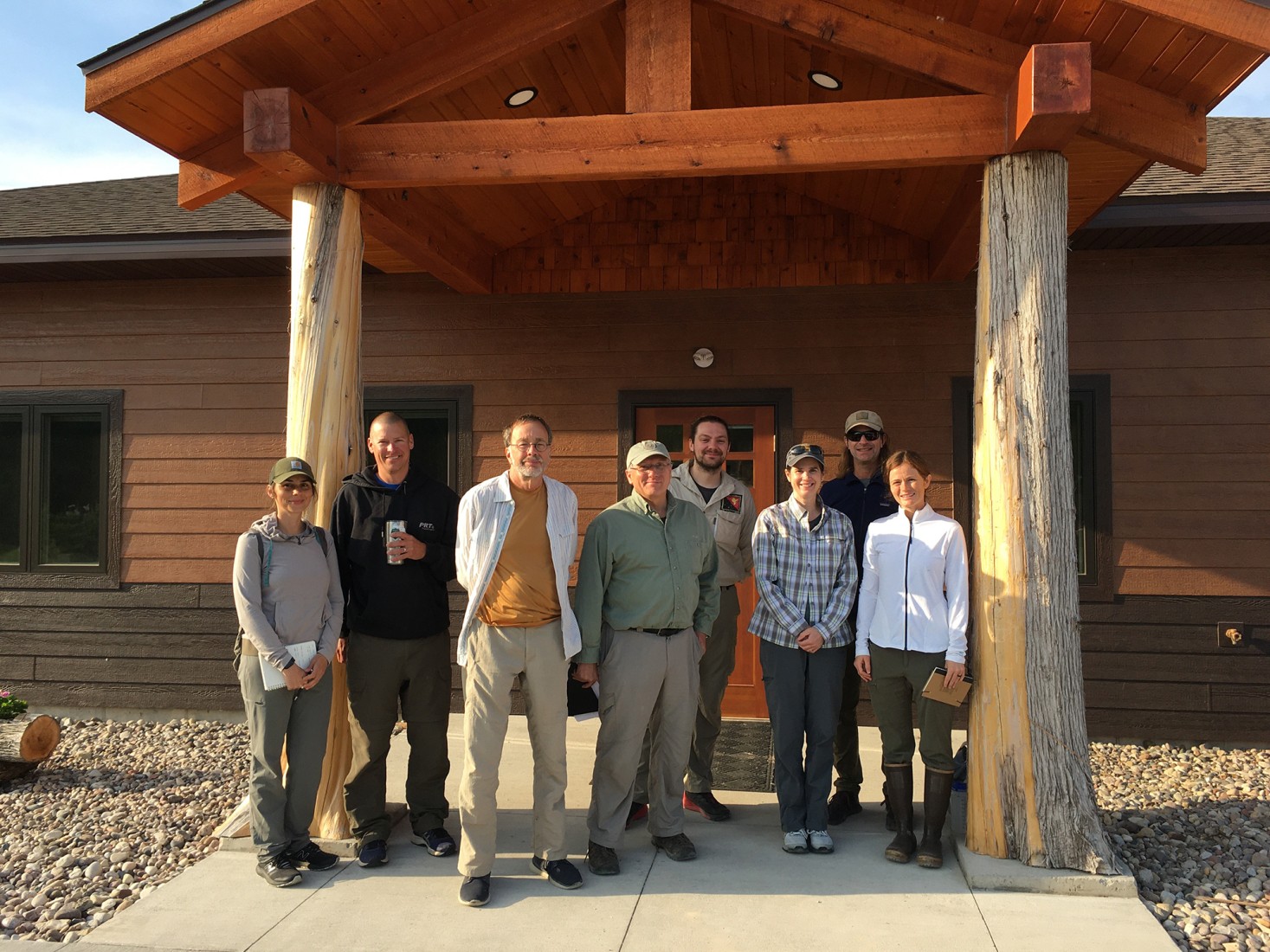
In my career, I’ve been really lucky to have the opportunity to expand my scope of research to include other public and private forests across the Northeast and Lake States. Quite early in my career, I started looking at northern white-cedar, a very common and abundant tree species, but one which we didn’t know a lot about. Regionally, we have seen widespread recruitment failures, which means cedars regenerate but don’t grow to larger sizes. We have been working on better understanding the reasons for that and finding management solutions. It’s been so interesting to work on a species across its entire range and to collaborate with researchers from around the U.S. and Canada. The folks involved in the research have changed over time, but we have always maintained a wonderful camaraderie. We call ourselves the “Cedar Club,” and there’s a great sense of community and a lot of expertise and dedication in the group.
When I started at Penobscot Experimental Forest in 1994, I was the first woman there hired into a scientist role. I began reaching out to colleagues with shared experiences in different regions and institutions. Working with folks who are committed to making space for everyone within forestry has been a meaningful part of my job and my life. I care about everyone having the opportunity to participate in forestry and I want to welcome folks who haven’t traditionally been a part of the conversation.
I’ve had great mentors, and that has been really meaningful to me. Ralph Nyland introduced me to Susan Stout, who was in a leadership role with the U.S. Forest Service in Pennsylvania when I was starting my career in Maine. Ralph had mentored Susan previously and thought she might be a good connection for me. She really supported me through the early years of my career. Even though they are both long retired, Ralph and Susan continue to be a part of my life in meaningful ways, and I am so grateful for their support. That really matters to me. I try to pay their mentorship forward by taking time and energy to give opportunities to others like those that were provided to me.
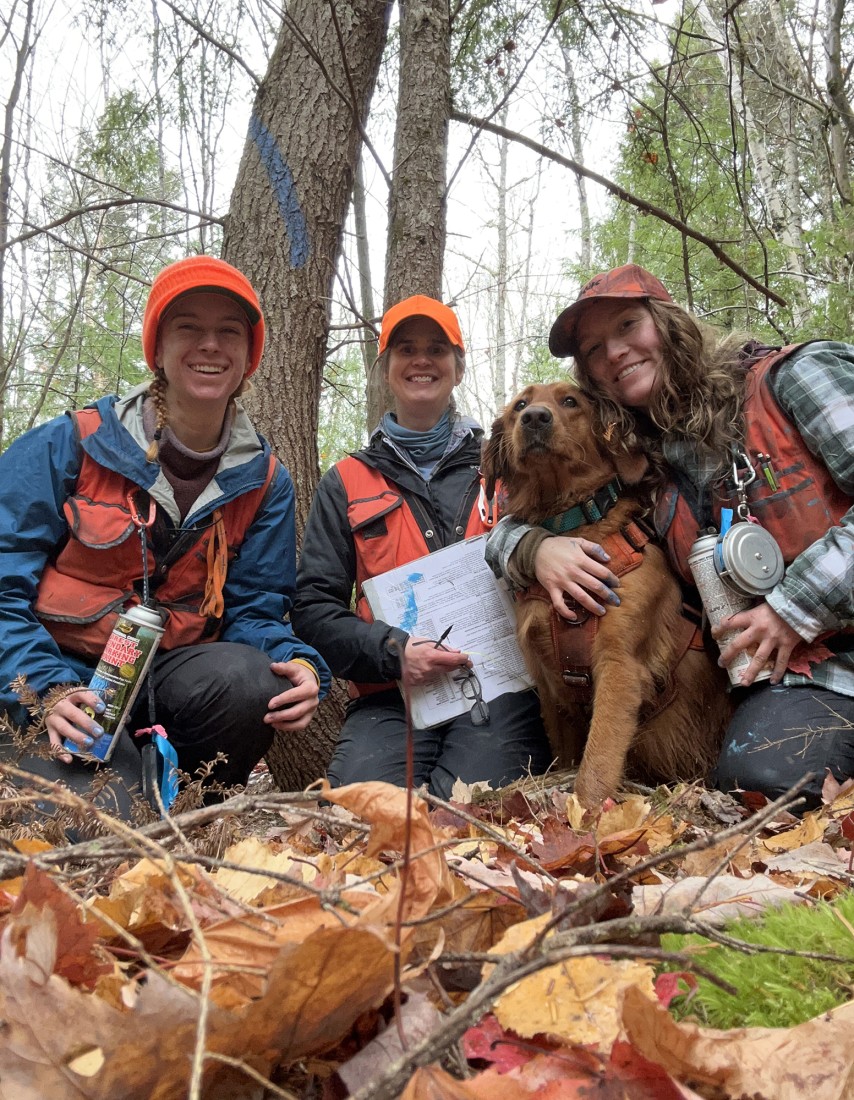
My husband gave me one of those digital frames that rotates photos, and in addition to my family, friends, and pets, I have pictures taken in the field with other people talking about forests and forestry. It brings me a lot of joy to remember all the moments when the photos were taken. The best part about my work is being in the woods with other people who are passionate about silviculture, who care about doing good work and managing our forests in a way that leaves them better than before. I love that even after studying these systems for so long, there is always more to learn – I learn something every time I’m in the field with people.
I feel like the theme of my career has really been about how silviculture matters. We do a tour at the experimental forest where we go look at an area that has not been managed since the late 1800s. We talk about what trees and understory plants are there, the natural disturbance regime, the canopy structure, and wildlife habitat. Then we go to other sites where different types of management or harvesting have been applied and see the profound differences between the stands. We talk about what the products are, what the economics are, how the forest has changed, and whether it is sustainable. The things we do today make a difference for tomorrow’s forests.
Working with forests, which have a super long timeframe, always reminds me that we don’t know how things will work out. Sometimes you do a treatment, and you think it’s great, but then you come out later and find that, for example, a bunch of the trees blew over. It can be disappointing and bad for timber production in the short-term, but it could be good for wildlife habitat or future germination substrate. Sometimes the outcome isn’t what we expected or wanted, but it opens up new pathways we hadn’t considered before. I think it’s important to have persistence and resilience in your career and in your life, just like the forests do.
I have been a scientist most of my life and it’s such an important part of who I am. I’m very proud to be a silviculturist. To me, that means being someone who really understands what it means to manage forests and the complexity associated with not just harvesting wood but doing that in a way that meets the needs we have today while leaving things in a better position for tomorrow – not just for ourselves, but for forest communities and the ecosystem as a whole.
Discussion *