
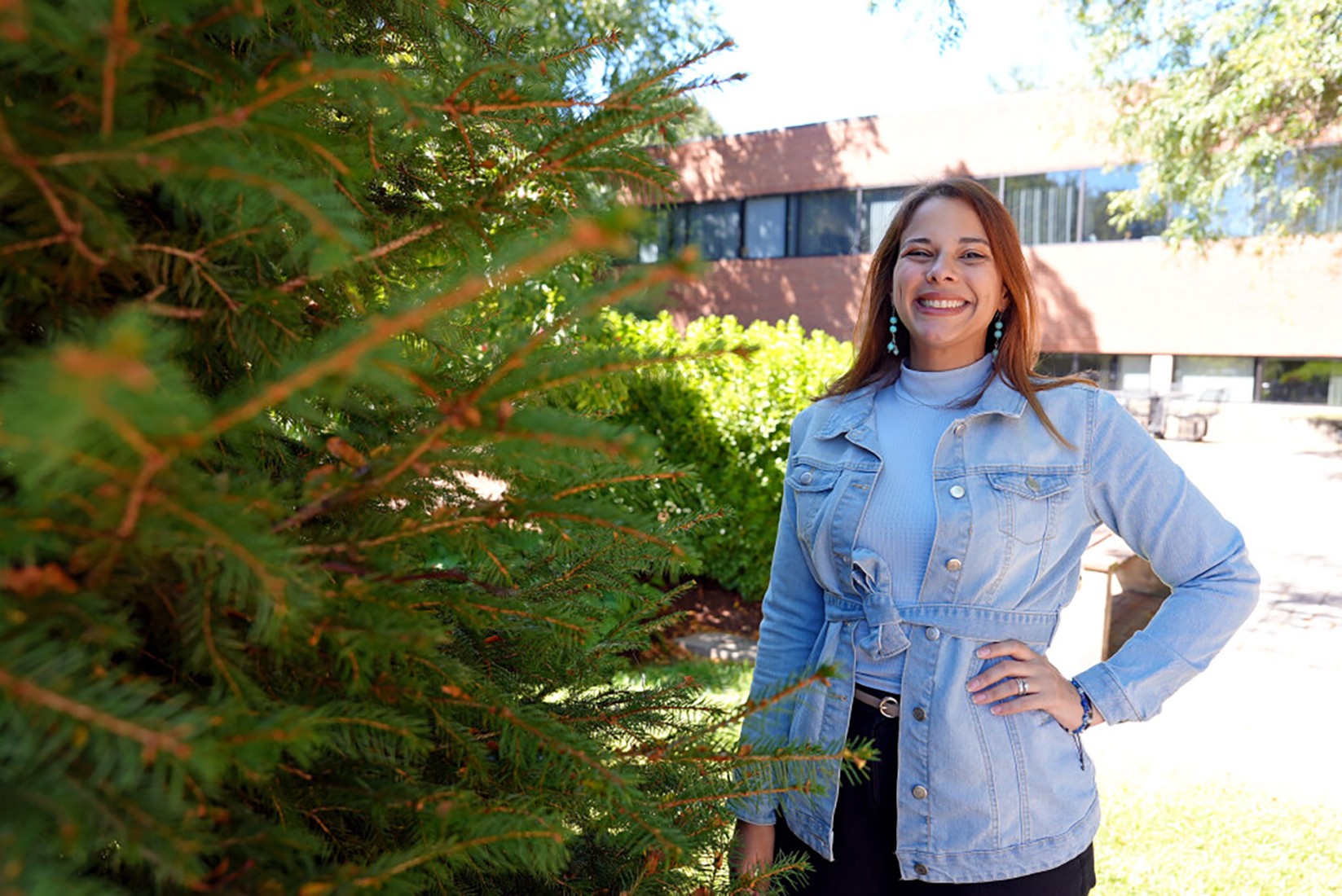
Mayra Rodríguez González is an urban and community forestry educator at University of Connecticut Extension. Mayra helps communities create natural resource management plans and provides professional and educational development opportunities for foresters, youth, and people interested in natural resource professions. Mayra graduated with her bachelor’s degree in biology from the University of Puerto Rico at the Bayamón campus and completed her PhD in forestry and natural resource management at Purdue University. Outside of work, Mayra enjoys reading, doing puzzles, and crafting.
I grew up in metropolitan area of Puerto Rico, in a pretty urban and industrial town near the capital. I didn’t necessarily have those outdoor experiences that people often associate with a forestry or natural resources management career, but the outdoors were just inherently part of my culture. A lot of traditions and culture center around nature, so even though I didn’t grow up in a family that was intentional about going into the tropical rainforest or doing outdoorsy things, I knew that nature and the forests were there, a part of it, and that was important.
In school, I was mostly interested in doing well, not in a particular subject. My family wasn’t very well off, and we were encouraged to do our best in school because if we didn’t there wasn’t going to be much opportunity for us to go to university. I think it’s fairly common for students in low-income families like mine for the focus to be on doing well, not coming up with ideas or dreams for what you want to be. In high school, I started to get more into biology. I had some teachers that I thought were very inspiring.
I went to one of the regional campuses in Bayamón, a commuter school, in the University of Puerto Rico (UPR) system. I majored in biology there. It was a major that could be completed within a four-year program at the same university, so it didn’t require changing schools. With a lot of the programs there, after the first couple of years you need to relocate to a main campus. It wasn’t a possibility for me to transfer and have to pay for housing, so studying biology at a commuter school made the most sense.
As a work-study job, I got hired by an ecology professor, Dr. Alex S. Sloan, to help with a plant census he was doing in the Guánica Dry Forest. He co-led the Ecological Society of America’s Strategies for Ecology Education, Diversity and Sustainability (SEEDS) chapter, along with Dr. Concepción Rodríguez. SEEDS supports underrepresented students working in the environmental field. I joined and got exposure to more opportunities. The first time I flew to the mainland United States was to attend a SEEDS leadership meeting in Colorado, which had a focus on food security. Dr. Sloan told me about the Research Experiences for Undergraduates (REU) program through the National Science Foundation, where students can get paid research experience, and he encouraged me to apply. I kind of applied blindly to anything and everything.
I got an REU at University of Arkansas, doing ecological modeling and GIS mapping after my third year of school. When I came back to UPR after the summer, Dr. Sloan told me about a limnology professor, Dr. Jorge Ortiz, who was looking for a student with GIS experience to support his graduate student, Arístides Martínez Cintrón. I worked for his lab and also for a non-profit, El Corredor del Yaguazo, Inc., doing urban wetland restoration, dealing with issues related to pollution exposure and flooding in low-income communities. When the next summer rolled around, I got an REU at Harvard Forest. I learned how to program there and did a lot of computational ecology work.
I graduated with a degree in biology in 2015. Despite my specific research experience, biology was kind of a catch-all major. My undergrad degree was mostly focused on molecular biology, but I was also doing ecology, zoology, and plant biology. I knew when I finished my degree, I would go on to specialize. I had enjoyed the work I did in ecology, so I applied to graduate schools all over. My professors were very encouraging of me applying to programs outside of Puerto Rico and considering different options.
I ended up at Purdue University in Indiana, doing a PhD in the forestry and natural resources department. I studied urban ecology, so I was recruited to a position to study ecosystem services and ecological modeling. It became clear to me that conservation here was very different. I was used to a more bottom-up approach to conservation in Puerto Rico; a lot of work was grassroots, started by a community member who felt like their community was being overlooked. It felt so different in the mainland United States, where a lot of planning and management seemed to happen without consulting the people who would be affected by it. I became really interested in understanding the perspective of community members, and I started diving more into the social science and human dimension of natural resource management.
My research focused on access to green spaces in the Chicago metropolitan area and the ecosystem services provided by those spaces. I acquired a lot of social science skills and created questionnaires and interviewed people about their views on natural resource management, so my dissertation was very interdisciplinary. It was interesting to look at demographic backgrounds and how that impacted people’s priorities and preferences for ecosystem services.
I was really in a hustle stage then, where I didn’t have a second to think, I was just trying to do. But it was challenging fitting in with forestry students, and in Indiana in general, and at times, it was very isolating. I completed my PhD during a period of significant personal and professional transition, which included some housing instability and major life changes. At the same time, it also brought positive developments, including the opportunity to spend time with my now-husband in South America after years of being in a long-distance relationship. I did a postdoc with one of the social scientists I worked with at Purdue, studying the impact of paying Bolivian farmers for maintaining certain ecosystem services. After that, I took on a postdoc at the Gund Institute for the Environment at University of Vermont. The lab I joined was interested in incorporating more social equity variables into the green space analysis they were doing for municipalities.
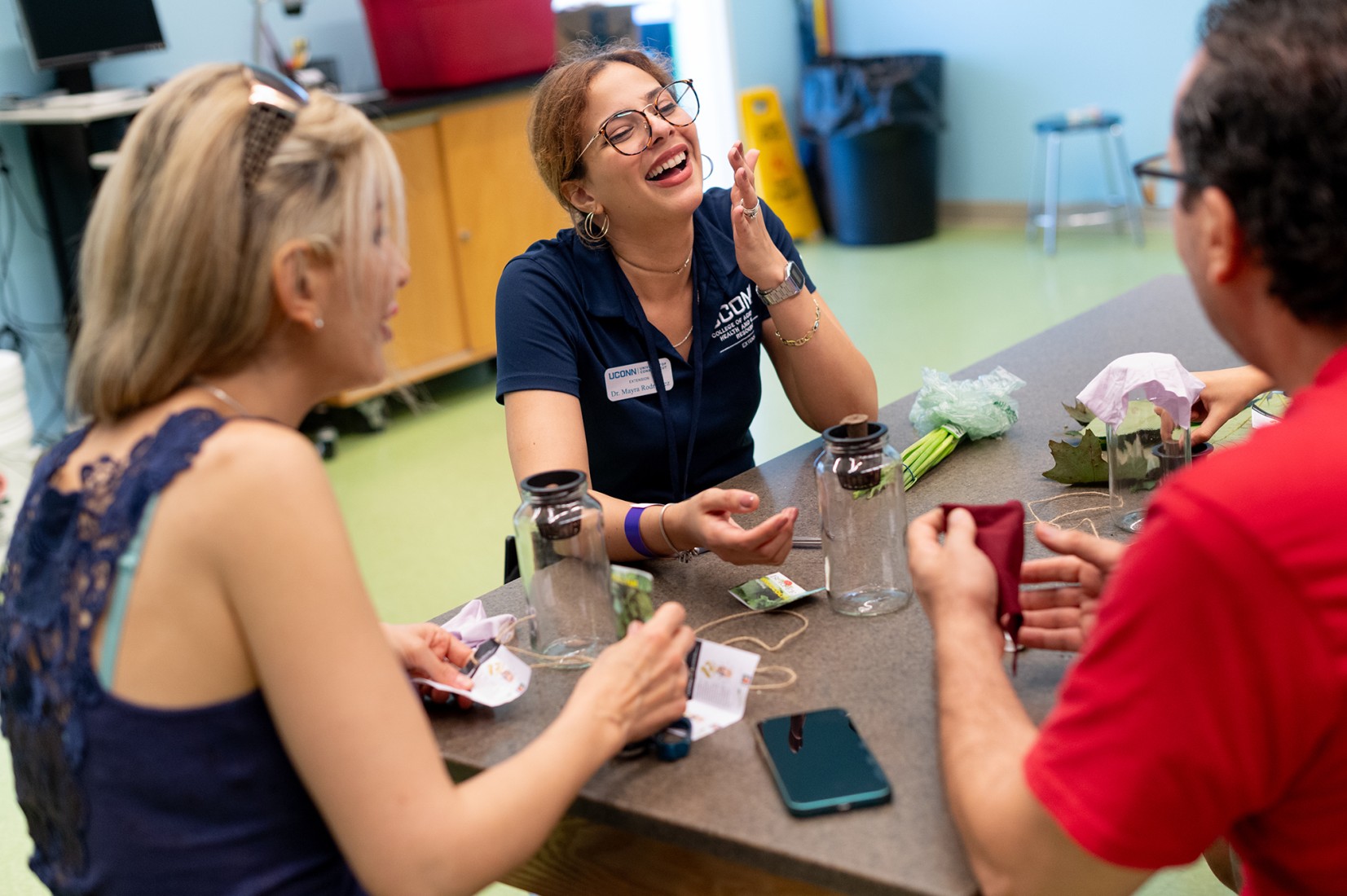
I was applying for faculty jobs and only really thinking about the traditional professor positions, but then I interviewed with University of Connecticut Extension, for a job that was all about community engagement and that was really exciting. I’ve been in my role as an urban and community forestry educator for four years now. I work state-wide, but I’m based at the Hartford County Extension Center. My work really revolves around needs and gaps in natural resource management in the state.
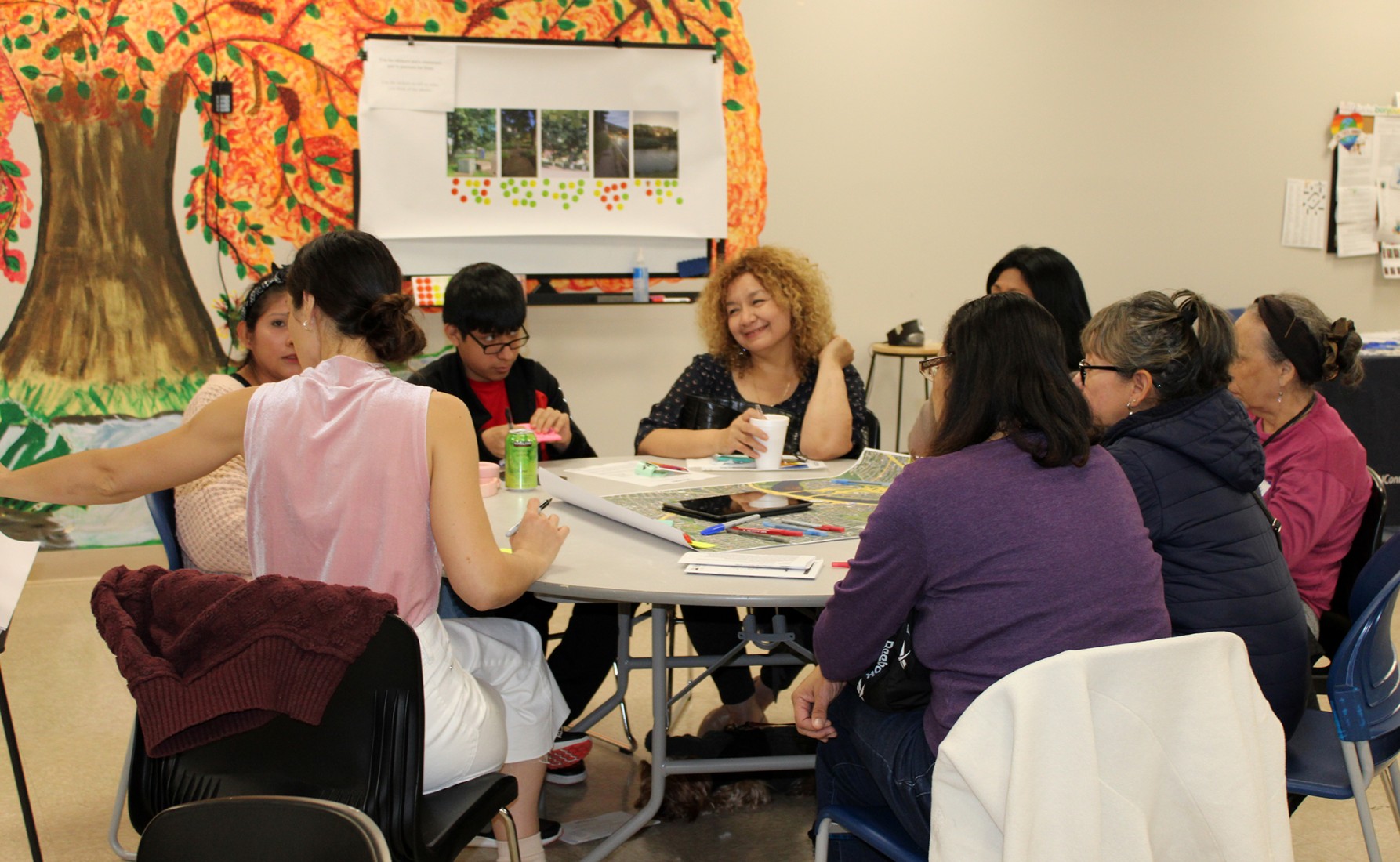
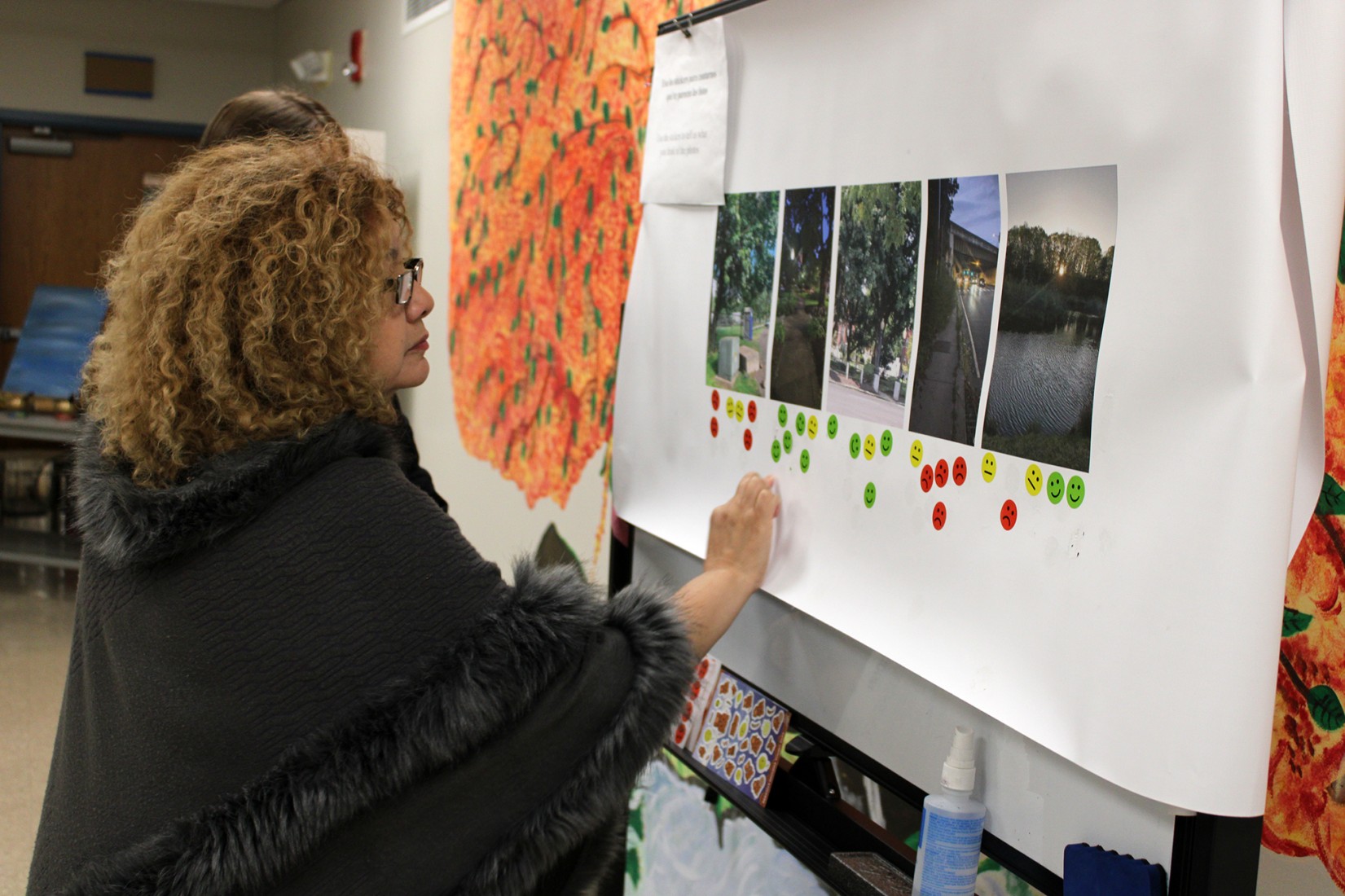
I work on a community level, a municipal level, and a practitioner level. At the community level, it’s a lot of workshops and engagement opportunities for the public to share what ecosystem services are most important to them, while the municipal side is more planning and mapping, thinking about how to incorporate social data into decision making. I also lead trainings for practitioners; a lot of foresters aren’t trained in social science or how to work with the public, so I help them develop those skills. A lot of it is about giving them tools and frameworks that are easy to adapt to all kinds of engagement and outreach. I also create toolkits for teachers to help students do more hands-on science. It’s different kinds of work on different scales; it doesn’t get boring!
There are so many projects that I’m excited about. We got a contract from the Connecticut Department of Energy & Environmental Protection Urban Forestry program to create an urban forestry toolkit for professionals to go from assessment to planning with public input. It’s divided into modules that come with hands-on activities, and now educators and young people are also using it as a way to learn about urban tree benefits like climate regulation, air purification, and noise buffering. We’re working on a new toolkit as well, which will focus on soil health and water regulation, and on the importance of structural diversity in the woods. For this, we have new partners at University of Texas in El Paso through Dr. LaRue’s spatial ecology lab, and so it’s becoming kind of supercharged! It’s fun that it started very local and now is receiving a lot of attention outside of Connecticut.
Often the projects that excite me the most have the smallest pots of money. We have funds from TREE Fund and Davey Tree Expert Company to do a pilot workshop offering professional development for people hoping to go into natural resources careers. The goal is for participants to come out with the skills to do a field assessment of a site, be able to use drones and make maps, and create a report on tree health and characteristics of a site. I’m really excited about the possibilities this will offer people.
There are the usual barriers – funding, people’s perceptions of who I am or what my agenda is – but I think coming from a background where you have to do a lot with very little, I don’t let it get me down. I just try something else. I love the challenges of the job and the creativity it takes. I feel privileged to be paid a full salary to do something I love. It’s important to remember that if something doesn’t work out, you can try a new thing. I think it really applies to not just my work, but also to life in general. You don’t have to have a set, defined career. Life comes with a lot of surprises, and it’s good to let excitement come from things being organic. My job has ended up being such a blend of things. I think being adaptable and letting yourself figure things out as they come is so important.