
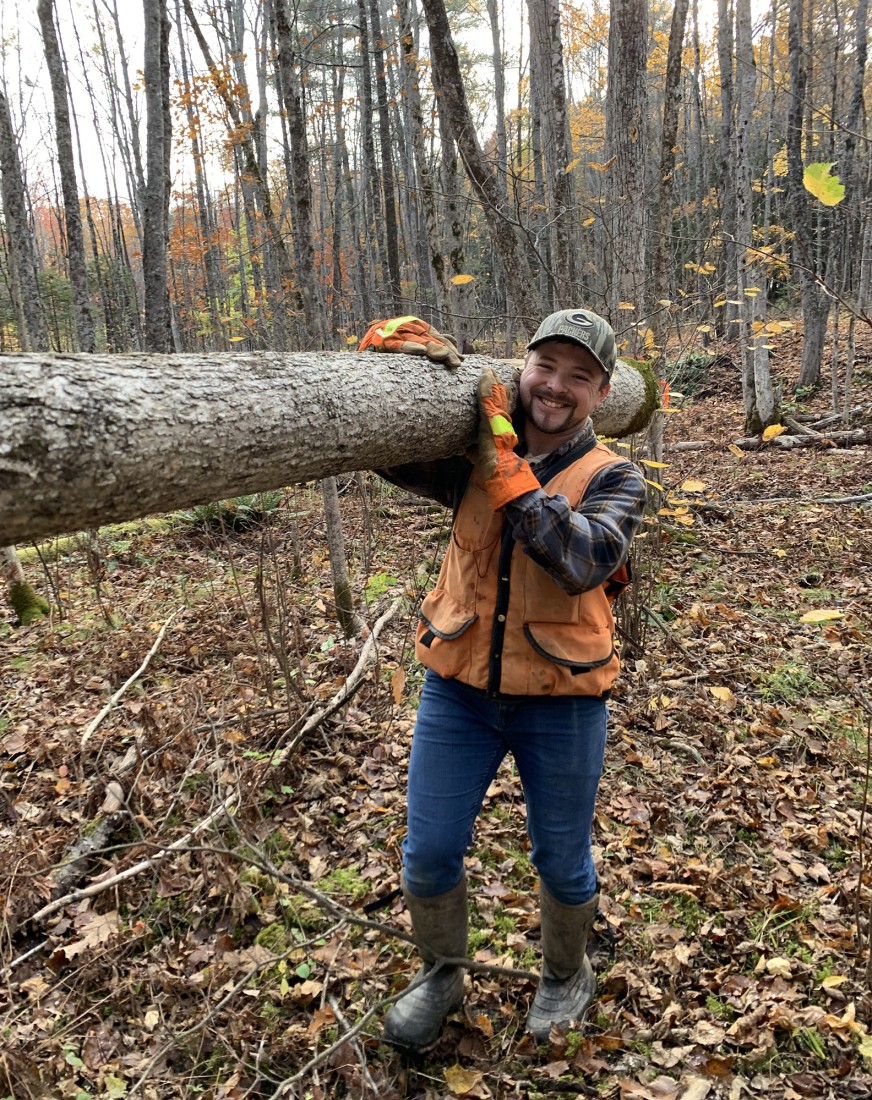
Tyler Everett is a PhD candidate in forestry at University of Maine, specializing in emerald ash borer and its impact on Tribal ash resources, and a citizen of Mi’kmaq Nation. He works as a forester with the Passamaquoddy Forestry Department and as the forestry resilience specialist for United South and Eastern Tribes, a non-profit that provides technical assistance to 33 federally recognized Tribal Nations in the southern and eastern United States. Tyler enjoys fly fishing, hunting, taking his dog Daisy for adventures, and rooting for the Red Sox and Green Bay Packers.
I grew up in Waterboro in southern Maine. From an early age, I loved fishing, hunting, cross-country skiing, and hiking. Most of the things that I did as a young kid were in the outdoors. I knew that when I got older, I wanted to do something where my career would put me outside as much as possible. In high school, I really enjoyed my biology class a lot, especially the topics in ecology; I liked being able to put a narrative to what I was seeing outdoors.
I went to University of Maine in Orono and started out as in environmental engineering. When I started to talk to some of the older students, I realized it wasn’t going to be quite what I had envisioned. I switched to biology with a forest ecosystem science minor. I wasn’t thinking about forestry so much as a path then, but an opportunity came up to get involved with Tribal forestry.
I’m a citizen of the Mi’kmaq Nation, a Tribal nation in Aroostook County in northern Maine. Most of the Mi’kmaq people are on the Canadian side; my family came from Nova Scotia into northern Maine and then eventually made their way to southern Maine. I found a Bureau of Indian Affairs (BIA) program that I could apply for to get funding for a summer job in a forestry department with Wabanaki Tribal Nations, and I got a position with the Passamaquoddy. Summers of my sophomore, junior, and senior year of college, I interned as a forest technician. I had been hunting in the Jackman area of western Maine before, but at first, it was daunting to live out there in a forestry trailer. The first week of my first summer there, I was bummed out, but I had my fishing rod and my mountain bike, and pretty soon I realized it was the perfect playground after work.
I was learning about forestry in the curriculum at school, but it was different than Tribal forestry; working in Tribal forestry really highlighted aspects of the curriculum I liked the most, like the importance of community and cultural connection to the land. There’s a real emphasis – in all forestry – about aligning management with landowner priorities. With the Passamaquoddy, it’s really about aligning management with community values. There’s a lot of attention paid to the cultural importance of the land, and to the flora and fauna of the forest. The thinking is more about protecting the relationship with the land than about the land as a resource, and forestry is a way of maintaining the relationship. So, if you think about hunting, it’s about being a steward to the moose, and about creating habitat that invites opportunities for Tribal hunters, which requires listening to hunters and wildlife biologists to support that relationship.
After graduating, I took a year off school to work and to find funding to support my pursuit of a master’s degree in forestry, so that I could be a licensed forester in Maine. Because I wasn’t a student, I couldn’t use the same BIA program to work with the Passamaquoddy, so I worked as a forest technician for Jeff Meserve, who was a consulting forester in central Maine under the company Oversett Forest Management. Jeff did a lot of consulting work with the Passamaquoddy Tribe and other small landowners in western and central Maine. I learned a lot from him in that time. Then I was able to get funding from USDA-APHIS (Animal and Plant Health Inspection Service) and go back to UMaine.
I was looking for a thesis project and approached my supervisors at the Passamaquoddy Forestry Department, who helped me think of some topics I could focus on. I thought I was going to write about their sugarbush, but then I was invited to join a Brown Ash Task Force meeting. The group was made up of state and federal agency representatives, Tribal natural resource and forestry staff, and basket makers and ash harvesters. The discussion was all about sharing information: what do we know about emerald ash borer? What can we do to respond? How do each of our groups approach this topic? By the end of the meeting, I thought I could help find information by inventorying brown ash wetland forests, and that protocol could be what I focus on during my degree.
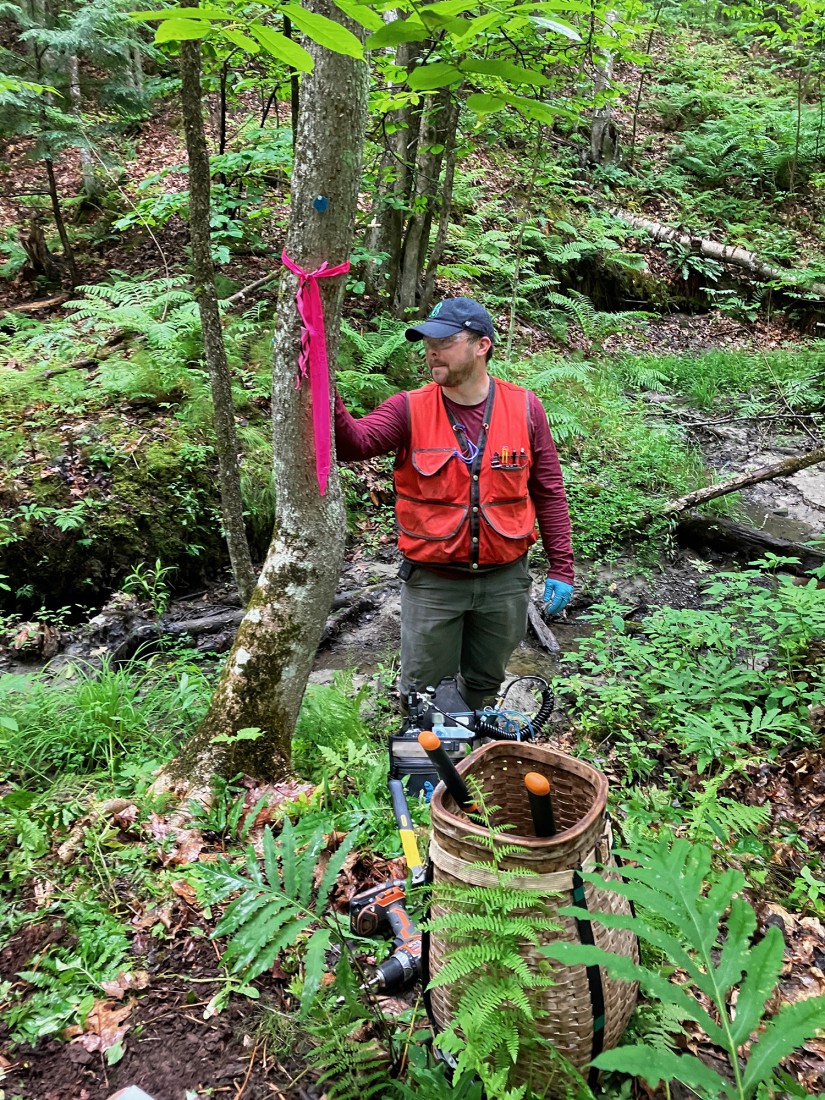
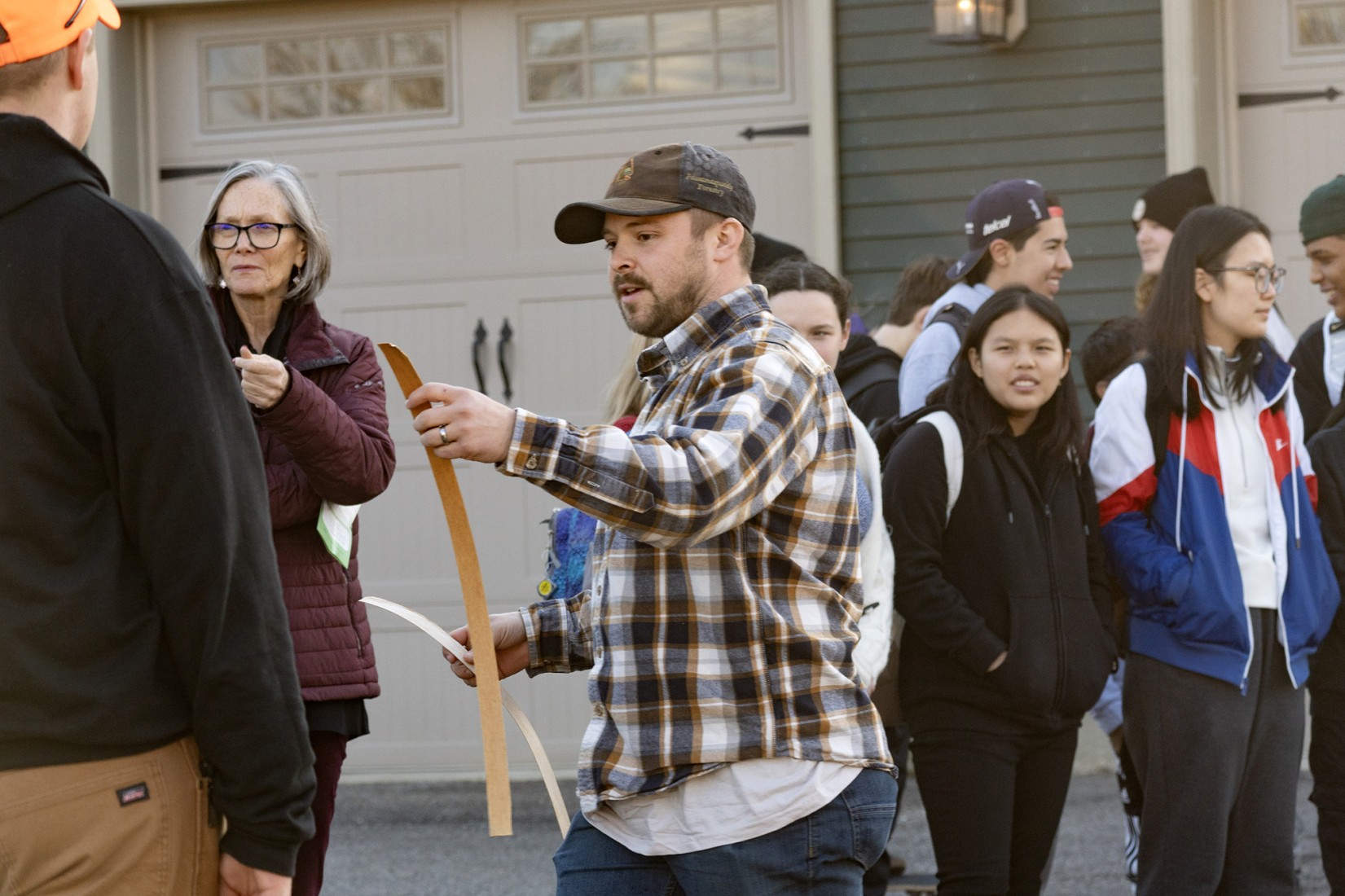
I created a three-tier inventory for identifying and inventorying brown ash stands. The first step is walking the perimeter of where ash occurs to create a map of the area to bring it into GIS. In GIS, I would place forest inventory plots and then go back and do the inventory as the second step. I tried to align methods for inventorying with traditional inventory methods used on Tribal forestlands. The third step is an additional inventory for high-priority sites – those that are particularly culturally valuable – where every tree is measured. In practice, it’s pretty challenging to carry out this third phase, but I did it for a few sites on Passamaquoddy Tribal Trust land. I also did a demonstration day of this inventory approach, where I invited a big group of Tribal foresters and natural resource staff and basket makers and ash harvesters out to learn how it is done. At the end of this work, I was left wondering, “Now that we know where these ash stands are and what each site looks like, what can we do for management?” That was my call to go on and do a doctoral program.
I started my PhD at UMaine in 2020 through funding from Northeastern States Research Cooperative. John Daigle became my advisor; he’s a Penobscot citizen and very involved in emerald ash borer (EAB) work. First, I did a lot of work to identify new ash stands through outreach and surveys. Then I did initial inventories of a number of sites on private land. After that I worked with landowners to apply silvicultural treatments to their land to manage for EAB. I focused on patch cuts and strip clearing because they seemed to be effective prescriptions for regenerating brown ash in a set of bottomland hardwood silvicultural trials in Wisconsin, and I wanted to have a local demonstration area to inform management in the Northeast that explored the same strategies. I had the idea to choose sites at several distances from known EAB infestation points so I could study how these sites with different treatments progressed once infested, but it’s ended up being very dynamic and hard to predict the spread of EAB. The plan is to return to these sites every five years to gather data on ash regeneration; it might be me who does this work or a future graduate student. Either way, I hope to stay involved.
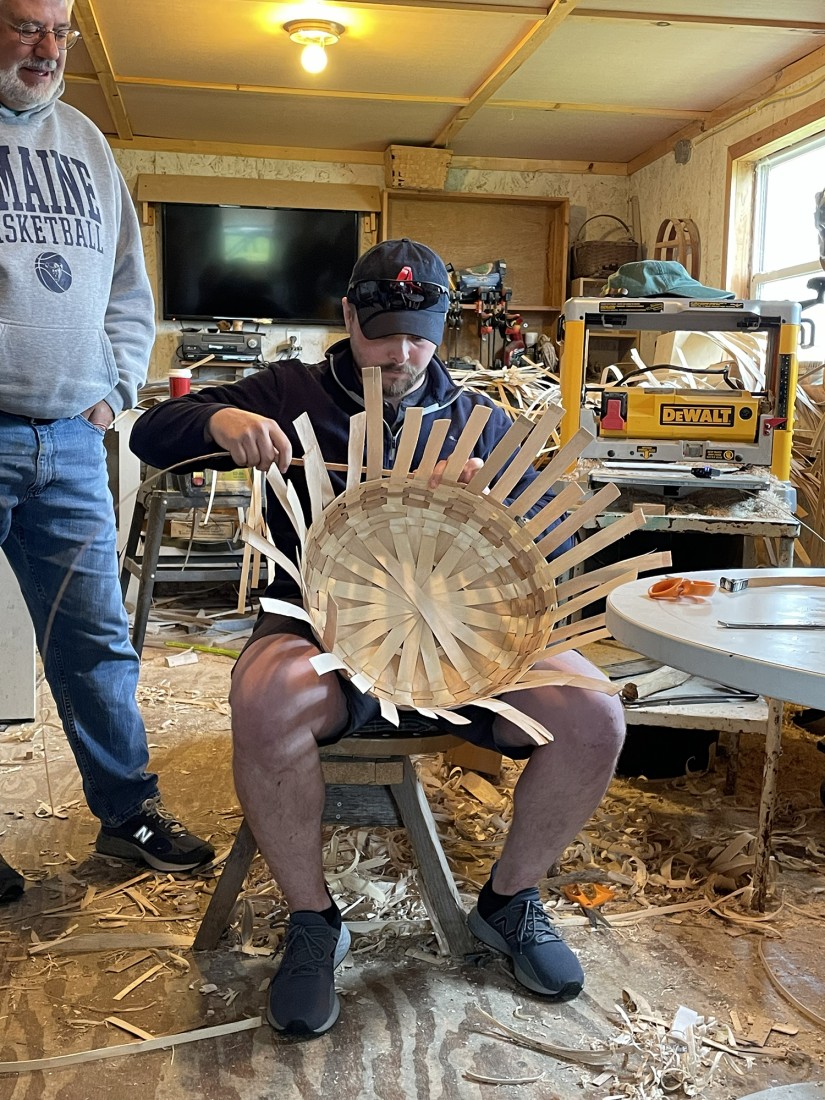
My great grandparents both made baskets, and my grandparents and uncles and aunts made baskets a little here and there. I had a connection to the tree before I started my research, but then, when I was working in Jackman, I made friends with community members that harvest basket wood, and I learned more. It’s really hard to hear about the strong connections with and family histories at these brown ash sites, and to think about how that – and their livelihoods – will be drastically impacted. I have met so many people in the community who are not foresters and who have other professions but know so much about EAB, especially locally. It’s a community priority to respond to emerald ash borer, and people are willing to take the time to learn about what is happening with it. There is a cultural responsibility to care for this tree.
The Passamaquoddy Forestry Department has been collecting brown ash seed, and now we’re propagating some of it at a nursery, and those saplings will be outplanted at some of the silvicultural sites I studied. It’s a way to focus on genetic resistance and breeding programs. I’ve also seen more students focusing on brown ash and getting involved with the task force. There’s the Ash Protection Collaboration Across Waponahkik (APCAW) research group at UMaine now, which brings together forest researchers and Wabanaki Tribal members. The Wabanaki Youth in Science (WaYS) program is an effort to connect western and traditional knowledge; it has served some Wabanaki youth similarly to the BIA program that was really important to me, but it’s homegrown, which is really cool.
I’m working on writing and finishing up my PhD now. I’ll keep working in this space of trying to protect brown ash. In addition to working with Passamaquoddy, I also work at a Tribal non-profit, United South and Eastern Tribes. We work with 33 federally recognized Tribal nations across the East Coast from the Wabanaki homelands and the northeastern woodlands down to the Everglades and across the Gulf of Mexico. I get to work with all these different forestry departments and talk about the work that they’re doing and find ways to support their work and provide technical assistance to them.
Working with so many different people, it’s interesting to see the different values that are driving people’s efforts toward this common goal of protecting ash trees. It’s been really great to connect my forestry work and research to my cultural identity and being Mi’kmaq. I have learned so much through classes and professors, webinars and textbooks, but also so much that can only be shared in the forest and walking with people who know the land. There’s a real hopeful element in having this network of people who care – whether it’s a cultural lens or a genetic lens or an ecological integrity lens that they have. When we start to really make progress on ways to maintain ash on the landscape, there are people there who will help make it happen.