
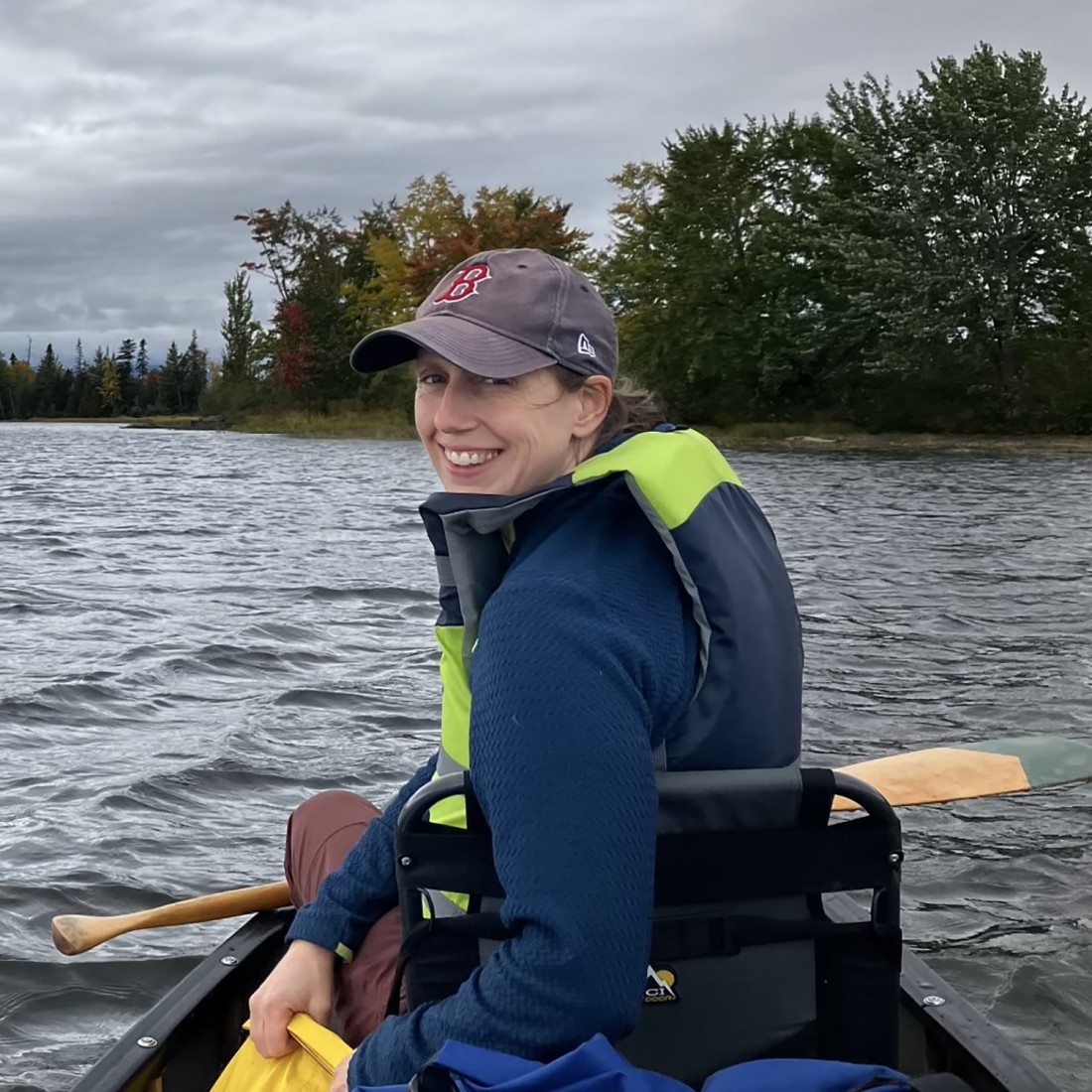
Becky Fuda is the deer project leader for New Hampshire Fish and Game, where she oversees all planning relating to deer management. Becky completed a bachelor’s degree in environmental science at Boston University and a master’s in fish and wildlife biology and management at SUNY-ESF. She worked in several wildlife technician roles across the country before returning to the East Coast in 2021. Becky enjoys hunting, hiking, gardening, canoeing, and cross-country skiing.
I grew up in Boston, but my family would come up to New Hampshire in the summer and go hiking. I didn’t really have any exposure to hunting, just fishing and clamming on Cape Cod as a family. In high school, I was interested in science and biology, but I didn’t really know about wildlife management because I didn’t know anyone who did that for work.
I went to Boston University and majored in environmental science and minored in biology. I studied abroad in Kenya and did a wildlife management program there and really enjoyed that. We learned about all kinds of wildlife, but big game was really the focus there, because it’s a big attraction to Kenya. And we talked about human-wildlife interaction a lot. That program cemented that I wanted to go into wildlife management. I did some internships in college, too; I monitored piping plovers in New York City with the Student Conservation Association, and I interned at a zoo as well to see if I might like that, which I did not.
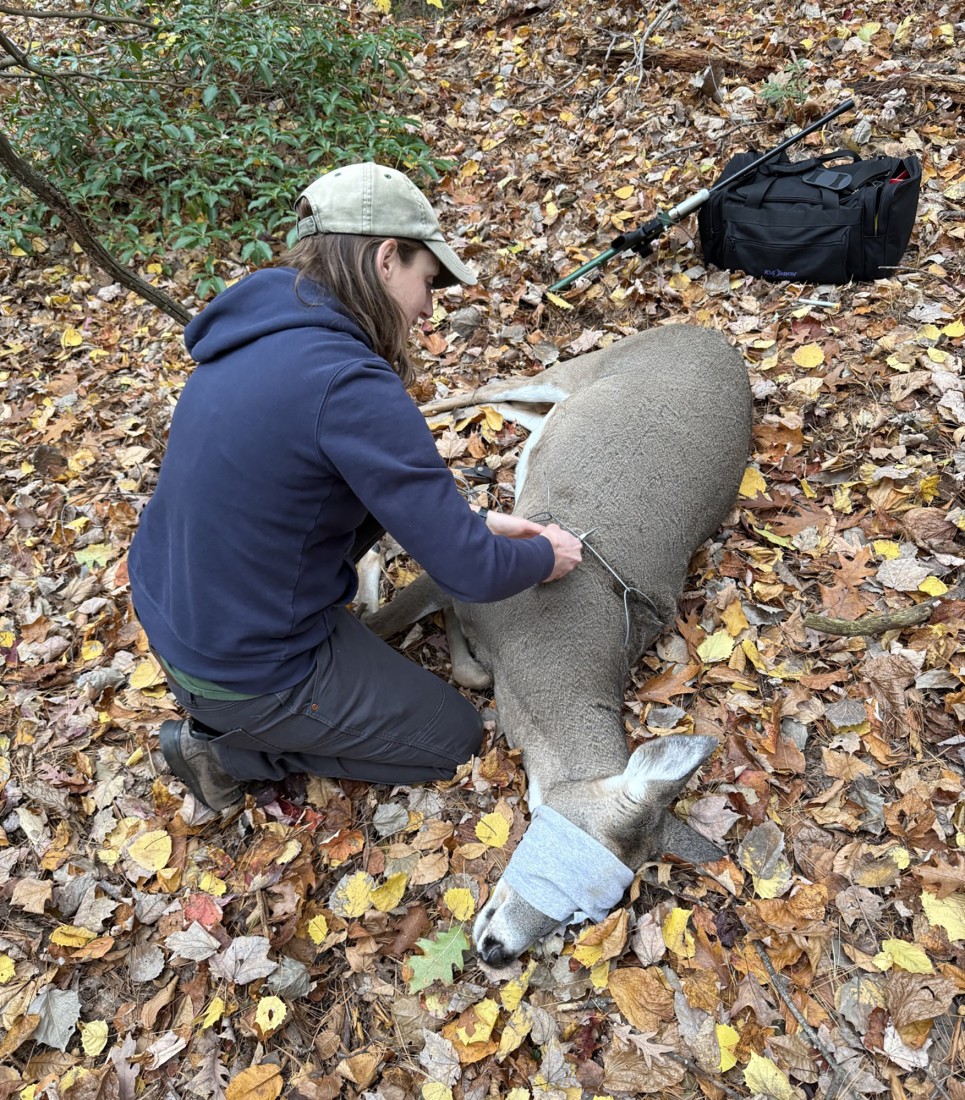
When I finished up school in 2008, I got a seasonal job doing songbird surveys in Washington state. I worked for a bit as an intern for the California Condor Recovery Program with U.S. Fish and Wildlife, but funding got cut soon after I started. The economy was really bad, and it was kind of a rough time. I bounced around doing non-wildlife jobs until I went back to school to get my master’s.
I got a master’s degree in fish and wildlife biology and management at SUNY-ESF. I studied large mammal distribution and how it related to restored oil wells in a national park in Uganda. I looked at a lot of different mammal species and found they were not actively avoiding the well sites that had been restored to natural habitat.
After graduating, I went to work at Tufts University as a lab manager working on butterflies. Next, I worked with MassWildlife in a seasonal role. I didn’t land anything permanent, but I realized I liked working for state agencies. I moved out to Wyoming and worked for Wyoming Game & Fish Department for three years. I started out working on elk and brucellosis, which is a disease that elk have in western Wyoming, and then later worked on grizzly bear and wolf conflict. In Wyoming, I started hunting, which I didn’t do as a kid – people call it adult-onset hunting. I took up elk and pronghorn hunting.
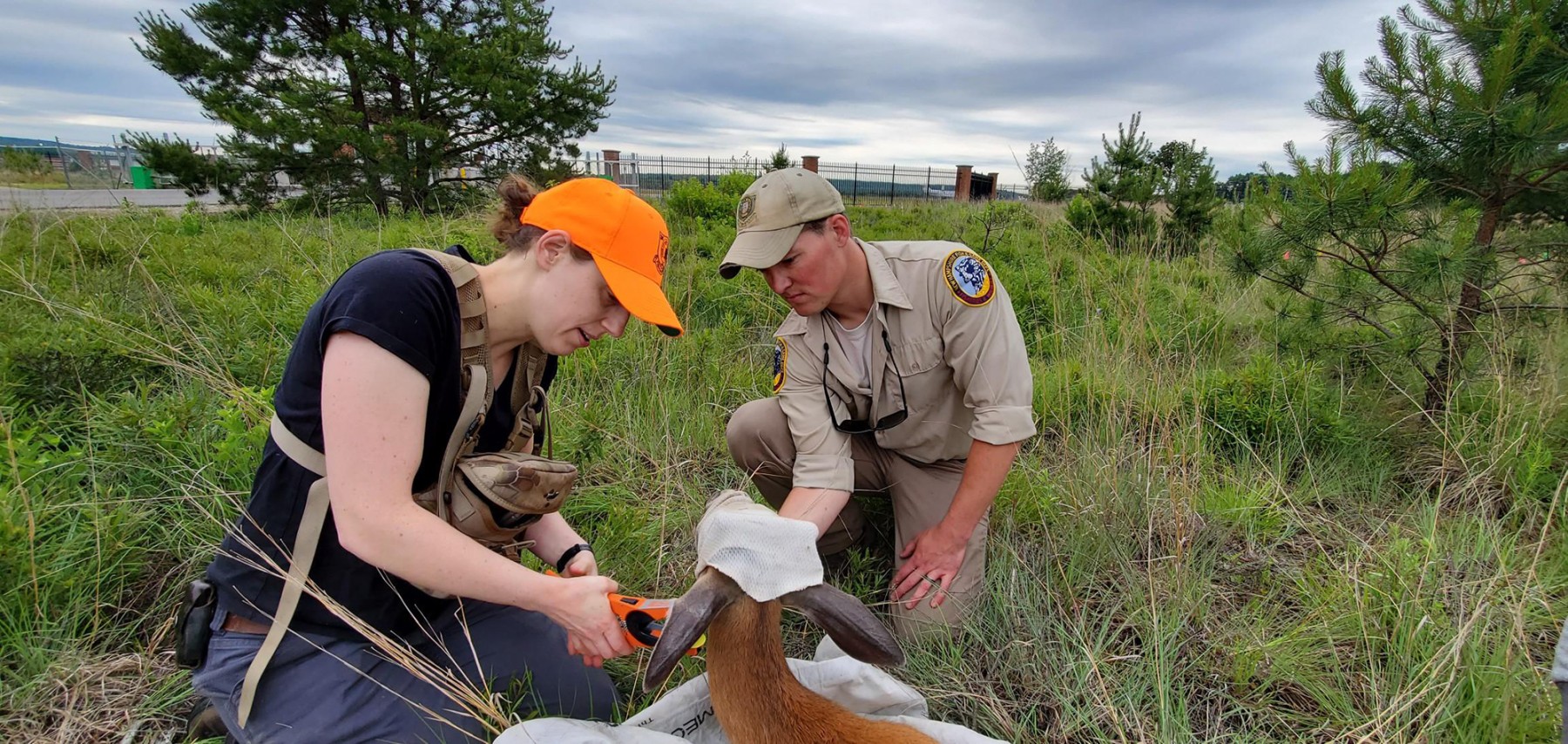
After three years as a technician there, I moved to Oregon. I worked with wolves there for a bit before switching to be a general district biologist, covering all kinds of wildlife. I was there for another two years, but during COVID, my husband and I started feeling like we wanted to move back to New England to be closer to family.
I was lucky enough to get a job as the deer project leader with New Hampshire Fish and Game in 2021. I coordinate our deer management program. Every other year, we propose changes to our hunting seasons and make adjustments if necessary. I keep track of how our deer herd is doing in our 13 different wildlife management units. I’m responsible for developing proposed changes to the hunting seasons and soliciting feedback from within the department, as well as from the public. In New Hampshire, if you harvest a deer, you are required to register it, whether it’s online or in person, so I’m also responsible for putting together registration materials for our 40 or so registration stations around the state. I also summarize data and write reports on all the information that’s collected during the hunting season from those deer registrations.
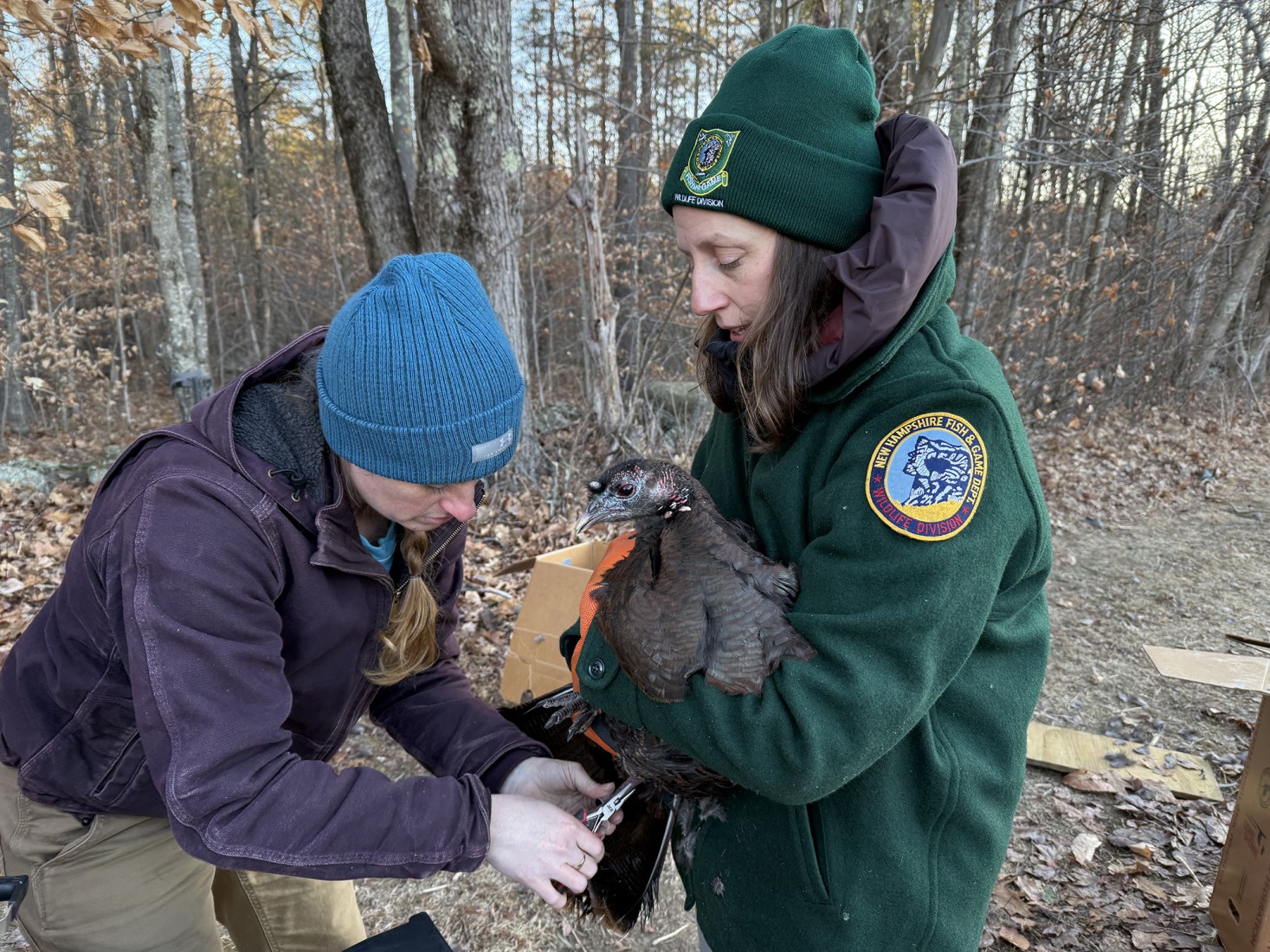
On the busiest days of the hunting season, I coordinate 15 to 20 staff members to go out to the registration stations and run biological check stations. This is when additional data is collected on weight, age estimations, lactation status, and antler measurements. We also sample for chronic wasting disease, which involves extracting lymph nodes at the top of the neck. We used to sample for it by collecting deer heads from butchers, but this year we’re going to do that work at the stations, which I think will be more efficient.
Chronic wasting disease, a fatal neurological disease that’s currently in 37 states and 5 Canadian provinces, is a big concern. It’s always a fatal disease, and it’s spread by a misfolded protein called a prion, which is present throughout a deer’s body, but concentrated in the brain and spinal cord. It’s never been detected in New Hampshire – or any of the other New England states – but its range has spread quite a bit in recent decades, and it has been found in New York and Quebec. It’s a huge management concern, and it’s safe to assume it’s eventually going to come here. Early detection is essential for limiting its spread. Prevention is super important, so I want people to be aware of our carcass importation restrictions; if people hunt out of state in places where chronic wasting disease (CWD) has been detected – like New York and Pennsylvania – they can’t bring back high-risk parts of the deer. Hunters hunting out of state should check our website for details on restrictions before bringing any deer back to New Hampshire. CWD spreads very easily via prions; the prions can even be present in urine and remain in the environment for several years. Because of this, we also ask folks not to use urine-based lures, because sometimes they’re made at captive deer facilities that have CWD.
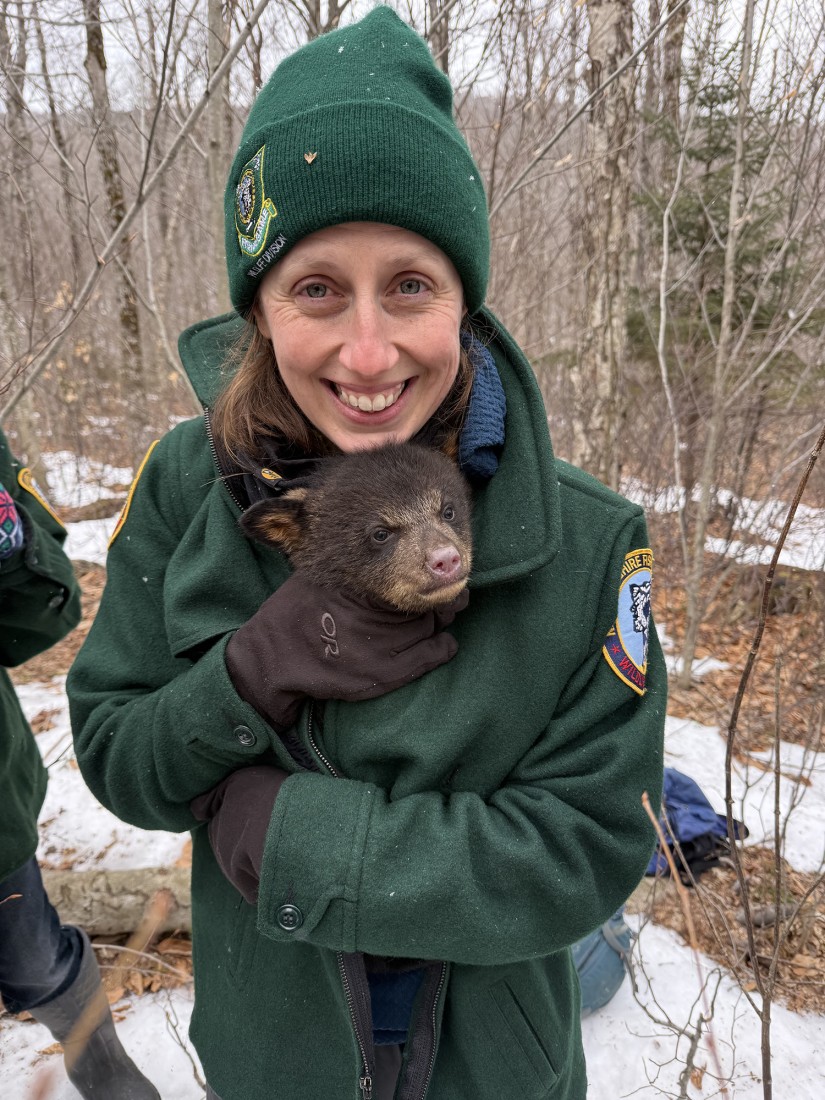
Every 10 years we update our game management plan. We just completed an update last year. It involves a big public survey where we ask people how they feel about the deer herd in their county, whether they want more or fewer deer, and that’s something that’s taken into consideration. The deer herd is doing very well. Historically, deer populations in New Hampshire are less dense than states further south or in the Midwest; we’re a pretty low-density state. The deer population really tanked in the early 1980s, but it’s been growing since then. Last year, we had our highest harvest on record. Many states have problems with overabundant deer; that’s not something we’ve seen widespread impact from, but we’re keeping an eye on it. We don’t want that to happen, so we’ve been increasing opportunity for harvest of antlerless deer to prevent overabundance.
I find getting to be outside for work a lot really rewarding. I appreciate having so much variety in the job. We have a great team at New Hampshire Fish and Game, and we all help each other out. So even though I focus on deer and am in charge of coordinating all the work around it, I also get to go out with other folks and help them with their work and they help me with deer-related work. Some days I might be trapping ducks or geese or doing turkey surveys. There’s a lot of opportunities to do different fieldwork throughout the year. Getting the chance to be outside and do wildlife work always makes me happy.