
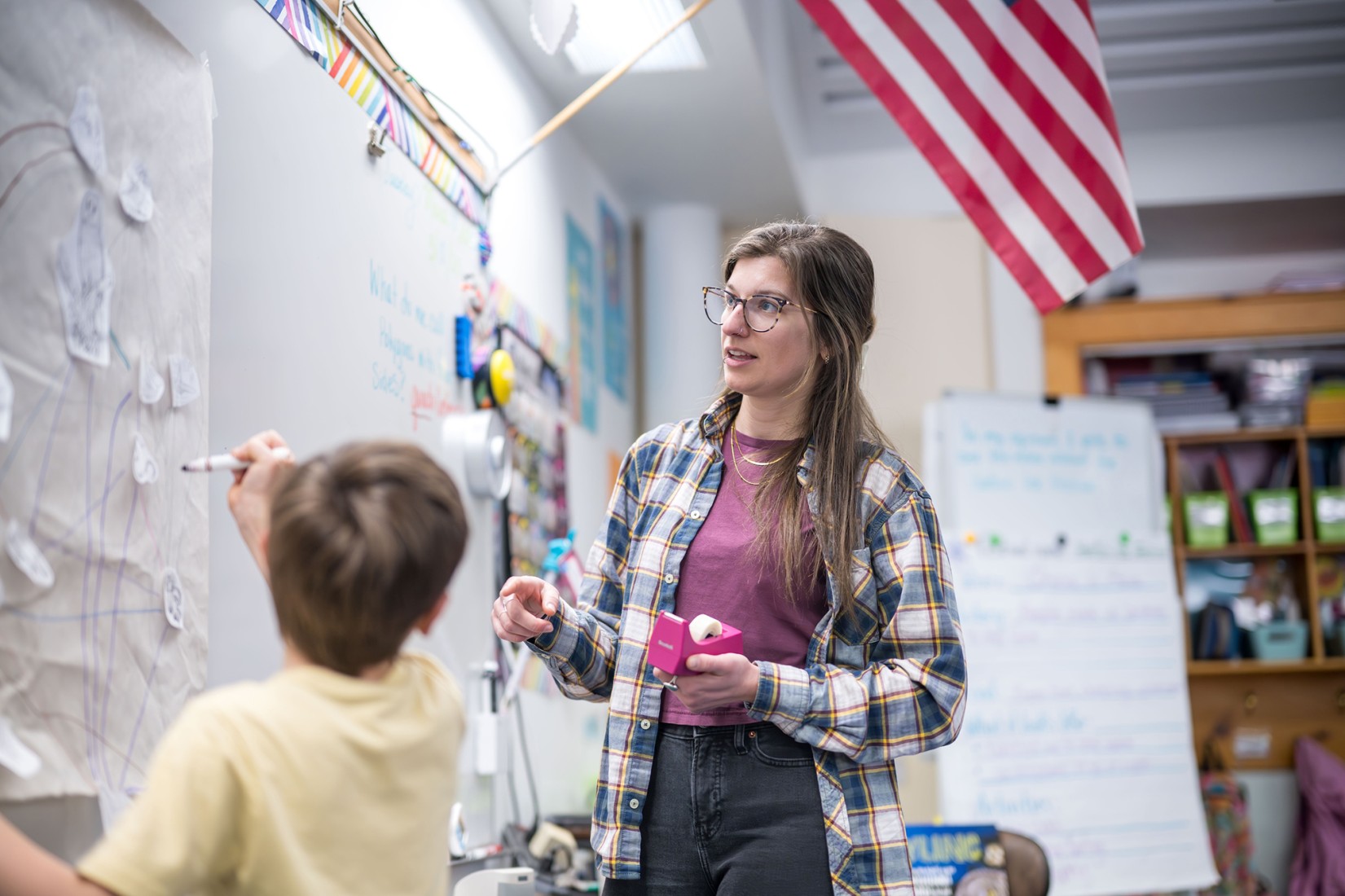
Nikko Gagnon is a teacher and naturalist at the Harris Center for Conservation Education in Hancock, New Hampshire. Nikko studied environmental science at University of New Hampshire and worked at a number of environmental education organizations in California, Maine, Washington, and British Columbia, before moving back to New Hampshire to earn a master’s in environmental education at Antioch University. When she’s not leading learners of all ages in nature programming, Nikko enjoys paddleboarding, hiking, and rock climbing.
I grew up in southeastern New Hampshire, in a little town called Sandown, near Derry. I camped a lot with my family, especially in Maine and New York. We’d spend days just doing nature walks and canoeing, learning how to fish, and being outside. I would play in the woods behind our house a lot, too. In school, I really liked English. I was also interested in science – I just wasn’t a great student in that subject. But toward the end of high school, I really started to feel a responsibility to help the environment and decided I wanted to study environmental science.
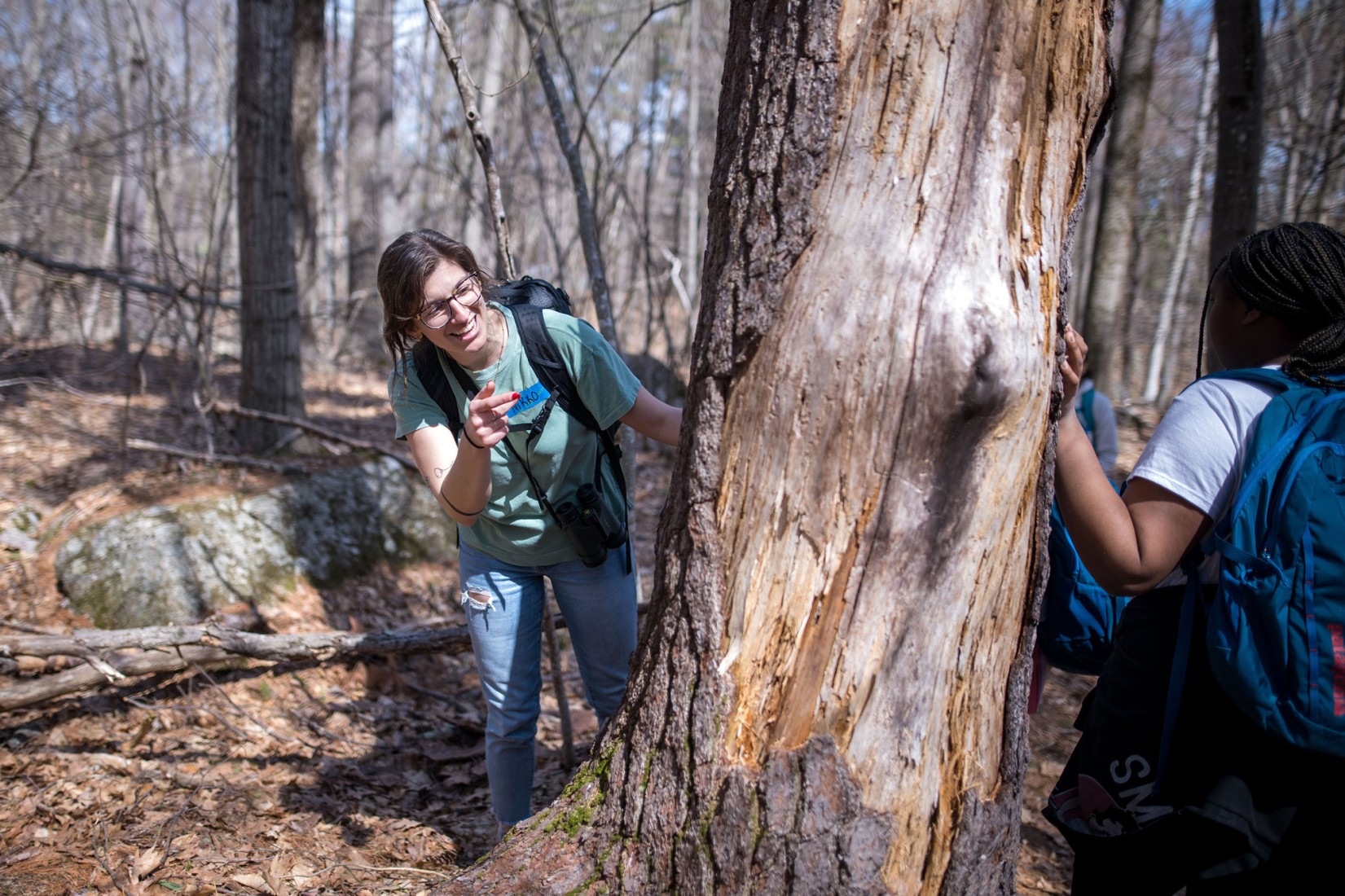
I went to the University of New Hampshire in 2007. I took a great forest ecology class there, and we spent a lot of time in different forest habitats near UNH. I hadn’t done a lot of hiking at that point, and my professor moved through the landscape so fast. I loved learning about the interactions of trees and soils and learning about how connected everything is. I worked in the Stable Isotope Lab, in the summer between my junior and senior year, so I got to spend time in the Bartlett Experimental Forest in the White Mountains to help do soil sampling there. It made me realize I wanted to spend more time in the field. It also made me realize that I didn’t want to do lab work, as I spent a lot of that summer and the following summer – after I graduated – just in the lab.
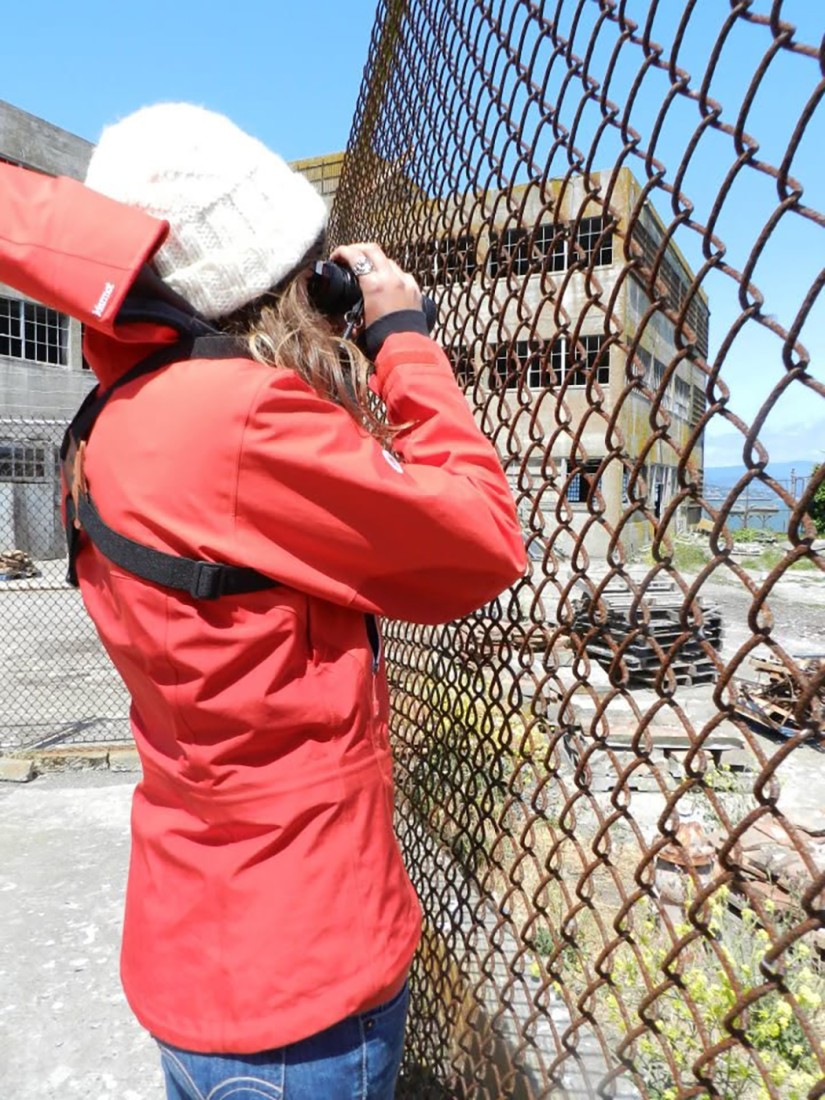
In 2012, I moved out west and got a position studying seabird populations on Alcatraz Island in San Francisco Bay. It paid almost nothing but offered housing. A lot of my job was interacting with the public when they’d ask what we were doing with spotting scopes or binoculars. We also had a student group come from Oakland; my supervisor asked if anyone would give a little presentation on the work we were doing, and I offered to do it. I had the best time teaching the kids and helping them look for birds. It made me realized I wanted to work in environmental education. When that job ended, I moved to Tahoe, where my partner was, and then we moved to Seattle together. I was working in restaurants and wasn’t quite sure where I wanted to go next.
I decided to do more environmental education work and was looking at jobs back on the East Coast. I ended up getting a field teaching position at a University of Maine 4-H camp at Bryant Pond. In spring and fall, we offered overnight programming for schools – we’d teach environmental topics and do the high-ropes course – and then in summer, we had nine weeks of overnight camp. I went back out to Seattle and got a job at Mercer Slough Environmental Education Center for a bit. Then came back to Bryant Pond and worked as a program coordinator. I stayed there for three years.
I was offered the position as the assistant director of the camp. It was different because instead of teaching kids, I was training staff. I found a lot of value in helping them figure out the best way to do their job. Some kids came from families dealing with food insecurity or drug problems or other challenges, and I found the socio-emotional aspect of helping staff understand kids really valuable.
After Covid, I wanted to get back to New Hampshire, and I was applying for jobs but feeling like I wasn’t qualified for them. A lot of places wanted to see a master’s degree, and I also felt like I was missing some of the pedagogy of environmental education. I found Antioch University in Keene. It was perfect; I really wanted to be in New Hampshire, and Antioch is really community-focused, which was important to me, especially after Covid. It was a great environmental education program, and I learned so much from professors and other students.
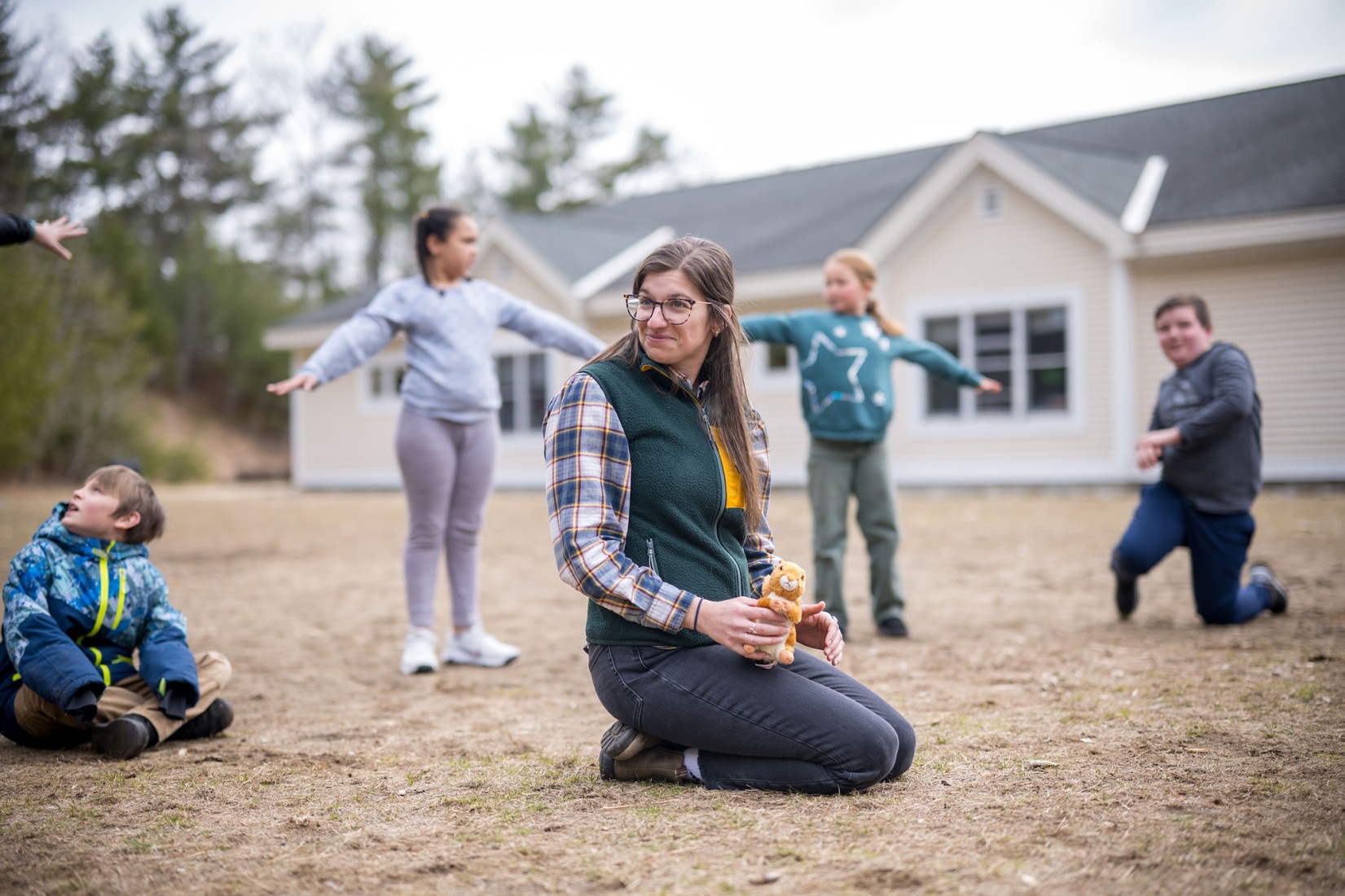
I told my advisor that if I stayed in the Monadnock region, I would love to work at the Harris Center. I was lucky that the timing worked out where they were looking for an educator. My role there is as a teacher-naturalist, and the role has been such a wonderful fit. It is a perfect mix of being independent and having structure. I work with school and community programming. For school programming, I communicate with the teachers at the schools we work with, and we decide what the lessons are going to look like. We have standard things that we typically cover; second graders often learn about pollination, and third graders do bird studies, but there’s a lot of room to build new curriculum, and we are also given the creative license to work with teachers to create programs that work for them. During summer break and school vacations, I also work as the camp director.
For community programming, I give presentations in retirement homes and lead walks and hikes in the area. It’s wonderful to be involved with so many different folks. I really like working with third and fourth graders; I feel like that’s when you can start asking some deeper questions, but they also still want to play games and have fun. But I feel like there’s something at every age that makes it pretty special. Helping someone feel seen, no matter what subject I’m teaching, is the most important thing to me.
I love hearing people’s stories. I recently gave a presentation on beavers in a memory unit at a retirement home, and people had great stories from throughout their lives of dealing with beavers on their property and visiting beaver ponds – just all kinds of stories. I think making those connections is so important in recognizing the collective experience we have in nature. Another program I help lead walks for is called “Babies in Backpacks and Toddlers in Tow,” where we go out with young families and experience whatever nature has to share that day, whether it’s acorns, icicles, or flowers. It is so much fun to see the world through their eyes. It makes me appreciate how there’s always something to learn or wonder about when we are outside. I’m so happy to be able to share that with people.