
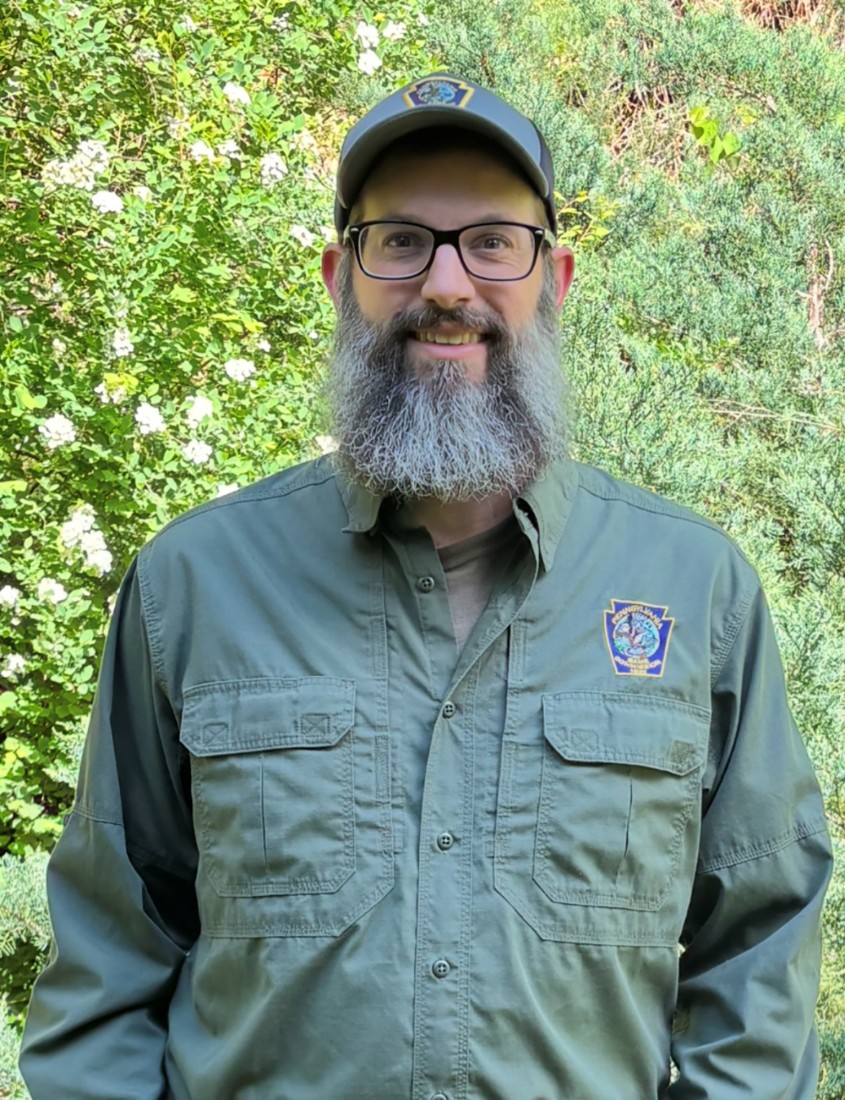
Mike Scafini is the endangered mammal specialist for Pennsylvania Game Commission. Mike’s love for wildlife conservation has brought him to Delaware for diamondback terrapins, to Pennsylvania for bog turtles, to Hawaii for nenes, and to Oregon for spotted owls. Mike completed his master’s at East Stroudsburg University and studied bat mortality related to wind turbines. When he’s not in the office or in a cave, he enjoys mountain biking, record collecting, and taking vacations with his wife and 4-year-old daughter.
I grew up in Voorhees, New Jersey, which is on the outskirts of the pine barrens in southern New Jersey. It was like this large outdoor playground for me to go explore. I would bike through our neighborhood woods. There were endless trails and waterways and just so much to explore; it was incredible. It really opened my eyes to what’s out there in some of these uninhabited places.
In school, I was always good at math and interested in science. But really, I couldn’t wait for school to be done so I could go out and play in the woods again. When I finished high school, I went to University of Delaware, about an hour away from where I grew up. I studied wildlife conservation. Junior and senior years I started to thrive because the classes got more specific, and it became really interesting. Doug Tallamy ran the wildlife program there, and he’s a super nice guy. He let me take a master’s level course (behavioral ecology) that I was interested in, and I appreciated that he let me do that and work alongside his graduate students. I graduated in 2005.
After school, I got hired by US Fish and Wildlife to do diamondback terrapin work. They were getting hit on Route 1, the road that goes through Delaware Seashore State Park. I got hired to monitor their nests. It was the saddest thing; every morning all their nests would be dug up by a fox or raccoon. It was easy pickings because they had such limited habitat.
Through that job I met someone who hired me to do consulting work in Pennsylvania, mostly working with bog turtles. For all the effort I put in, I was terrible at finding them! They’re in these tussock sedges, in mucky bogs. You just get down and root around with your hands – there’s no other way to do it than be up to your armpits in mud, getting all cut up by the plants. We did some telemetry with the turtles when we did find them. But I learned pretty quickly I didn’t want to do that work long-term.
I was there for about a year before I got a call from the Student Conservation Association about a job out in Maui doing work on the nene, the Hawaiian goose. I was like, “Well, why not?” A lot of it was setting traps for their predators – cats, rats, mongooses. I would spend most of my day hiking through Haleakalā National Park, which looks more like the surface of the moon than anything else! I lived in the park, too, and it was beautiful. I was there for six months. After all of this seasonal work, I moved back to New Jersey and worked a groundwater sampling job. It was a steady job which allowed me to start looking into graduate school options.
I went to East Stroudsburg University in Pennsylvania to get my master’s in biology. I studied bat migration and the impact of wind turbines. Out west, it’s primarily birds that get killed in wind turbines, but along the East Coast, it’s mostly bats. We have three migratory bat species in Pennsylvania – hoary, silver-haired, and eastern red – and they fly along the ridgetops as they’re migrating, which is right by a number of wind farms. When they get close to the turbines, their lungs explode, caused by the pressure difference. I looked at storm fronts and temperatures to figure out if there were any correlations; they hole up if there’s going to be a weather event, and they fly right after and that’s when a lot of mortality happens. I worked with wind farms to plan when to curtail the turbines to lessen the impact on bats. I graduated in 2010.
I took a job with the U.S. Forest Service in Bend, Oregon, primarily to call for spotted owls. A lot of it was reconning survey sites, playing a call at different stations, and listening for a response. If there was a response then we’d do what they call “mousing,” where you put a mouse on a stick and hold it up in the air. The owls reliably come down and snatch it up, and then you can see if they bring it to a nest and track reproductive success that way. I’d think, “Oh, there’s no way they’ll come near a person,” but they do! I did all kinds of other stuff with USFS too: mist netting for bats, educational programming, even prescribed fires and wildland fire fighting.
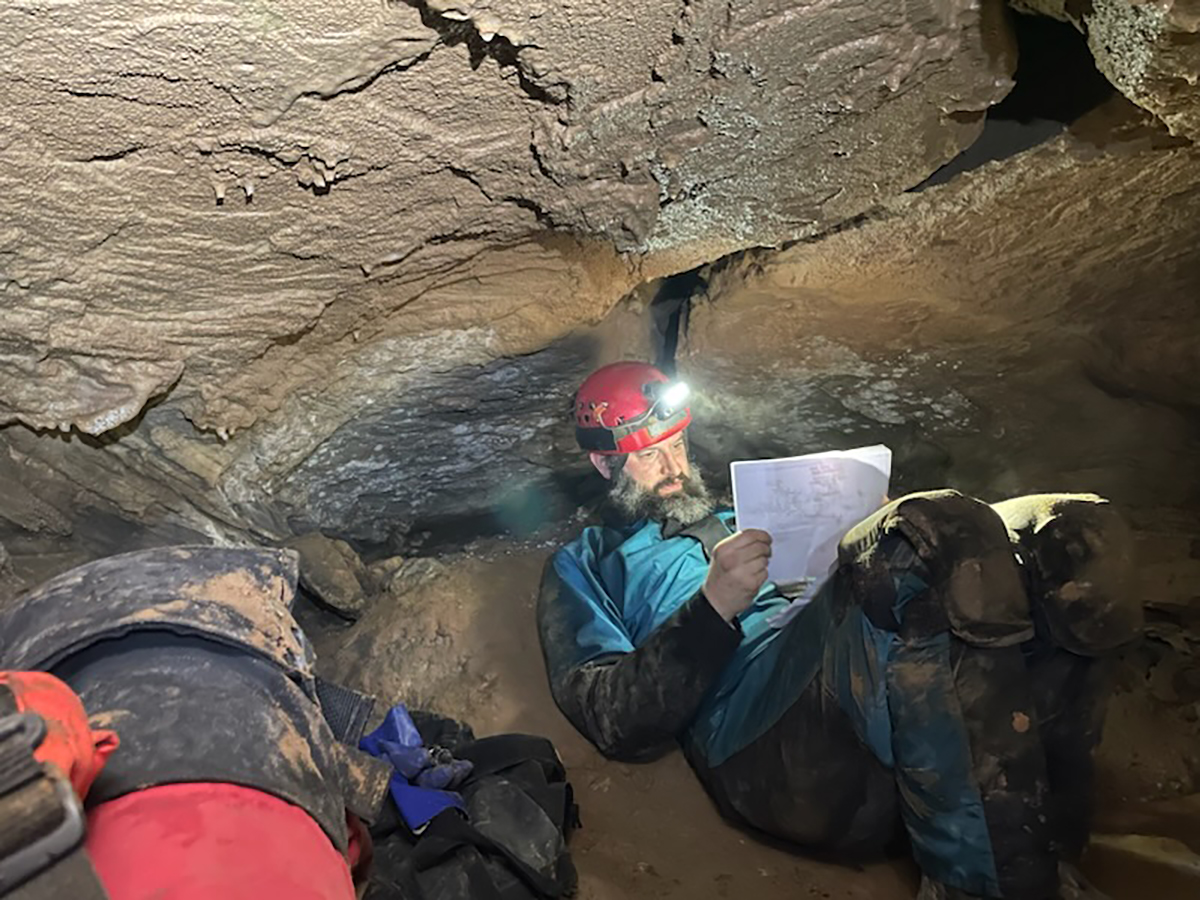
I started doing caving for bat surveys; USFS has a relationship with an organization called Oregon High Desert Grotto, which is where I learned rappelling and rope work. I got really into it, and it kicked off my interest in underground work. I was out there for about two years. I was able to stay on board for so long because I kept making myself useful, but I was looking for permanent full-time work, and it just wasn’t working out. I put in for jobs with Pennsylvania Game Commission and got a limited-term position. So I moved back to Pennsylvania in 2012, wrote game lands management plans for a few years, and then moved into the mammal position that I’m in now.
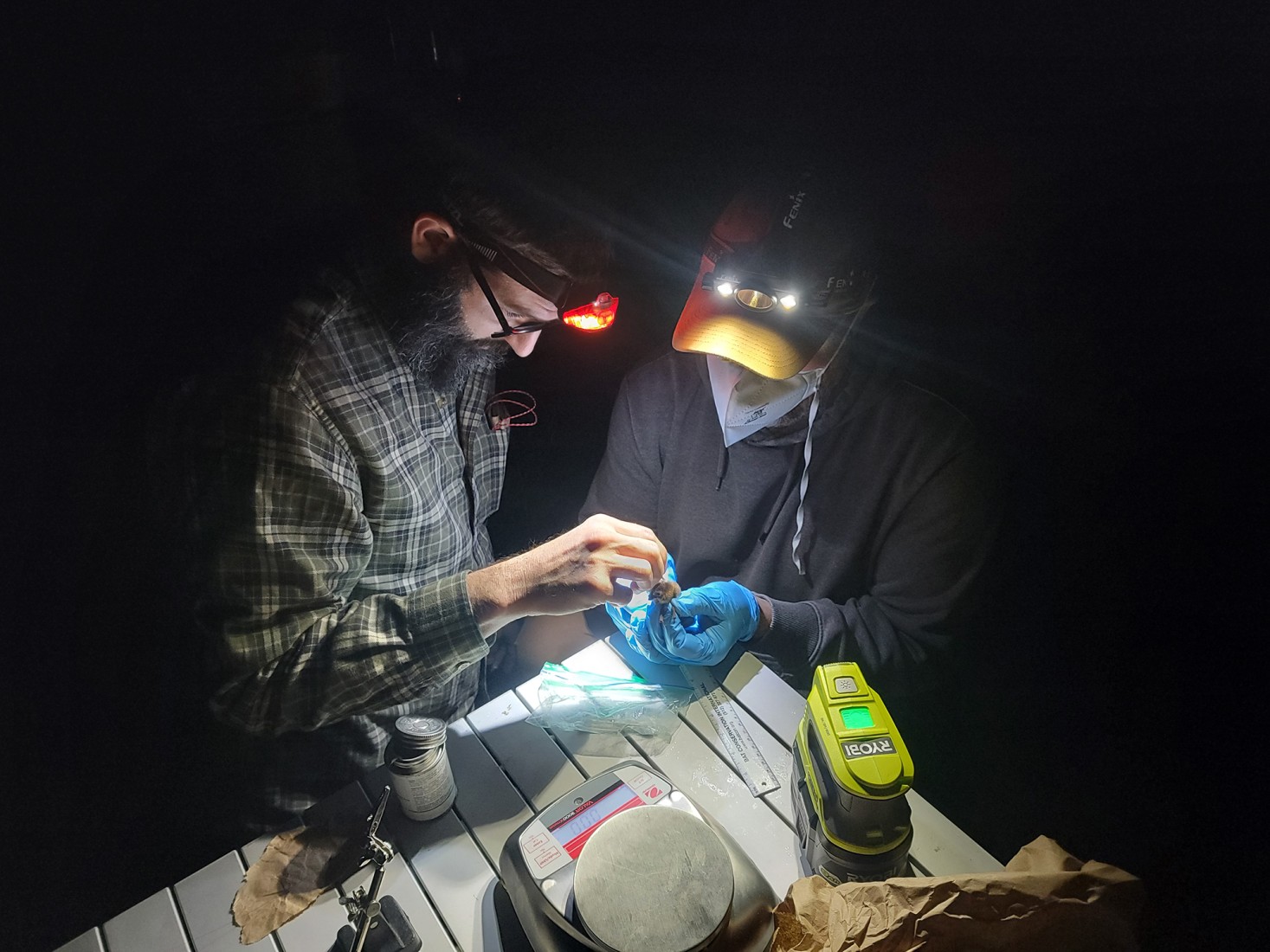
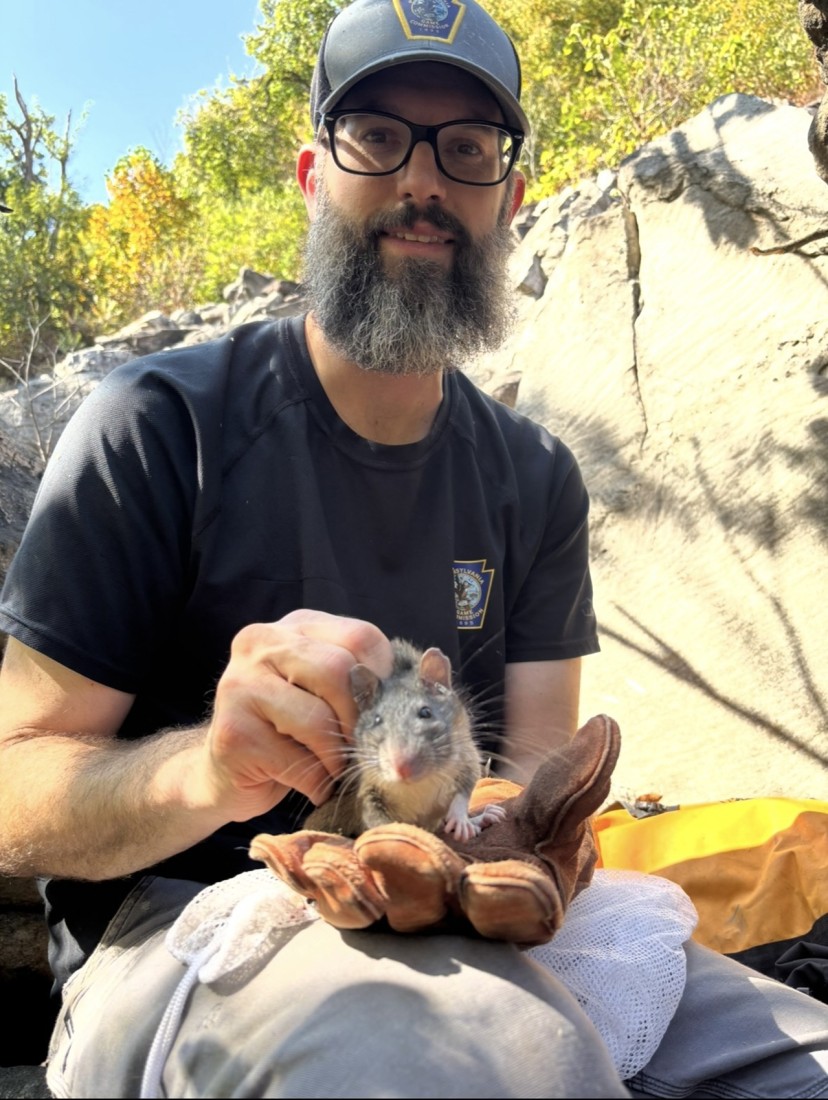
I’m the endangered mammal specialist; I mostly work with bats, but also with flying squirrels and Allegheny wood rats and some shrew species. The bat program is basically me and my supervisor and then six technicians around the state. I help with environmental review work and writing species-specific management plans. We’re doing lots of research, too. We’ve been spraying polyethylene glycol (PEG) into a select number of hibernacula in fall. PEG is harmless and is even found in a number of human products, like chapstick and toothpaste, but at the right concentration, it stops white nose syndrome fungus from sporulating and growing. It gives the bats longer to survive in the winter.
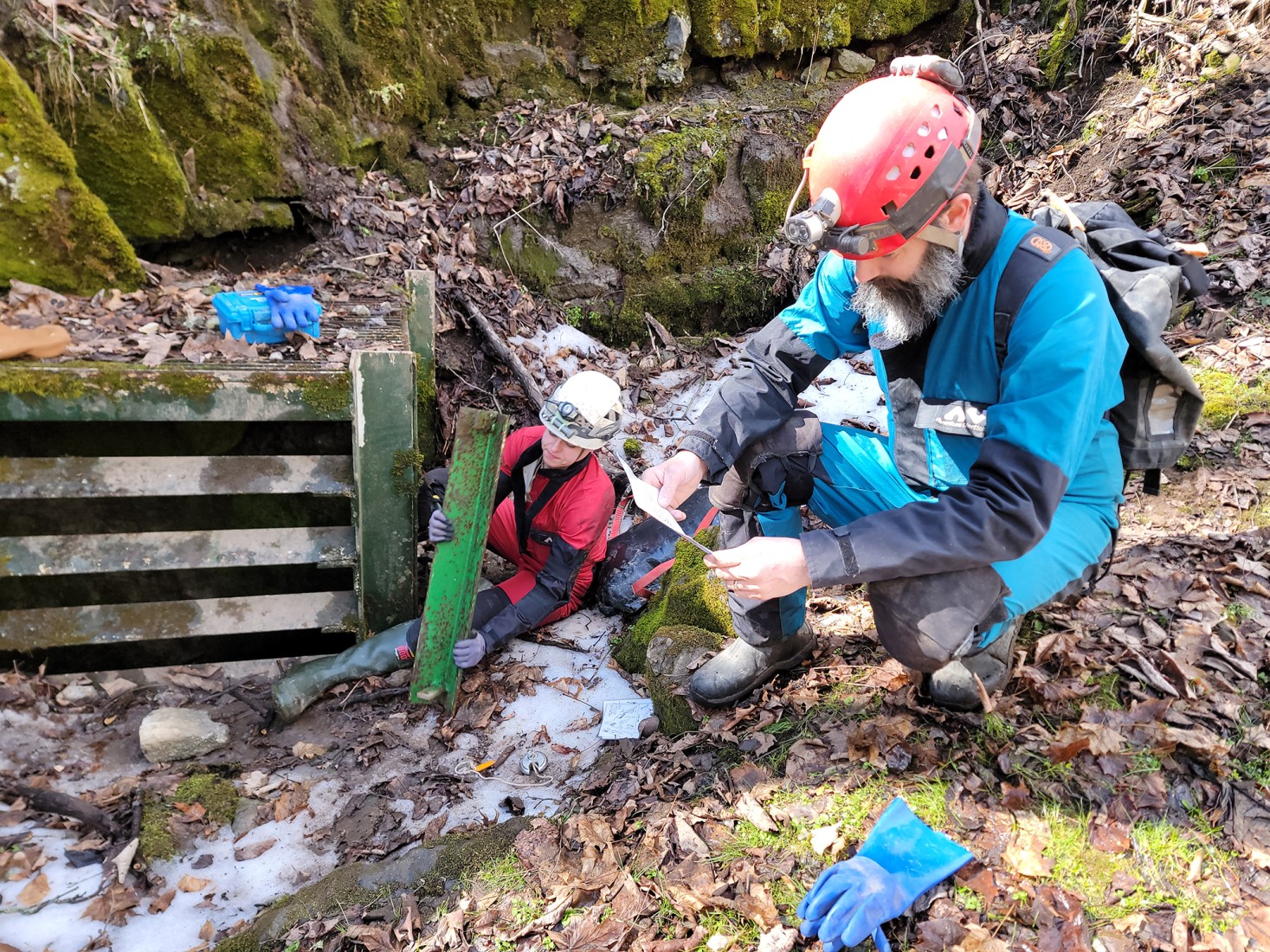
White nose syndrome, which was introduced into the U.S. in 2006 after some cavers accidentally brought it back from Europe, has drastically impacted our bats because it was completely novel to them. The fungus, Pseudogymnoascus destructans, can do a lot of damage. At one location, Canoe Creek Mine, we’ve historically had over 30,000 bats there, both little brown and federally-endangered Indiana bats. After white nose decimated the population, we were down to 72 bats there. We’re doing a lot of conservation work. Bats have started adapting by using colder sites – where the fungus grows more slowly. We’re trying to do habitat manipulation at some hibernacula by boring holes to vent air out so that the temperature stays colder. At one site that was down to less than a dozen, we now have more than 1,200 bats again, so that’s very encouraging. Human disturbance can also be a challenge. There’s kind of a cat-and-mouse situation going on at sites, where we gate them, but people breach them all the time and cut locks and bars off the gates, and all that. The biggest challenge is just like, “Where do we focus?” There’s so much to get done.
The best part of the work is just getting to see bats up close. I like seeing them in their natural state, in caves and mines and tunnels. It’s so interesting to see them hibernating – whether they’re clustered together or tucked way deep in the rocks alone. Every other year I go do work down in Hellhole Cave in West Virginia. They have tens of thousands of bats there, so they need a lot of biologists to come out and help. It’s 150 feet to rappel in, and then there’s rooms of thousands and thousands of bats within the cave system. It’s beautiful to see; we don’t have anything like that anymore in Pennsylvania. In the western part of the state, we used to have a site with 90,000 bats, and I was just out there and there were no more than 50 bats. It’s pretty devastating to witness and it’s going to take generations for bats to come back. But there’s so much we don’t know, and sometimes we’ll find a coal mine or another unexpected site that bats are using. There are survivors out there that we don’t know about. They’re remarkable creatures, so that gives me hope.
Discussion *