
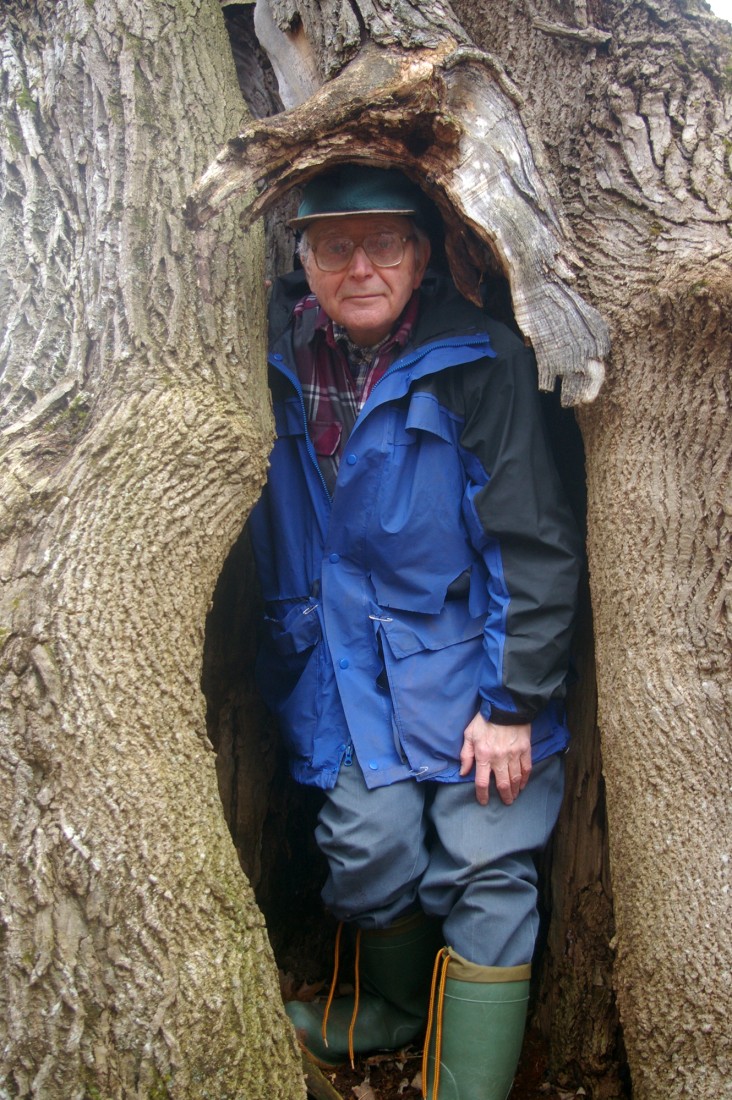
Michael Kudish is forest historian who has dedicated his career to studying the forests of the Catskill and Adirondack regions of New York. After earning a PhD from SUNY-ESF, Michael taught at Paul Smith’s College for 34 years. Retired since 2005, he has been living in the Catskills, where he’s at work on a four-volume update to his book The Catskill Forest: A History, first published in 2000.
I grew up in New York City and spent a lot of time in parks. Almost every weekend, my father would take me hiking. We’d go to botanical gardens and zoos, too. We didn’t have a car, but we took mass transit all over, and in the summers, I’d go to my grandfather’s place in Sullivan County. I liked biology in school, but when I went on to City College in New York, I started out as a civil engineer. My junior year I switched over to biology.
I decided to go on to Cornell University for a master’s degree in botany. I always enjoyed botany; when I was 12, I did a science fair project on trees and won an award. It was just something I was interested in. After I finished at Cornell, I went on to SUNY-ESF for a doctorate. I studied the history of the forests in the Catskills, which I study to this day. In other words, it’s been 55 years, and I’m still working on my thesis. Even though SUNY-ESF was satisfied with my dissertation and gave me a degree, I was not fully satisfied, so I’ve spent my life working on it.
Ed Ketchledge was my PhD advisor at SUNY-ESF. He studied forests in the Adirondacks. I took some classes with him, and we’d take field trips and he’d point out historical landmarks, and he’d be able to say what year a place was logged or burned. I was interested in history as a kid, because my father was and he would talk to me about history a lot. So both my father and Ed fueled my interest in forest history.
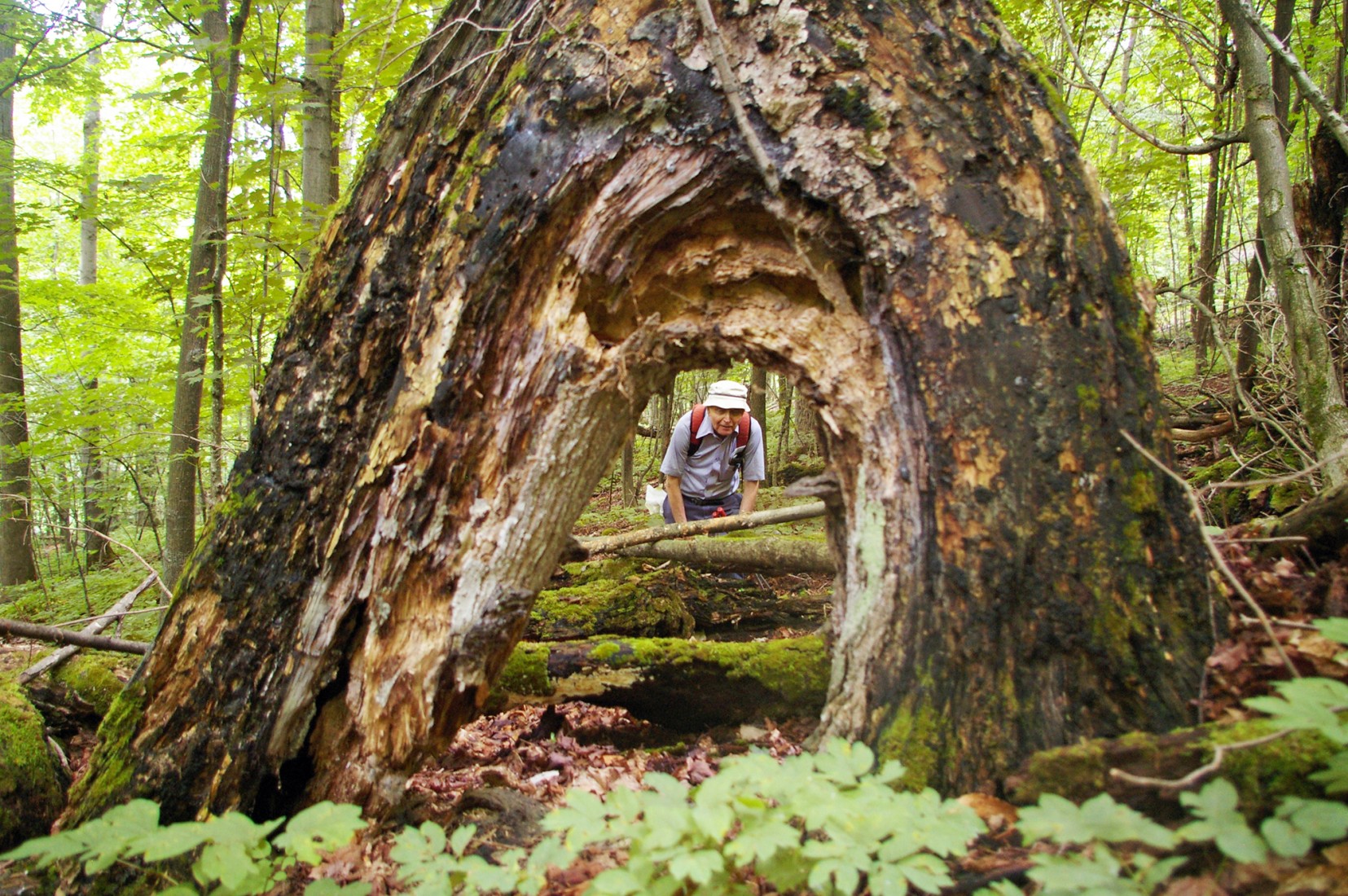
After I finished my PhD, I went on to teach at Paul Smith’s College. I knew I wanted to teach even as an undergraduate. I had some really great teachers who inspired me: Ed at SUNY-ESF, Harlan Banks at Cornell, and Larry Crockett at City College. Having those three outstanding professors really made a difference for me, so I wanted to go on to do that. Working at Paul Smith’s was my first full-time job and my last full-time job. I retired in 2005 after 34 years in the forestry department. I taught dendrology, which is a tree identification class, and I taught other courses on forest soils, herbaceous plants, and forest ecology. The last seven years I was there, I taught forest history, which was my favorite course to teach.
I had some really wonderful students over the years. Some of them have remained friends of mine for all this time. I think most of the students at Paul Smith’s were engaged more than they are at other colleges; they were always interested. Sometimes I’d take students from other colleges on field trips, and it would be so silent – they didn’t have the same curiosity and didn’t ask any questions. Teaching field courses was always the most rewarding part to me. I liked being out in the woods with students. All of my classes had a field component.
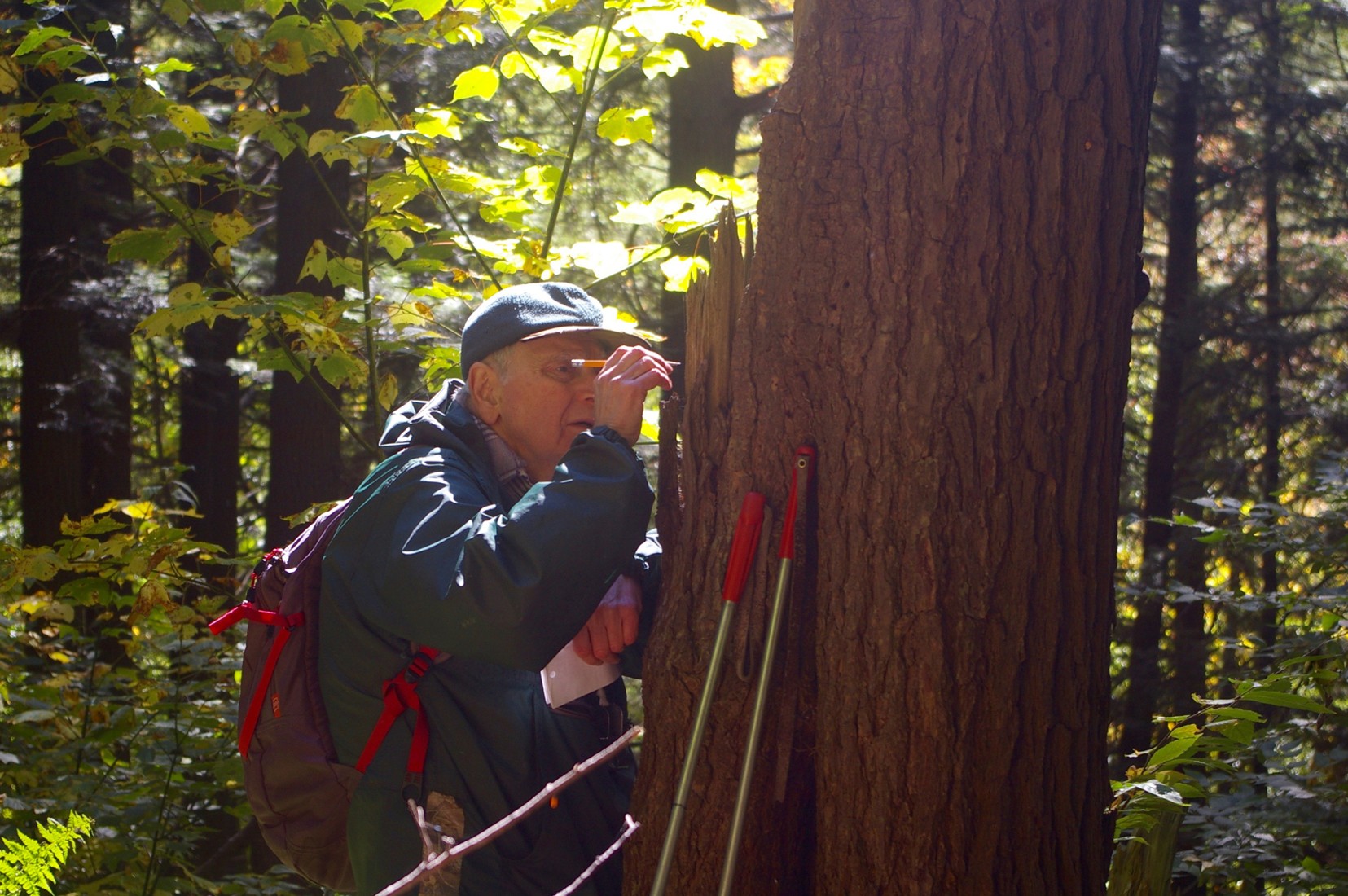
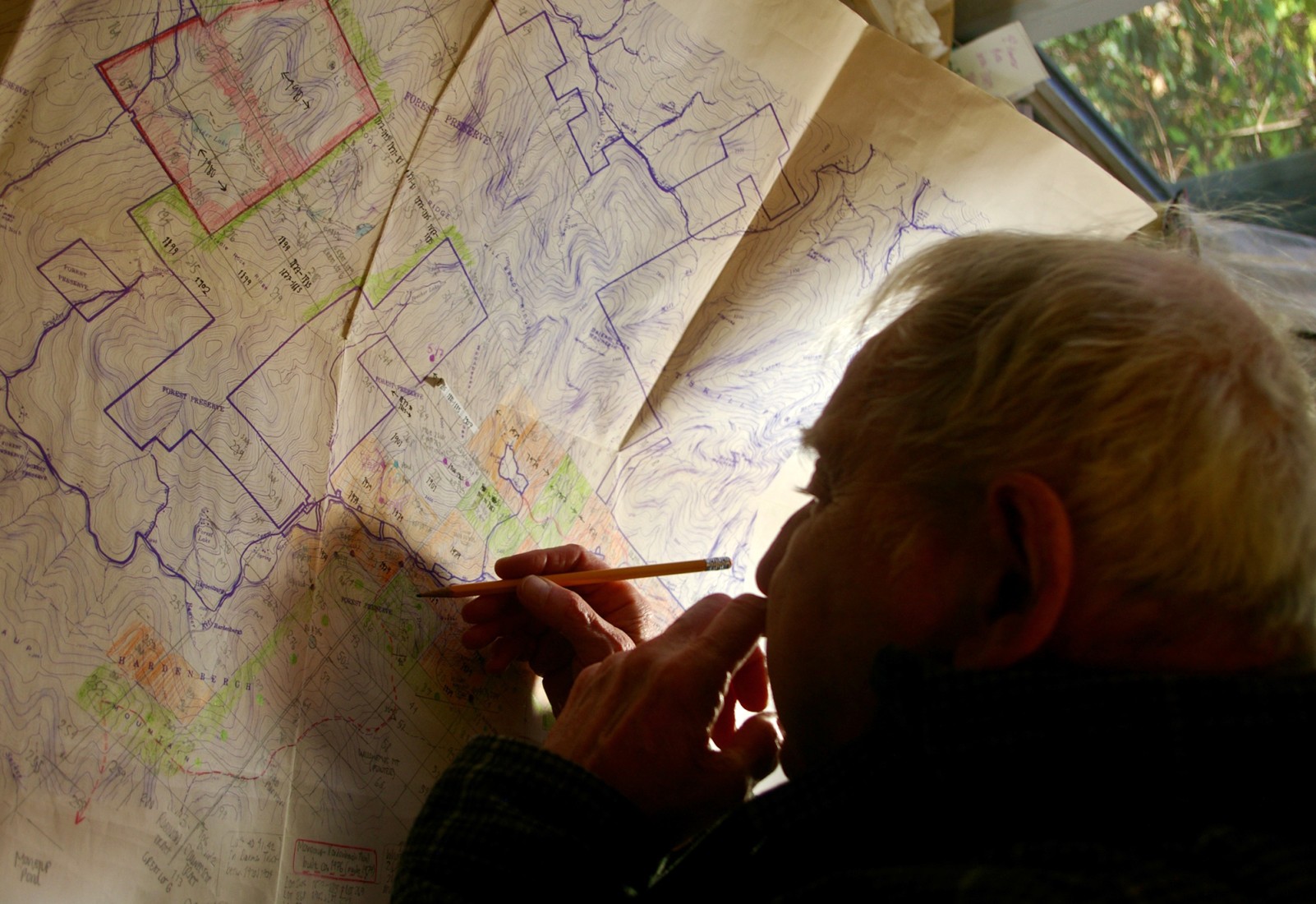
Being a professor was great because I could do my research over the summers. I would work in the Adirondacks during the year and then in May or June I’d go down to the Catskills and spend a month mapping the forest here. When I map a site, I inventory all the flora and look at the geology and the soils of the location and then study what the human history is there. I learn what was logged or quarried or farmed or left alone. I collect a lot of materials about sites as well. My home is a library. I bought a building next door as an overflow library, and I also have an herbarium of pressed plants. I have people coming here all the time to use the library or herbarium. It’s great to have all the information in one place. Some of my field notes have been scanned to store in digital archives at the Cary Institute for Ecosystem Studies and Forest Ecosystem Monitoring Collective, but it’s been a bit helter-skelter as funding comes and goes, so it’s incomplete, and my field notes are always growing.
I’m still doing quite a bit of mapping in the Catskills. I visited a few dozen destinations in 2026. I pick an area to study and map if I have a question about it. For example, I’m mapping a logging road network from 1979 right now that I don’t yet have a complete picture of. And I’m interested in remnant forests that were left untouched. In the Catskills, we have about 116 square miles, but in the Adirondacks, it’s probably five times as much, but it still hasn’t been mapped. I don’t go back to the Adirondacks as often as I used to, but it would be good to get back.
I’m also working on a bog project where I’m taking peat samples to identify fossil plants. I have them radio carbon dated so I can reconstruct what the vegetation was like from 15,000 years ago to the present. I do the identification, and I’ve taught people how to identify charcoal to species. Every bog has a different life history just as every person has. I have studied 131 bogs in the Catskills, amounting to thousands of pages of field notes. Most of them used to be lakes, but then the vegetation would move in and fill the water, so it would close over and a wetland forest would form there – sometimes a coniferous one, sometimes with red maple and yellow birch. Many of them are in different stages of closing in. This is a major discovery for the Catskills that no one else, to my knowledge, has expressed before. I also mapped location, age, and duration of Indigenous forest fires, and the original remaining first growth forests in the Catskills, which are also major discoveries.
I see things over a 15,000-year period, so it’s a different perspective than most people have. The relationships between the plants and trees are more interesting to me than the relationship between people and the forest. I’m working on a second edition of my book The Catskill Forest: A History; the first one came out in 2000. I’ve got at least four or five times the amount of detail now, so I’m planning on releasing them as four volumes. I have about 1,200 pages right now, and I feel as if it’s just the start. I hope to get out one volume every year for the next four years. After I finish those books, I’ll get to work on the fire history of the Catskills. There’s plenty to do. One needs to live 200 years just to scratch the surface.