
Building a wildlife viewing blind from natural materials will allow you to blend in to your surroundings and get closer to wildlife for hunting, photography, or simply to have a more immersive outdoor experience. A blind made with deadwood and local vegetation breaks up your silhouette and conceals your physical movements.
I designed this ground blind for deer hunting. The lean-to blind design is simple and takes advantage of the existing forest structure. Because deer have a keen sense of smell, I oriented the blind downwind of a trail where deer often cross and used a downed tree as the foundation, with the adjacent hillside blocking my silhouette from behind.
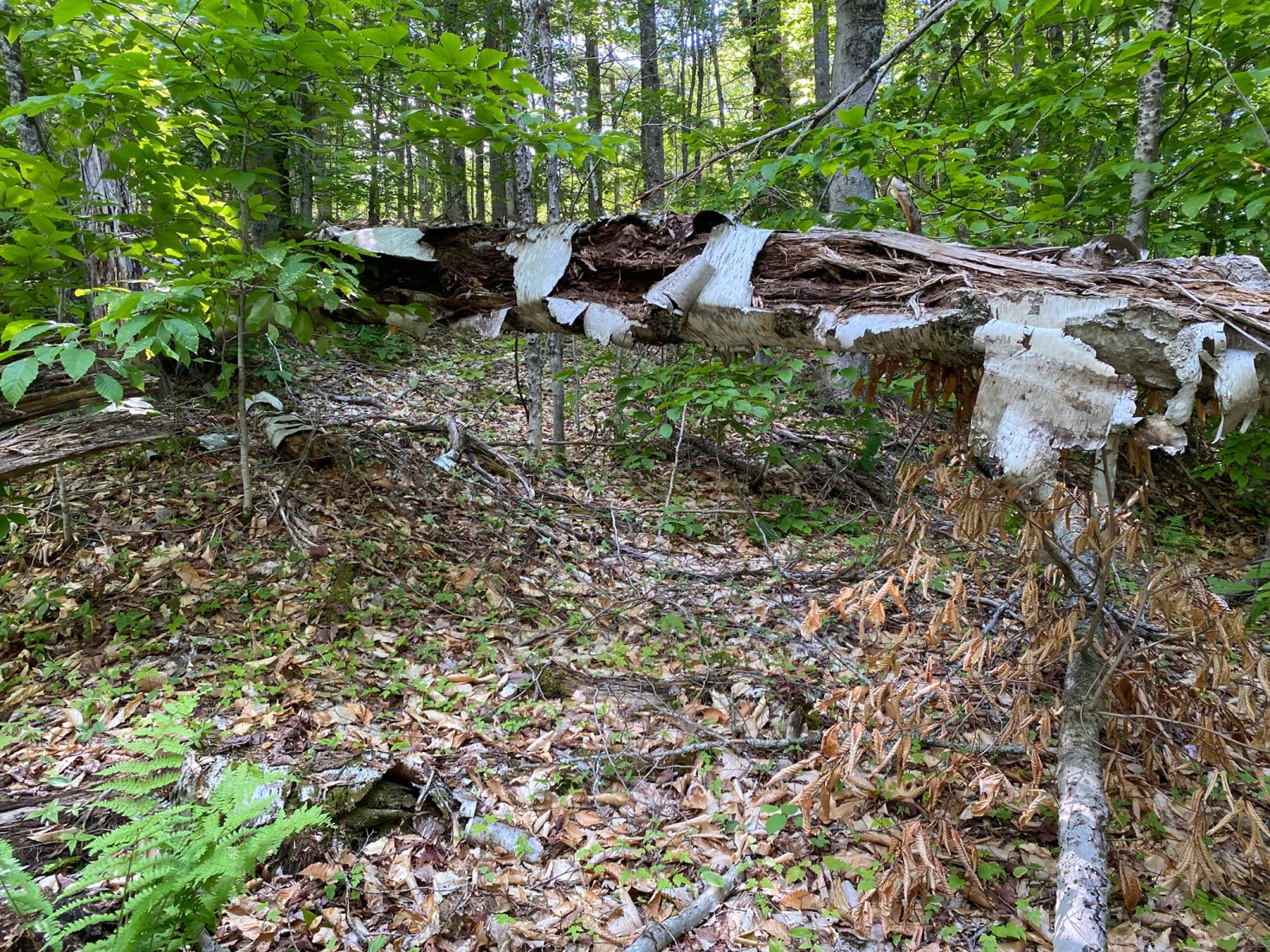
This particular birch fell in a perfect location for building my blind (top photo), but hinge cutting a tree in an area where you want to create a blind would provide a similar starting point.
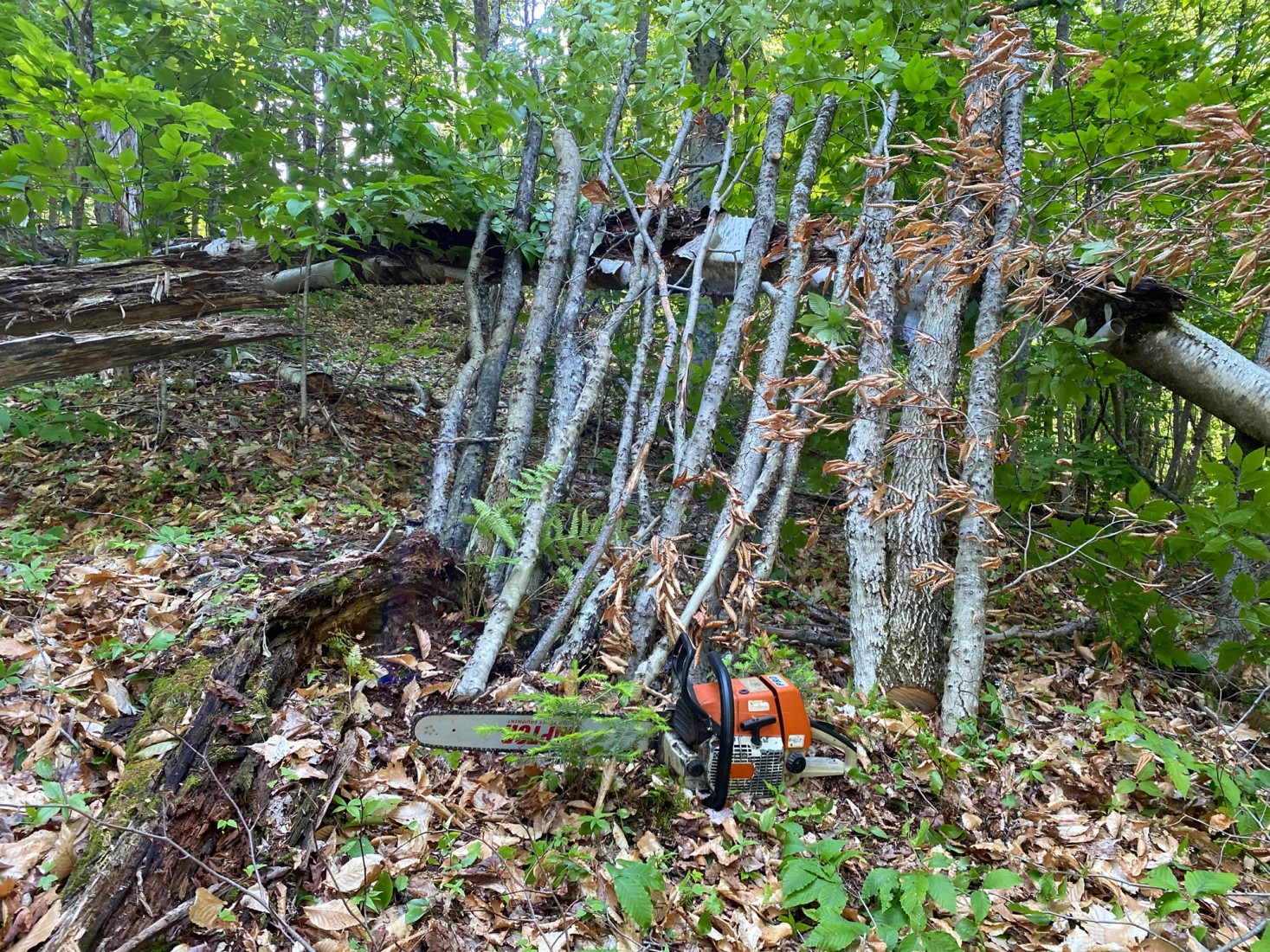
Next, install a series of vertical poles to support the structure (middle photo). Arrange these with some space between the poles, including a couple of wider gaps to serve as openings for observing or shooting. Because this blind sits against a hillside, I placed the vertical branches only on one side. Without the support of the hill, I would have repeated this process on the backside.
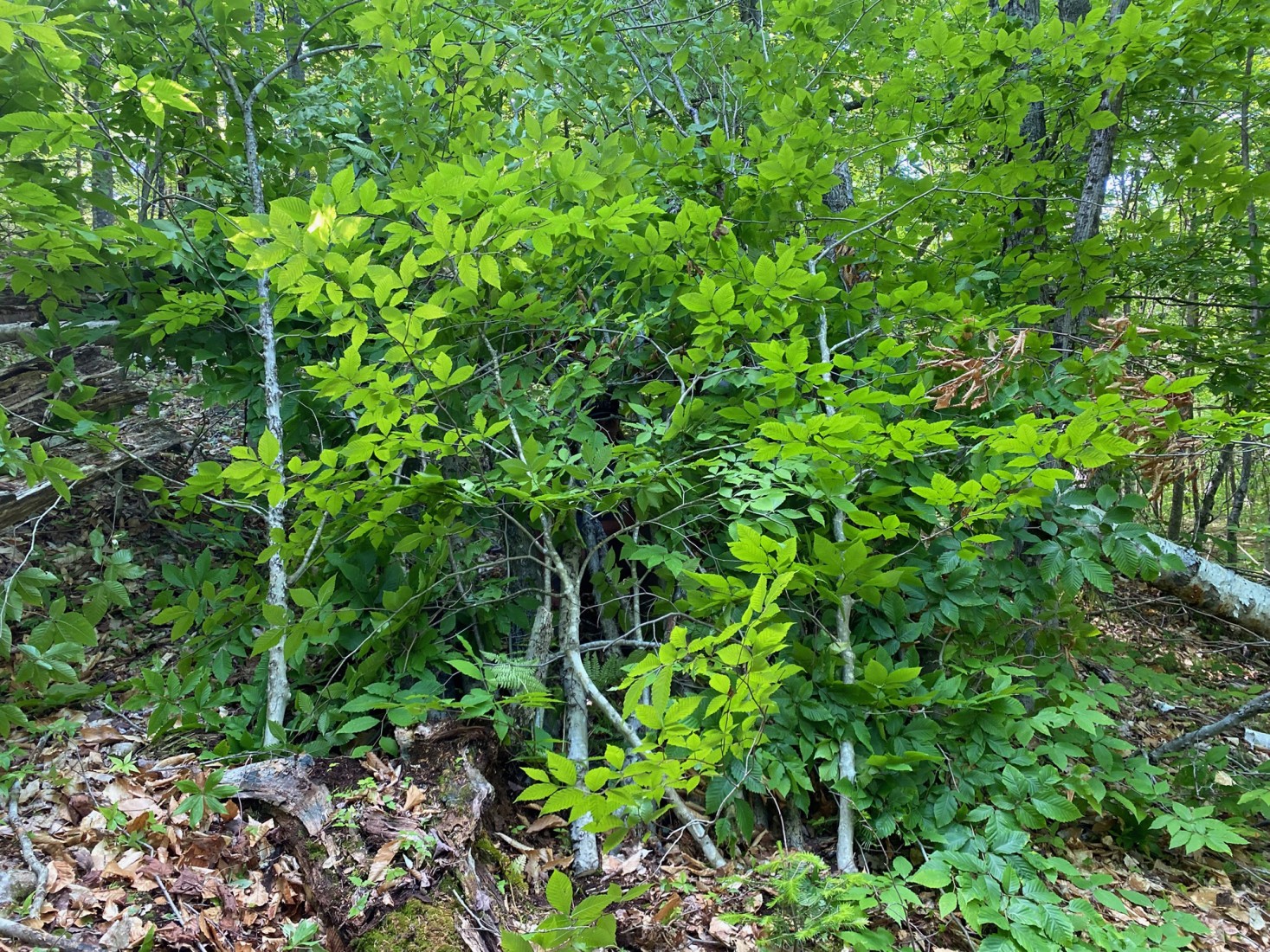
When gathering materials to construct the blind, harvest wood debris and limbs from anticipated shooting lanes. This will allow for an unobstructed shot, and the materials will match the surrounding forest. In this particular case (bottom photo), I camouflaged the vertical poles with a layer of limbs and brush from American beech, which hold on to their leaves throughout winter, so our leafy blind constructed in early autumn will remain leafy and camouflaged late into the season; other leaves would more easily blow away.
If you don’t have beech, consider camouflaging your blind with evergreen boughs, ferns, grasses, or sheets of bark from dead and downed trees. Weaving camouflage materials into the vertical logs will help to hold things in place and fill the gaps. Each year, you can freshen your blind with new camouflage. Wildlife will accept the blind as a natural part of the forest, creating closer and more frequent viewing opportunities.