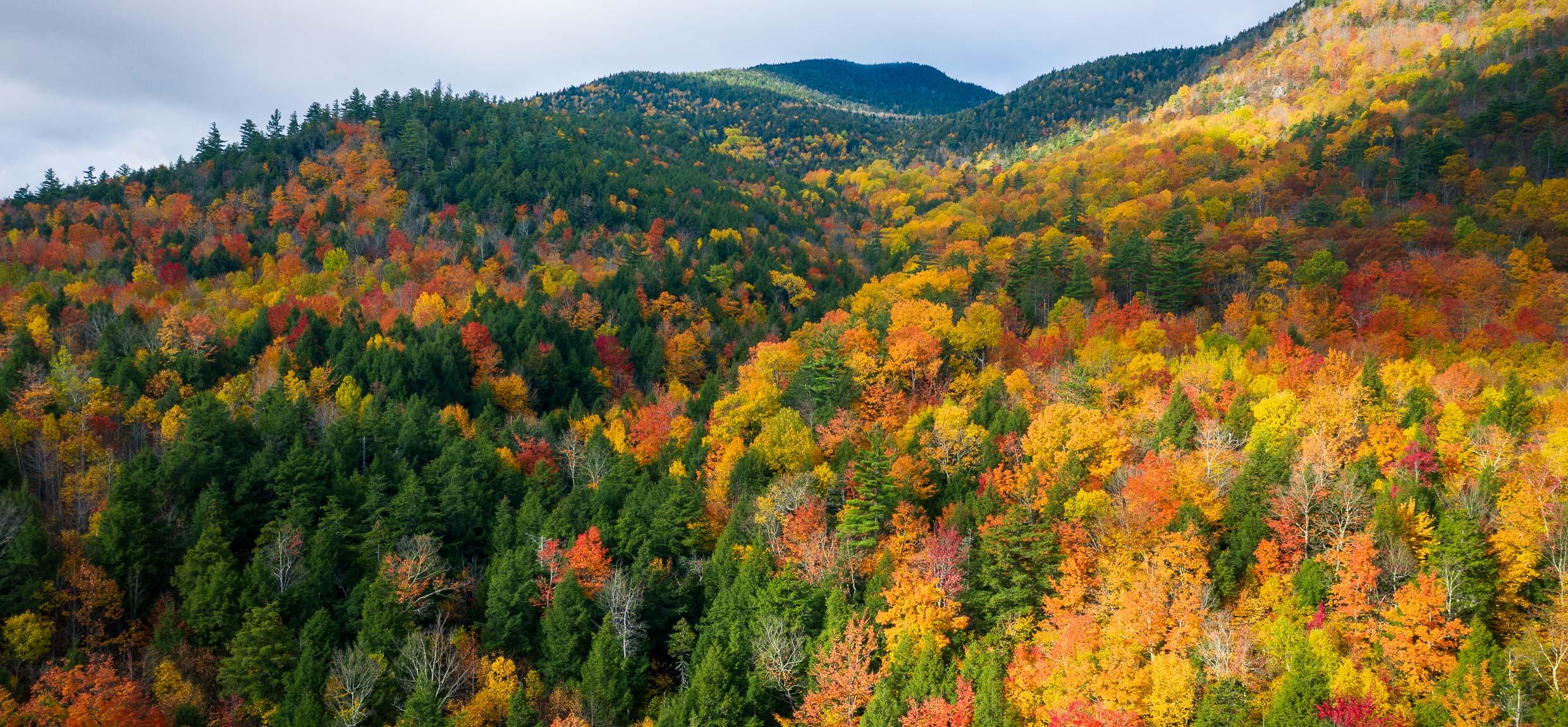

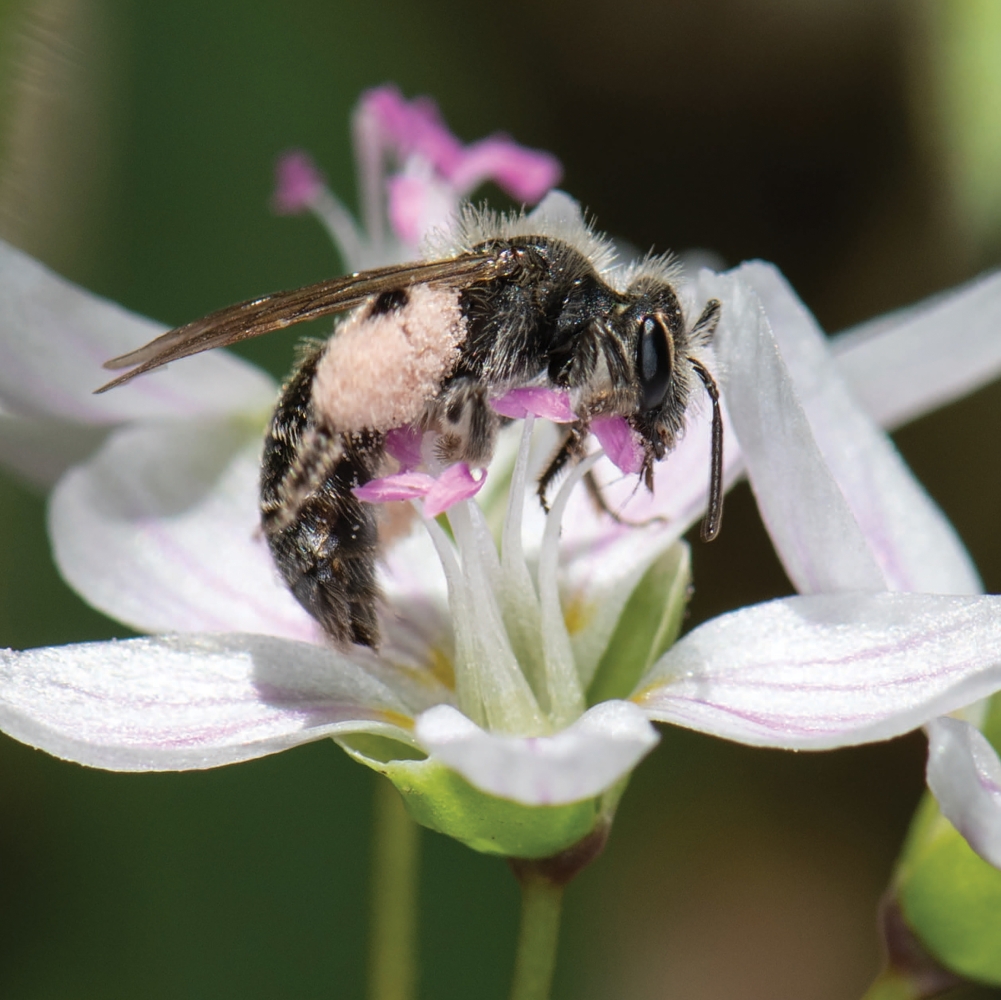
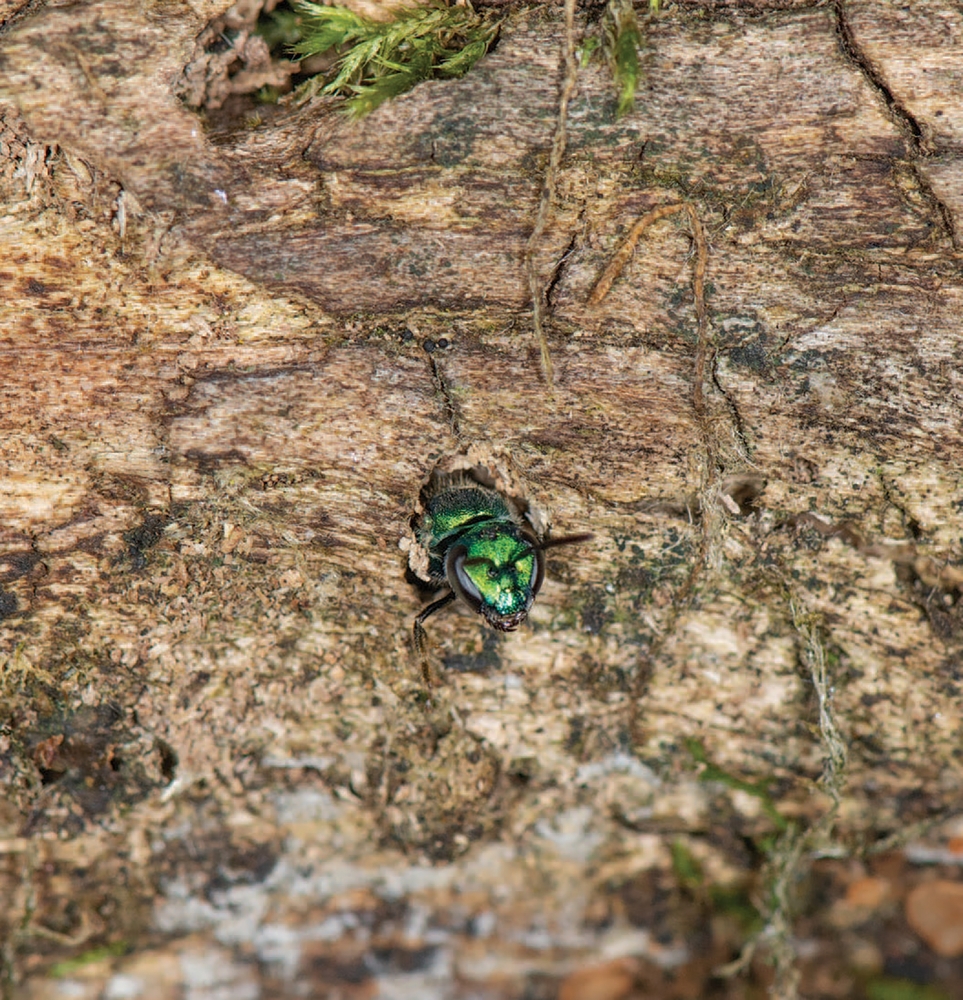
Many of us associate bees with gardens or fields of wildflowers and are familiar with the common eastern and golden northern bumble bees we see there. However, forests also provide critical habitat for myriad native bee species, including ones that fewer people have heard of, such as the pure green sweat bee or the spring beauty mining bee.
“If you walk from a meadow to the forest, everybody intuitively is thinking, ‘All the flowers are out there and it’s dark in the woods,’” said Kass Urban-Mead, a pollinator conservation specialist at Xerces Society for Invertebrate Conservation. “‘Surely, there are no bees here.’”
The Northeast boasts more than 450 native bee species, and forests are essential for many of these, providing vital food resources in springtime, areas and materials for building nests to shelter eggs and larvae, and places to overwinter. For reasons including pesticide use and a changing climate, bees here – and elsewhere – are facing serious population and diversity declines. Several scientific studies indicate that loss of forested habitat also plays a role in that decline.
Wild and managed bees (including honey bees, which are not native to North America) pollinate roughly 75 percent of the fruits, vegetables, and nuts cultivated in the United States. Native bees are also crucial for wild plant communities, pollinating plants such as ghost pipe, hawthorn, elderberry, cherry trees, and shadbush. Some bee species specialize in particular wild plants. For example, red-tailed mining bees (Andrena erythrogaster) and Clark’s mining bees (Andrena clarkella) exclusively collect pollen from willows, while the trout lily mining bee (Andrena erythronii) mainly collects pollen from its namesake flower. A diversity of bee species supports a diversity of forest plants.
Essentially, these bees need the forest – and the forest needs the bees.
Forests Provide Food
Around one-third of bee species in eastern North America rely on mature forests to complete their entire life cycle, according to a 2021 study led by scientists at Rutgers University. The same paper reported that another one-third of bees were “habitat generalists” that require forests for at least part of their life cycle. This indicates that some two-thirds of native bees in the Northeast use forests.
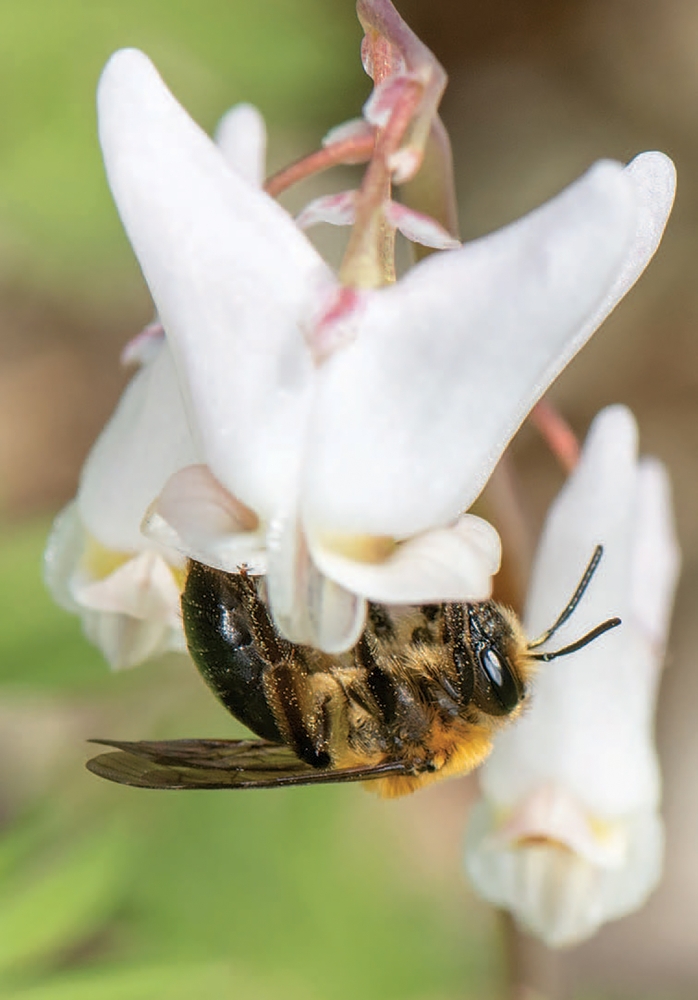
One reason bees rely on forests is the abundance of nectar and pollen early in spring, when they’re less available in other habitats. Deciduous forests in the Northeast don’t leaf out until mid-spring. During early spring, early-blooming wildflowers blanket the ground in these forests. Dutchman’s breeches, spring beauty, trout lily, bittercress, and wild columbine are among the spring blossoms that provide important early food for bees, including emerging bumble bee queens and a range of native solitary bee species.
Although bumble bee drones and workers succumb to cold in late fall, bumble bee queens persist and spend winter in hibernation. They emerge with exhausted energy stores to face the work of starting the new year’s colony: laying eggs and feeding the resulting larvae.
“Those bumble bee queens coming out of hibernation need to get as much pollen and nectar as they possibly can ASAP,” said Urban-Mead. “They’ve been depleted of their winter fat stores, and they need to lay high-protein-requiring eggs really quickly to start the colony.… It doesn’t matter how much is blooming in June, July, and August to the bees that didn’t make it through April and May.”
Bees also collect pollen from the flowers of understory shrubs such as spicebush, viburnums, winterberry holly, dogwoods, and blueberries – as well as from deciduous trees including red and sugar maple, oak, willow, cherry, tuliptree, linden, and tupelo. Pollen provides bees with protein and nutrients, while nectar supplies carbohydrates for energy. Each bee species supplies a different pollen-to-nectar ratio to their offspring, and they may source pollen and nectar from different plant species. While adult bees consume some pollen, a female bee brings most of what she collects back to the nest to support growing bee larvae, Urban-Mead said.
Declines in spring-flowering understory plants are among the many challenges forest bees face. In the Northeast, spring ephemerals are affected by high populations of deer in some areas, which decimate understory vegetation; by shifting phenology that has led to changes in bloom times; and by invasive shrubs and earthworms.
While forests tend to have more blooms in spring, shade-loving understory species that bloom in summer and fall – including many fall asters – are also important sources of nectar and pollen. And the more open habitats that are often adjacent to forests – including meadows and wetlands – provide an array of flowers during summer and autumn. Within forests, gaps, blowdowns, and patch-cuts offer open areas beneficial to bees.
Forests Provide Shelter
Beyond serving as important sources of food for wild bees, forests and edge habitats also offer important habitat for overwintering and nesting.
Bumble bee queens, the larvae of many wild bee species, and the adults of others, such as mining bees and mason bees, spend their winters in diapause. Bumble bee queens seek areas below ground, under leaf litter, or in the layer of decaying plant matter on the forest floor to hibernate. When a queen emerges in spring to establish a new colony, she will seek out protected areas such as abandoned rodent burrows, crevices in stone walls, or hollows in rotted logs. Wood-nesting bee species nest and overwinter in tree snags or rotting logs.
Mining bees and plasterer bees are among the species that build their nests in underground tunnels beneath the forest floor. For example, the spring beauty mining bee (Andrena erigeniae), which relies exclusively on its namesake flower to provision its young, nests in forest leaf litter, along forest edges, and sometimes even in lawns, as long as spring beauty is nearby. Mason bees also build nests in pre-existing cavities and tunnels in deadwood and snags, and the adult females will overwinter in these nests.
Some bees may incorporate resins or pine sap into their nests. These materials can provide structure, waterproofing, and antimicrobial effects. Forests can also provide favorable microclimates that shield bees from high temperatures and wind, a factor that may be increasingly important as the climate changes, according to Francis Drummond, professor emeritus of insect ecology and insect pest management at University of Maine.
“In the summer, out in the open areas, it’s a little more of a hostile environment,” Drummond said. “We’re having more droughts, so these warm, moist areas in the forest are probably playing a really significant role in providing alternative foods for the bees.”
Urban-Mead noted that honeydew from aphids and other sap-sucking insects also provides bees with an alternative sugar source during drought periods. While forest bees typically rely on deciduous woods for food and shelter, conifer trees often host these sap-sucking insects.
According to a 2021 study from Tufts University, some bee species have more success when nesting in forests compared to their meadow-nesting counterparts. Common eastern bumble bees (Bombus impatiens), for example, produced nearly three times as many gynes (females with the potential to become queens) per nest in forests compared to meadow nests. Scientists believe forests may buffer against extreme temperatures or that bees nesting in forests may face less competition for nest sites from other species, such as the brown-belted bumble bee (Bombus griseocollis), which typically nests in more open areas or along forest edges.
Managing Forests for Bees
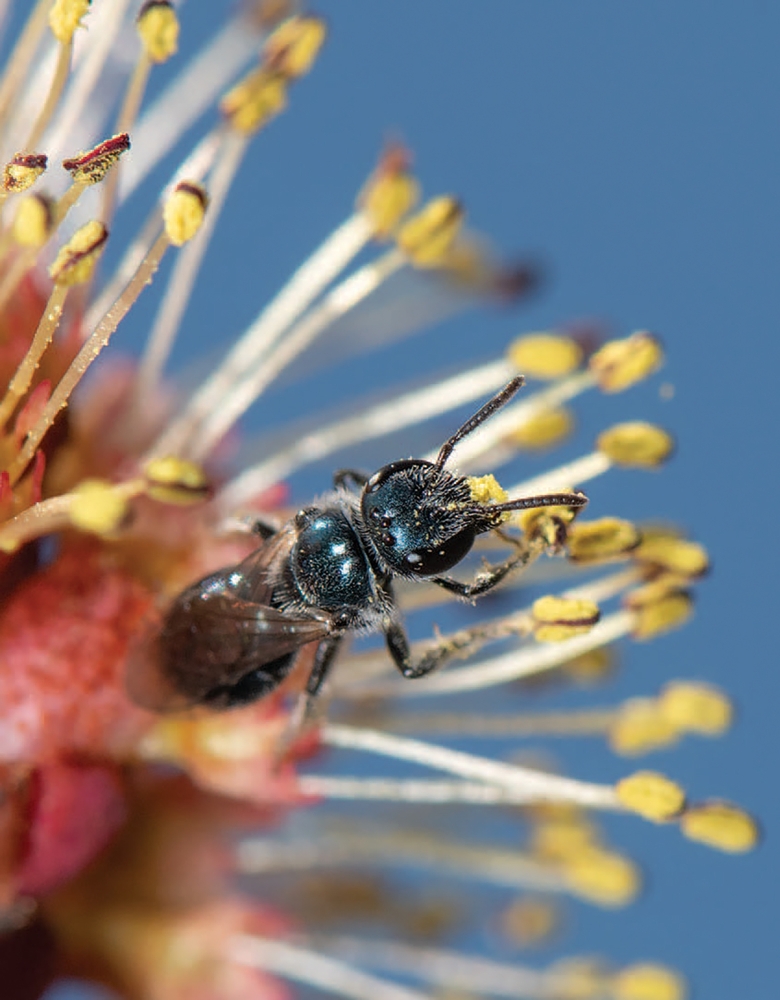
Land stewards and forest managers can help bees by promoting good bee habitat, diverse forage, abundant woody material, rich native understory flowers, flowering shrubs, a diversity of age classes, and protection from pesticides, including drift from adjacent land uses.
“There are certain features and characteristics within the woods…that are important for bee and other pollinator habitat,” said Eric Hansen, a Connecticut-based forester. “That includes making sure that there are places for them to live, places for them to breed, food sources, and sources of water.”
Hansen said managing for diverse tree species and forest ages is key – both to overall forest health and to providing good habitat for bees. This includes leaving “dead trees in different stages of decay and decomposition and size,” he said, as well as maintaining a healthy layer of leaf litter on the forest floor, allowing areas for bees and other insects to overwinter.
The USDA’s Natural Resources Conservation Service (NRCS) offers guidelines for promoting pollinator habitat through forest management. These include managing for young forest characteristics; promoting native blooming plants such as blueberries, black huckleberry, and fireweed; controlling dense shrubs, ferns, and invasive plants; and leaving open patches in forests, along with snags, tree cavities, and woody material to provide nesting options for bees.
Hansen also suggested promoting tree species that are beneficial to bees, including oaks, tulip poplar, sugar maple, red maple, blackgum, and basswood, which all provide valuable food resources for bees and other insects. Encouraging a variety of plants that can thrive in both sun and shade is also useful for bees, as is maintaining wildflower habitat along forest edges by avoiding pesticide use. Another important aspect of maintaining healthy forests and habitat is preventing deer over-browse.
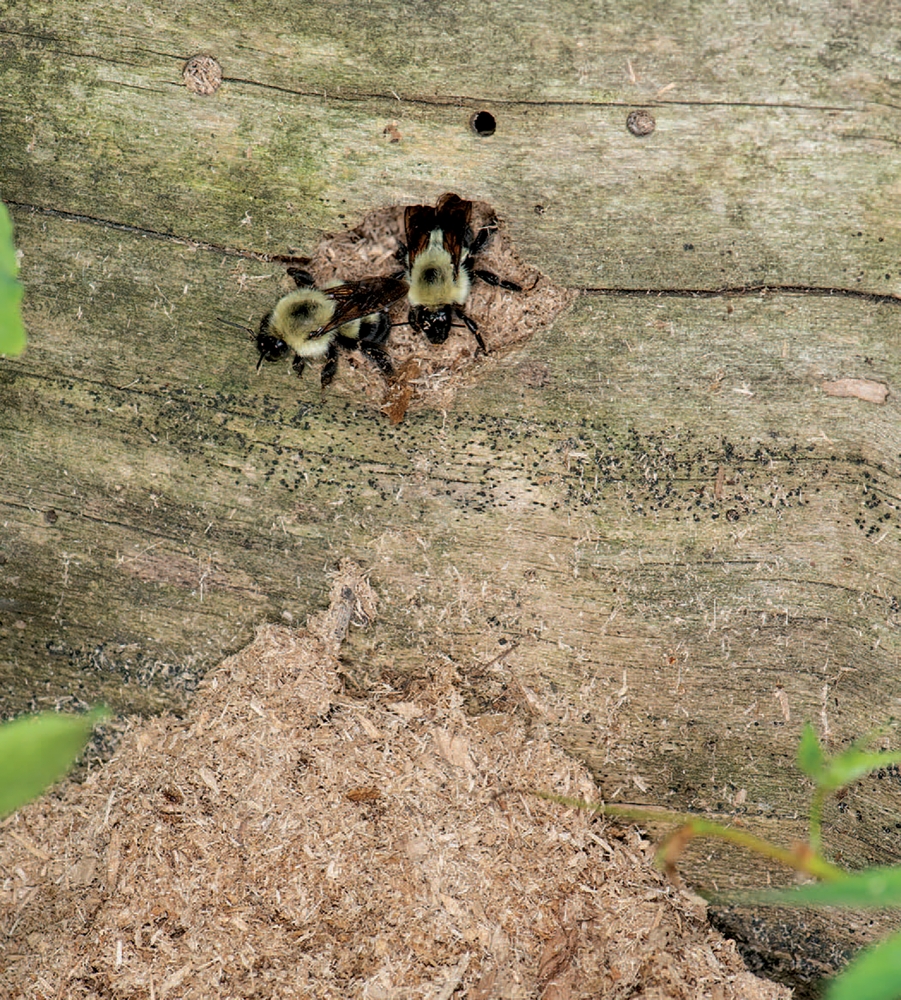
“We need deer populations to be at reasonable levels in order to allow the trees to regenerate,” said Urban-Mead, noting that, particularly in fragmented landscapes, deer over-browse can decimate both tree saplings and spring flowers.
Methods for protecting forests from deer over-browse, Hansen said, include leaving treetops or other debris after a harvest, placing tubing around individual trees, or installing fencing around sections of regenerating forests.
Creating gaps within a forest can also benefit bees, Hansen said. Depending on forest type and size, gaps can be anywhere from one-tenth to one-quarter of an acre in size, and Hansen said managers should create new gaps every 10 to 15 years to create patches of early successional forest. These gaps and regenerating forest benefit bees by providing habitat for flowers and other vegetation that don’t grow in the shade.
“A lot of what we do as foresters and forest managers is create canopy gaps by cutting trees of different sizes,” Hansen said. “There is greater species richness in those gaps.”
The USDA NRCS provides financial and technical assistance to forest owners to improve pollinator habitat on their land. Organizations such as Xerces Society for Invertebrate Conservation provide regional guides for landowners on creating pollinator-friendly landscapes. Recommendations for the Northeast include planting native, site-appropriate trees, shrubs, and forbs with different colors, bloom times, and plant families. While recommendations have often focused on meadows, gardens, and agricultural landscapes, there is increasing awareness of – and resources to address – the importance of hedgerows, woodlots, woodlands, and healthy forests for native bees and other pollinators.
Other important factors, according to Urban-Mead, are to recognize and protect rare and site-specific plant communities such as those found in vernal pools and wooded wetlands, as well as protecting healthy forest soils and riparian areas. Restoring or using forestry practices to emulate historic fire regimens as appropriate can also help native bees – and many other forest-dependent wildlife species.
Urban-Mead is hopeful about the growing awareness that the future of northeastern bees depends in large part on healthy, resilient, and diverse forests. “I think that there are a lot of important conversations about the health of our northern forests and the importance of active, thoughtful stewardship and ecological management of forests,” she said. “The amazing life cycles of native forest-dependent bees can be a surprising and delightful way to invite landowners and managers into the conversation.”