
For millennia, a group of prehistoric fishes have been swimming the rivers, lakes, and coastal waters of northeastern North America. These fish – some of them approaching a leviathan-esque 15 feet in length – are relicts from an era when reptiles ruled the land, air, and seas. As a group, sturgeon (family Acipenseridae) have been around for more than 200 million years and have remained more or less unchanged for the past 100 million years.
Despite outlasting the non-avian dinosaurs, these survivors almost did not make it into the 20th century. Of the 27 sturgeon species worldwide, 23 are threatened or at risk of extinction, including the three species in the Northeast: Atlantic sturgeon, shortnose sturgeon, and lake sturgeon. The story of sturgeon declines is another chapter in the well-worn tale of overexploitation, pollution, and habitat loss and degradation. Thanks to protections and recovery efforts over the past few decades, however, there are signs of hope for northeastern sturgeon, although the journey to recovery has been slow. Helping sturgeon rebound requires a multifaceted approach that begins with understanding the biology, ecology, and history of the fish – as well as the threats they face.
Northeastern Sturgeon Biology

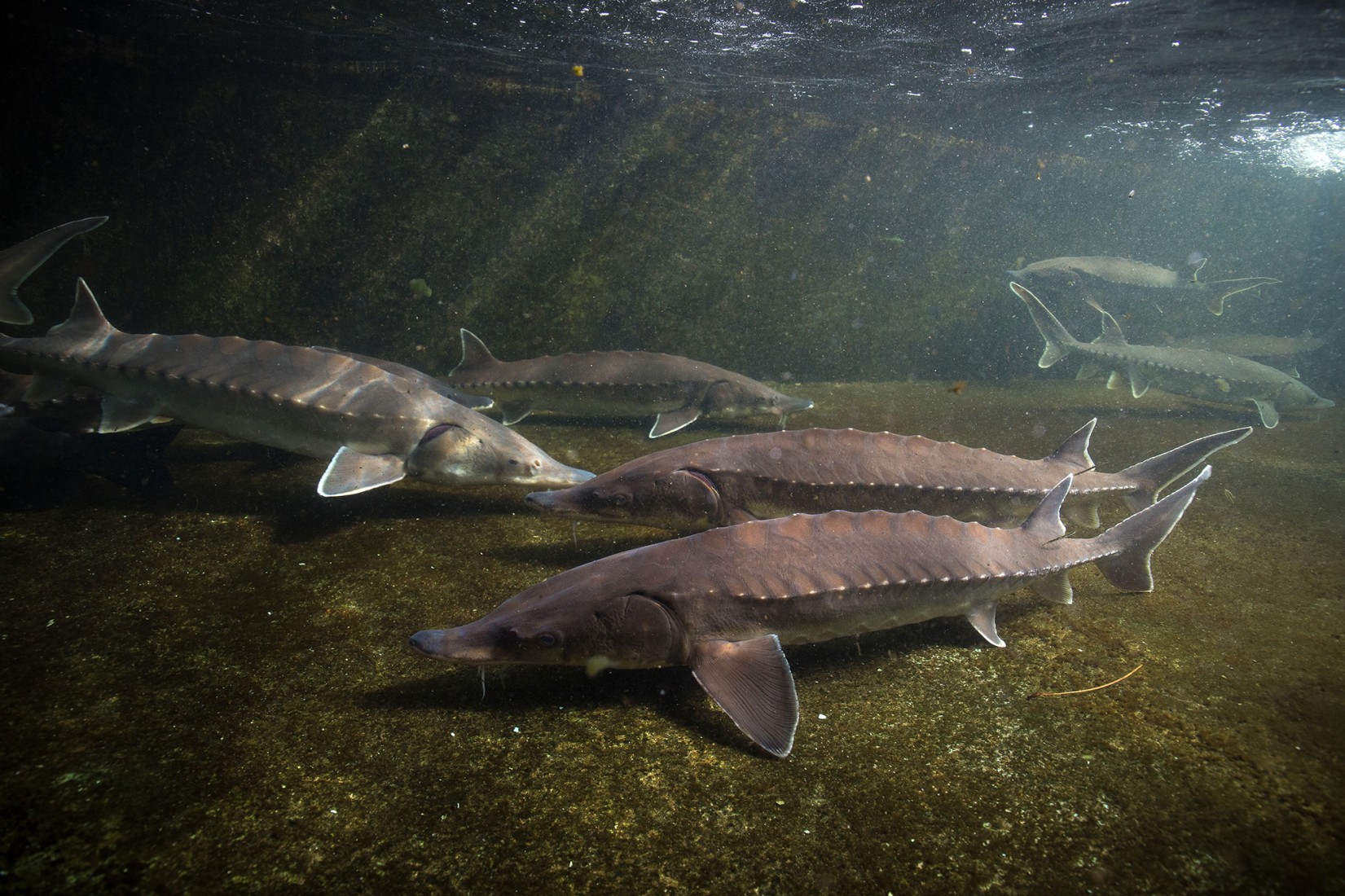
All sturgeon share a similar anatomy: a long, torpedo-shaped body that is modestly dorso-ventrally compressed (slightly squashed from top and bottom), varyingly elongate snouts tipped with highly sensitive barbels and a downward-facing mouth, five rows of armorlike bony scutes (modified scales), and a sharklike heterocercal tail (asymmetrical, with a larger dorsal – or upper – lobe). Sturgeon spend much of their time on or near the water’s bottom, feeding on myriad invertebrate and vertebrate prey they vacuum from the substrate with protrusible, toothless mouths. They find hidden prey either by “tasting” them with gustatory receptors on their barbels or by detecting their electric fields via electroreceptors on their snout.
Sturgeon are slow-growing, late-maturing, long-lived fish. All three northeastern species can live more than 60 years, and lake sturgeon may live as long as 150 years. Each of these three species typically begins reproducing between 10 and 20 years of age, with males attaining sexual maturity earlier than females. Males breed every 1 to 3 years and females every 2 to 6 years. This intermittent breeding is likely due in part to the energetic costs of reproduction; one female Atlantic sturgeon, for example, can produce 8 million eggs at a time, which, combined with the effort to reach the spawning grounds, severely taxes her energy stores.
In spite of their slow development, sturgeon can grow to be quite large. Lake sturgeon may reach 7 or more feet in length and about 250 pounds, while Atlantic sturgeon can grow to 14 feet and approximately 800 pounds. Shortnose sturgeon are smaller, reaching maximum lengths of 4½ to 5 feet.
History of the Sturgeon in the Northeast

In the early 1600s, John Smith of the Jamestown colony in Virginia wrote of Atlantic and (most likely) shortnose sturgeon, “There was more sturgeon here than could be devoured by dog or man.” And according to environmental historian Nancy Langston, legends from the Potawatomi tribe around the Great Lakes referred to “rivers so full of [lake] sturgeon a person could walk across the water on the backs of fish.”
Based on these historical accounts of their abundance – and what we know about the importance of salmon and other abundant, large-bodied fish – sturgeon likely played a sizeable ecological role in their watersheds in pre-colonial and colonial times.
They would have exerted significant pressure on many of their prey species, keeping populations of bivalves, crustaceans, worms, small benthic fish, and many aquatic insects in check. They likely also provided an important source of energy within their aquatic communities as well as spreading into the surrounding terrestrial habitats. Like the large pulse of nutrients that salmon provide as they migrate upstream to spawn, the similarly anadromous Atlantic sturgeon would have imported vast quantities of marine nutrients in the form of eggs, waste, and their bodies as they traveled hundreds of miles from the ocean (prior to widespread damming of rivers) into riverine systems. Shortnose sturgeon and lake sturgeon were likely just as important parts of their food webs, and large spawning aggregations would have provided massive energy inputs anywhere they occurred.
In addition to their ecological importance, archeological evidence shows that sturgeon have been an important resource for many Native American tribes dating back 4,000 to 5,000 years. Historically, Indigenous people used a variety of tools and tactics to catch sturgeon, including spears, harpoons, hooks, nets, weirs, and even lassos. According to literature from the Maritime Aboriginal Peoples Council, the Mi’kmaq tribe in the Canadian Maritimes employed a nighttime fishing strategy called “saksegwa,” which involved using torchlight suspended from a canoe to draw sturgeon to the surface, where they were harpooned and towed to shore.
Early European colonists also relied on bountiful sturgeon. According to Greg Garman, director of Virginia Commonwealth University’s Center for Environmental Sciences, archeologists studying the Jamestown colony site believe Atlantic sturgeon were responsible for saving the colony during the “Starvation Time” winter of 1609–1610. Sturgeon became a valuable commodity to the budding nation, and colonists harvested all three species for food, oil, and their leatherlike skin. The market for caviar (sturgeon eggs) exploded in an approximately 20-year period during the late 1800s known as “the black gold rush.” During this time, fishermen pulled approximately 4 million pounds of lake sturgeon from the Great Lakes each year – peak landings in Lake Erie alone topped 5 million pounds in 1885 – while Atlantic sturgeon harvest rates exceeded 7 million pounds per year. That fishing pressure, combined with the damming of rivers that cut sturgeon off from their spawning grounds and high rates of pollution and siltation that rendered existing spawning grounds unusable, drove all three species close to extinction by the early 1900s.
Protection – and Ongoing Threats
In 1967, the U.S. federal government provided the first protections to shortnose sturgeon under the Endangered Species Preservation Act (precursor to the Endangered Species Act), but fishing of Atlantic sturgeon continued until 1998, when the Atlantic States Marine Fisheries Commission enacted a coastwide fishing moratorium. Fourteen years later, the National Marine Fisheries Service established federal protections for Atlantic sturgeon that included protecting Atlantic sturgeon habitat and minimizing bycatch in addition to halting commercial and recreational fishing. While lake sturgeon never received federal protections, they are listed as state-threatened (New York) or state-endangered (Vermont, Pennsylvania, and Ohio) where they occur in the Northeast.
Despite encouraging signs, these three species continue to face hurdles on their paths to recovery. Because they all breed in relatively shallow rocky habitat in moving fresh water, the eggs and young are susceptible to changes in flow rate, especially in areas downstream from dams; one large water discharge event can erase an entire breeding season. Blunt-force trauma and propeller damage from boat strikes are a common source of mortality for these slow-moving, large-bodied fish, especially in rivers. Barges and cargo ships have large propeller blades that can come close to the bottom, where the fish typically reside.
For Atlantic sturgeon, the greatest threat to recovery is likely bycatch in commercial fishing nets and trawls set for other species in marine environments. Lake sturgeon face some additional challenges, including morbidity and mortality from invasive sea lampreys, outbreaks of botulism and viral disease, and the loss of spawning habitat from invasive mussels fouling the hard substrate. High mortality of juveniles or the death of just a few adult fish can have a sizeable negative impact on the recovery efforts for these species due to their slow rates of development and intermittent breeding schedules.
Research and Recovery Efforts
Once sturgeon received protections, fisheries biologists began developing recovery plans for each of them. Early (and ongoing) work targeted spawning sites for all three species, and these efforts have included identifying and protecting important spawning locations, restoring degraded spawning beds, removing dams, and adding fish lifts to existing dams to re-establish access to sites from which sturgeon were cut off. Biologists also had to determine how many fish remained and their population demographics, as well as the specific geographic locations and habitats the fish were using. In addition to spawning sites, where did they forage, overwinter, and migrate?
In the 1990s, biologists started capturing sturgeon using gillnets to collect basic demographic, morphometric, and body-condition data and to figure out how many fish there were in certain areas. Scientists at the New York State Department of Environmental Conservation (NYSDEC) and their collaborators have been netting both juvenile and adult Atlantic sturgeon in the Hudson River since 2004 to help track population trends of the two age classes. An article published in 2025 in Transactions of the American Fisheries Society revealed that the adult population in the Hudson River increased slowly but consistently between 2004 and 2022. In contrast, the juvenile population increased between 2004 and 2015 but declined from then until 2022, resulting in no net change. It is unclear why the two age classes exhibited different population trends over time, but the results underscore the importance of long-term studies to help determine potential recovery bottlenecks and the need to identify the factors driving the different rates of mortality in young versus mature fish.
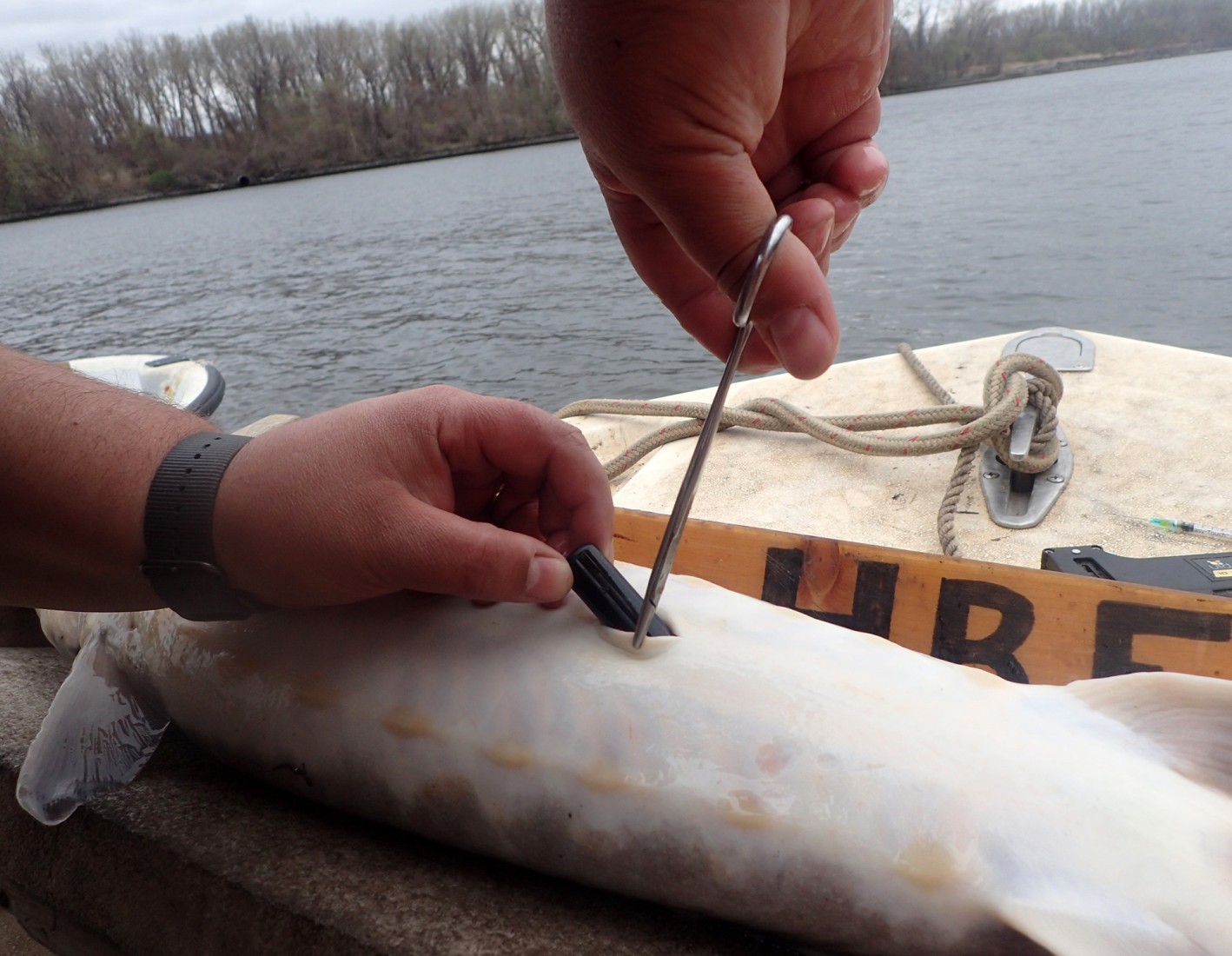
To address these and other questions, researchers use acoustic telemetry tags to understand where fish are going over the course of the annual cycle – and from year to year. Acoustic tags are typically surgically implanted in the fish and communicate with a network of receivers deployed into the environment.
Researchers are using acoustic tags on all three sturgeon species, and the data have yielded novel insights into the movements of these fish. For example, scientists thought Atlantic sturgeon exhibited high breeding-site fidelity to their natal rivers (returning to breed in the river they hatched in). But a 2024 article published in Animal Biotelemetry found that adult fish were moving between the Delaware and Hudson rivers across breeding seasons and that both rivers hosted adult fish that had originated from South Carolina to Maine, indicating much greater use of non-natal rivers than scientists had previously assumed. An understanding of these movements is critical for establishing effective protections, and information from acoustic tag work is helping biologists fill in those gaps.

Scientists have also used data from acoustic tags to help estimate sturgeon populations. In a 2025 Canadian Journal of Fisheries and Aquatic Sciences paper – led by Amanda Higgs, fisheries biologist at NYSDEC and Cornell University, and Shannon White, fisheries ecologist from the U.S. Geological Survey – researchers found that the population of shortnose sturgeon in the Hudson River was larger than previously thought: about 70,000 adult fish, likely making it one of the largest sturgeon populations in the world. These results indicate that protections for the shortnose sturgeon have been successful in the Hudson. But researchers also found that about 40 percent of that population spend the winter in one small area of the river that also has a high level of anthropogenic activity. The Hudson River is a major transportation thoroughfare and is subject to high boat volume, as well as activities such as dredging and blasting. The authors note that a major disturbance at the overwintering location could have a huge impact on the shortnose sturgeon population, highlighting the importance of identifying key areas to protect.
Another exciting piece of shortnose sturgeon news emerged from the Connecticut River during the summer of 2024. A group of researchers from the Connecticut River Conservancy, led by aquatic ecologist Kate Buckman and postdoctoral researcher James Garner, documented the presence of shortnose sturgeon between the Turners Falls dam in Massachusetts and the Bellows Falls dam at Bellows Falls, Vermont / North Walpole, New Hampshire. Researchers detected the fish using environmental DNA (eDNA), a useful source of molecular information that helps scientists locate rare and cryptic species, especially aquatic species. In essence, every living organism constantly sheds DNA into the environment – including through feces, shed skin, scales, hair, and mucus. Scientists can collect samples from the environment – including water or sediment taken from a river or lake – and extract DNA from those samples in the laboratory.
Officially – and importantly from a management and regulations perspective – shortnose sturgeon had not been present in the river above the Turners Falls dam. But ongoing reports of shortnose sturgeon sightings led to the eDNA study, which provided hard evidence that these endangered fish are in this part of the river. The presence of shortnose sturgeon here will likely play a critical role in future river management decisions, including the permitting process for dams in that section of river.
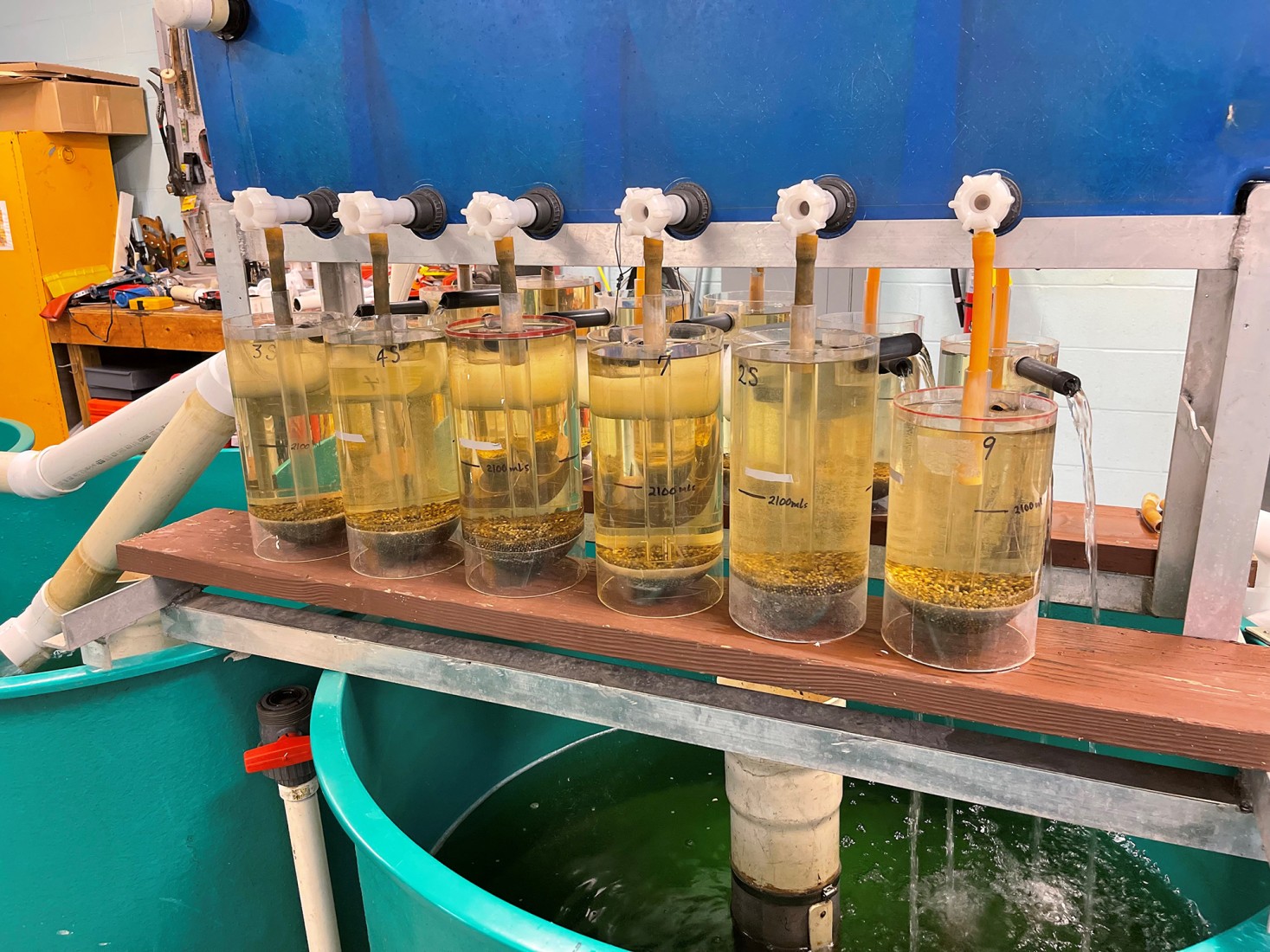
Of the three species, lake sturgeon are showing the most rapid rates of recovery, thanks in large part to restocking efforts. Since 1993, NYSDEC has stocked hundreds of thousands of fish in historically important water bodies and the number of fish is steadily increasing in all target areas. Some of the fish stocked early on are now successfully reproducing, and lake sturgeon are close to coming off New York’s list of threatened and endangered species. Similar restocking efforts began in Ohio in 2018 in the hopes of re-establishing breeding populations to the state.
In addition to the role that state and federal scientists play, community scientists can help in the sturgeon recovery efforts. People may report live or dead Atlantic or shortnose sturgeon to a National Oceanic and Atmospheric Administration (NOAA) sturgeon-reporting platform. Some northeastern states, including Maine, Connecticut, and New York, have state-specific sturgeon-reporting platforms, available through the NOAA site, where members of the public can provide information about any living or dead sturgeon they have encountered.
In the first six months of Maine Department of Marine Resources’ (MDMR) sturgeon-reporting platform’s operation – from January through June 2025 – community scientists reported 16 sturgeon carcasses, and researchers collected 7 of those. Dead sturgeon can be valuable for research purposes; biologists at University of Maine are ground-truthing a nonlethal method of aging sturgeon (the current gold-standard method for aging fish via otoliths – calcium carbonate structures found in the inner ear of bony fish – can only be done on dead fish), and sturgeon carcasses reported by the public are a critical source of material for this work. MDMR also received 32 sightings of live sturgeon during this period, and these data can help researchers target new locations for acoustic receiver deployment as well as identify key locations for public outreach.
The Northeast’s sturgeon almost succumbed to the same fate as the reptiles with which they shared the planet millions of years ago, but with help from biologists and the public, these living fossils may once again become a common sight in the region’s rivers, lakes, and coastal waters.
Discussion *