
Trees’ ability to draw carbon dioxide out of the air and sequester it for decades make them a key nature-based solution to mitigating climate change. And with the localized cooling they provide in urban areas, trees also help protect people and animals from the health risks of extreme heat. In addition, trees filter pollutants and absorb water to help reduce flooding, which scientists expect will increase in the Northeast. Given these benefits – and the urgent need to address climate change – in 2024, New York Governor Kathy Hochul launched the “25 Million Trees by 2033” initiative, encouraging residents, landowners, land trusts, and forest managers across the state to plant trees.
“New York is taking decisive action to protect our environment and strengthen communities’ ability to withstand severe weather,” Hochul said in a February 2025 statement issued by the New York State Department of Environmental Conservation (NYSDEC).
“Reforestation is the single largest opportunity to increase [carbon] sequestration in New York and ultimately, it’s the pathway for the U.S.,” Michelle Brown of The Nature Conservancy (TNC) said this past spring. Brown is TNC’s natural climate solutions director in New York and leads projects connected with 25 Million Trees.
The project’s tree-planting goal is singular in the Northeast. In nearby Pennsylvania, which is slightly smaller in area than New York, the state partnered with municipalities and nonprofit organizations to plant 10 million trees from 2018 to 2026. Maine, New Hampshire, and Vermont are already heavily forested, and state and local initiatives focus mostly on ecological restoration; and Connecticut, Massachusetts, New Jersey, and Rhode Island prioritize urban tree planting.
Amid a challenging funding landscape, state and federal support for 25 Million Trees remains strong. More than $67 million in state funding, plus $50.5 million from the U.S. Department of Agriculture, is boosting production at New York’s only state-owned tree nursery, fueling grants for landowners and private nurseries, and supporting education and outreach efforts. TNC is playing an important role, too, by providing grants to regional private nurseries and landowners, developing a research-based priority native tree species list, and partnering with the NYSDEC to publish a booklet for laypeople titled Reforestation & Afforestation Guidance for New York. (Definitions of reforestation and afforestation vary, but for the New York initiative, reforestation refers to planting trees on land that is forested or has recently been forested, and afforestation refers to planting trees on land that has been used for other purposes, such as agriculture.)
In 2025, NYSDEC built an interactive online database called Tree Tracker, allowing anyone in New York to record trees they’ve planted. Every tree entered since 2024 counts toward the 25 million goal, whether planted by the state, a town, or residents; in urban or suburban areas; on former farmland or previously forested land; or as part of an ecological restoration project. As of June 2026, the tracker shows nearly half a million trees planted – roughly 2 percent of the goal, a quarter of the way into the timeline.
Success will require more than strong funding and partnerships – especially in a state where NYSDEC estimates that 97 percent of suitable tree-planting land is privately owned. Recognizing this, NYSDEC and TNC are working directly with private landowners by offering planting guidance, financial support, and technical assistance. The state and TNC are also identifying native, climate-resilient species to prioritize for the 25 Million Trees effort and are encouraging regional nurseries to grow these species.
Choosing Tree Species and Boosting Production
After Hochul’s announcement, researchers from TNC and the Ecological Health Network initiated a study to develop a priority native species list for New York. They formed an advisory council with forest ecologists, carbon scientists, land managers, Indigenous horticulturists, nursery professionals, foresters, and other experts. They also surveyed “stakeholders from various sectors, including government agencies, private companies, nonprofits, foresters, industry consultants/contractors, land trusts, and educational institutions.” The researchers asked respondents about how they choose which tree species to plant. Despite respondents often having budget constraints, the price of seedlings “was not the primary factor driving species selection,” the researchers noted in the study’s September 2024 final report. “Instead, ecological factors, such as wildlife benefits, reference ecosystems, and recommendations from ecologists, had the greatest influence on species choice. Conversely, recommendations from vendors, contractors, and engineers were the least influential.”
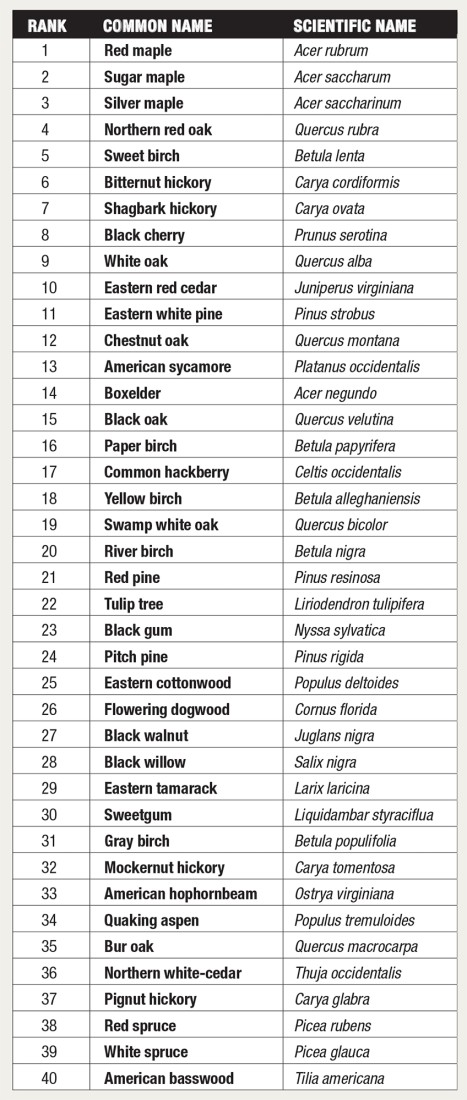
The organizations scored each native trees species according to several factors, such as ecological value, adaptability to climate change, carbon sequestration capacity, viable seed production, Indigenous uses, and resistance to deer browsing, pests, and pathogens. The resulting Collaborative Priority Species List for Reforestation in New York ranks 40 native tree species according to their scores. Higher ranked trees have greater adaptability across a range of locations, while lower ranked trees have more particular site requirements, such as needing acidic, well-drained soils or wide-open spaces, as in an urban park. The priority list is intended to help nurseries and seed collectors grow these native species, and to help landowners, government agencies, nonprofits, and tree-planting professionals choose and plant the species most suitable to a given location.
With the list of priority species compiled, both TNC and NYSDEC came to understand the importance of assisting regional nurseries in growing those saplings. Currently, many tree-planting projects in the Northeast must source seedlings from the Midwest or the Southeast, where the genetics and adaptability of the seedlings may not be ideal for our region.
“We can’t plant 25 million trees if we don’t have 25 million trees to plant,” said Annabel Gregg, the 25 Million Trees program coordinator for NYSDEC.
To bolster the state’s tree-growing capabilities, NYSDEC is investing $25 million in its only tree nursery, Colonel William F. Fox Memorial Saratoga Tree Nursery, to modernize its facilities and to boost production of seedlings from 1.2 million to 6 million per year. The money has also funded a 10-foot-high fence around the nursery’s primary growing site to protect young trees against browsing by deer, and Gregg expects that fencing will increase sapling survival at the site by 30 percent.
“You can see a big difference now,” David Lee, a forester and manager of the nursery, said this past spring. “There’s not a deer track on the property.”
Lee is pleased that the state is recognizing the nursery – where he’s worked for 35 years – for the vital role it plays in propagating native species and for the detailed, labor-intensive work that its staff accomplishes. For example, the nursery sources all its own seeds, and each species requires a different recipe for evaluating ripeness, preparing for storage (which often involves heating to precise temperatures), sorting by hand or by machine, and testing germination capacity. The nursery stores the seeds of more than 40 species in a large walk-in cooler set at 29 degrees. Rather than respond purely to market demand, the nursery operates to supplement the trees sold by private nurseries and “to help preserve the genetics of [trees in] New York,” said Lee. “We’re not here to compete with the private industry at all.”
The Seedling Bottleneck
Planting 25 million trees in less than a decade is an impressive endeavor, said Anthony D’Amato, a silviculturist and University of Vermont forest researcher. D’Amato, who is assisting with the 25 Million Trees initiative, asked, “What does it look like to try to plant this many trees – and actually source them?”
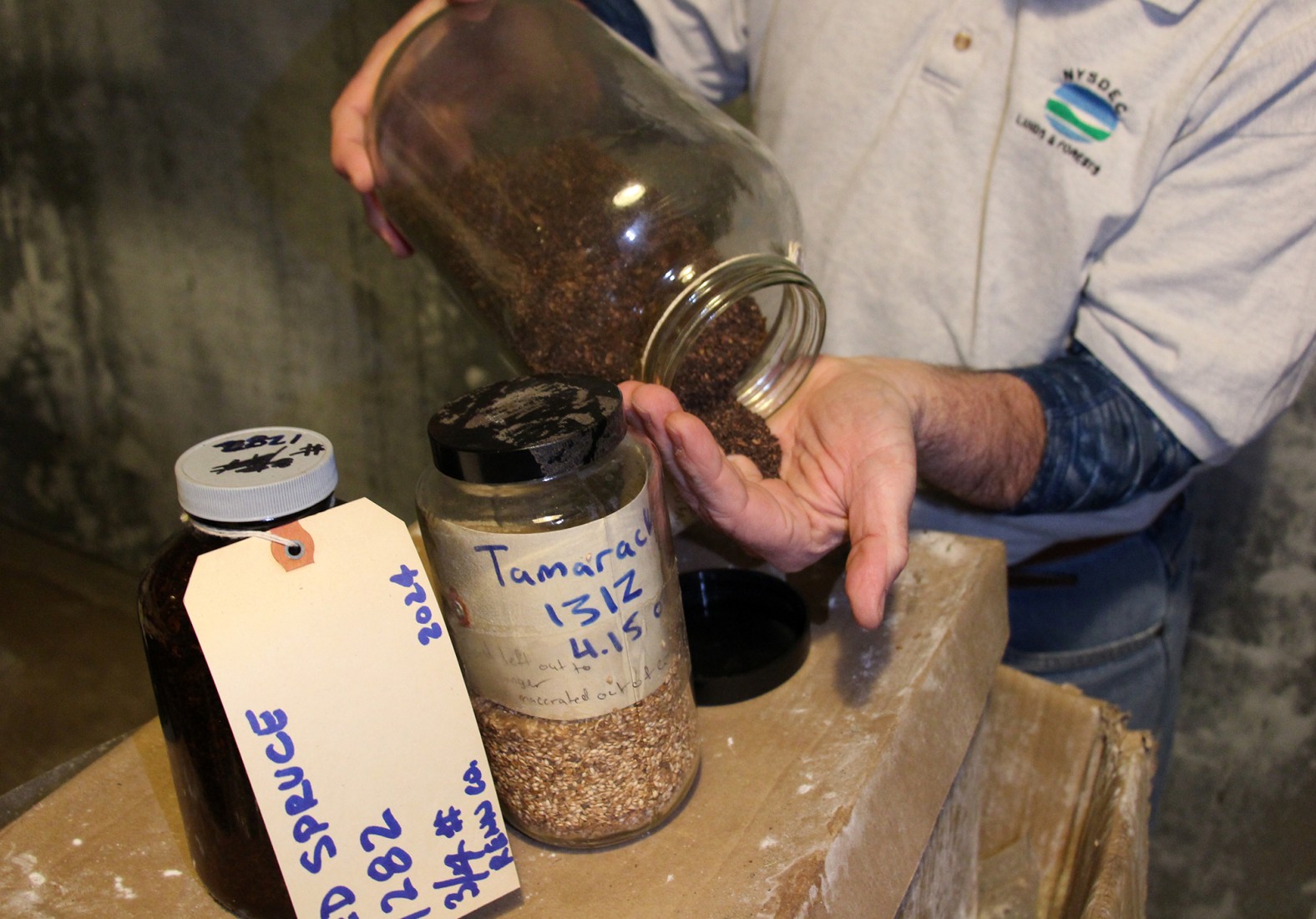
Private nurseries are often reluctant to invest in native seedlings unless they know which species buyers want, how to secure high-quality seeds, and whether customers will buy the stock in two to three years. Both NYSDEC and TNC are addressing the challenge of providing native tree seedlings in numbers large enough for the 25 Million Trees goal.
Beyond investing in the Saratoga Tree Nursery, NYSDEC is providing several million dollars through three grant programs that subsidize private nurseries so they can sell native tree species to customers at a discounted price; promote the collection, processing, germination, storage, and propagation of seeds; and expand businesses related to reforestation, forest management, timber, and other forest products.
Boosting private nursery production is essential to reducing “barriers and bottlenecks” to planting more native trees in New York, said Molly Hassett, a supervising forester with NYSDEC who helps lead 25 Million Trees. “The majority of trees that are being sourced by our grantees are from private nurseries.”
TNC is taking a similar approach through its Nursery Incubator Program, which funds individual nurseries, mostly in the Northeast, that provide growing stock to New York residents, land trusts, and private landowners. “We hear from the nurseries what they need,” said TNC’s Michelle Brown. “Maybe it’s workforce, maybe it’s greenhouses, cold storage, air pruning.” Whatever they need, TNC helps them purchase it. Awardees receive between $50,000 and $300,000 to make improvements, and TNC guarantees the purchase of almost 200,000 native tree seedlings to lower the financial risk and to increase the overall availability of native seedlings for other customers.
“The Northeast largely is benefiting from New York having this ambitious goal,” said D’Amato, because the state is investing millions to boost regional seedling production and providing a road map for state-led, large-scale tree plantings on privately owned lands.
Engaging with Private Landowners
To encourage private landowners to join the 25 Million Trees project, TNC and NYSDEC have used social science research to ensure their outreach efforts would be effective.
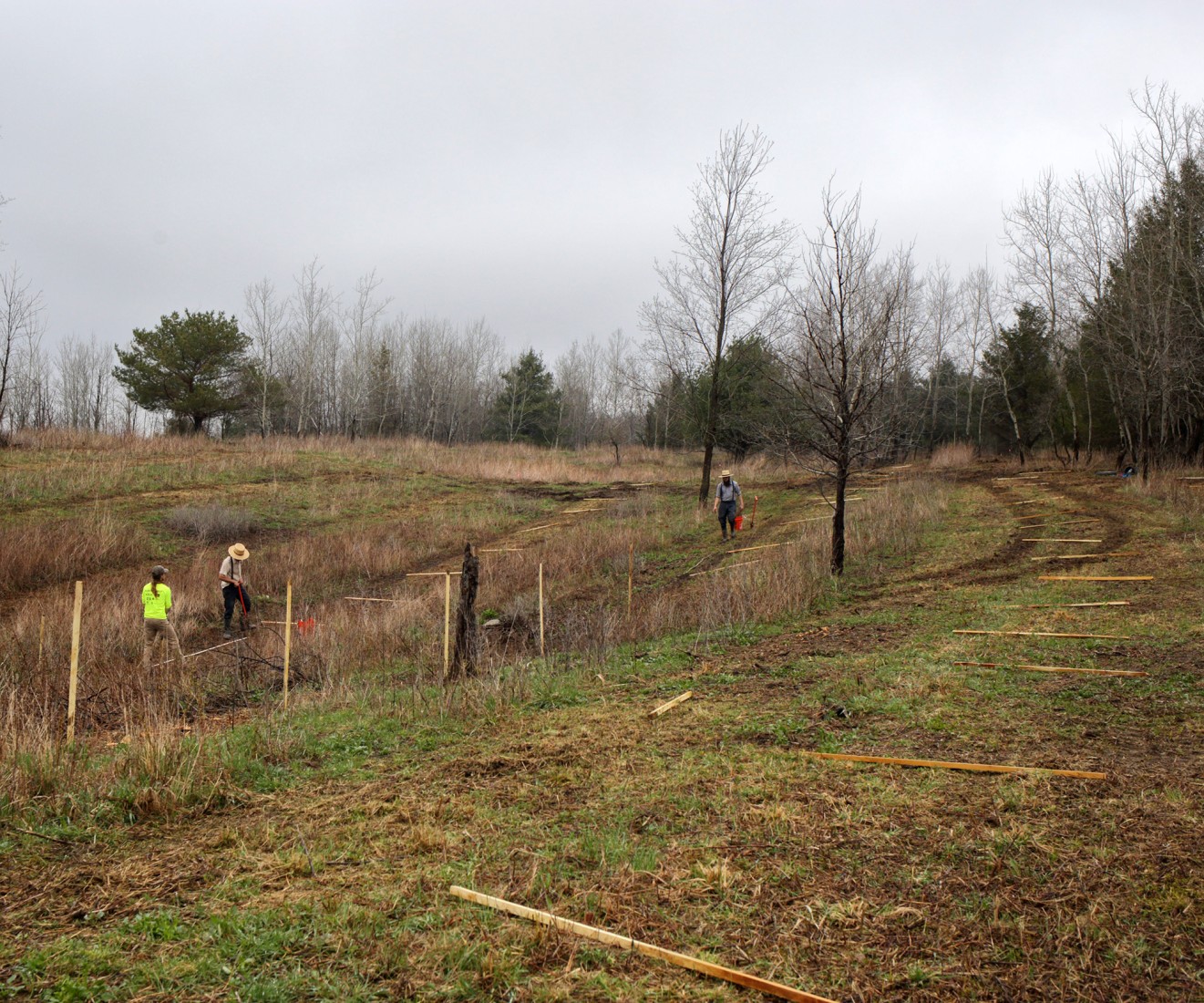
“Without getting landowners excited about reforestation, we’re not going to be able to meet our goal,” said Hassett. According to NYSDEC, New York has 196,000 acres of unused or low-profit agricultural land and 3.8 million acres of pasture suitable for reforestation, nearly all of it privately owned. The department also identifies another 1.35 million acres of urban open space suitable for tree planting, which is especially important for helping people in disadvantaged neighborhoods with limited tree cover to cope with extreme heat. (For example, New York City’s NYC Urban Forest Plan 2026 calls not only for increasing the city’s tree canopy cover from about 24 percent to 30 percent by 2040 but also for doing so more equitably – focusing on increasing tree canopy cover in disadvantaged neighborhoods where it can be below 10 percent. Such neighborhoods have higher rates of poverty and air pollution and fewer parks and green spaces.)
Informing TNC’s and NYSDEC’s outreach to private landowners is a 2023 report from Cornell University’s Center for Conservation Social Sciences, in which researchers presented results from a detailed survey mailed to 3,500 New York residents who owned more than 20 acres; 979 responded. The survey asked landowners about their reasons for owning their land, their awareness of climate change and carbon sequestration, and their willingness to clear invasive species, to grow mature forests, to plant trees in unused fields, and to protect and monitor trees once planted.
The researchers found that the largest perceived barriers to “growing mature forest” were a lack of labor (46.6 percent) and upfront and ongoing costs (45.7 percent). The authors, who included Cornell researchers and TNC social scientist Andrea Armstrong, concluded that, on average, respondents were very willing to plant tree seedlings and cut brush. But they were much less willing to install tree tubes to protect fragile seedlings or to perform annual maintenance of planted seedlings – and even more unlikely to create brush barriers, install deer fencing, or apply herbicides.
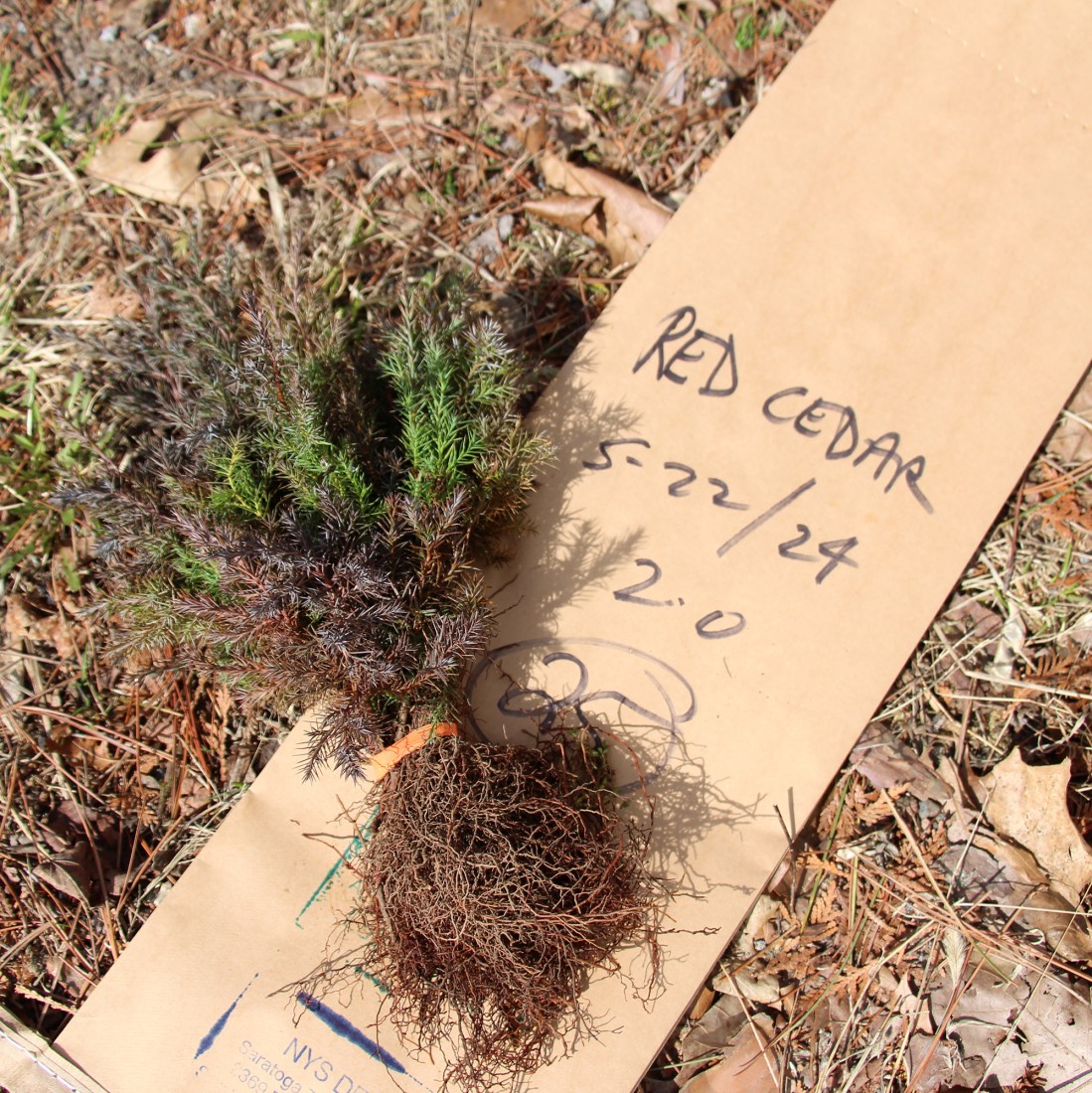
To help landowners overcome challenges related to forestry expertise, finances, and labor – and to help advance the goal of planting 25 million trees – NYSDEC offers Regenerate New York Forestry Cost Share Grants, which require landowners to contribute only 10 percent of the project’s cost. The state has awarded 64 Regenerate New York grants in the past four years, totaling $7.6 million (that total includes a one-time supplemental federal grant of $5 million). The 2026 cycle attracted more projects than could be funded, and NYSDEC staff anticipates the state will allocate additional funding for the grants because of high interest.
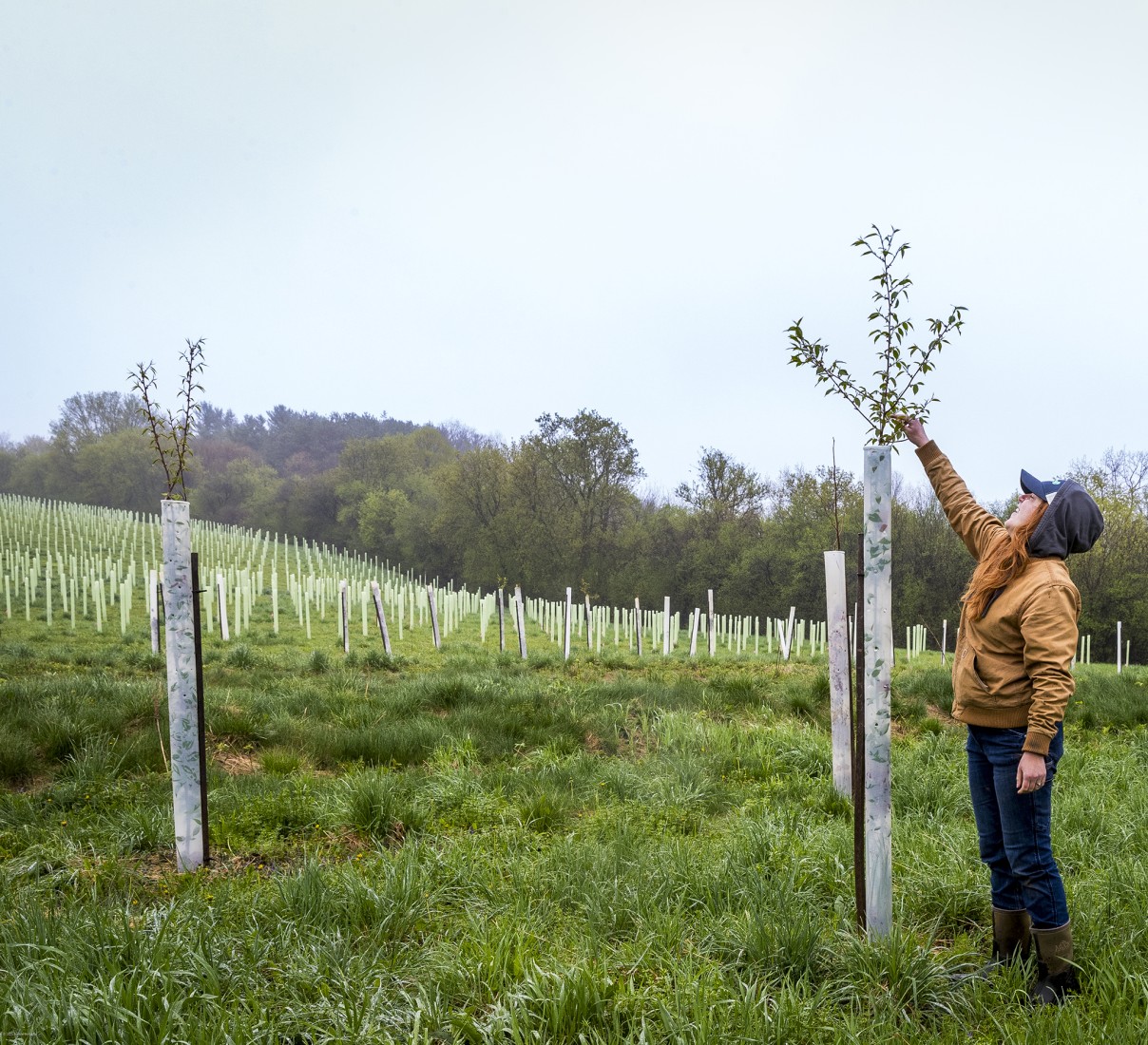
One grant recipient is Mike Sanchez, who in 2014 bought 75 acres about 50 miles south of Rochester. One-third of the hilltop land was already forested, but Sanchez wanted to plant more trees on a 10-acre parcel. However, that land was overrun with invasive honeysuckle and autumn olive, and Sanchez didn’t have the knowledge he would need to achieve his goal. As a Regenerate New York grant recipient, he worked with an experienced forester who oversaw herbicide spraying in 2023 and the 2024 planting of native tree seedlings (450 each of red oak, white oak, red maple, and black walnut) with tree tubes to protect against browsing from deer.
The forester returned to inspect the trees one year later and estimated an 80 percent survival rate, much higher than the grant-required 65 percent survival. If a landowner doesn’t achieve the required rate, NYSDEC staff collaborate with them to figure out why, but such circumstances have been rare, in part because recipients work with a natural resource professional and/or forester.
Sanchez praised NYSDEC staff and noted the educational value of partnering with forestry experts. “It was elation and heartbreak all at once,” he said, “because I learned so much about getting the trees in, keeping them alive” – and about the devastation wrought by pathogens and pests, such as the emerald ash borer, which has killed most of the ash trees in his existing forest.
Saving Seeds and Culture
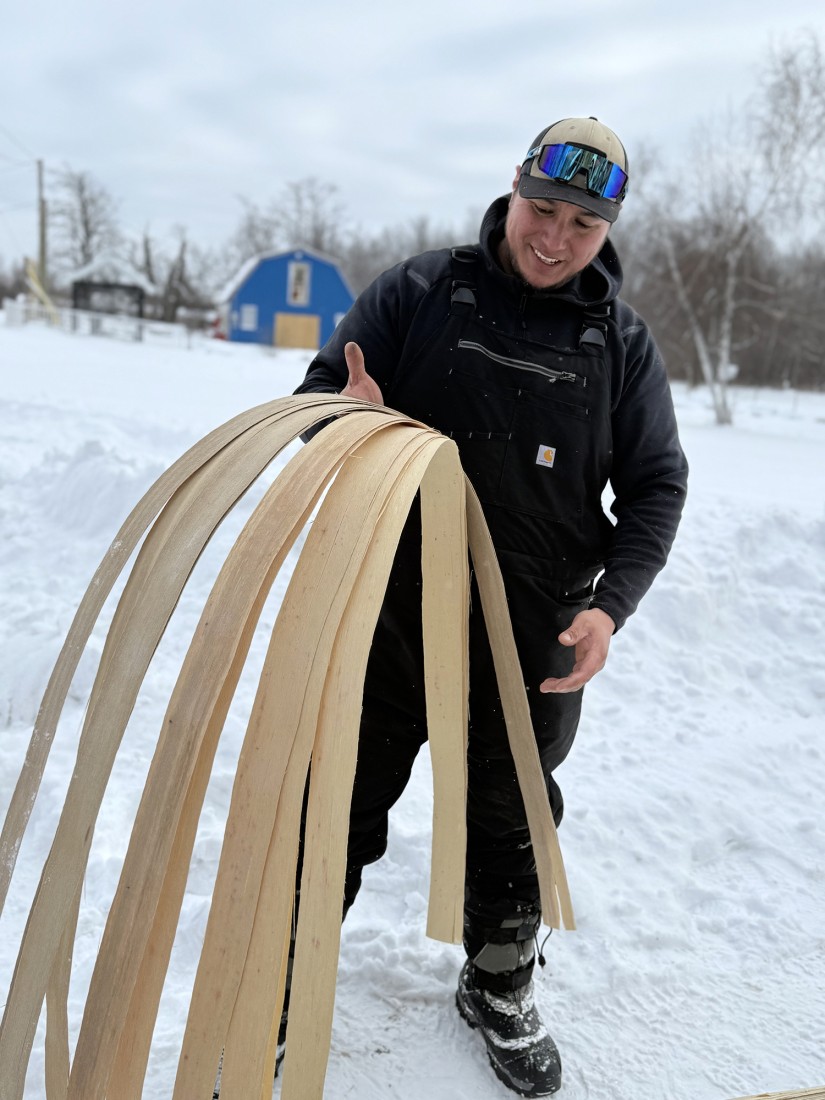
While planting more native trees in New York is essential to mitigating the worst impacts of climate change on people and wildlife, state residents are also working to protect imperiled native tree species. For example, members of the St. Regis Mohawk Tribe, located in northeastern New York along the Saint Lawrence River, have been fighting emerald ash borer on their land (called Akwesasne) since 2016, when they first discovered the beetle in their prized ash stands. The tribe partners with the U.S. Forest Service to protect the most valuable ash trees – black ash, which are used for basketmaking – through insecticide injections, silviculture treatments, and parasitoid wasps that selectively hunt for EAB larvae and eggs. Tribal foresters inject young, fast-growing black ash trees that should become excellent for basketmaking: those with straight trunks, no knots, and spongy bark.
“When you squeeze [the bark], it feels like a cork,” said Angello Johnson, a tribal member, experienced basketmaker, and land resource program manager for Akwesasne. Great basketmaking trees take 30 to 40 years to reach 10 to 12 inches in diameter at breast height.
Johnson finds it “heartbreaking” to watch so many ash die. “Our goal is really to just stretch out the amount of time we have with this precious resource,” he said. To help achieve that goal, Johnson and others collect and store as many ash seeds as they can during “bumper crop” or mast years. While these seeds probably won’t be planted before 2033, they may bring back ash trees generations from now.
Tallying Results
With a little more than six years left, NYSDEC and TNC staff know they have a long way to go. As of June, the most trees planted in New York were in the southern tier, along the Pennsylvania border, where landowners planted a total of 176,300 trees. Mohawk Valley, which includes Albany, followed with almost 58,000 trees, then the northern region of the state with 49,300, and New York City with 45,600.
“Our rate of tree planting cannot stay linear to achieve our goals. It has to be exponential,” said Lori Severino, a public information officer at NYSDEC. The state – with help from TNC – has built a strong foundation for accelerating tree planting, and with approximately $117.5 million in state and federal funds invested in 25 Million Trees, “we expect the returns to accrue in later years,” said Severino. “DEC anticipates meeting the goal.”
Meanwhile, TNC remains “dedicated to partnering with the state,” said Brown, “to move the needle on … harnessing nature as a climate solution across New York.” After all, a single tree can live for hundreds of years. “By building a coalition of people who care about reforestation,” said Brown, “we’re helping to create a more resilient New York…. It’s about trees and forests and bringing people together to make it happen.”
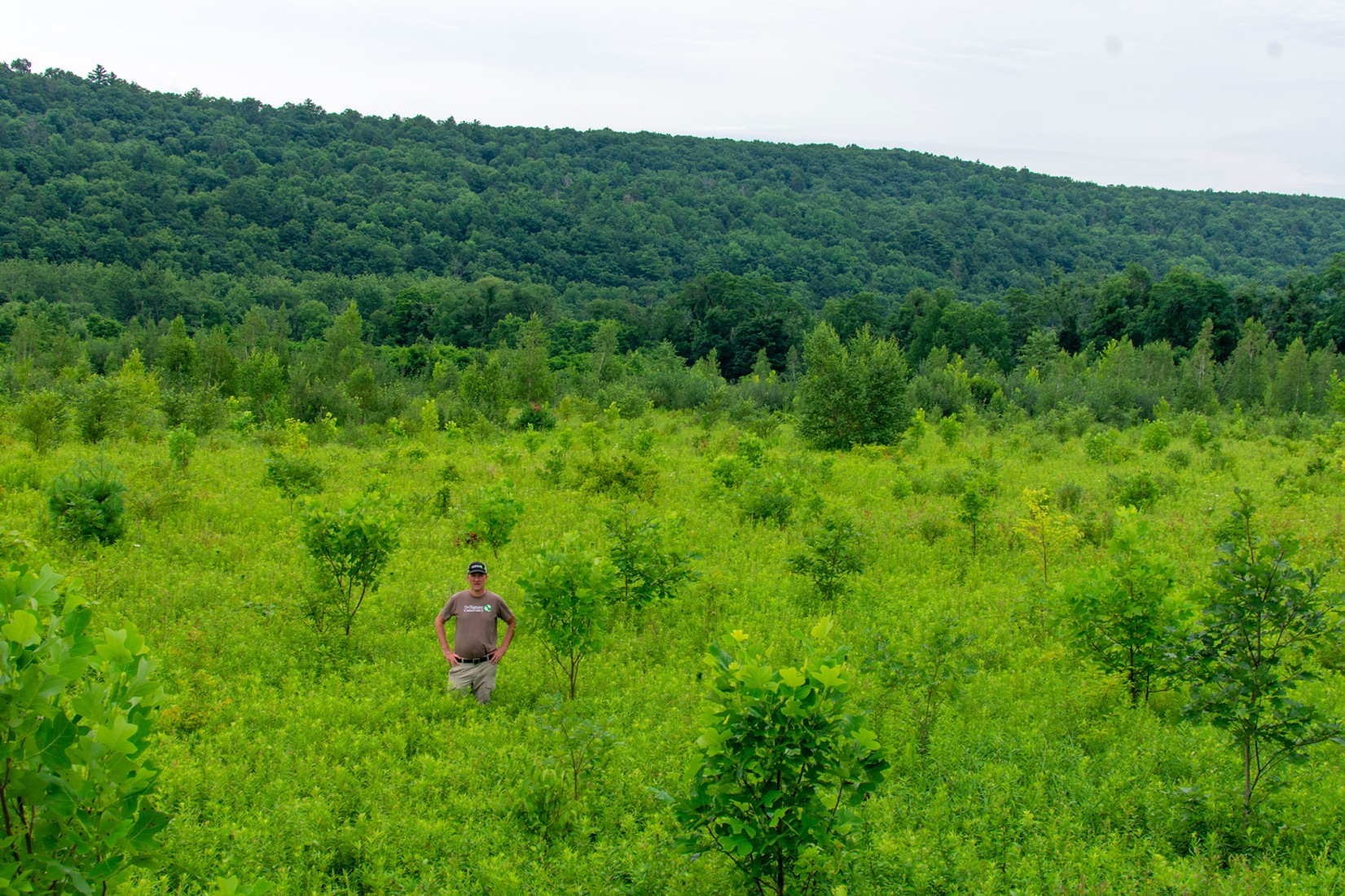
Almost 100 miles northwest of New York City lies Neversink River Preserve, a large, intact floodplain forest that provides a home for countless species, such as bears, bald eagles, and at least 10 species of trees. This thriving ecosystem – which absorbs floodwaters, filters water pollution, and stores carbon – didn’t exist in 2000. Instead, it was mostly unused agricultural land – the kind of land that will be essential to achieving New York’s goal of planting 25 million new trees by 2033.
“When we did that large floodplain reforestation project, we weren’t thinking about reforestation per se in New York,” said Chris Zimmerman (pictured), a forest reforestation ecologist at The Nature Conservancy, who led the planting of 15,000 seedlings across 50 acres of Neversink in 2016. Now, he appreciates the lessons Neversink is still teaching people in New York and beyond: choose resilient, adaptable, native species of trees; train or hire skilled planters; and use tree tubes or a high fence to protect the trees from browsing deer.