Skip to navigation Skip to content

Pond Patrol: Keeping an Invasive Bladderwort in Check

Tilton Pond
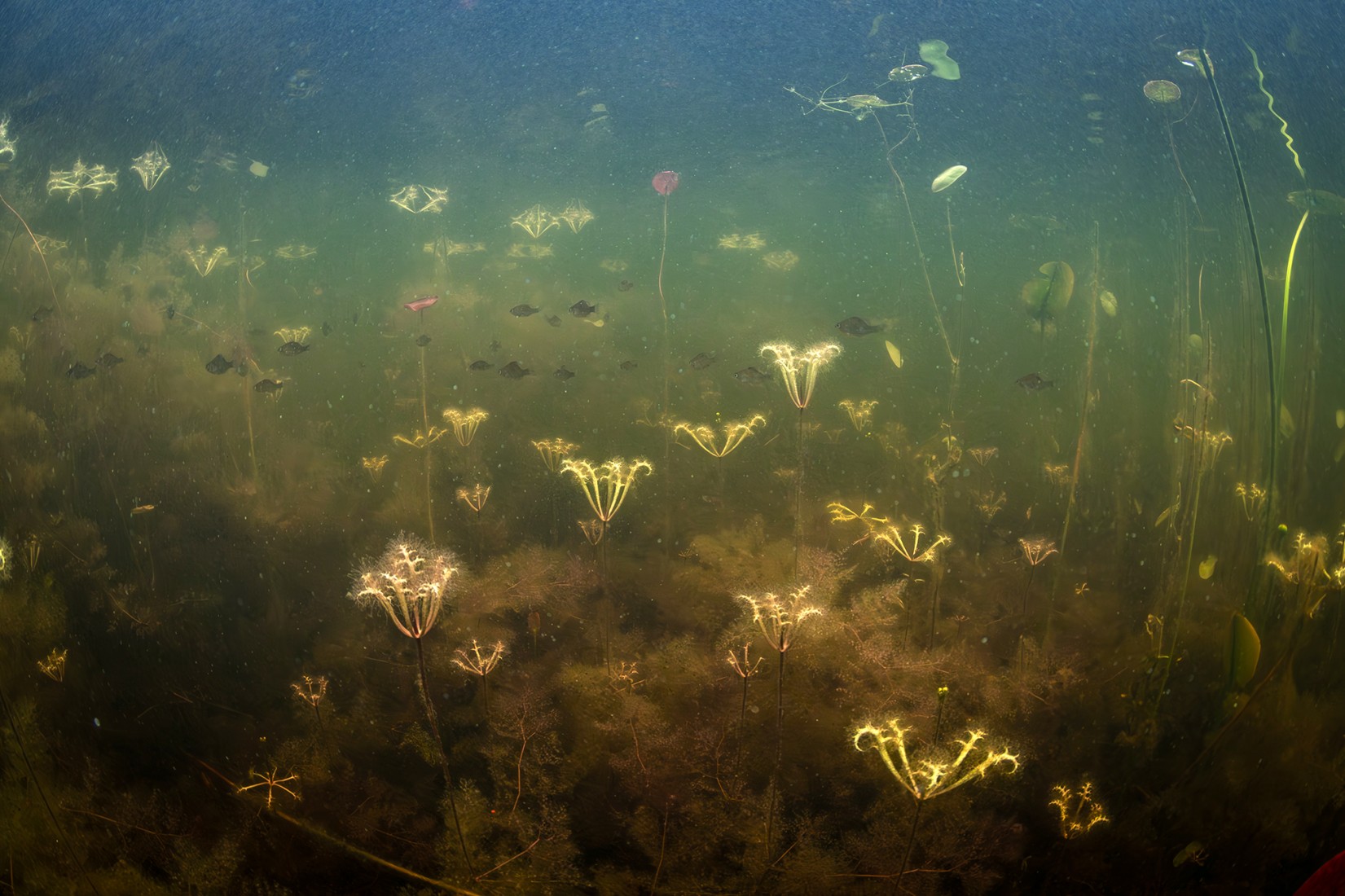
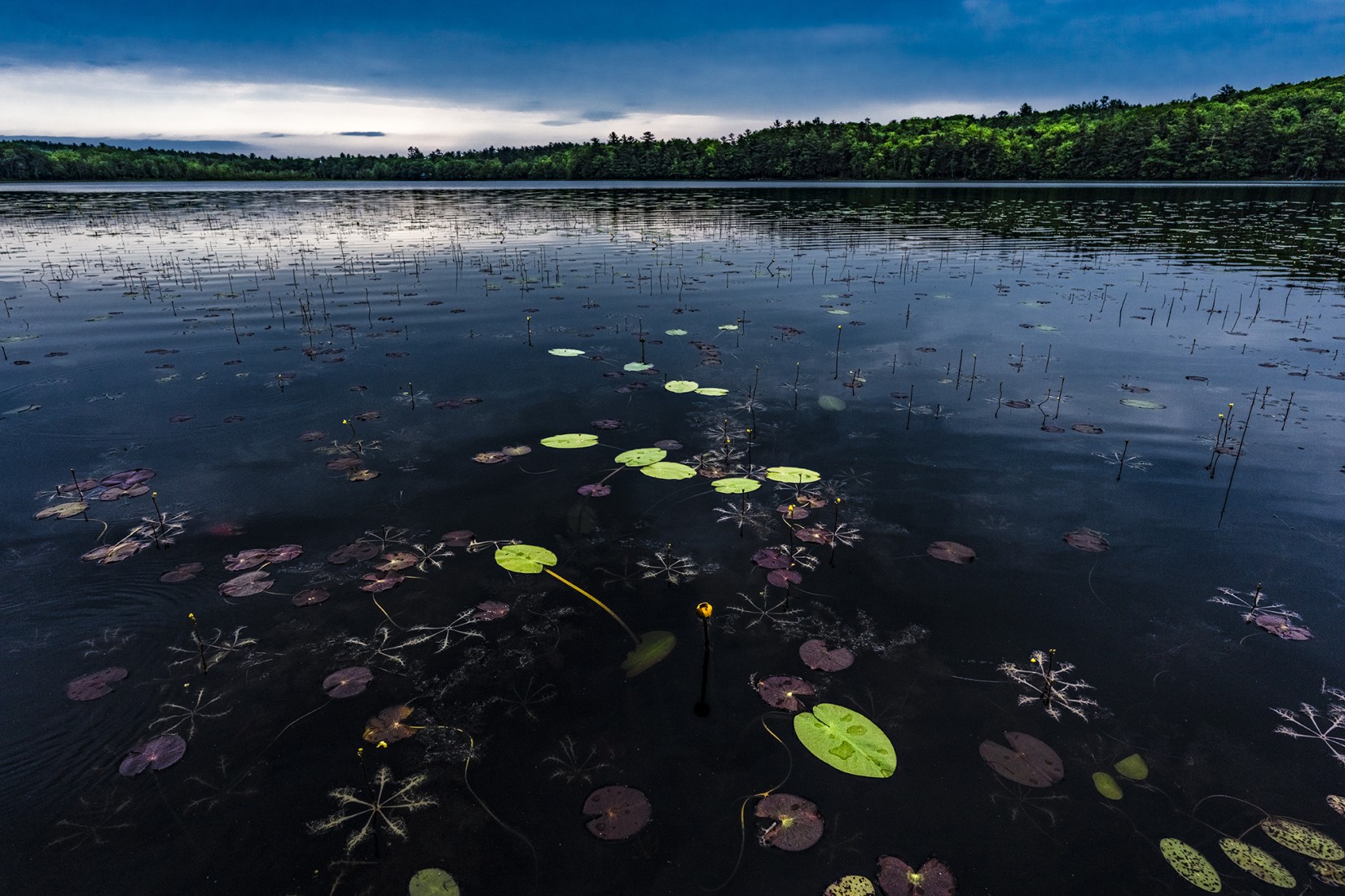
Tilton Pond in Maine has experienced a rapid spread of swollen bladderwort in its southwestern corner. Containment efforts have included hand removal by volunteers (by state permit) and a mesh barrier stretched across the outlet to adjacent David Pond to prevent fragments from spreading there. Volunteers work to remove swollen bladderwort, identifying the plants by their bright yellow flowers, which rise from wide, pinwheel-shaped floats. Photos by Joanna Lentini.

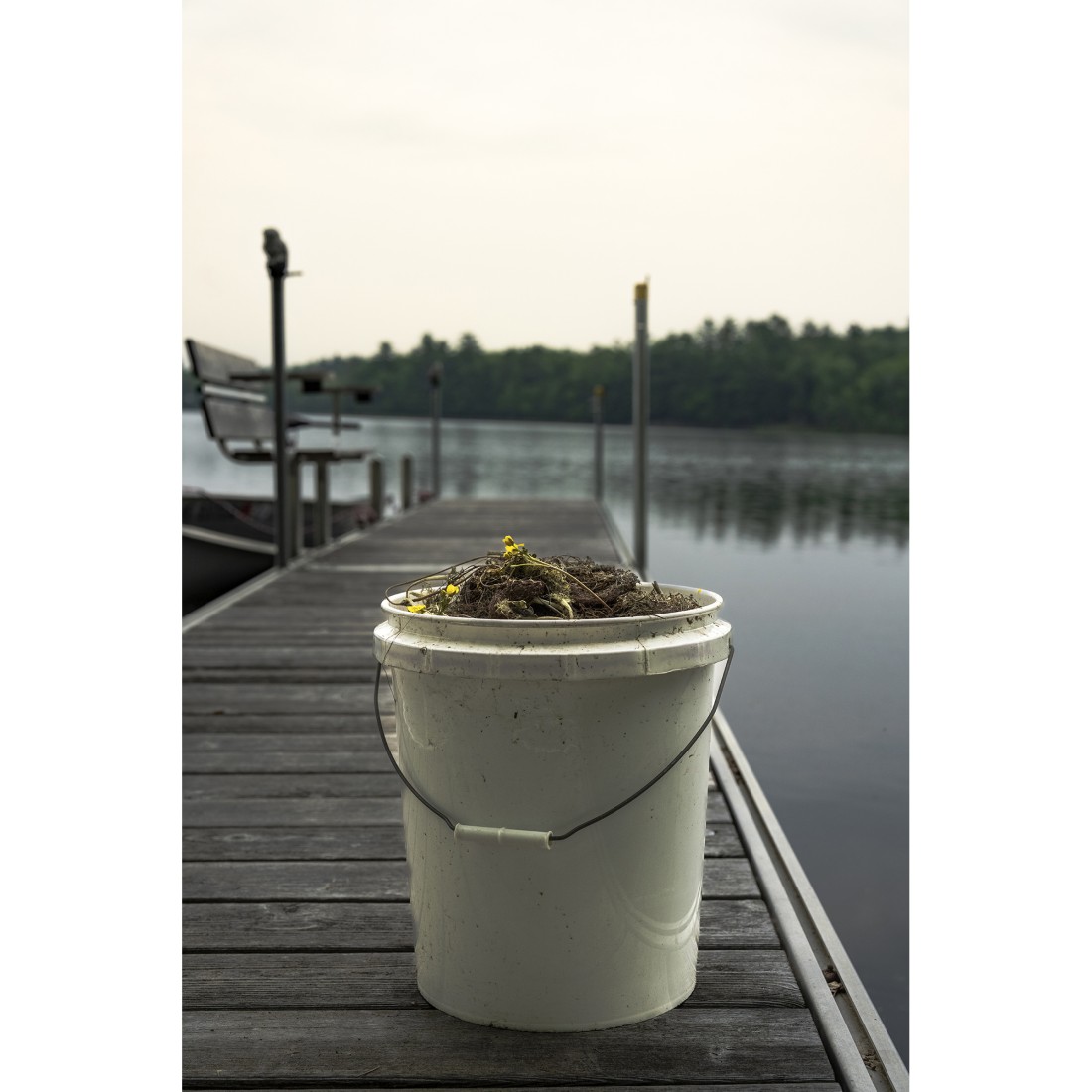
On several days throughout summer, a small flotilla of canoes and kayaks gathers on Tilton Pond in central Maine, on the hunt for an uninvited carnivorous plant that has taken hold: swollen bladderwort (Utricularia inflata). The effort, led by the 30 Mile River Watershed Association and carried out under Maine Department of Environmental Protection guidance, has helped to keep this invasive species in check on the 116-acre lake. On workdays, volunteers fill buckets one by one, often accumulating hundreds of pounds of swollen bladderwort in a single outing.

Maine has nine native bladderwort species, and these play an important role in lake ecology, forming underwater structure that provides young fish and invertebrates both foraging grounds and shelter from predators. Swollen bladderwort’s native range extends as far as New Jersey, but it has migrated northward, with populations documented in Massachusetts and New York in the 1990s and in Maine within the past few years. It is now present in all six New England states. Waterfowl may occasionally move plant fragments between lakes – on their feathers or feet – but swollen bladderwort’s recent spread is likely the result of human activity, particularly the transport of plant fragments on boats, trailers, and fishing gear.

In its native range, competition from other native plants, predators, and pathogens keep swollen bladderwort in check. Beyond this range, however, it quickly dominates, displacing native vegetation. Swollen bladderwort reproduces through fragmentation, with small pieces breaking off and growing into new plants to form dense floating mats that block out sunlight, reducing the ability for other aquatic plants to photosynthesize, and even altering the oxygen levels and temperature of the water.

“Once an invasive aquatic plant gets established in a lake, it becomes nearly impossible to eradicate it,” said Bob Capers, the local botanist who first documented swollen bladderwort in Tilton Pond in 2023. “At that point, people have to live with it, while trying…to keep it from becoming so abundant that it makes swimming or boating impossible.”
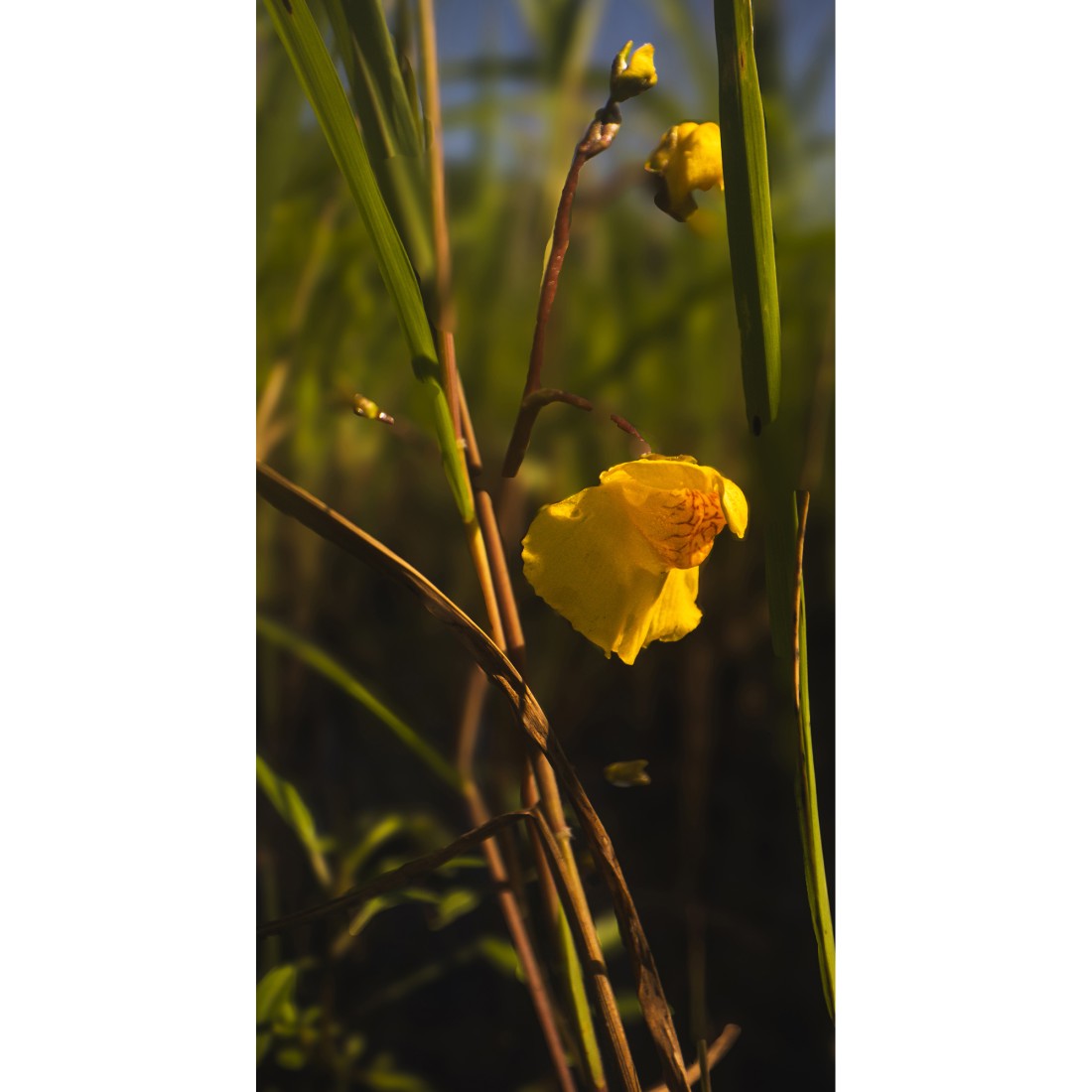
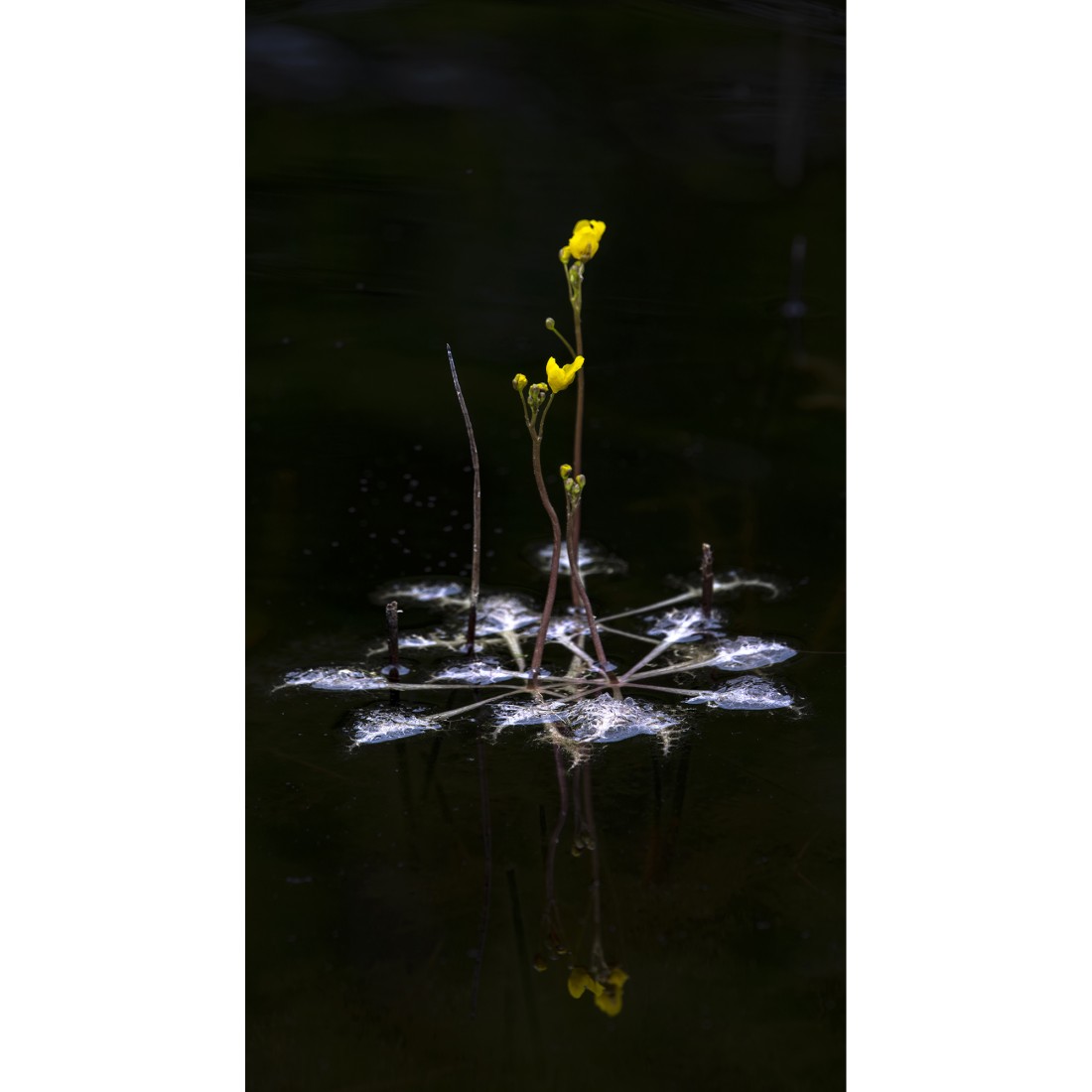
Common bladderwort
Common bladderwort (Utricularia vulgaris) is an abundant native bladderwort; it does not have floating branches.
Bladderwort
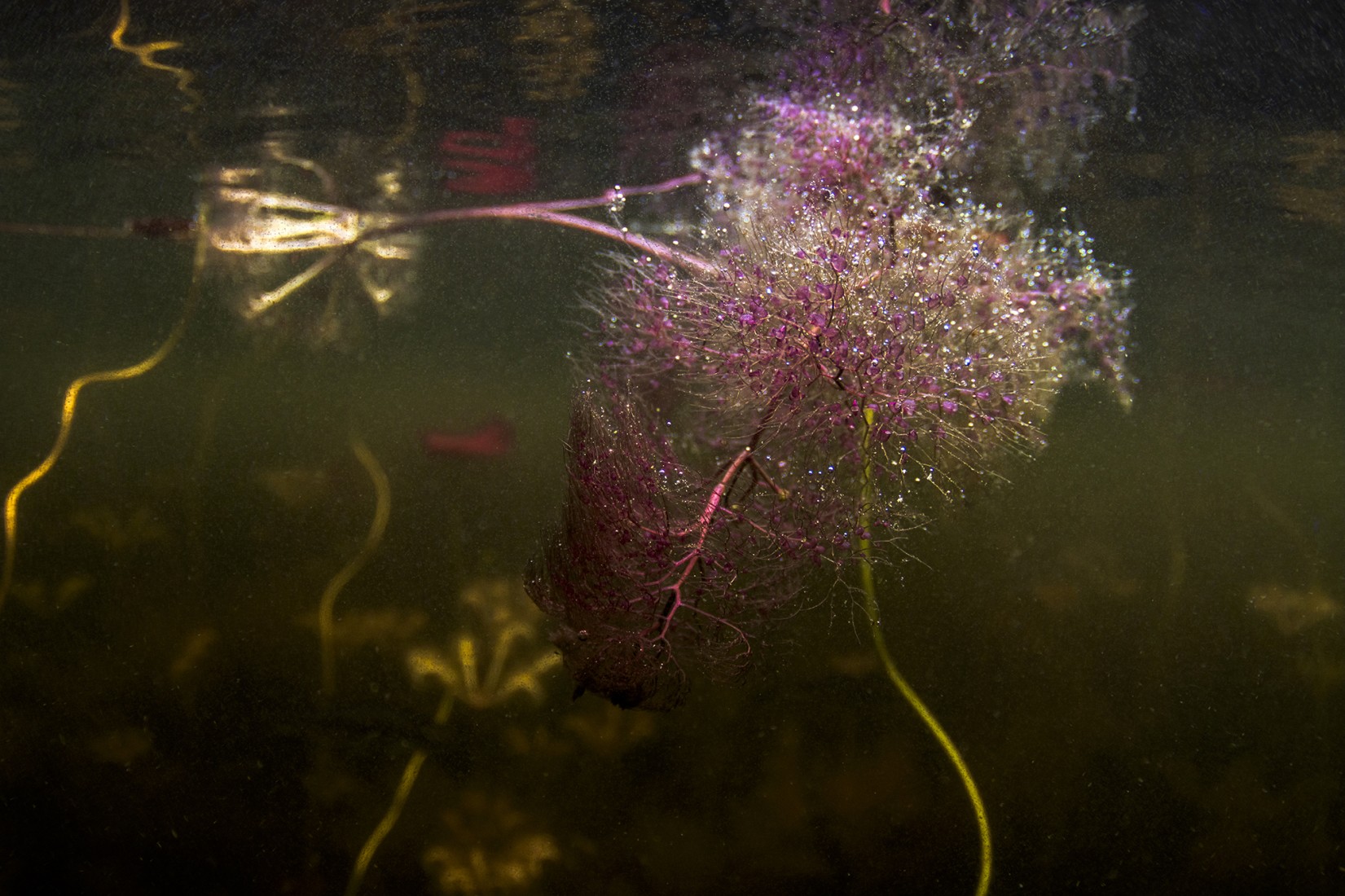
Floating bladderwort (Utricularia radiata) is another native species. It is similar in appearance to swollen bladderwort and, like the invasive, has a whorl of floating branches. However, floating bladderwort has fewer flowers, a shorter stem, and its float is much smaller – all clues that help volunteers distinguish it from the invasive species.
Bladderwort sacs
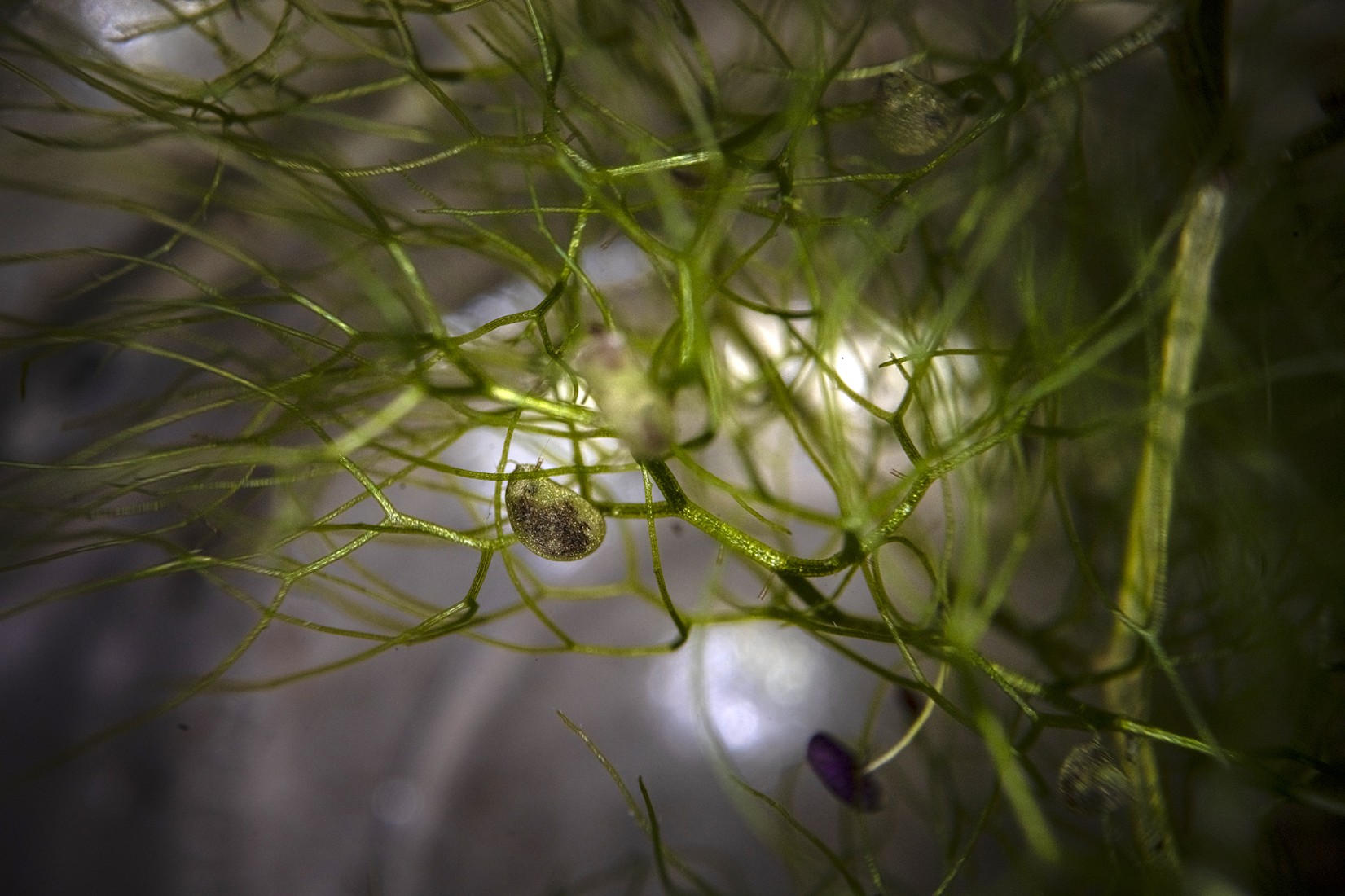
Swollen bladderwort’s sacs seem to be scattered across the leaves, with no pattern.
Large bladderwort
Common bladderwort, conversely, has larger bladders than swollen bladderwort, and these generally appear in neat rows along the middle of the leaves.
Microscopic bladderwort
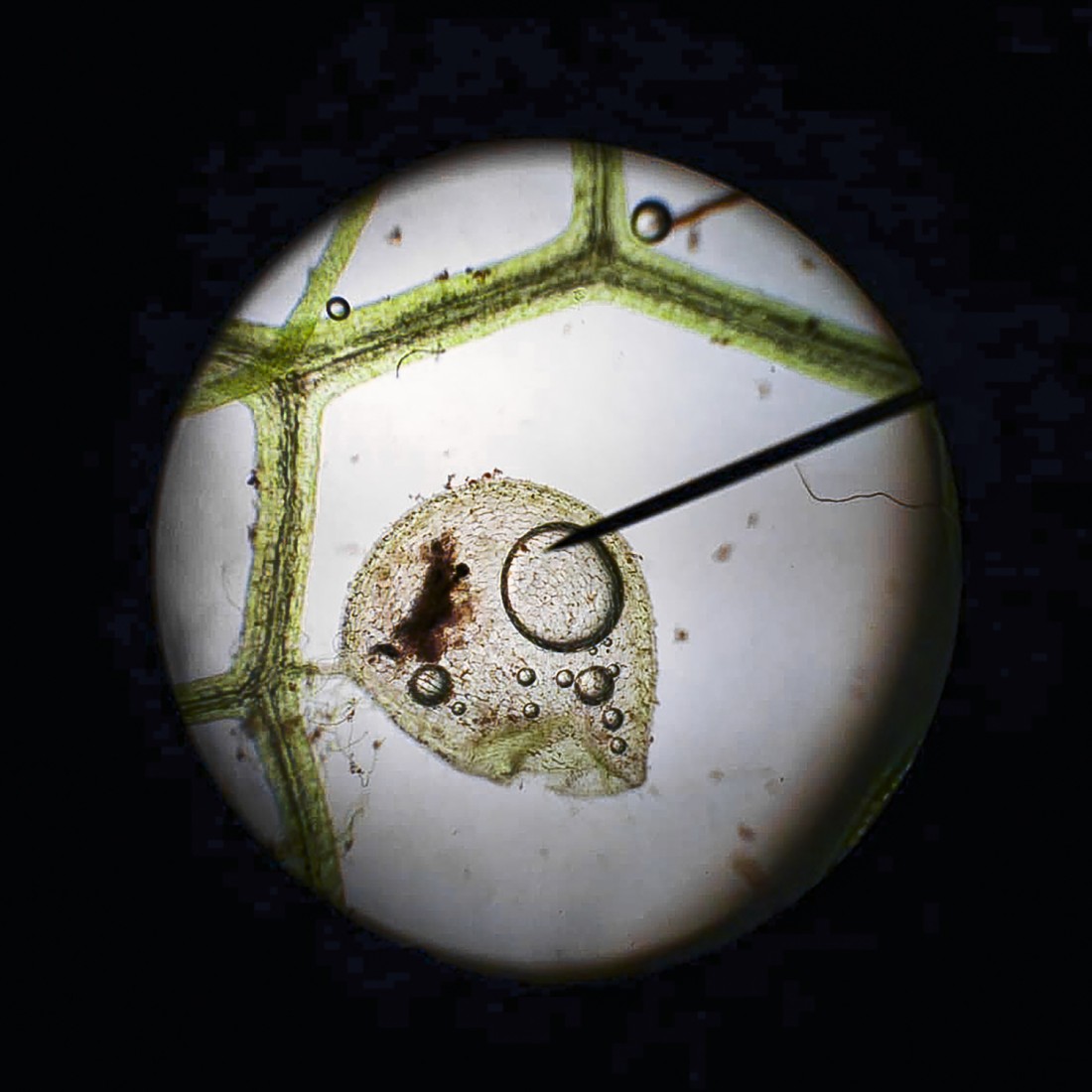
Among carnivorous plant species, bladderwort has the fastest “trap door.” This view through a microscope offers a closeup look of common bladderwort’s suction trap and its contents of consumed microorganisms. When a tiny bristle on the outside of the bladder encounters something passing by, the trap door snaps inward in an average time of 0.5 milliseconds and pulls its prey in within 0.1 milliseconds – too quickly for prey to react and escape. Each plant can have hundreds to thousands of bladders that consume microscopic prey found in the water column.
Fish in bladderwort
Schools of small fish and the occasional snapping turtle swim within the swollen bladderwort web of delicate stems and traps. At low densities, this invasive can fill the ecological role of native bladderworts, but it quickly spreads to the point of harming the native ecosystem.
Sorting specimens
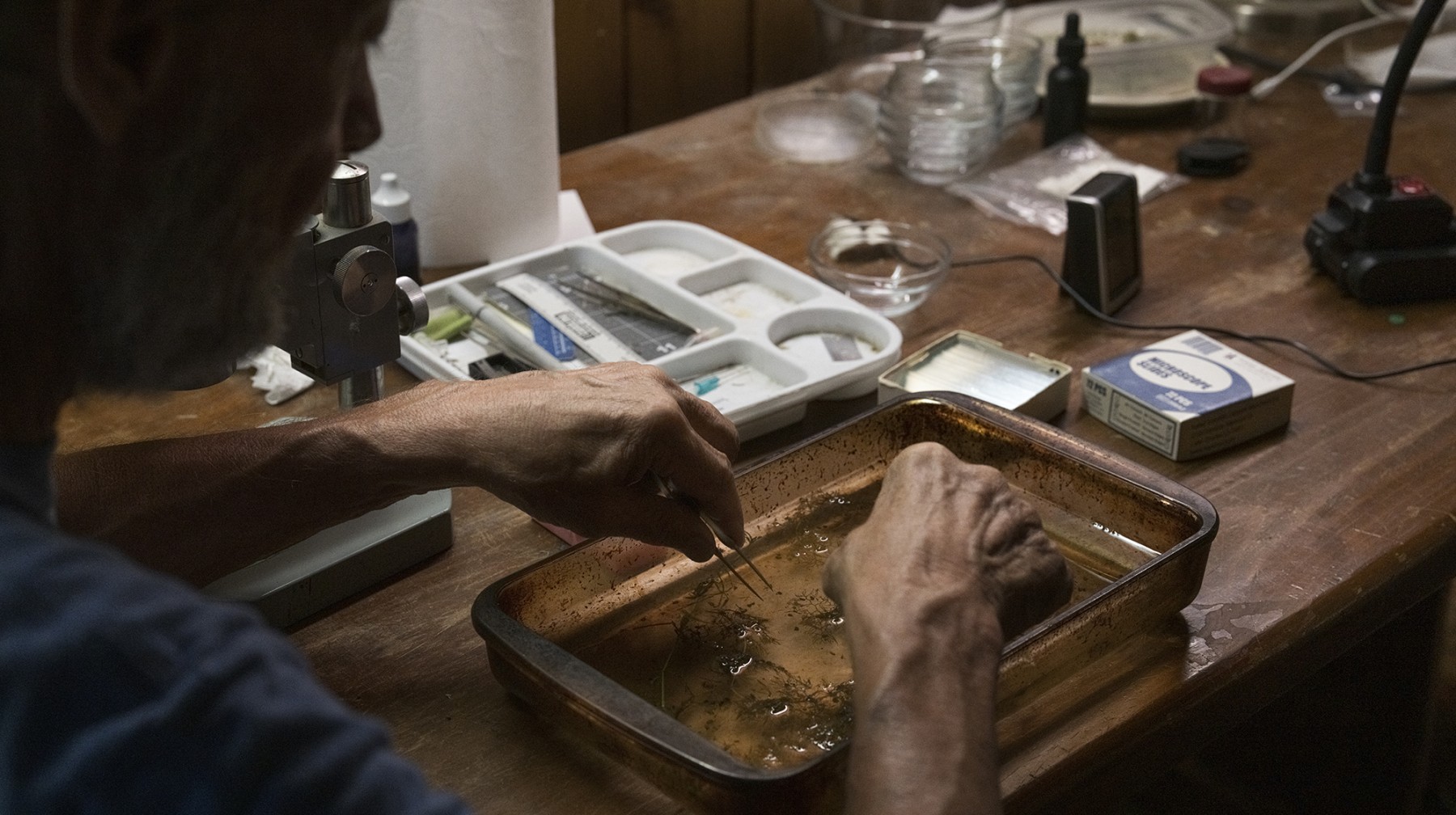
Bob Capers sorts through a tray of collected specimens, recording details and building an archive of the bladderwort species present in the pond.
Landowner
Lori Beaulieu, who owns a home on Tilton Pond and is a trained volunteer and project coordinator, spends many days each summer collecting swollen bladderwort. From canoes and kayaks, volunteers collect and deliver bucketloads of the plants to Beaulieu’s dock, where they empty it on shore to dry out and die. Some days, volunteers collect as much as 500 pounds of the invasive plant over the course of a few hours.
Bladderwort
Volunteers receive training on how to accurately identify bladderwort species and how to carefully hand-pull plants to avoid breaking them, as small fragments can regrow into new plants.
Bladderwort
By the end of summer, volunteers have removed thousands of pounds of swollen bladderwort from Tilton Pond, keeping the population from expanding. Maine added swollen bladderwort to the state list of invasive and unwanted aquatic plants in 2023, and it is now present in nine ponds and lakes in the state. Under Maine law, it is now illegal to sell, import, or transport the plant.

No discussion as of yet.

Leave a reply

To ensure a respectful dialogue, please refrain from posting content that is unlawful, harassing, discriminatory, libelous, obscene, or inflammatory. Northern Woodlands assumes no responsibility or liability arising from forum postings and reserves the right to edit all postings. Thanks for joining the discussion.