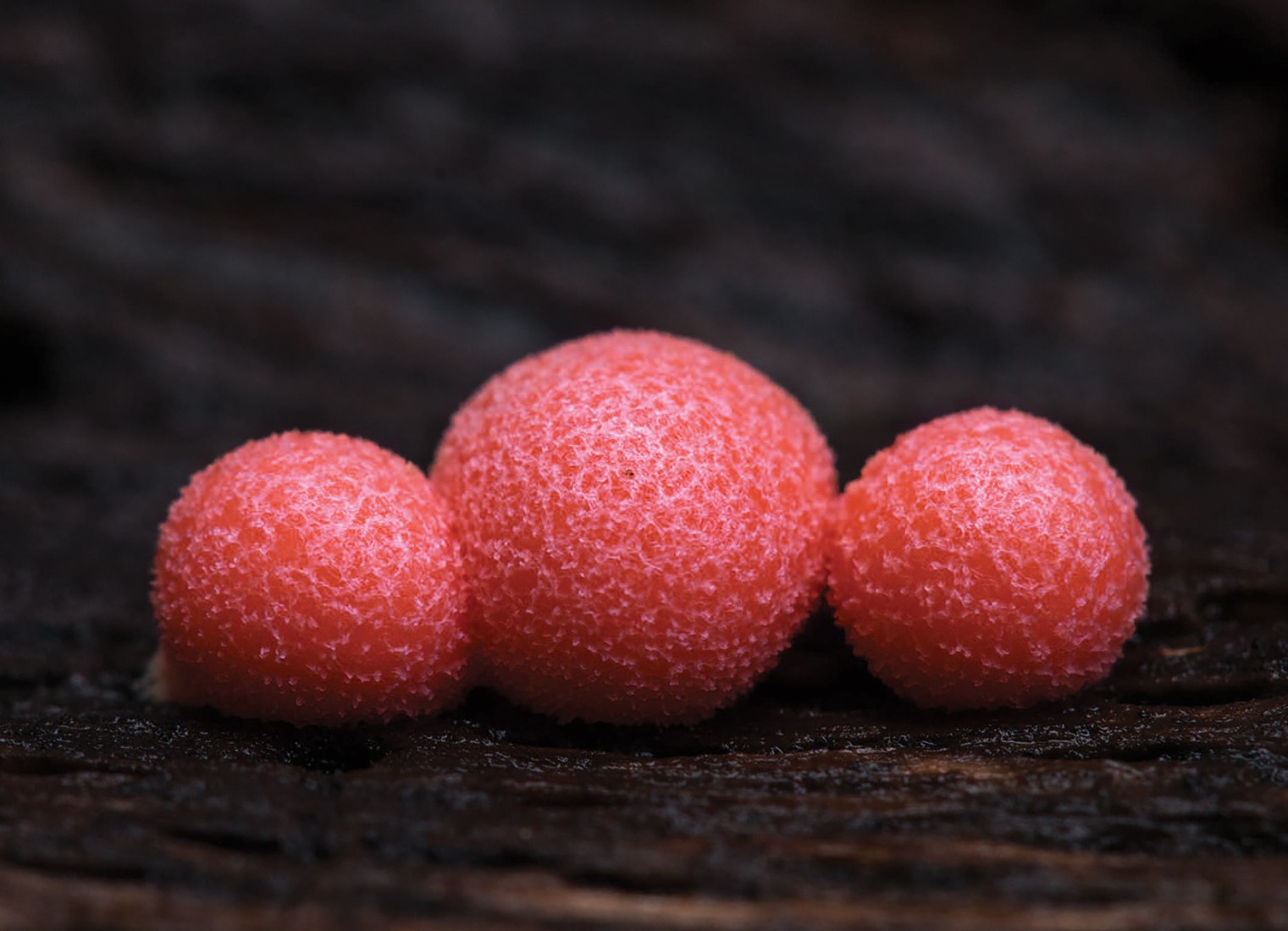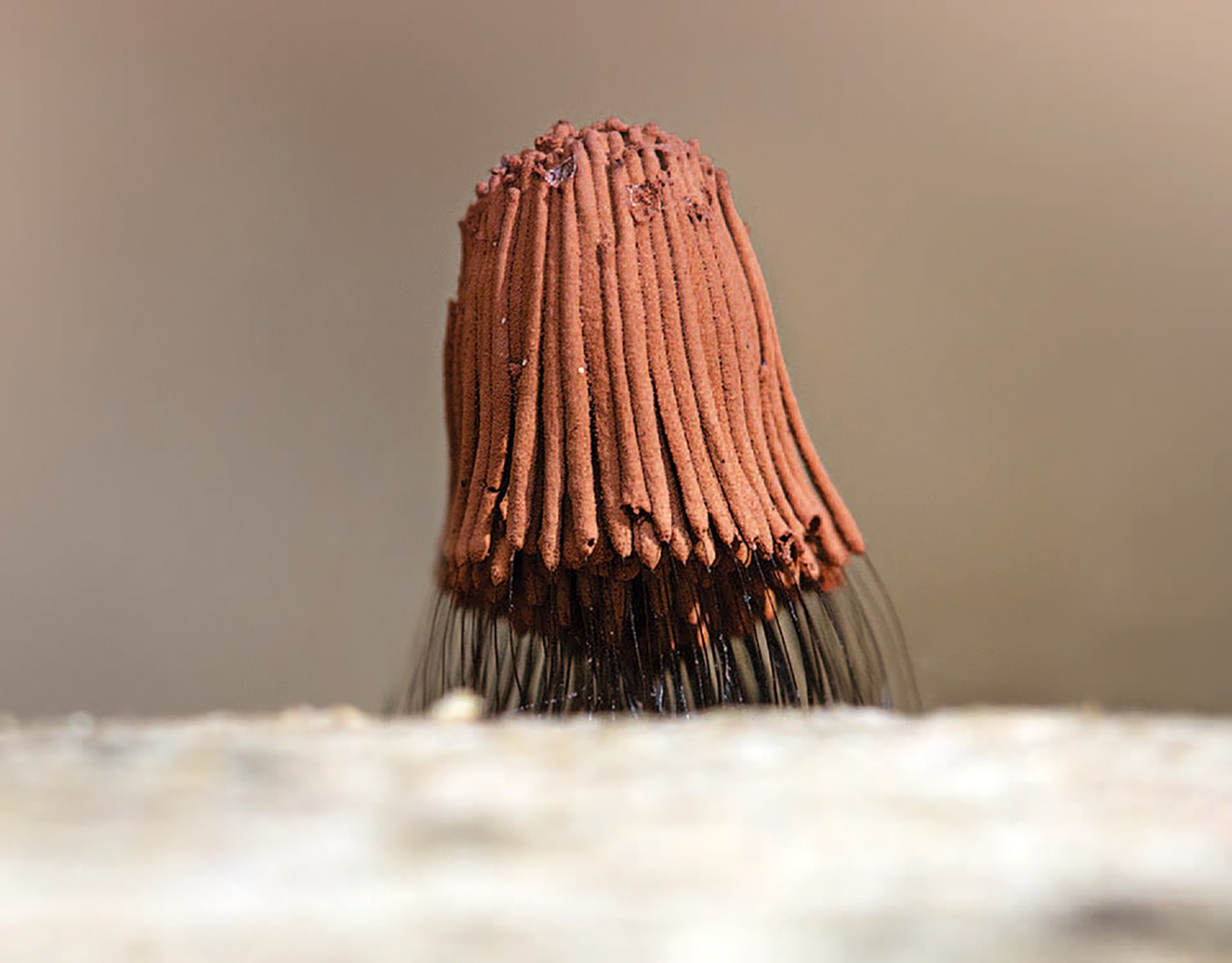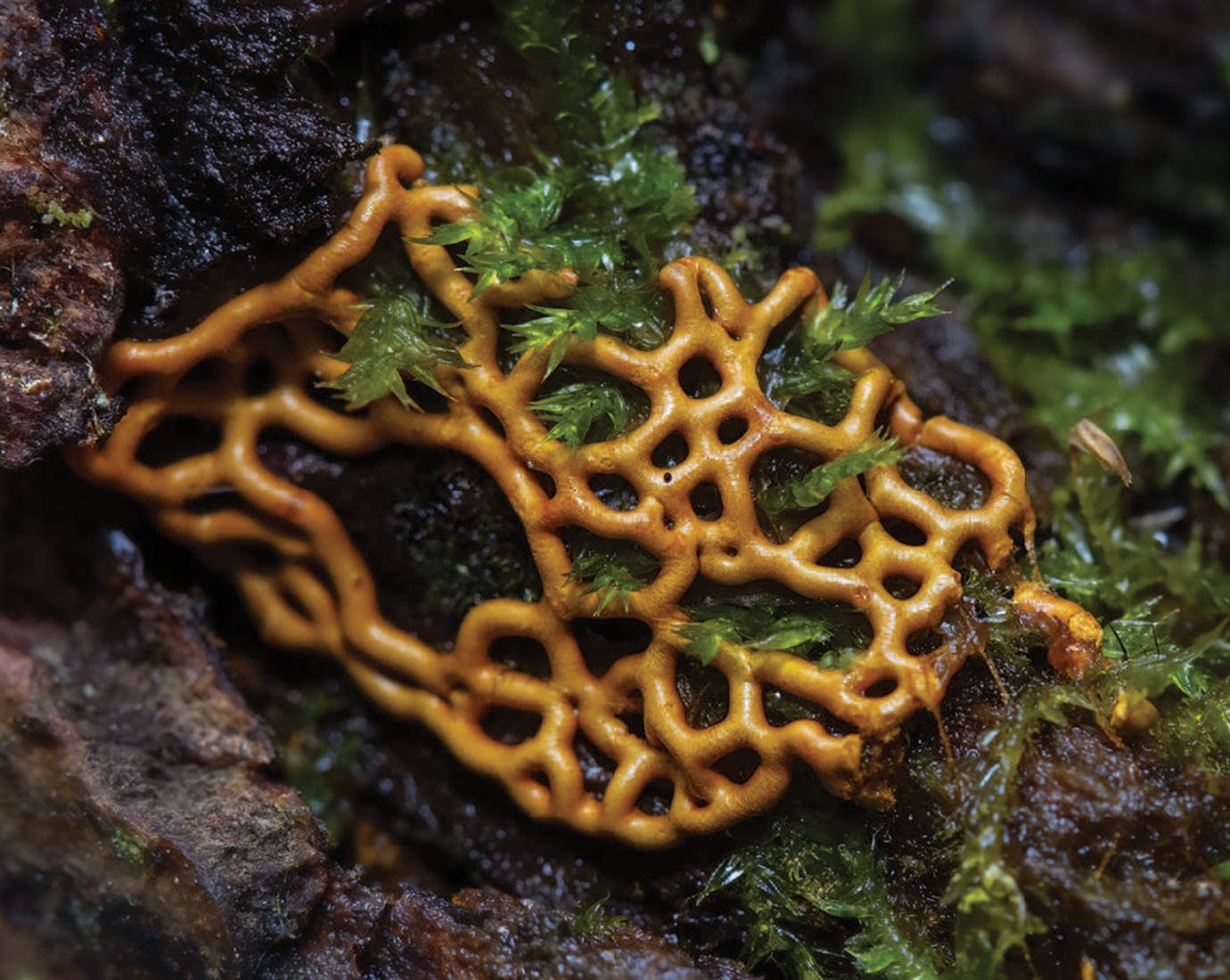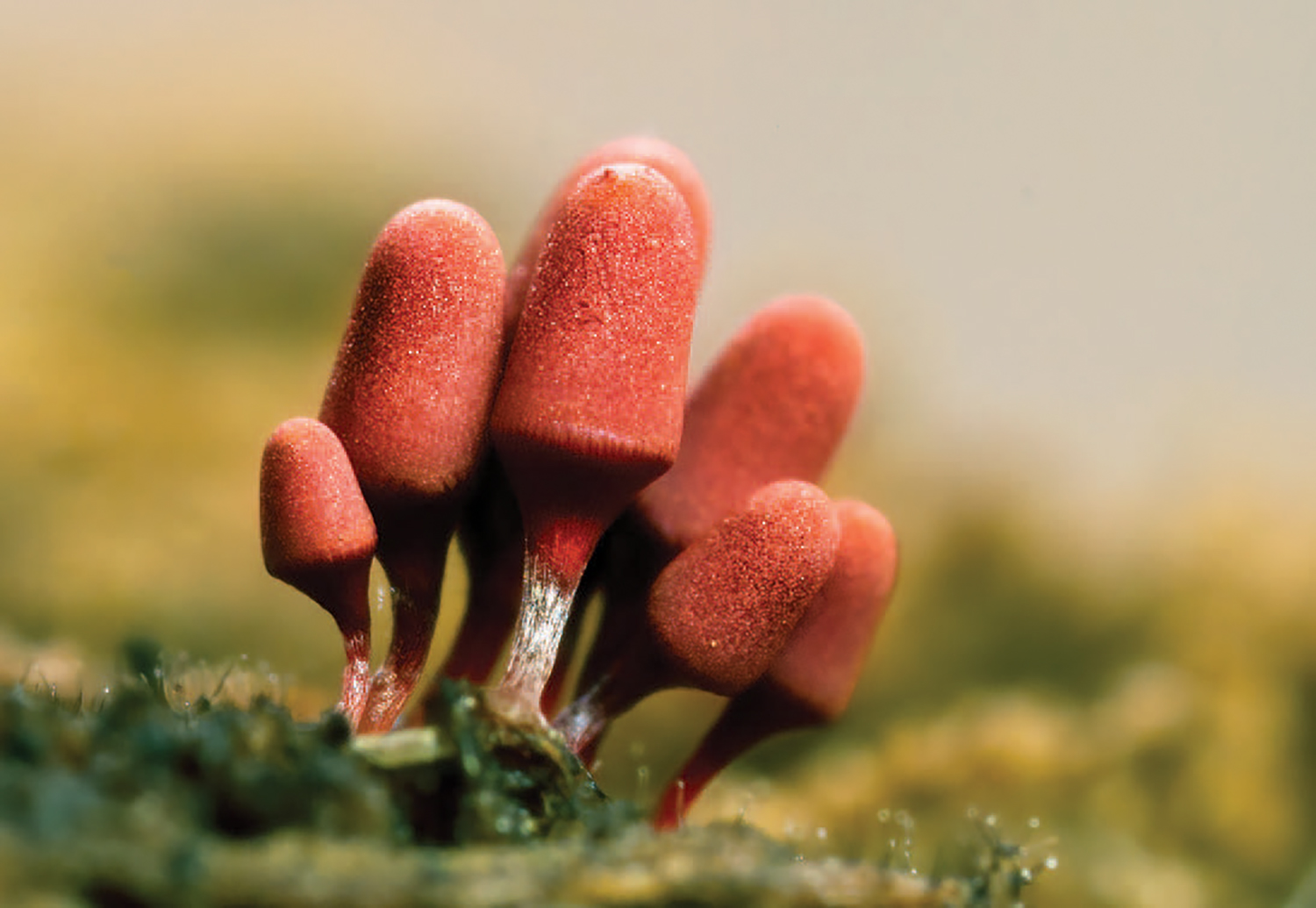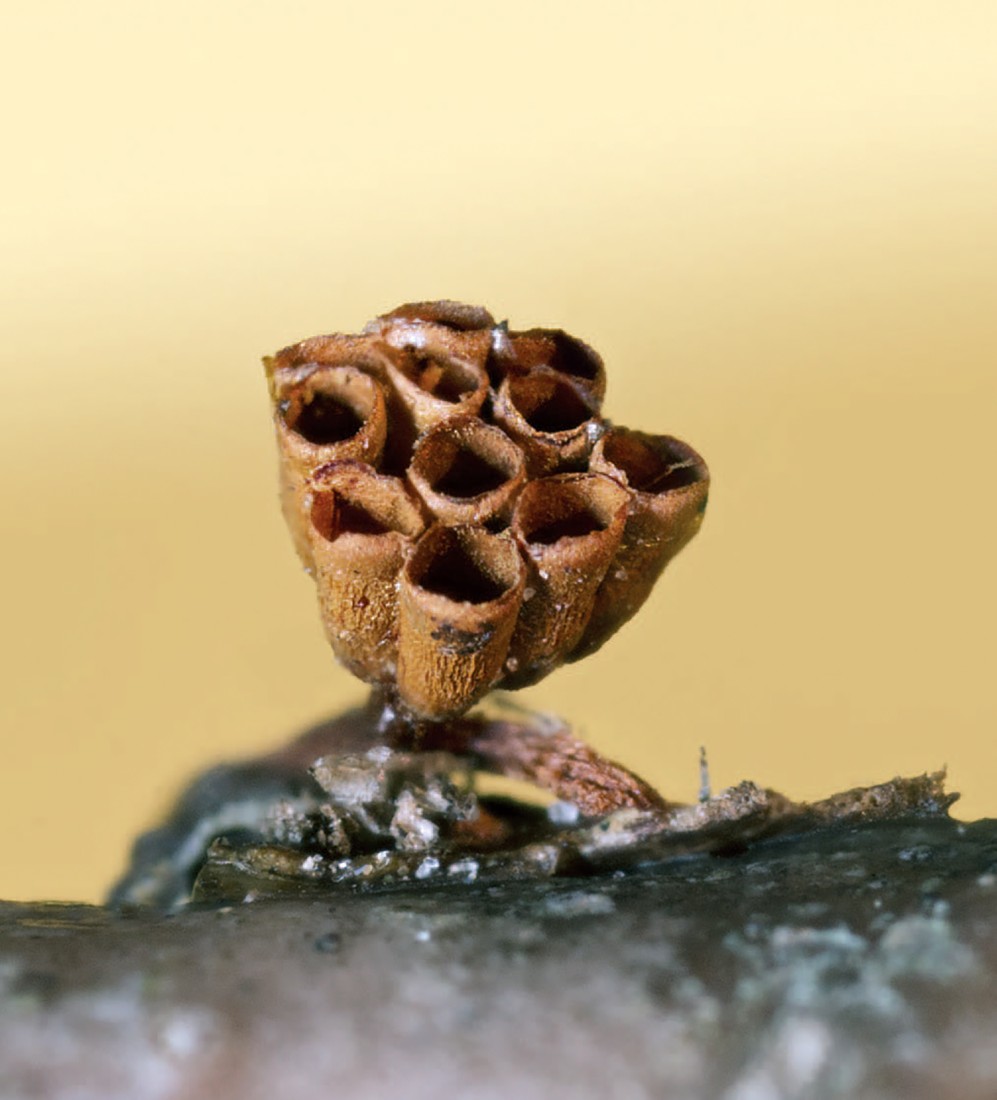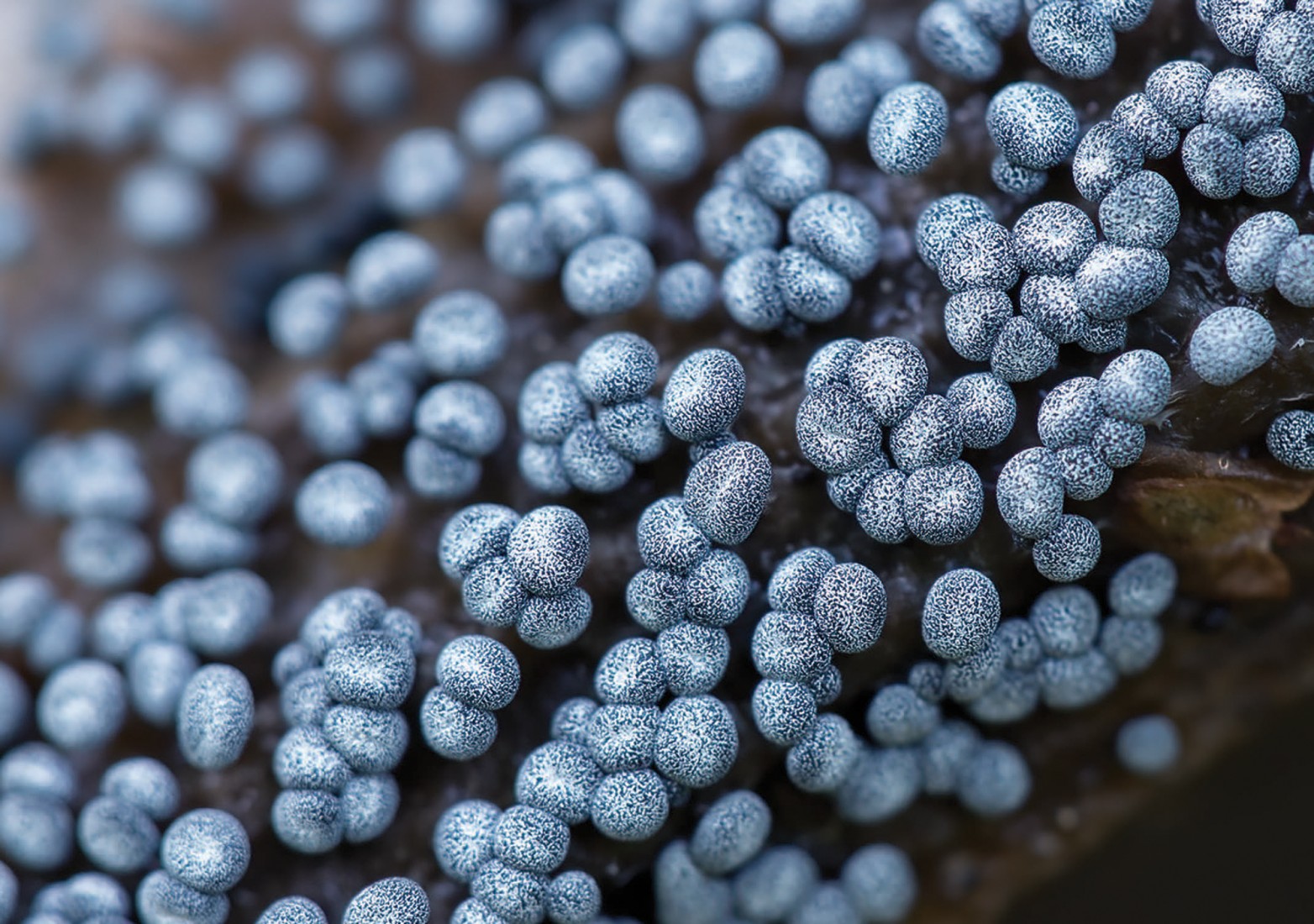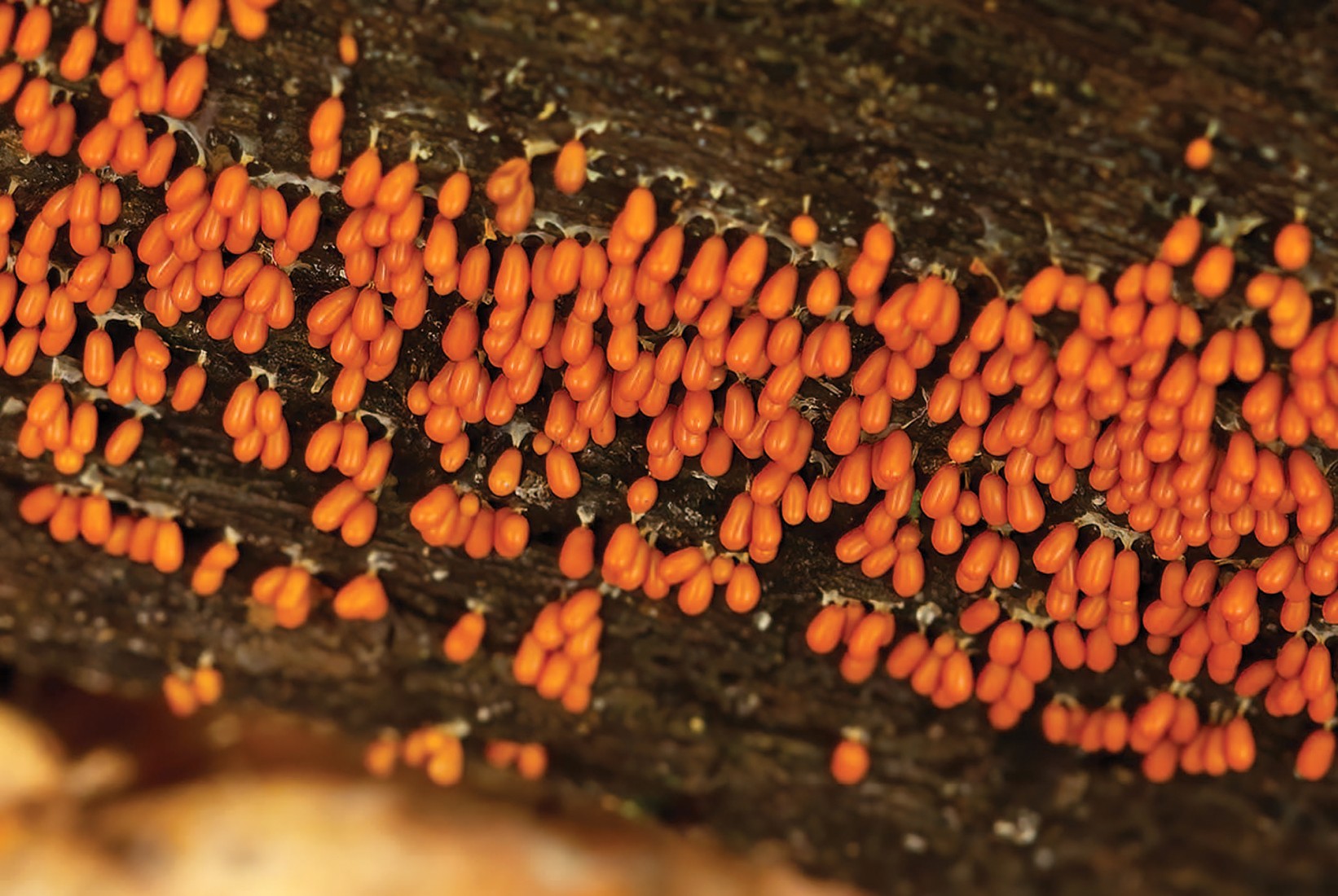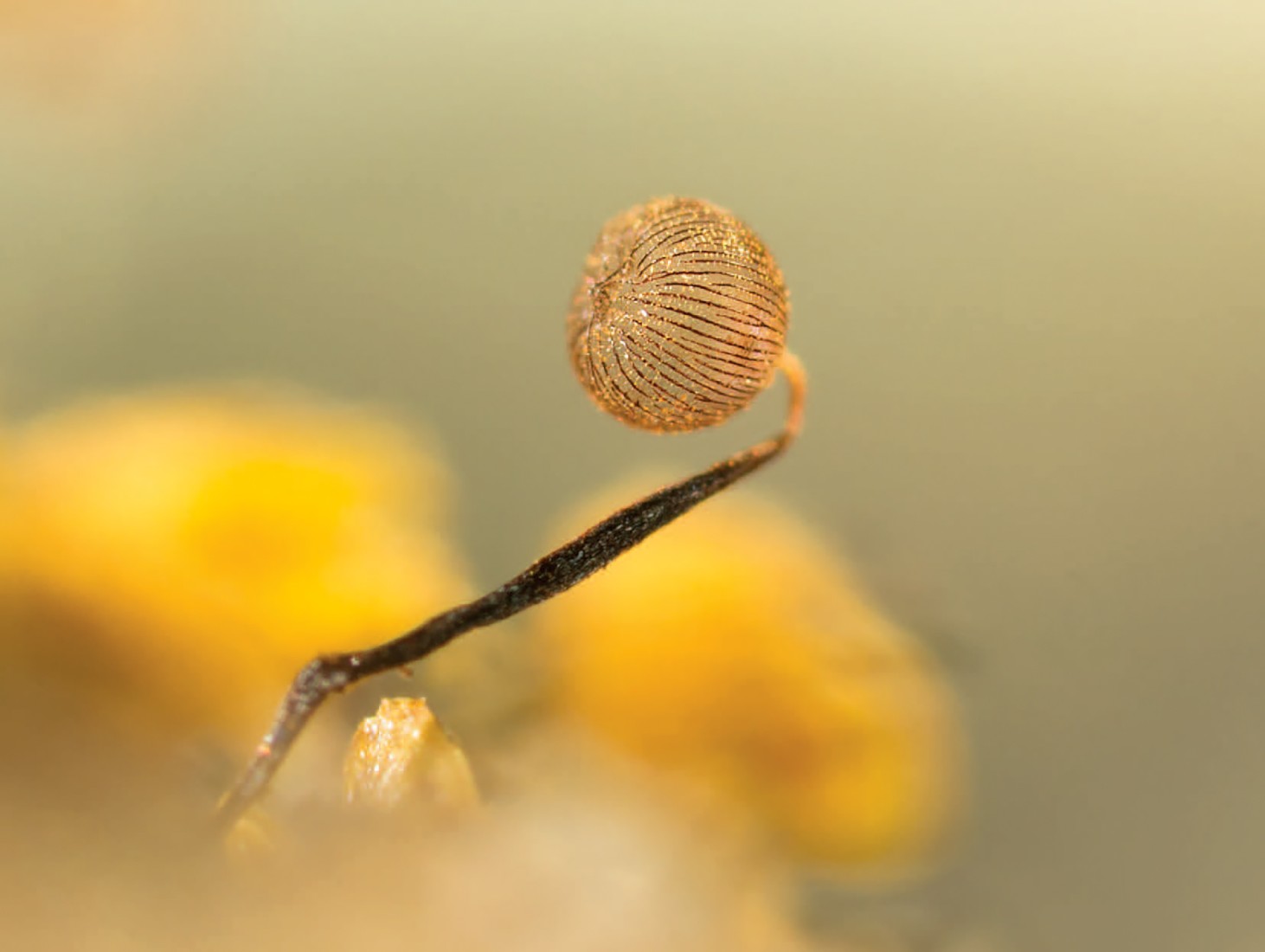

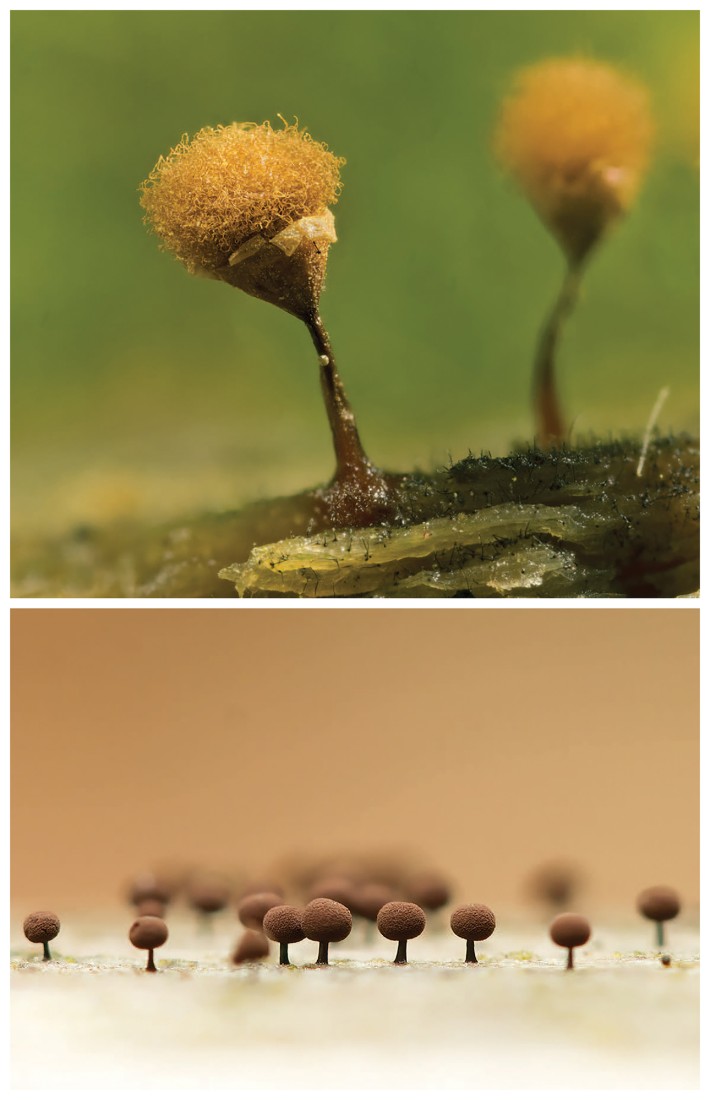
Slime molds are enigmatic organisms best observed up close, making them an ideal subject for macro photographer Brent Haglund. Along with protozoa and alga, slime molds are within the kingdom Protista, a diverse group of mostly single-celled organisms that do not fit into any of the other three kingdoms in the domain Eukarya (Animalia, Fungi, or Plantae). Most of the roughly 1,000 species currently known are myxomycetes.
Myxomycetes start as spores, which develop into single-celled, microscopic organisms. These mate and aggregate with other cells of their species, forming a larger single-celled organism with many nuclei, called a plasmodium. As a plasmodium, slime mold can creep along leaf litter or rotting logs, engulfing and digesting bacteria, fungus, and decaying organic matter as it moves. Once it has depleted available nutrients, it becomes stationary and produces fruiting bodies, which release spores, thus starting the next generation. “The fruiting bodies truly steal the show,” said Haglund, who stumbled upon his first slime mold in 2019 while raking leaves in his yard. It was in the genus Physarum, with powdery white sporangia and a thin brownish stalk. He was immediately captivated.
Haglund spends time searching for slime molds in summer and fall, especially after heavy rains that can trigger slime mold growth and reproduction. He mostly photographs them in the field, finding that they change quickly when moved and are easily damaged. To find slime molds, Haglund recommends checking logs at spongy stages of decay along hiking trails, but he cautions that slime molds can be elusive. “After the spores have dispersed, there may be little evidence left that a slime mold once flourished in that spot,” Haglund said. “Due to their ephemeral nature, witnessing them at their peak is a treasured experience for me.”