
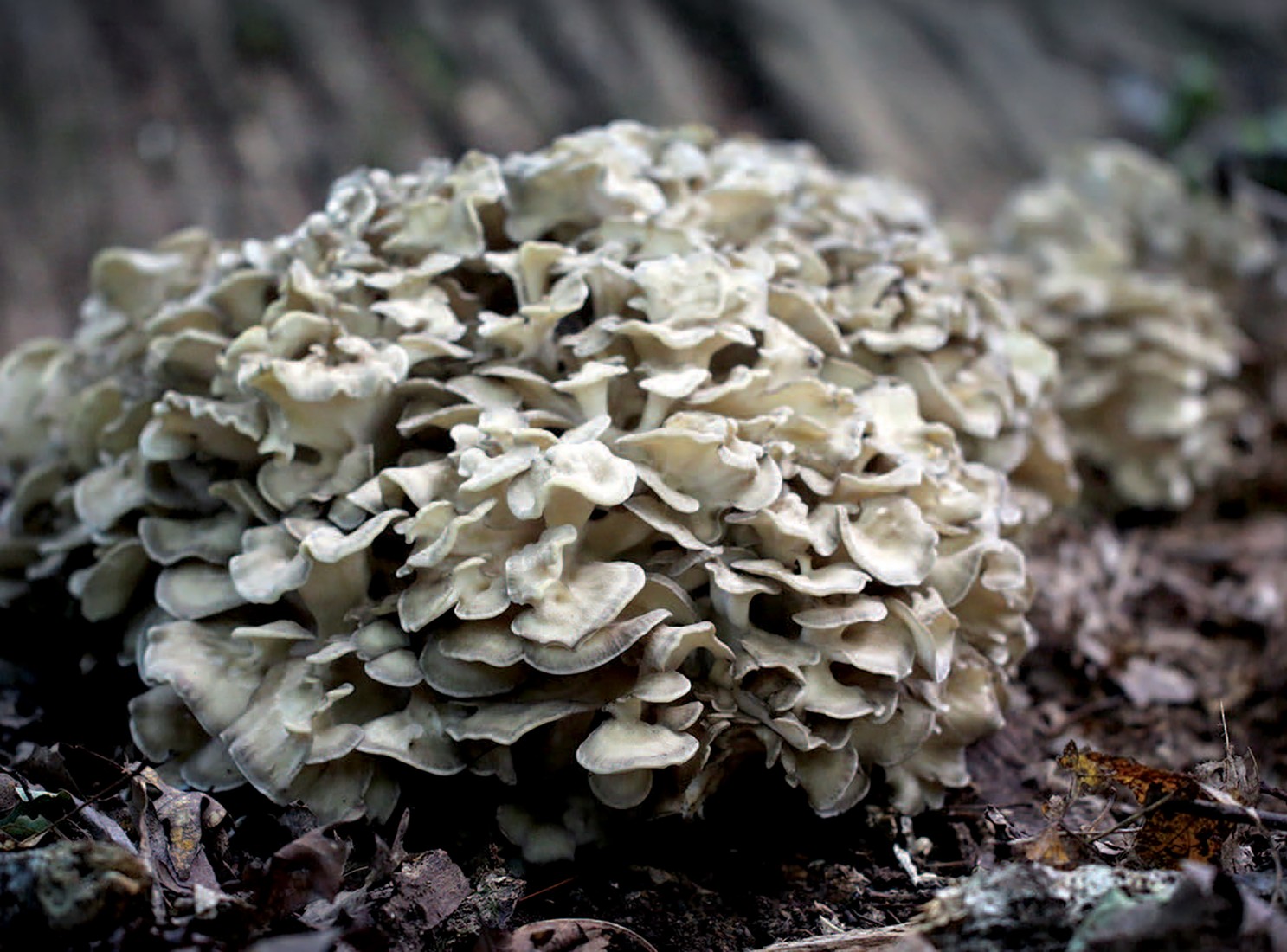
Roosting like a plump hen at the base of an oak tree in autumn, maitake, or hen of the woods (Grifola frondosa), is a distinctive and delicious polypore that offers versatility in the kitchen. This easily identifiable wild mushroom can be a good entry into foraging – and was, in fact, the first mushroom I learned to identify with reasonable certainty.
As a polypore, maitake has pores, instead of gills or teeth, on the underside of each curvy gray-brown lobe. The myriad lobes emerge from a thick central stem, and the visible pores beneath have an off-white, creamy hue. The fruiting body starts out tight and brain-like, and becomes ruffled and looser as the lobes expand with maturity. Maitake should easily tear apart radially, and neither the pores nor the flesh bruise or discolor upon handling.
Depending on the subregion and micro-climate, the abundance of maitake can vary significantly. The primary factor in maitake sightings is the prevalence and age of oak trees. This fall, try walking in woods with an abundance of mature oak trees in search of maitake. Larger diameter, older oaks often host maitake, which may also fruit from ailing or dying trees and even stumps.
Red oak (Quercus rubra) and white oak (Quercus alba) are the most common species to feature maitake; I have also seen spectacular flushes of hen on the rarer bur oak (Quercus macrocarpa) and swamp white oak (Quercus bicolor) in the Champlain Valley of Vermont. Occasionally, maitake will surprise the forager with its adaptability; I once found a hen gracing the base of a massive silver maple tree in the heart of downtown Northampton, Massachusetts.
Maitake fruits directly from a sclerotium, an underground, potato-like mass of mycelium just below the soil at the base of the host tree. After the visible mushroom fruiting bodies rot or disappear following a frost, the maitake sclerotium becomes dormant but remains present and alive in the cold ground.
While maitake can colonize new trees via spore dispersal, tried-and-true trees with maitake sclerotia in the soil are by far the most reliable spots to look each fall. Maitake is a decomposer, or saprophytic, mushroom that mycologists also consider weakly parasitic, but it is unlikely to afflict younger trees and is capable of coexisting with a seemingly healthy, robust host tree for decades. A reliable hen tree can be surprisingly enduring. As a child, I discovered a nice fat hen of the woods fruiting at the base of an oak tree on a neighbor’s driveway. Decades later, I returned to the same oak in September to find three chunky hens at the foot of the tree’s slowly decaying trunk.
Maitake means “dancing mushroom” in Japanese, and for good reason: one good tree can produce a half-dozen or more hens in a single flush, each weighing well over a pound and sometimes rivaling a Thanksgiving turkey in girth. If you’re lucky enough to discover the maitake mother lode this fall, you might find yourself dancing, too.
Fortunately, the primary look-alikes of hen of the woods are simply inferior edibles rather than harmful imposters. Of importance, make sure the underside has pores. The black-staining polypore, which typically turns black when touched, and Berkeley’s polypore, tougher with larger lobes and an enormous stature at maturity, are not poisonous when cooked – just woody, bland, and disappointing when you’re expecting a maitake dinner.
Although hen’s common name frequently leads to confusion with another avian-named polypore, chicken of the woods (Laetiporus sulphureus), there are several key differences. Hen has gray to brown fronds, with white pores; chicken is orange-yellow, with yellow pores, or white pores for the regionally uncommon Laetiporus cincinnatus. Hen is also more selective in its seasonality (fruiting exclusively in fall and favoring mid-September to early October) and fruiting habits (only at the base of the tree or stump, while chicken can be high up the trunk or bursting from a downed log).
It’s important to harvest at the optimal time to avoid specimens sullied by boring beetles, pill bugs, and other enterprising forest critters. Since maitake has a central stem, each hen can easily be sliced near the base of the fruiting body, not far from where the soil meets the tree trunk. Remember to leave some hens to spread their spores, and be mindful not to disturb the sclerotium below the soil.
In the kitchen, maitake epitomizes the umami flavor that makes mushrooms unique. Delectable sauteed, roasted, pickled, or braised, it also makes a good candidate for dehydration or freezing. Hen can be frozen raw, and then – importantly – cooked later, or can be sautéed in butter or oil before freezing (add onions, garlic, and salt if desired). Freeze in a manner that allows easy removal without defrosting – simply put the frozen mushroom mixture straight into a hot, buttered pan, and taste the essence of autumn on a dark winter evening.
There are poisonous wild plants and mushrooms in the region, and foragers should only eat wild food they are able to identify with certainty.
Cream of Maitake Soup
By Jenna Antonino DiMare
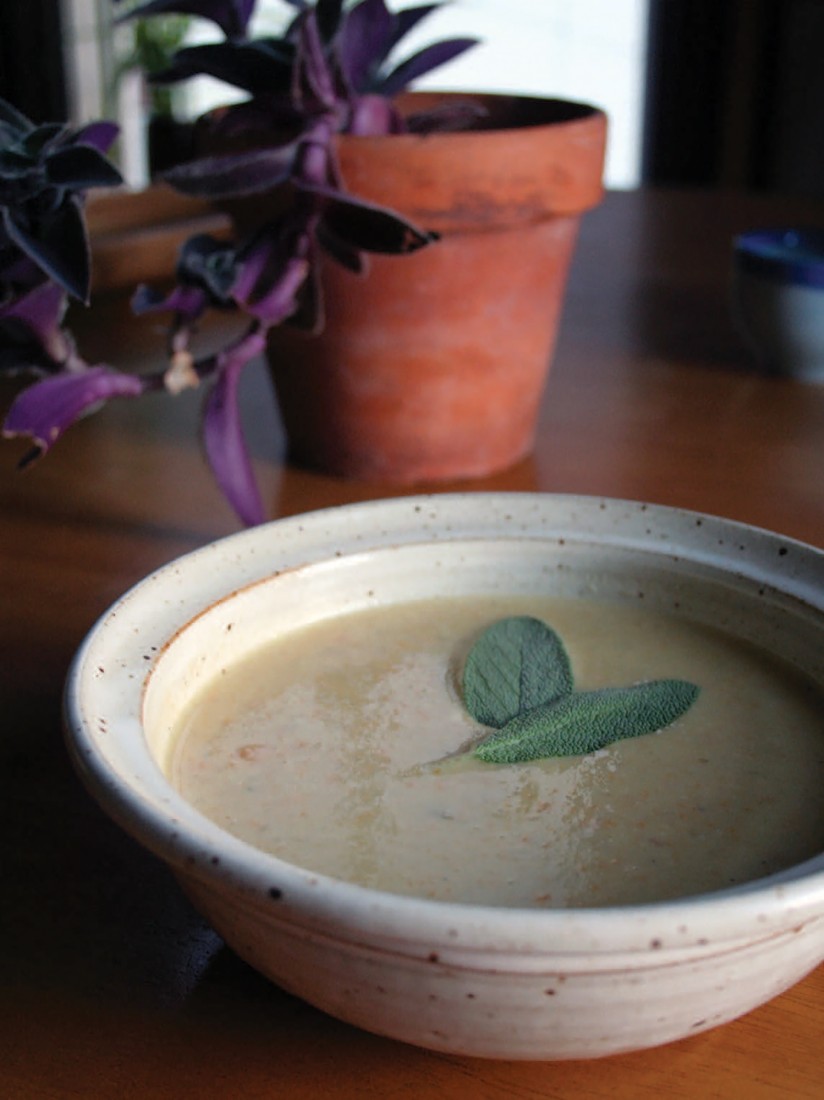
Hen of the woods has an incredible umami taste that delights the tongue and nourishes the body. This cream of maitake soup recipe, originally published on The Mushroom Forager’s blog in 2011 and updated for Northern Woodlands, is a perfect way to celebrate this outstanding autumnal mushroom during a chilly autumn evening.
Serves 8
Ingredients
2 pounds hen of the woods (maitake) mushroom
2 tablespoons olive oil
2 tablespoons butter
A few shallots or 1 medium onion, chopped
3–5 cloves garlic, minced
Salt and freshly cracked black pepper
1 tablespoon fresh thyme (or 1 sprig), plus more for garnish
1 tablespoon fresh sage, minced, plus more for garnish
½ pound of carrots, chopped
1 pound of potatoes, chopped
½ cup white wine
6 cups vegetable or chicken stock
2 bay leaves
1 cup heavy cream
2 tablespoons lemon juice
Directions
1. Thoroughly clean the hen of the woods. Dry and then break apart into small pieces.
2. Place a heavy soup pot or Dutch oven over medium-high heat, then add the olive oil and butter. Add the hen of the woods to the pot and sauté for 8 to 10 minutes until slightly browned. Add the chopped onion or shallots and sauté for another 3 minutes before adding the garlic and some salt and cracked pepper as well as the thyme and sage. Stir for another minute or two before adding the carrots and potatoes. Sauté another few minutes, stirring often.
3. Add the wine and let simmer for 1 to 2 minutes, then add the stock, bay leaves, and any additional sprigs of herbs such as thyme and sage. Bring the soup to a boil and reduce heat to simmer for 25 to 30 minutes.
4. Remove the bay leaves and puree the soup until smooth. Stir in the heavy cream and add additional salt and pepper to taste. Simmer for another minute or two before stirring in the lemon juice. Garnish with your favorite fresh herbs and serve hot.
Variations: To prepare a dairy-free version of this soup, omit the butter and substitute coconut milk for the heavy cream.
Discussion *