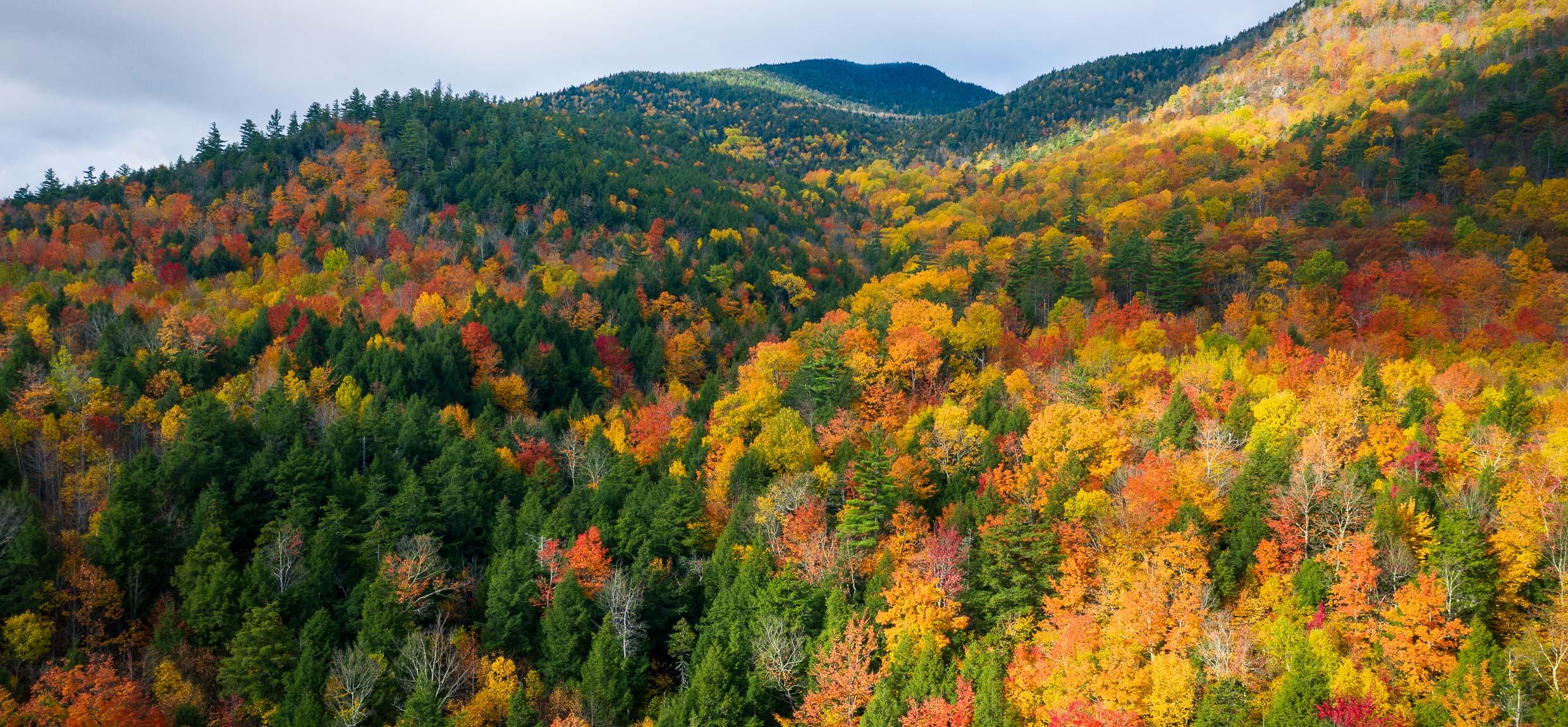

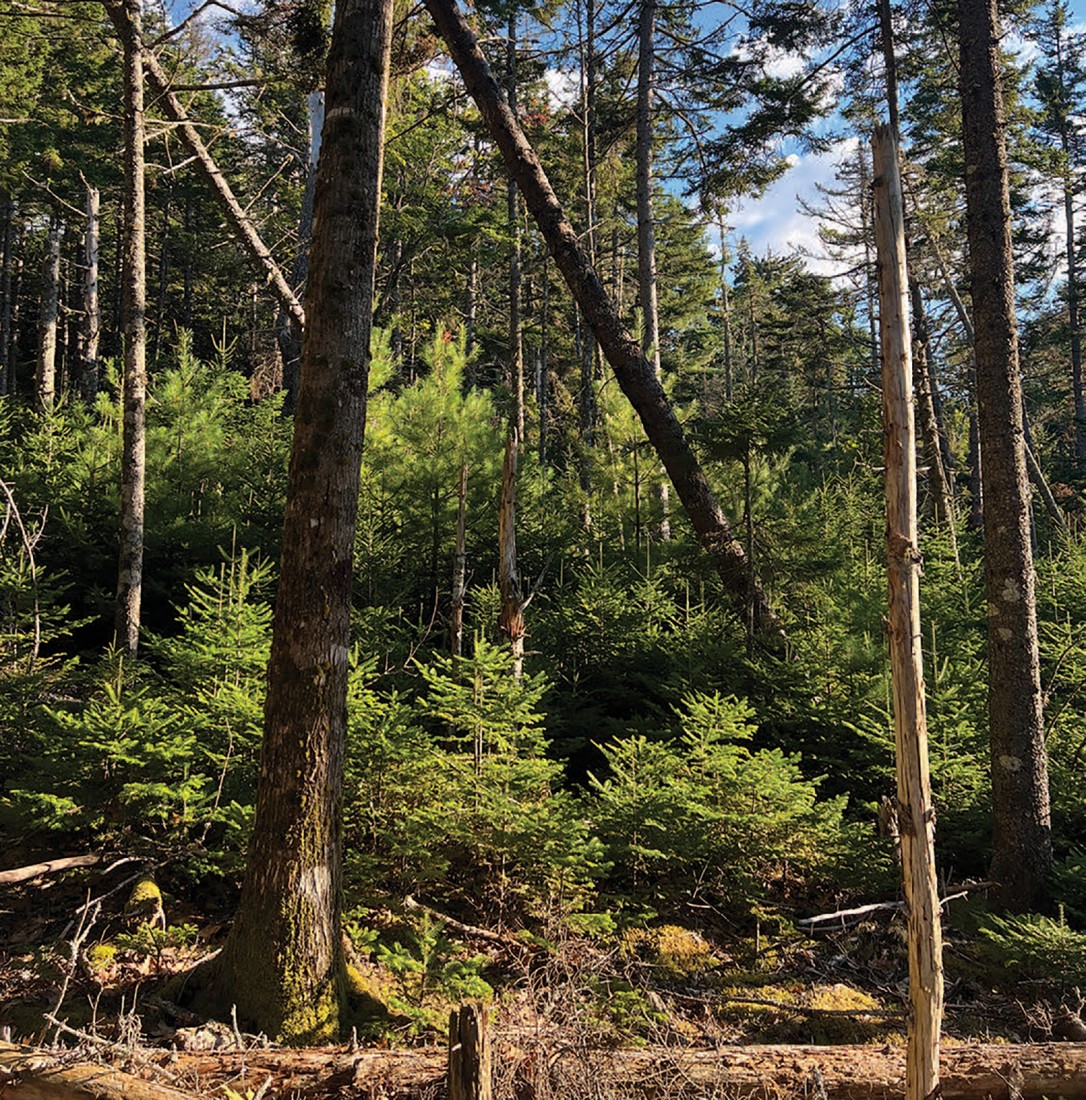
Every forest tells a story of disturbance. The trees growing today reflect past hurricanes, abandoned farm fields, insect outbreaks, timber harvests, and even retreating glaciers. Forest succession is the process by which plant communities change over time in response to disturbance. Understanding succession helps landowners and foresters “read” the woods – explaining which species are present, which are absent, and what will likely happen next. Because forest management either works with or deliberately alters succession, recognizing a forest’s developmental stage is essential to sound stewardship.
Types of Forest Succession
Forest succession is commonly divided into two types: primary and secondary. The key difference between them is the starting condition of the site – whether soil is present after disturbance.
Primary succession begins on newly exposed surfaces such as bare rock or sand, where no soil exists. This can occur after glacial retreat, landslides, or volcanic activity. The first organisms to establish are those able to grow without soil, such as lichens, mosses, and fungi. Over time, these species break down rock, add organic matter, and build soil. As conditions improve, grasses, ferns, and other plants establish, followed by shrubs and trees.
Secondary succession occurs when a disturbance removes vegetation but leaves the soil. Wildfire, hurricanes, clearcutting, and farmland abandonment initiate secondary succession. Most northeastern forests developed this way and are called “secondary forests.”
Once soil is present and trees establish, both primary and secondary succession follow the same broad stages of forest development. The difference lies in what happens before trees arrive: primary succession includes soil formation, while secondary begins with that foundation in place. Because most forest stewardship in the Northeast occurs on sites where soil is present, secondary succession is the focus of this article.
The Successional Pathway
Forest succession is shaped by how plants compete and by disturbances. Some trees grow quickly and shade out neighbors, while storms, insects, pathogens, and harvests can reopen the canopy. These changes typically unfold through four stages of development: stand initiation, stem exclusion, understory reinitiation, and late succession.
Stand initiation begins when conditions allow abundant sunlight to reach the ground and a new cohort of trees to establish. This may follow a major disturbance such as a harvest, windstorm, or fire, or occur when an open field reverts to forest. Seeds germinate, stems grow, and sun-loving pioneer species dominate. In the Northeast, these often include raspberries, grasses, aspens, and paper birch. This early-successional phase typically marks the beginning of an even-aged stand, in which most trees are roughly the same age. This stage lasts until the canopy closes – often 15 to 25 years, depending on site conditions.
Next, the stand enters stem exclusion. Competition for light and growing space intensifies. Faster-growing trees overtop their neighbors, and suppressed trees decline. Forests at this stage are dense, with tightly packed crowns and sparse understories. In fast-growing stands, this stage may persist 20 to 30 years; in slower-growing forests, considerably longer.
In the understory reinitiation stage, small canopy gaps emerge as dominant trees die, allowing sunlight once again to reach the forest floor. Seed production increases, and species tolerant of shade establish beneath the canopy. Many areas in the Northeast that were cleared for agriculture in the 1800s and eventually allowed to revert to forest are now within this phase. The duration of this stage depends on the longevity of dominant species, ranging from several decades to more than a century.
In late-successional forests, trees of many ages coexist. Shade-tolerant species such as sugar maple, American beech, and red spruce may dominate the canopy. Large trees, standing dead wood, and downed logs contribute structural complexity and wildlife habitat. While this stage is sometimes called “steady state,” these forests are not static. Small canopy gaps allow for continual regeneration of shade-tolerant species that have persisted under a closed canopy. Larger disturbances can reset succession, favoring more light-demanding species.
Succession Is Not Linear
Succession is often portrayed as a straight line from disturbance to a “climax” forest, but it is better understood as movement between disturbance events. Fire, windstorms, insect outbreaks, logging, and climate stress can reset a stand to an earlier stage. Rather than a fixed “climax,” late succession represents a dynamic equilibrium until the next disturbance.
Forest development is shaped not only by disturbance, but also by soils, seed availability, herbivory, competition, and a changing climate. These factors influence which species establish and persist, often unpredictably. As a result, not all forests follow the same pathway, even on similar sites. Repeated disturbances or shifting conditions can redirect succession, compress stages, or create alternative pathways.
Succession can also be arrested when stressors prevent trees from establishing and maturing. In some settings, this is intentional – for example, along power-line rights-of-way, where managers maintain shrubs by repeated cutting. In other cases, overabundant deer or interfering plants can prevent forest development. Beech bark disease, for example, can create dense thickets of root sprouts that remain vulnerable to reinfection while limiting the establishment of other species.
Species and Successional Roles
Foresters and ecologists often group tree species by the stage where they are most competitive: early-, mid-, or late-successional. These categories reflect shade tolerance – the ability to survive beneath the canopy – as well as lifespan, growth rate, and seed dispersal. However, site conditions, browsing pressure, and climate often shape outcomes as much as species traits do. Although many species can occur across multiple stages, they are classified by where they are most competitive or likely to dominate.
Early-successional species are shade intolerant, fast growing, and relatively short-lived. They produce abundant, often small seeds that disperse widely. Quaking aspen, bigtooth aspen, paper birch, gray birch, eastern red cedar, pin cherry, and black cherry are examples. Their presence in an older forest signals that a substantial canopy opening once occurred.
Mid-successional species are moderately shade tolerant and longer lived. Red maple, eastern white pine, oaks, and hickories fall into this category. They may colonize open sites like pioneers but can also establish under partial shade.
Late-successional species are long-lived, highly shade tolerant, and capable of reproducing beneath their own canopy. Sugar maple, American beech, red spruce, and eastern hemlock often dominate older forests. Although these species can grow in full sun, they frequently lose early competition to faster-growing species. Because they can persist in shade, they remain in the understory until canopy openings allow them to reach the overstory.
Factoring Succession into Stewardship
Reading a forest’s successional stage is fundamental to good stewardship. Each stage presents distinct opportunities and constraints. When evaluating management options, consider stand stage, which species are likely to regenerate, and whether management will reinforce or redirect the current trajectory.
Stand initiation is a critical stage for directing future stand composition. Management at this point often focuses on creating the right light conditions for desired species and protecting young regeneration as it becomes established. Large canopy openings, created through patch cuts or large group removals, favor light-demanding species, while smaller openings favor more shade-tolerant species. Stewards may also thin dense regeneration to improve spacing and stem quality, protect seedlings from deer browsing, and control competing vegetation where needed.
During stem exclusion, management often focuses on improving stand quality and reallocating growing space to the most vigorous trees. Because trees at this stage have developed under crowded conditions, heavy thinning can increase the risk of wind damage and reduce stand stability. Gradual treatments, including precommercial or early commercial thinning, are generally more effective for favoring well-formed, healthy trees while improving growth, structural stability, and future timber quality.
In the understory reinitiation stage, management decisions often center on balancing short-term income with long-term stand development. As canopy gaps form and trees gain commercial value, partial harvests become feasible, but this is also the stage when high-grading can cause lasting damage. Removing only the largest and most valuable trees can reduce long-term productivity and shift species composition toward lower-quality, shade-tolerant trees. Stewardship during this stage may include retaining high-quality trees as future crop trees or seed sources, encouraging regeneration of a diversity of species, and harvesting declining early-successional trees before they lose value.
In late-successional stands, management begins with a fundamental decision: whether to maintain existing conditions or intentionally create different future ones. Some stewards may choose to retain structural complexity, wildlife habitat, and uneven-aged conditions through minimal intervention or selection harvesting. Others may use regeneration harvests to reset succession and to favor particular species or future stand conditions. The most appropriate actions depend on whether the goal is to sustain late-successional features or to direct the stand toward a new developmental pathway.
Forests are dynamic systems shaped by disturbance, competition, climate, and time. Understanding succession allows stewards to anticipate change rather than simply react. By recognizing developmental stages and aligning management with ecological processes, stewards can guide their woods toward clearly defined, long-term goals.
Discussion *