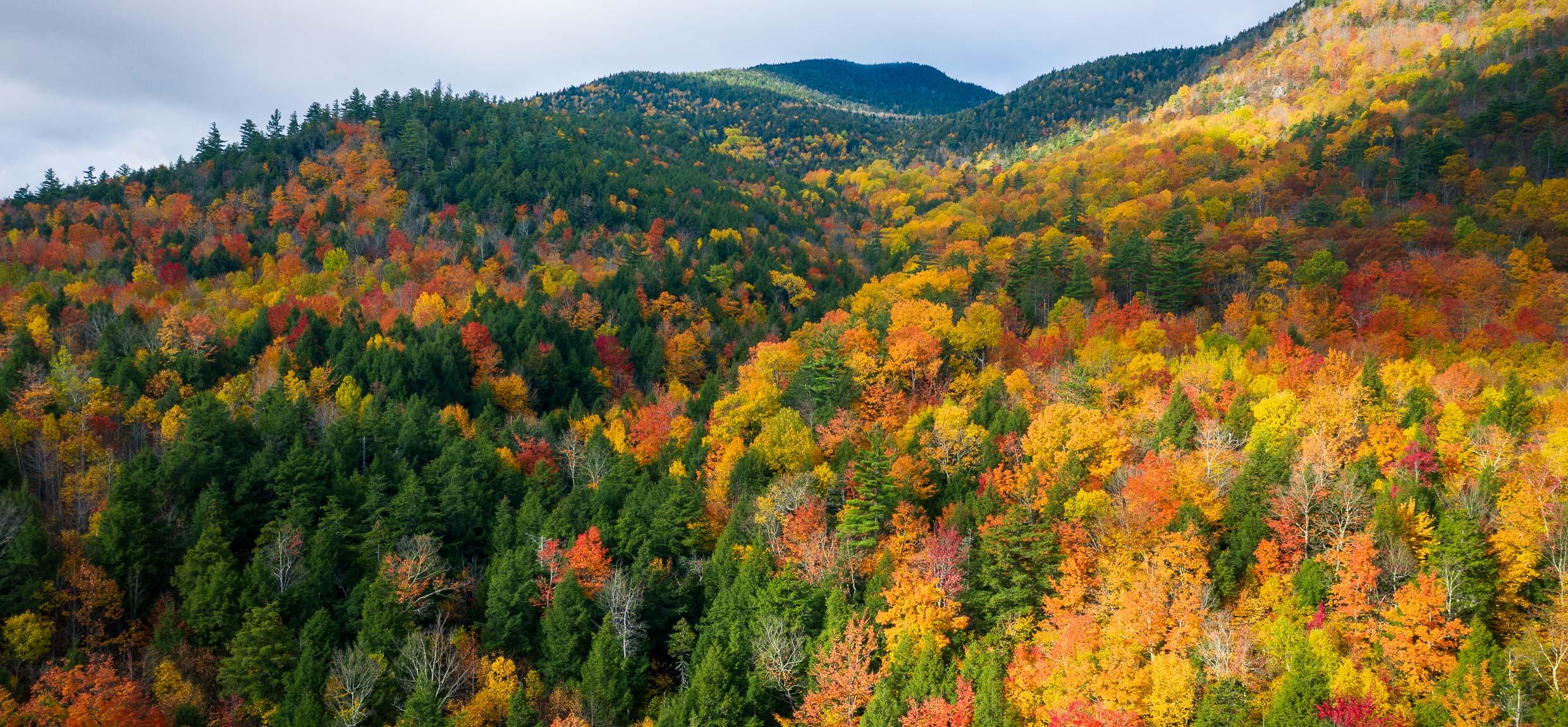

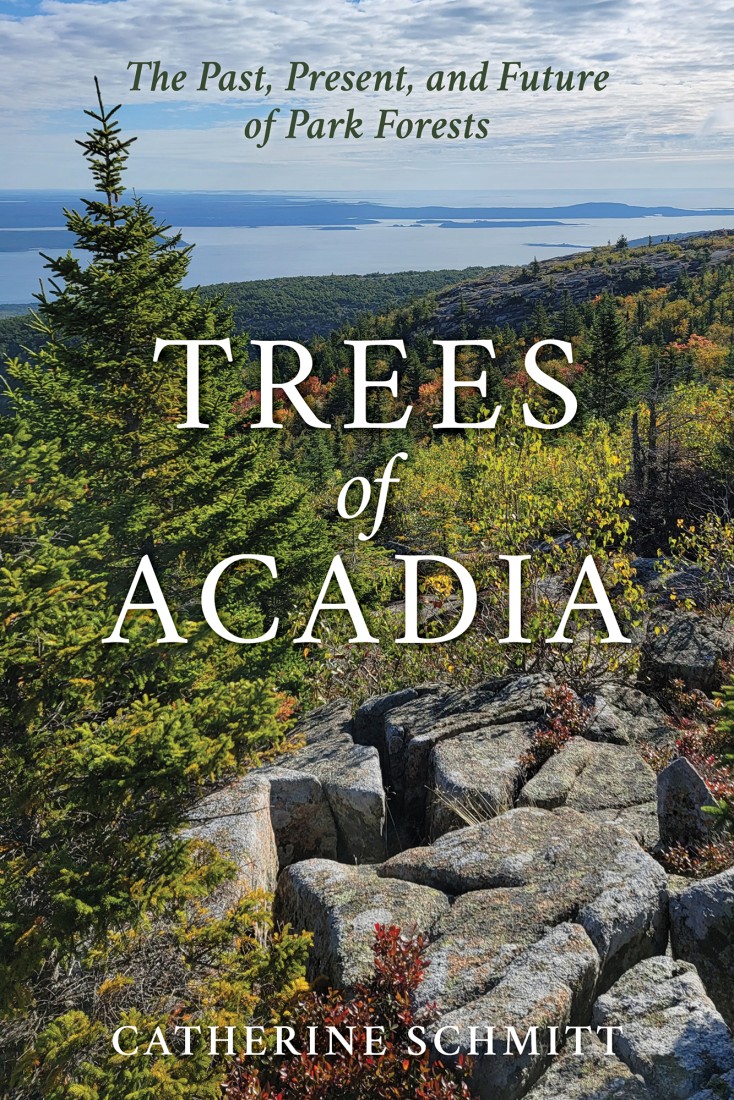
As the only national park in New England, Acadia is known for its rocky coastline, carriage roads, and the view from Cadillac Mountain, where visitors gather nearly every morning to watch the sun rise over the Atlantic Ocean. But Acadia National Park is also home to coastal forests with a diversity of tree species, and in her book Trees of Acadia: The Past, Present, and Future of Park Forests, Catherine Schmitt explores these forests, offering insight into both the ecosystem and the people studying this unique area.
“Acadia’s forests are the dominant ecosystem in the park but don’t get as much attention as shorelines, mountains, and other more dramatic features,” Schmitt said in explaining her inspiration for writing the book. “Trees in Acadia defy expectations. They might grow or respond differently than what textbooks describe. Information based on interior regions or working forests doesn’t necessarily apply.”
Each of the 14 chapters focuses on one species of tree growing in Acadia, sharing the ecology and natural history of the tree, acting as a segue into other information about the park, and reminding readers that it was, after all, concern for forests that inspired the creation of Acadia National Park a century ago.
The following excerpt is from Chapter 10, “Shifting Seasons: Red Maple”.
—Meghan McCarthy McPhaul
Shifting Seasons: Red Maple
The Featherbed
The rain that falls on Cadillac Mountain does not stay on the mountain. The rounded summit sheds water in all directions. Water flows in sheets across granite, drips from sponges of moss, fills cracks and pools. On the south ridge, water collects in a small pond called The Featherbed, which overflows down the steep west face of the mountain.
On a ledge below the pond and the uppermost cliffs, a cluster of very large spruce and white pine mark the tree line. More soil and wood accumulate on the flat shelf, doing their part to soak up the rain. The excess rivulets braid into a channel, following gravity down paths worn by the water that came before. Not far below the ledge, the terrain flattens and the canopy turns leafy. In October a grove of tall sugar maples illuminates the forest with peachy light as the sun filters through yellow, orange, and red leaves. The height and shaggy bark of the maples suggest an older age.
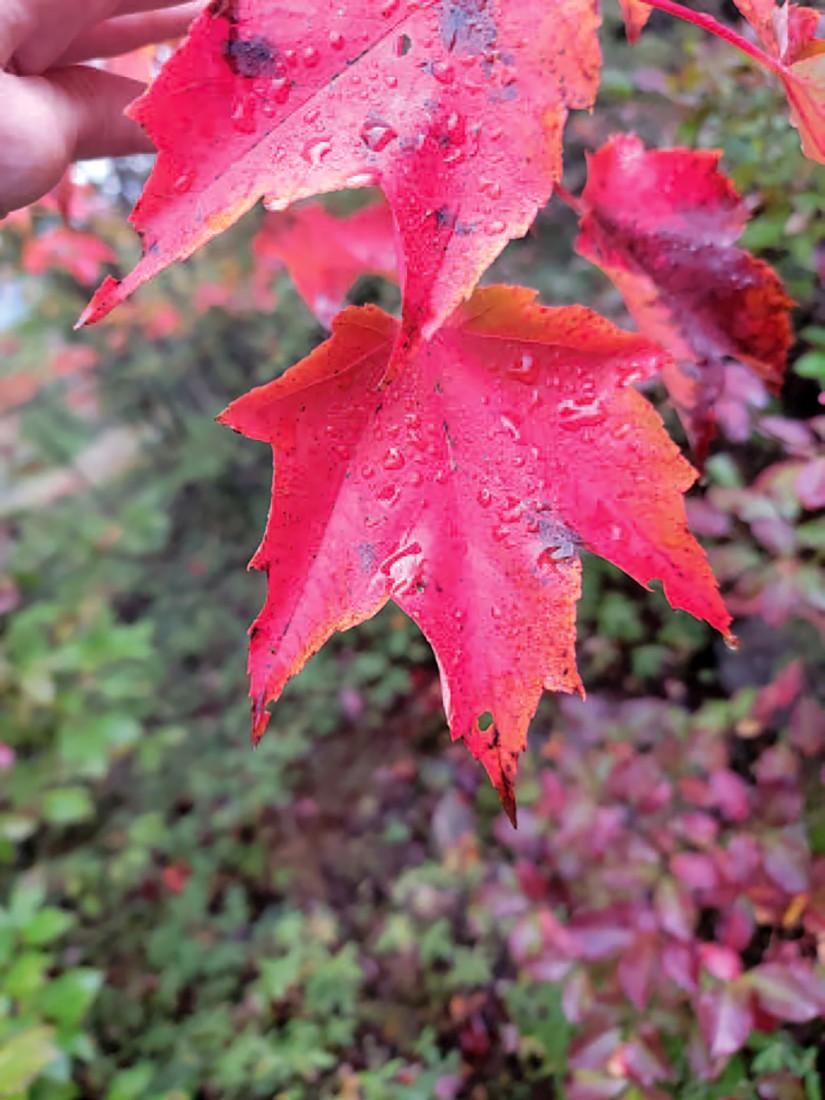
Sugar maple (Acer saccharum) is less common than the other maples in Acadia. Striped or moose maple (A. pensylvanicum) is abundant in the understory, where it casts a paler yellow tone in fall. Also in the understory, mountain maple (A. spicatum) tends to grow along streams. Red maple (A. rubrum) is the most common.
Maples are thirsty trees, but what they take they give back freely in their sweet sap, flowing in late winter, when nights are still below freezing but the days are warmer. Filling their xylem with sugar is how the trees repair damage from one season and prepare for growth in the next. Come autumn, as days shorten and temperatures cool, the trees shut down sugar production and drop their colorful leaves. Unlike the tough leaves of oak and beech, maple leaves decompose rapidly, increasing the supply of nutrients in the top layer of soil.
The leaves fall just as the rains arrive. The ground layer of leaves protects the soil from the kinetic energy of rainfall, preventing erosion and compaction. As water levels increase, some leaves, twigs, and other forest bits are flushed into streams.
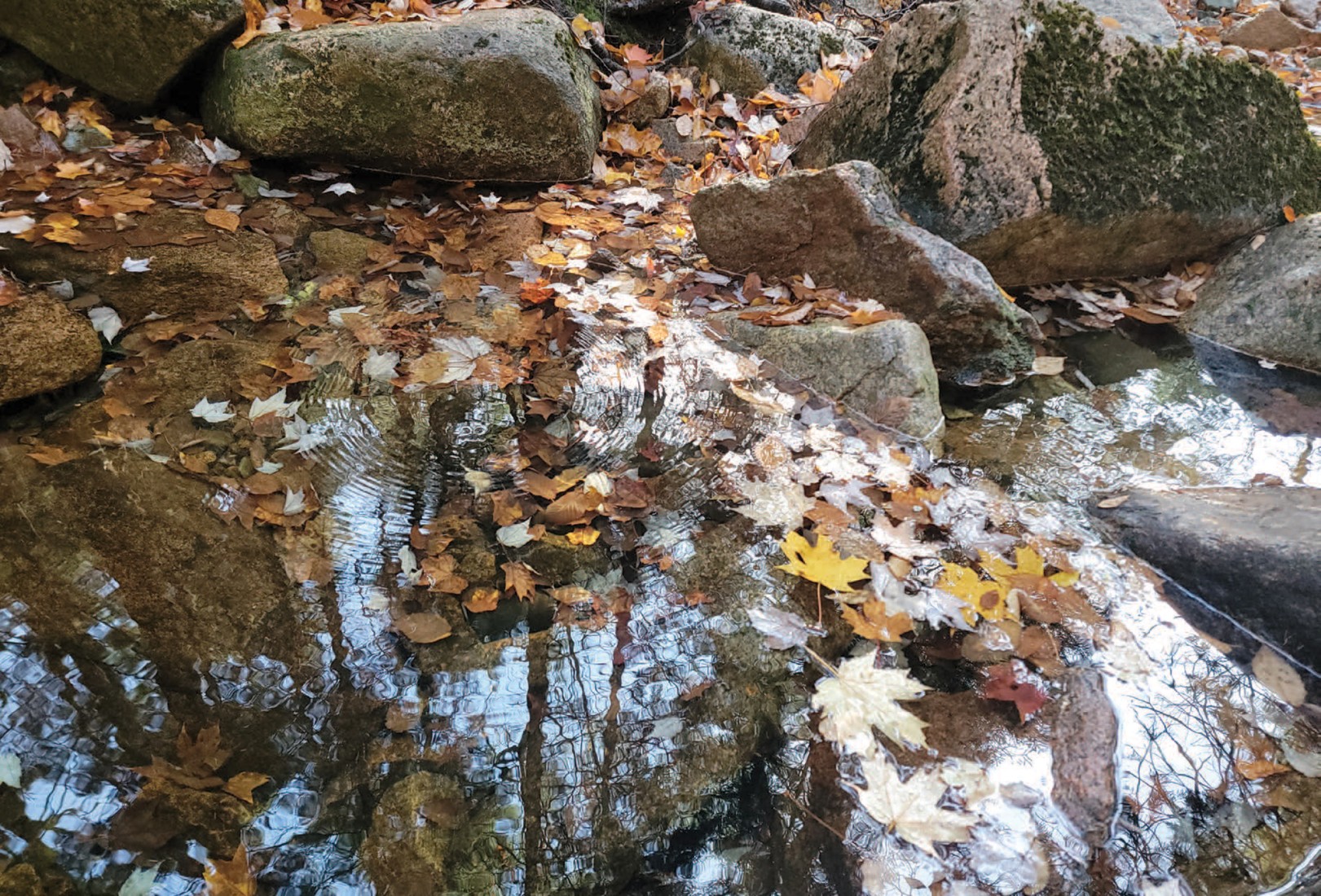
Below The Featherbed, where the water has formed a channel, maple leaves cover the surface—draping over mossy stones, collecting in eddies and pockets, sinking to the bottom of the shallow stream. As soon as they get wet, the leaves begin to leach out sugar and become covered by bacteria and mold, providing food for crayfish, snails, amphipods, and larval forms of insects including stone flies and crane flies. Each has its own preferred kind of leaf. As the animals eat, they shred the leaves into smaller fragments that drift downstream.
The channel, fulfilled by streams of water from the mountains, has become Hunters Brook. In the rocky riffles, downstream from the leaf scrapers and shredders, a fascinating array of stream creatures have evolved sophisticated ways to catch their forest food: They weave nets of silk, use their legs to form baskets, pump water through pipes of knit sand grains, or direct the current to open mouths. These mayflies, caddisflies, blackflies, and other “filter feeders” consolidate small and dispersed particles, keeping energy within the stream reach by concentrating it in their bodies, which become food for fish and other predators, or putting it back into the current as waste. In the pools, “collector-gatherers”—copepods, worms, mayflies, midges, minnows—consume the finer particles that have settled on the bottom.
As the stream flows downhill, it gains more water and gets larger, and it receives less forest material relative to its area but more sun. Light and heat stimulate the growth of diatoms and other algae, which are scraped off rocks and wood by grazers that keep the stream looking “clean.” Snails and brook trout move the nutrients upstream and downstream. Insects not eaten by fish hatch and fly into the forest, feeding birds and bats. Others are still in the stream, chewing on the tougher oak and conifer needles that remain.
What is left of the leaves that fell in fall after all that scraping, shredding, filtering, collecting, and grazing? The smallest particles have flowed downstream. Carbon has dissolved, staining the water like tea. The forest, transformed, is moving downriver.
A healthy forest floor of roots, fungi, moss, and dead wood soaks up between half and one-third of annual precipitation. Much is given back to the sky as water vapor from soil and plants. Gravity helps the rest find its way through the soil into groundwater and over land into streams and lakes.
Changes occurring in the surrounding forests are therefore reflected in the water. Dams constructed to power sawmills interrupted water flows, preventing leaves from drifting downstream and blocking migrations of alewives, sea-run brook trout, and other fish that brought marine nutrients into the forest. Removing trees increased sunlight reaching streams, raising water temperature and reducing the inputs of leaves and wood. Logging activities widened streams, damaged streambanks, and eroded soil so that the land did not hold the rain.
Nineteenth-century observers like George Perkins Marsh were quick to make the connection between forests and water quantity and quality, inspiring preservation of the Catskills, Adirondacks, and White Mountains as well as Acadia. “We believe it to be a provable fact that within the last ten years the flow of many brooks on the Island has been materially lessened by the destruction of the woods within their watersheds,” wrote botanist Edward Rand in 1883. Concern about drinking water from Eagle Lake was one of the motivations for conservation by the Hancock County Trustees.
Today forests continue to filter the water that enters the deep, clean lakes and groundwater used for drinking water in Acadia. And Acadia’s land and water continue to reflect the past, even as they face new changes.
Canon Brook
The south ridge of Cadillac Mountain is a watershed divide. The Featherbed drains to the west, eventually into Hunters Brook. To the east, water flows down more narrow terrain and almost immediately becomes Canon Brook. The stream cascades over boulders and through crystal pools in wild curving steps. Crusty old yellow birch and sugar, red, and striped maples line the stream, their roots helping to stabilize the banks.
Like the trees and the land, this water has memory. The rain that falls on Acadia contains chemicals and particles picked up in its journey through the atmosphere. The clouds that drift on the prevailing winds eastward across the United States transport ozone, mercury, and other chemicals from burning coal and oil. In the air, nitrogen and sulfur mix with oxygen and water, turning rain, snow, and fog to acid.
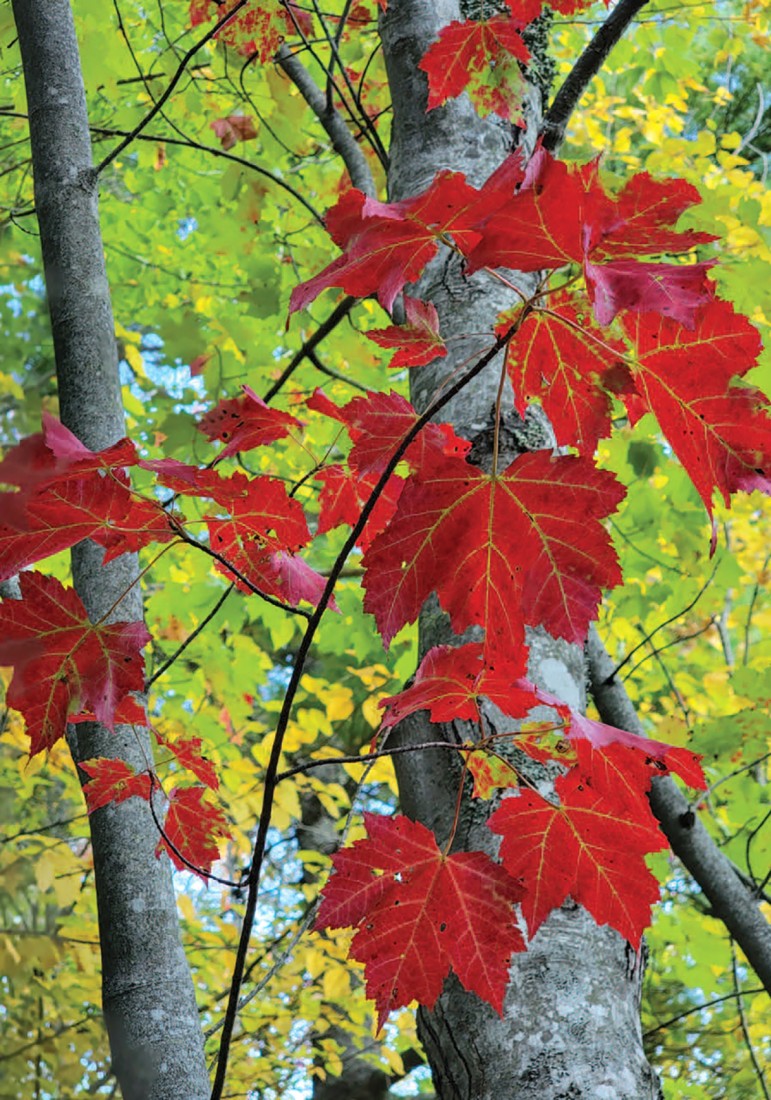
Acadia lies downwind, and the granitic bedrock, thin soils, conifer forests, high elevations, and clear lakes and streams have little capacity to buffer against acid rain, which can be toxic to wildlife and plants. Acid pollution was particularly severe in the middle and late 1900s, and it meant trouble for trees, including sugar maple and especially red spruce.
Trees in mountains that intercepted the clouds, and along the coast, immersed in acidic fog, were most affected. Outcry over acid rain and extensive research on its impacts by scientists, as well as the human health damage from air pollution, led to the Clean Air Act Amendments of 1990, which had immediate impacts on emissions of sulfur dioxide and to a lesser extent nitrogen oxides. But no one knew how long it would take the forest to recover.
In 1998, with funding from the National Park Service and the Environmental Protection Agency, Molly Schauffler and other University of Maine researchers began a decade-long study of atmospheric deposition of nitrogen and mercury in trees, soil, and water in Cadillac Brook (a tributary of Canon Brook) and Hadlock Brook. In the spruce-fir forest of Hadlock Brook, where researchers estimated red spruce had been growing uninterrupted for at least 500 years, conifer needles acted like collectors, raking pollutants from the air even when the sun was shining. The soil had been accumulating nitrogen and mercury throughout the industrial era. Acid rain flushed calcium and magnesium, which trees need for growth, out of the soil and into surface water and eventually the sea. Red spruce and red maple in the Hadlock Brook forest had more potassium, aluminum, and nitrogen in their leaves but less calcium, and the stream water also had higher nitrogen content—all signs that the forest had been impacted by acid rain.
Most of the Canon Brook watershed burned in the Fire of 1947. Water chemistry was altered as the fire burned through the soil, releasing elements to the air and promoting erosion. The birches, maples, and other broadleaf trees that grew back in the wake of the fire were slow to form a canopy, and thin, rebuilding soils accumulated less pollution.
Since the 1990 amendments to the Clean Air Act, air and water quality have improved across the park. For evidence, just reference the rain. In 1993 the annual average precipitation pH was 4.55. Now it’s 5.02, which is five times less acidic. “That’s a pretty significant improvement,” said Bill Gawley, air and water program manager at Acadia National Park.
Or look to the lichens. Tree lichens such as shaggy, stringy “old man’s beard” (Usnea) and lungwort (Lobaria), commonly encountered in Acadia, are indicators of both clean air and old forests. Surveys have found that compared to other areas of Maine, Acadia trees have a more diverse bark flora, including pollution-sensitive lichen and rare species such as hairy scalewort (Frullania bolanderi), a tiny liverwort that grows on red maple trees.
Acadia remains exposed to air masses that drift across the continent or blow in from the Atlantic Ocean. There are still days when ozone concentrations are hazardous to human health and smog or smoke from distant forest fires obscures the view from the mountains. And despite measures to reduce sulfur and nitrogen emissions, the burning of fossil fuels continues to change the chemistry of the atmosphere, adding excessive carbon dioxide and methane that are warming the planet. And warmer air holds more moisture.
Great Meadow
From Canon Brook, the trail turns north, following a string of beaver wetlands connected to The Tarn at the base of Dorr Mountain, and then winds through a short stretch of beech and hemlock woods to Sieur de Monts. Beyond lies the Great Meadow, the largest freshwater wetland in Acadia.
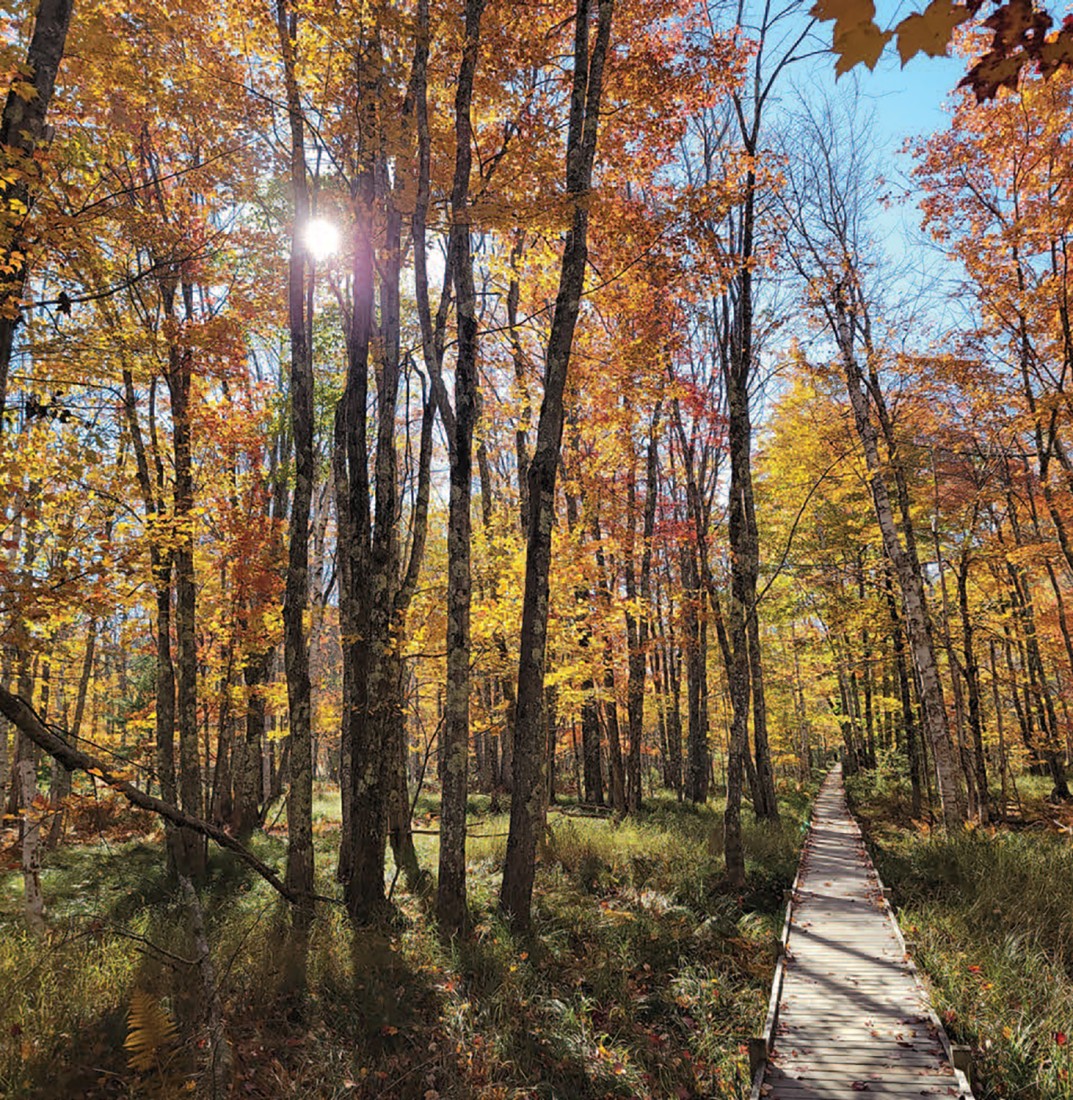
The western edge of the meadow is a red maple swamp. Technically a wet woodland, this red maple swamp is more open than a forested swamp. The trees are spaced apart, almost equally it seems. Sunlight reaches the ground, reflecting off the shiny blades of sedges and oval frondlets of royal fern. Winterberry and speckled alder cluster along the edges, around sphagnum islands of tamarack, sweet gale, and blueberry that are also home to four-toed salamanders. The tamaracks are deciduous conifers that lose their needles each year, the last display of golden color before winter.
These swamps are the only places where red maple dominates the forest, but being swamps they are not often frequented by people, which makes the Jesup Path all the more special for passing right through the middle of one. The red maple trunks often split into multiples, their gray bark splotched with lichen.
Unlike most trees, red maples drop their seeds in the spring, when high water levels carry them to streambanks and hummocks. As soon as flooding recedes, those winged samaras not eaten by mice germinate. Red maple is more tolerant of shade, and seedlings put more energy into aboveground tissues, allowing for faster initial growth. By fall, they already have a set of tiny leaves, turning red, a reflection of the maples turning red in the canopy above.
Along with decreasing daylight, air temperature is the primary cue for trees to begin shutting down chlorophyll production. As nights cool, green colors fade, and other pigments in leaves, like yellow and orange carotenoids, become visible. But the red in the maples comes from anthocyanin, which is not a pigment already in the leaf but one the plants produce, some in the spring and others, as with maple, in the fall.
“Anthocyanin is produced when there are bright sunny days and cool but not cold nights,” said Stephanie Spera of the University of Richmond, who has studied fall foliage in Acadia. “The sun part is important. Think about picking apples, how the reddest parts of the fruit face the sun and the shaded parts are often green.”
Spera said scientists have not reached consensus on why trees make anthocyanin. It could be to protect against solar radiation, especially in spring, when the leaves are tender and new and still ramping up photosynthesis. Or red could make the trees less attractive to aphids and other insects. “It’s not clear why this ability to make anthocyanin exists, because it seems to have different functions in different plants,” said Spera. “But I’d argue that it’s the abundance of these anthocyanin producing trees in the Northeast that makes fall foliage here so beautiful.”
That beauty is a big attraction for visitors, but catching the colors has gotten less predictable as temperatures have warmed and the timing of the “fall foliage” season has shifted.
Since recordkeeping began in 1895, average annual air temperature in Acadia has increased 4 degrees Fahrenheit, and the rate of warming is accelerating, with recent years among the warmest. The frost-free period, or growing season, is roughly two weeks longer than it was in the 1980s, when acid rain reached its peak. Trees are beginning photosynthesis earlier in the spring and continuing later into the fall, holding on to their chlorophyll and their leaves. A longer growing season also means longer exposure to whatever chemicals are in the atmosphere, making air quality a continued concern.
Spera studied changes in peak fall foliage using park records, newspaper archives, and historical photographs contributed by hundreds of residents and visitors, combined with more recent satellite data. She estimated that on average, peak fall foliage is now occurring in the third week of October, almost two weeks later than in the previous century.
September temperatures seemed to be the most important variable in predicting the timing of peak fall foliage, with warmer Septembers resulting in later color. Precipitation is another factor, including how much moisture is in the soil. In Spera’s analysis, later peak color was associated with more rain in May.
The links between climate and senescence vary by species, variation easily observed in each autumn’s unique spectrum and intensity of color. It is harder to predict when colors will be at their peak.
The increased variability of weather has been one of the most obvious effects of a changing climate. Though Acadia is wetter overall, drought also has become more frequent, as large air masses tend to stagnate in particular locations, blocking movement of weather systems around the globe. More water evaporates from a warmer ocean into warmer air that can hold more moisture but then delivers more water as rain and, less frequently, snow. The hydrologic system has intensified, and extremes are the result: a deluge at Maple Spring one season, drought in Great Meadow in another. In Great Meadow, the stress of fluctuating water levels prompts the red maples to make anthocyanin and lose their chlorophyll well before other trees change color, the red standing out against so much green. In a dry year after multiple years of flooding, the Great Meadow is parched, the silty-clay soil cracked and hardened. The maple leaves turn early, their crimson dim and tired-looking.
Trees have more time to experience drought stress because of the longer growing season. Drought affects a tree in multiple realms: aboveground, where leaves communicate with the air; belowground, where their roots communicate with one another; and in surface water, where their stress is passed on to still other organisms.
With more carbon dioxide in the atmosphere, leaves don’t need to keep their stomata open as long, so they lose less water through transpiration to the air. But warmer temperatures and drought can quickly evaporate any benefits from excess carbon dioxide, especially for seedlings. As the air gets warmer and drier, water exits leaf stomata more quickly, and a seedling may not be able to move enough water from the roots to the leaves. By closing stomata, a red maple prevents its leaves from drying out but also pauses photosynthesis, which can ultimately lead to reduced growth. Growth is further slowed under dry conditions because without enough water, a tree’s new growing cells don’t expand as much. A tree could be compared to a sponge, or a water balloon, explained Jay Wason of the University of Maine, whose specialty is tree physiology. “Without enough water, the balloon doesn’t get as big so the cells are smaller and growth is less.”
Wason and students have been studying how trees in Acadia respond to “extreme” climate conditions over short periods, from days to months to years. Like changes in fall color, changes in tree growth over periods of days to weeks can provide early signals of a species’ ability to survive in a warming climate. Warming alone seems to be less of a challenge than warming and drought combined.
Drought affects the forest above- and belowground. When the forest floor is dry, red maple can access water deeper in the soil. In the red maple swamp, beneath the muck of partially digested organic material, threads of fungi weave through the soil, connecting trees to one another. Like all of life, this mycelial network requires water and thus is also vulnerable to drought. As the fungi search for water and organic material to digest (releasing nutrients the plants can’t get on their own), they envelop new roots as they come across them. The farther they have to spread through the soil to find water, the more carbon they are using, and the fewer nutrients they are providing to the trees. If the trees are already stressed, the fungal community may shift toward species with shorter “distance exploration strategies” and shorter life cycles, disrupting the network.
The atmosphere-tree-soil continuum that regulates water flow and growth in trees is mirrored by the continuum in rivers as leaves move from the mountain headwaters to the sea. In the streams, warmer temperatures could increase microbial breakdown of leaves, resulting in less leaf area for the insects, while drought alters the timing, type, and tonnage of carbon flowing downstream. Dissolved organic carbon has been increasing in surface waters across the region. Though it’s not clear why, researchers think it may have something to do with forest recovery from the acid rain era, as well as a warming climate.
Red maple has seemingly weathered all of these changes. Red maple is the most common tree in the United States, growing from Maine to Florida and west as far as Minnesota and Texas. In the Northeast, red maple has increased in abundance as beech, hemlock, oak, and spruce have decreased.
Considered a generalist, red maple has flexibility that allows it to grow in swamps but also under many other conditions, including polluted air. This resilience has allowed red maple to increase in and beyond Acadia over the last fifty years, attributed to regrowth after logging and suppression of oak and pine-friendly fire, as well as increased precipitation and warmer temperatures. Red maple is the most abundant tree in the Northern Forest. Models show increased suitable habitat, abundance, and growth for red maple. The USDA Forest Service ranks the species as one of only a few in Acadia “very good in ability to cope” with climate change.
How is it that a swamp tree is also tolerant of drought? “Flooding can cause a lack of oxygen, killing roots and reducing the tree’s ability to acquire water during and after floods. The canopy experiences water stress just like during drought conditions,” said Jay Wason. In part it is the stress, not the water, that red maple reveals when it turns color early in the fall.
“We often find that the trees that are best adapted to surviving flooding are also well adapted to survive drought conditions,” said Wason. “We can see this readily with the common successful street trees, including red maple: Most are trees adapted to wet conditions, but they thrive on roadsides with extreme variation from flooding to drought.”
Kate Miller of the NPS calls red maple life insurance for the future forest. As other trees, such as red spruce and balsam fir, as well as mountain and striped maples, are challenged by the changing climate, red maple will be there to fill in the gaps and keep Acadia forested. But she acknowledges that relying on red maple to fill too many niches is inherently risky. “Resilient forests are those that are composed of multiple species and age classes and that have more variability in how they respond to various threats and stressors,” she said. “So red maple is a good insurance policy, but so is ensuring that forests are more diverse than just red maple.”
A species-by-species approach ignores the complex relationships among trees, in the roots underground and the canopy above. Trees have been on this Earth for hundreds of millions of years. They have lived through great change before. Spruce and fir persisted here when they perished in nearby inland forests. A shift to broadleaf forests across much of the park would be a major ecosystem change. But at least the ecosystem would still be forest.
Those who care for forests worry less about trees because they know the future forest will not have the same types and abundance of trees. What they worry about is the very existence of the forest itself. With so much tree cover—89 percent in Maine, 77 percent in Acadia—it is easy to take the forest for granted. Trees grow everywhere around here. Give them a crack in the pavement, a scrap of unmowed lawn, and trees will appear. The fact that the forest has already returned once, regrowing after the “great cutover” in the 1800s, demonstrates how so many tree species depend upon one kind of disturbance or another. But the frequency and type of disturbances occurring in the forests have both shifted. By changing the chemistry of the atmosphere and the flow of water through the forests, humans are now the primary disturbance, and the future of the forest depends on human action.