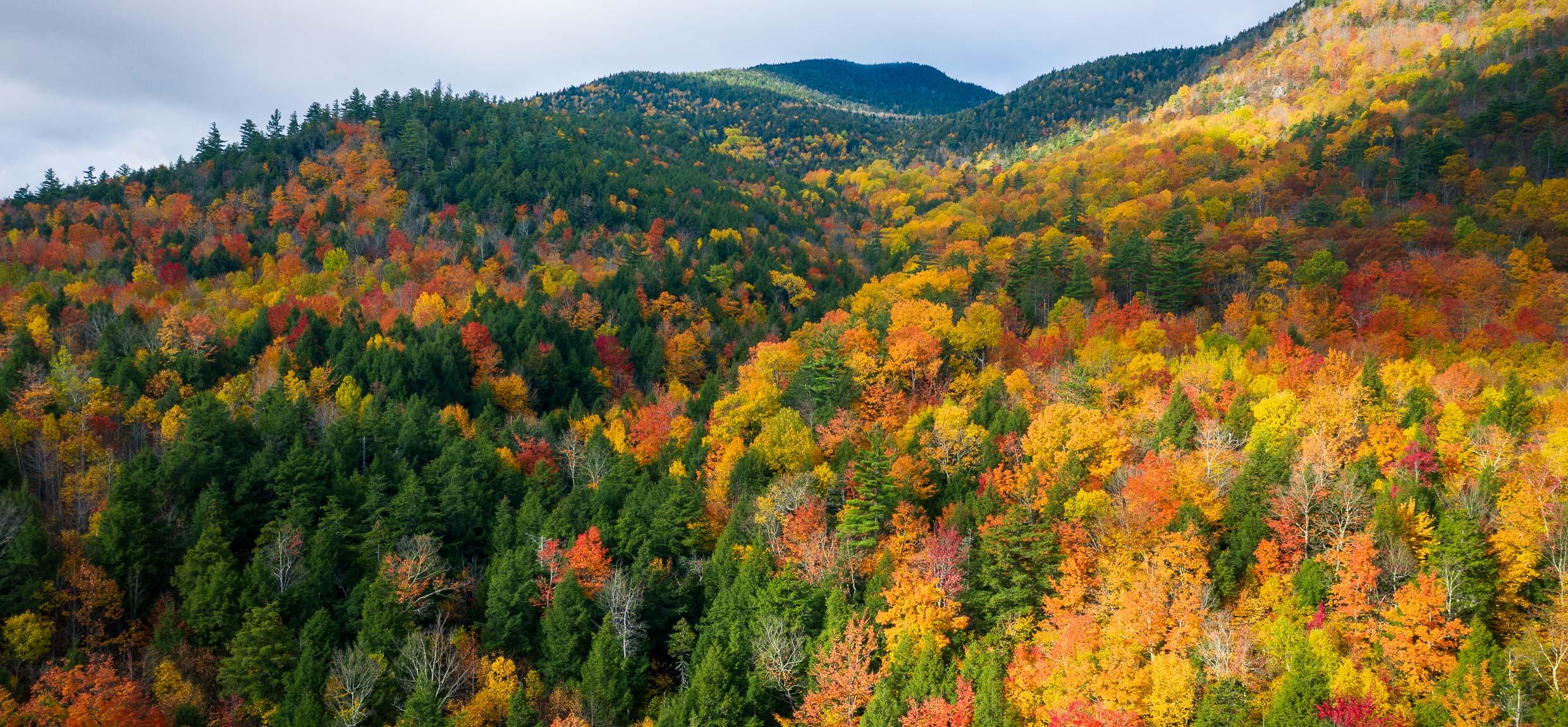

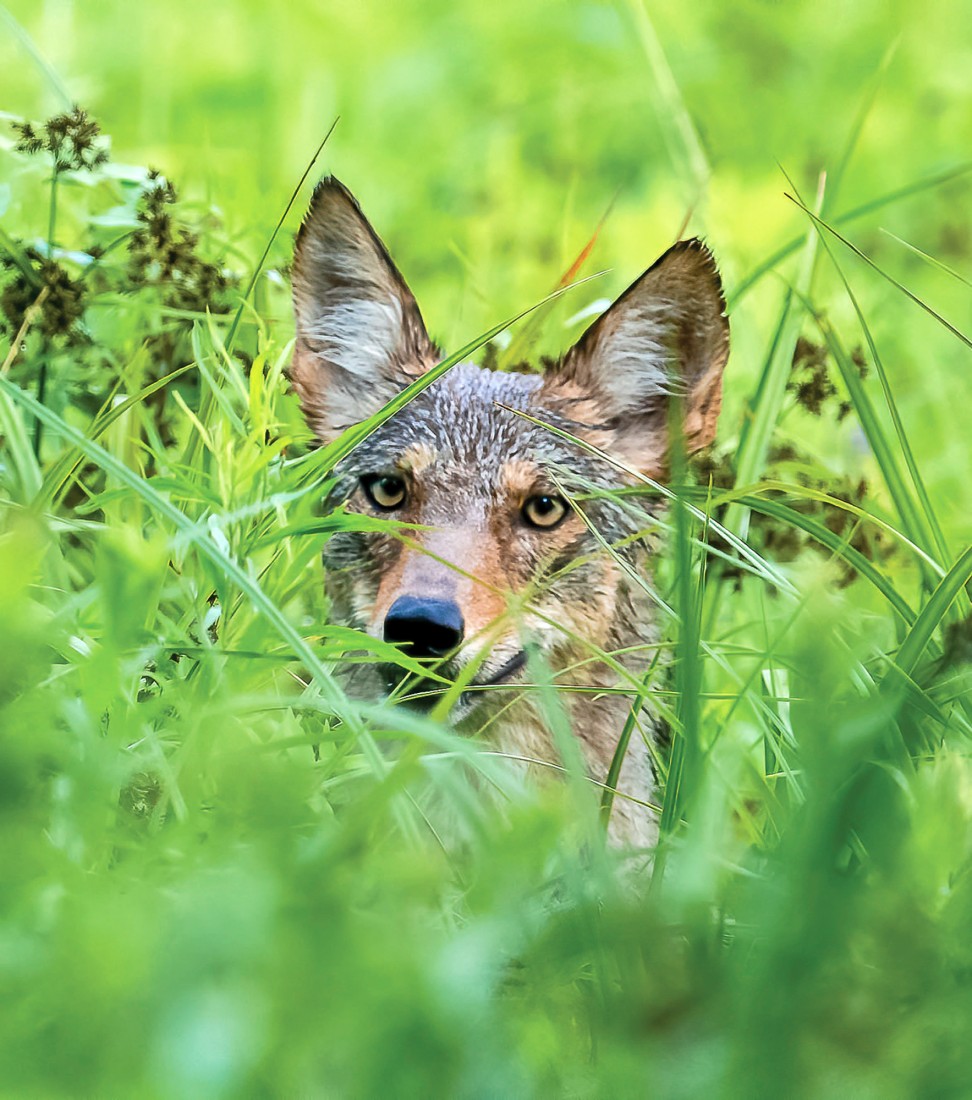
Prior to colonization, wolves roamed the forests of what is now the northeastern United States and southeastern Canada, hunting deer, moose, and caribou in packs. Catamounts stalked deer in these woods, while black bears preyed on fawns and scavenged carcasses abandoned by other predators. In the 1600s, European settlers began converting forestland into farms and working to eradicate large carnivores through hunting, trapping, and poisoning. As predator populations decreased, deer proliferated, and their intense browsing of the understory contributed to a shift in species composition and a decrease in forest regeneration.
By the late 1800s, ongoing persecution and habitat destruction had driven wolves to near extirpation in the Northeast, and in the early 1900s, coyotes moved in from the west and interbred with remaining wolves. Almost any canid in the Northeast can produce viable offspring with any other canid, and during roughly the past 100 years, wild eastern canines have largely become a genetic hodgepodge of coyote, wolf, and domestic dog.
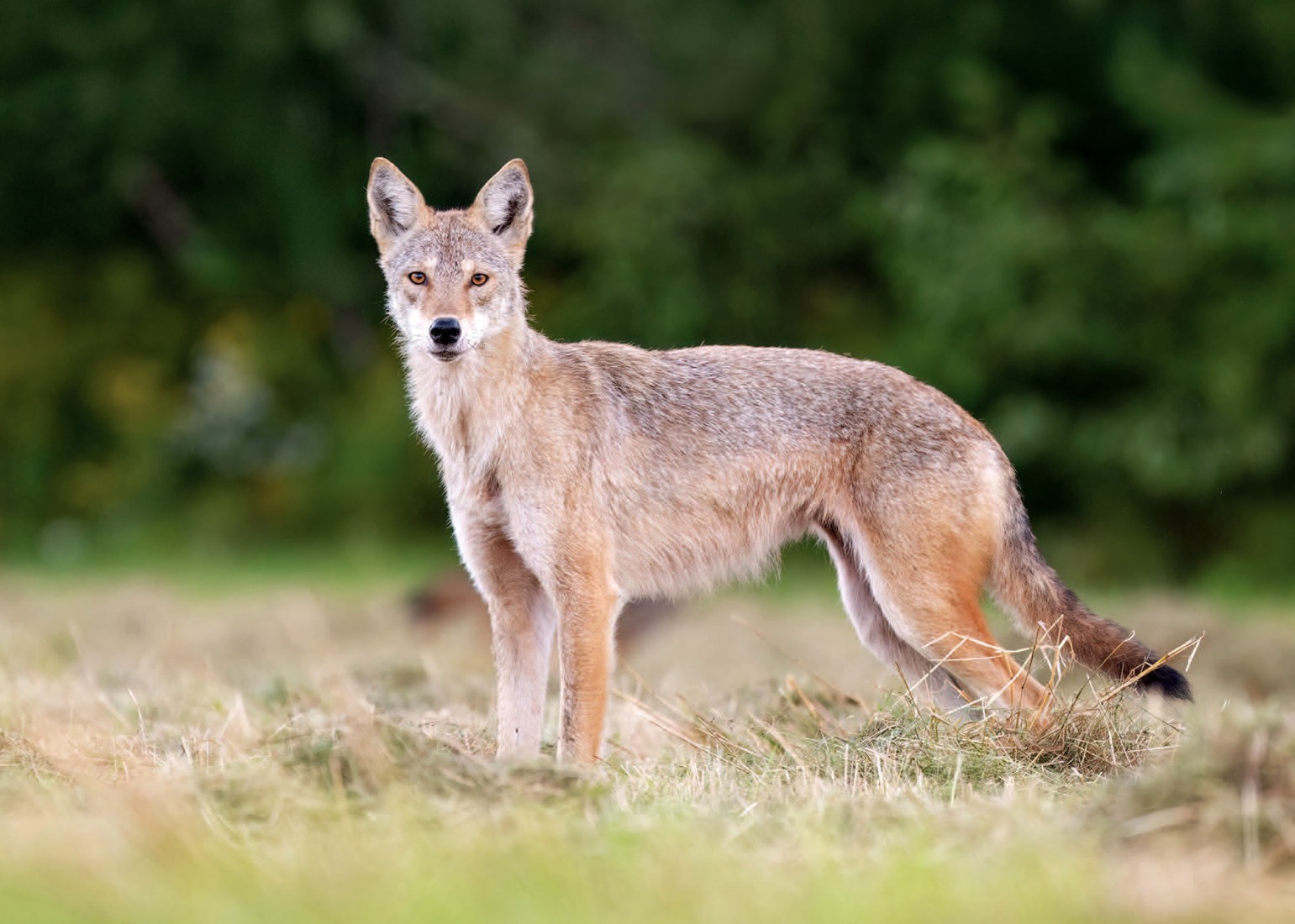
Researchers jokingly refer to these creatures that defy species definitions as Canis soupus, while the public may have more familiarity with the monikers coydog or coywolf. Geneticists prefer the term “admixtures” for animals with mixed genetic profiles.
In western North America, it’s easy to distinguish gray wolves and coyotes: the elusive gray wolf lives in the remote wilds of northern woods, while the common coyote wanders the open plains. But in the Northeast and southeastern Canada, these animals have more overlap in their habitats, ecology, and morphology. Confusion about the identity of these animals – and how to tell them apart – is ongoing. In order to understand why, we need to start at the beginning.
Eastern Wolves
The canid, or dog, family evolved in North America around 40 million years ago. Approximately 10 million years ago, some canines began traveling to and from Eurasia via the Bering Land Bridge. Within the canid family, the Canis genus evolved in North America roughly 5 million years ago, producing the proposed common ancestor of coyotes and wolves, Canis lepophagus. Around 1 million years ago, the coyote (Canis latrans) lineage evolved in North America, while the gray wolf (Canis lupus) lineage did in Eurasia, before expanding back to North America.
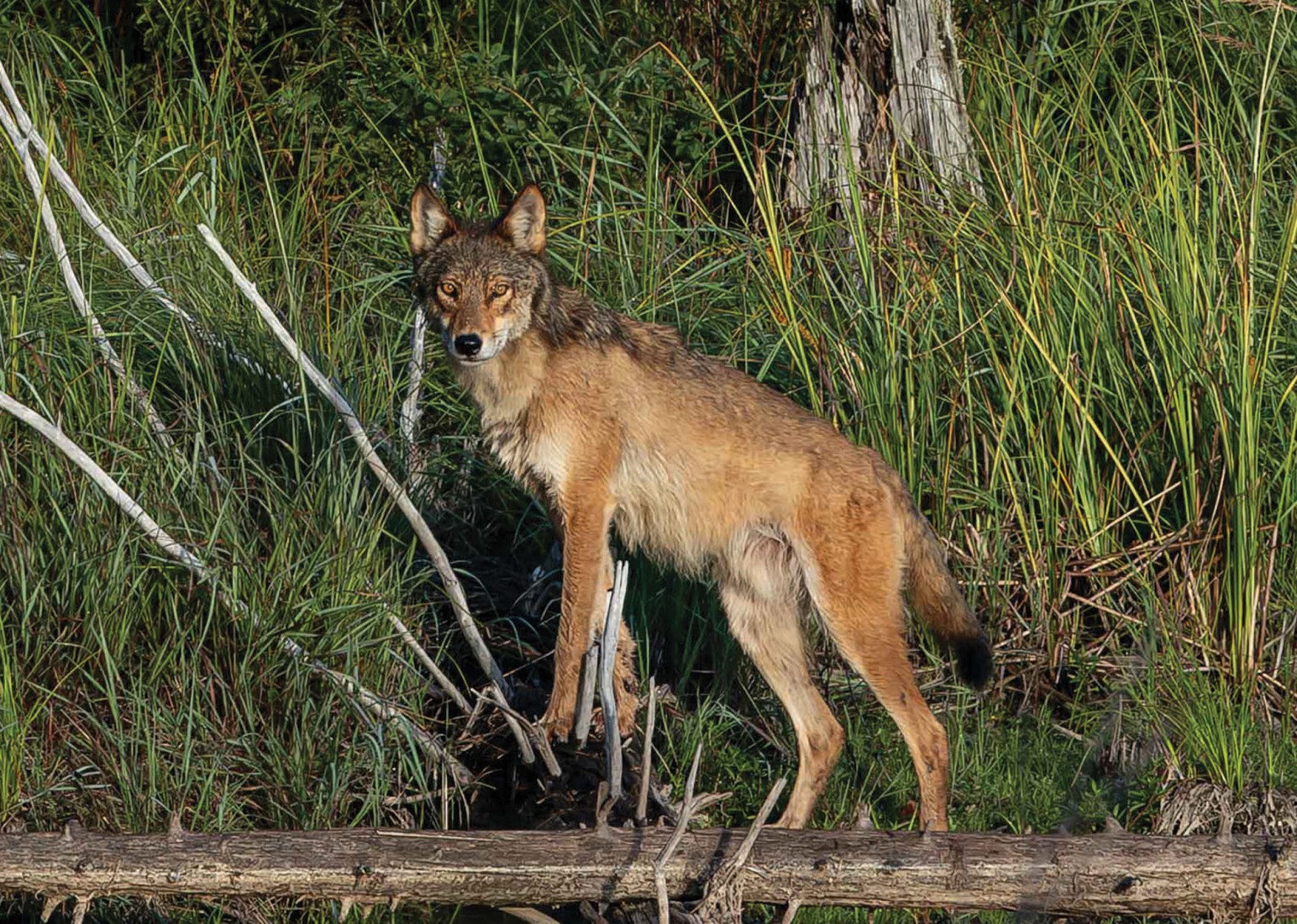
Canine genetics become even more complicated when eastern wolves enter the conversation. These canids still live in forested regions of southeastern Canada, and the epicenter of their range is in Algonquin Provincial Park in Ontario. Although eastern wolves historically inhabited the Great Lakes states and the Northeast prior to the early 1900s, today they are only occasionally documented in these regions, and there are no known breeding populations in the Northeast.
One camp of researchers believes eastern wolves evolved between 150,000 and 300,000 years ago from a common ancestor of gray wolves and coyotes; another group believes eastern wolves are the result of gray wolf and coyote interbreeding – possibly as recently as tens of thousands of years ago. Those who support the so-called “ancient lineage” hypothesis deem the eastern wolf its own species, Canis lycaon, while the “hybrid origin” researchers consider them an admixture. “These canids in the Northeast really have this mosaic identity,” said Bridgett vonHoldt, professor of evolutionary genetics and epigenetics at Princeton University. “There are these signatures of genetic exchange throughout their history.”
As the field of evolutionary genomics advances, the interpretation of genomic datasets has varied, and no consensus exists yet on a correct timeline. Although it may seem overly academic to get hung up on how recent or ancient the divergence between canids is, it has a direct impact on species designation, which informs how we manage species and what protections we afford them.
Canada recognizes eastern wolves as a distinct species, and several researchers at Trent University in Ontario are proponents of the “ancient lineage” hypothesis. In 2024, The Committee on the Status of Endangered Wildlife in Canada estimated that there are likely fewer than 1,000 mature eastern wolves in the wild and classified them as threatened under the Species at Risk Act. In the United States, the eastern wolf occupies a taxonomic gray zone – neither a separate species nor a subspecies – and therefore is not considered independent of the gray wolf. Because the gray wolf is federally protected as endangered under the Endangered Species Act (ESA), the eastern wolf is afforded the same protections; if gray wolves are delisted, eastern wolves lose their de facto protections as well. In 2025, the U.S. House of Representatives passed the Pet and Livestock Protection Act, which proposes delisting the gray wolf from the ESA. As of early 2026, the bill was pending in the Senate. If it passes and becomes law, it will leave management decisions to states. Gray wolves are listed as endangered in New York under state law and would remain illegal to kill regardless of the federal ruling; no New England states list wolves as endangered.
Regardless of divergence timing or taxonomic status, eastern wolves display intermediary morphology and ecology between gray wolves and coyotes. While gray wolves hunt moose, elk, and deer, eastern wolves primarily hunt deer and occasionally moose. Gray wolves may have up to 12 individuals in a pack, while eastern wolf packs are usually only half this size at most. Eastern wolves are smaller, with slighter builds and narrower skulls. Hailing from a wolf lineage, but with some coyote DNA – either from shared ancestry or long-ago interbreeding events – eastern wolves are the first complicated piece of the eastern canine puzzle.
Eastern Coyote History
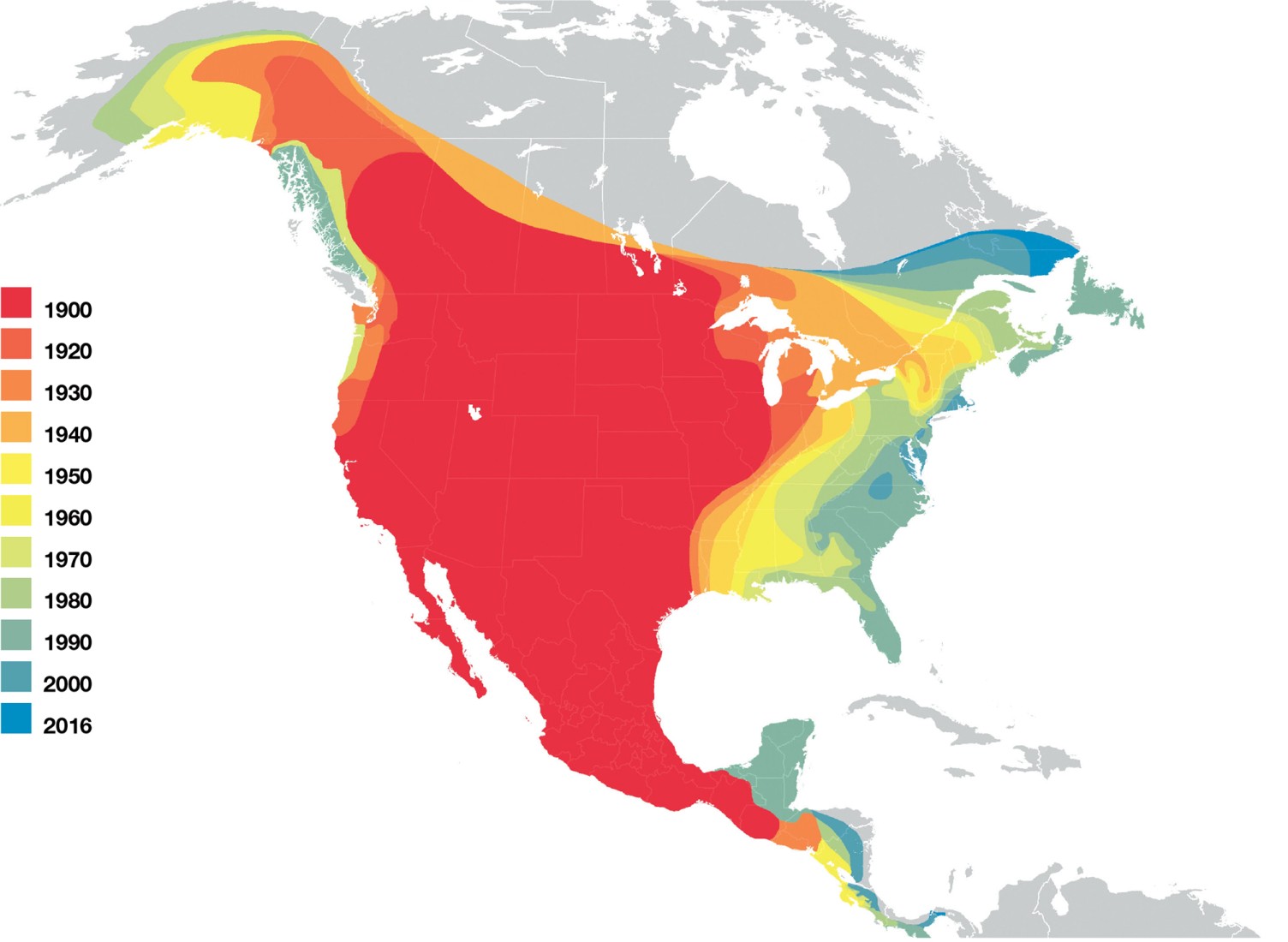
Eastern coyotes are the most recent confusing chapter in the story of canid evolution in the Northeast. Before European colonization, coyotes were confined to the grasslands of the west, while eastern wolves lived in the forests of the east. On their 1804–1806 expedition, Lewis and Clark did not encounter a coyote until they reached present-day South Dakota, where Lewis described it as a “small wolf of the plains.” As wolves – and other large carnivores – were hunted to near extirpation along the East Coast in the late 1800s and early 1900s, coyotes moved eastward into the void.
Coyotes’ expansion was not limited to the Northeast; by 2010, they had spread to every state except Hawaii. Their remarkable adaptability allowed them to move from plains to forests, wetlands, and suburbs. And their reproductive strategy – adjusting litter size in response to available territory and resources – enabled them to rebound quickly, regardless of population control measures. In his 2016 book Coyote America: A Natural and Supernatural History, Dan Flores notes that approximately half a million coyotes are killed each year in the United States, but it has little impact on their numbers. Although this means many people regard them as pests, vonHoldt sees it more as a superpower. “They’re the underdog of the canine world: if you hunt the crap out of them, you just get more,” vonHoldt said. “They have an amazing capacity to bounce back – they’ve found a way to live in a world that we have really altered and fragmented.”
As coyotes moved eastward in the 1910s, they encountered remnant eastern wolf populations and began to interbreed. “Interbreeding often happens when one species is rapidly losing ground and enough of their mating population, or when a species is adventive in an area as their range expands,” vonHoldt said. In this case, with the eastern wolf population dwindling, and coyotes moving eastward, it was both. The product of these species’ coupling is the eastern coyote (referred to as either Canis latrans var. or Canis latrans x lycaon, this second name a nod to the eastern wolf), one of 19 coyote subspecies. During this time, they also occasionally interbred with farm dogs. Eastern coyotes spread from Canada – and, to a lesser extent, from the Midwest – into northern New York in the 1920s and into southern New England by the 1960s. The eastern coyote now ranges from southern Canada to the mid-Atlantic.
Genetics, Morphology, and Ecology
In a 2013 study published in Molecular Ecology, researcher Javier Monzón and his team analyzed DNA from 427 canid carcasses – from animals that were hunted, trapped, or found deceased – and noted that “eastern coyotes form an extensive hybrid swarm.” The study found their genome to be, on average, roughly 65 percent coyote, 25 percent wolf, and 10 percent domestic dog. Individuals sampled closer to Algonquin Provincial Park, and in areas with high deer density, exhibited higher percentages of wolf DNA.
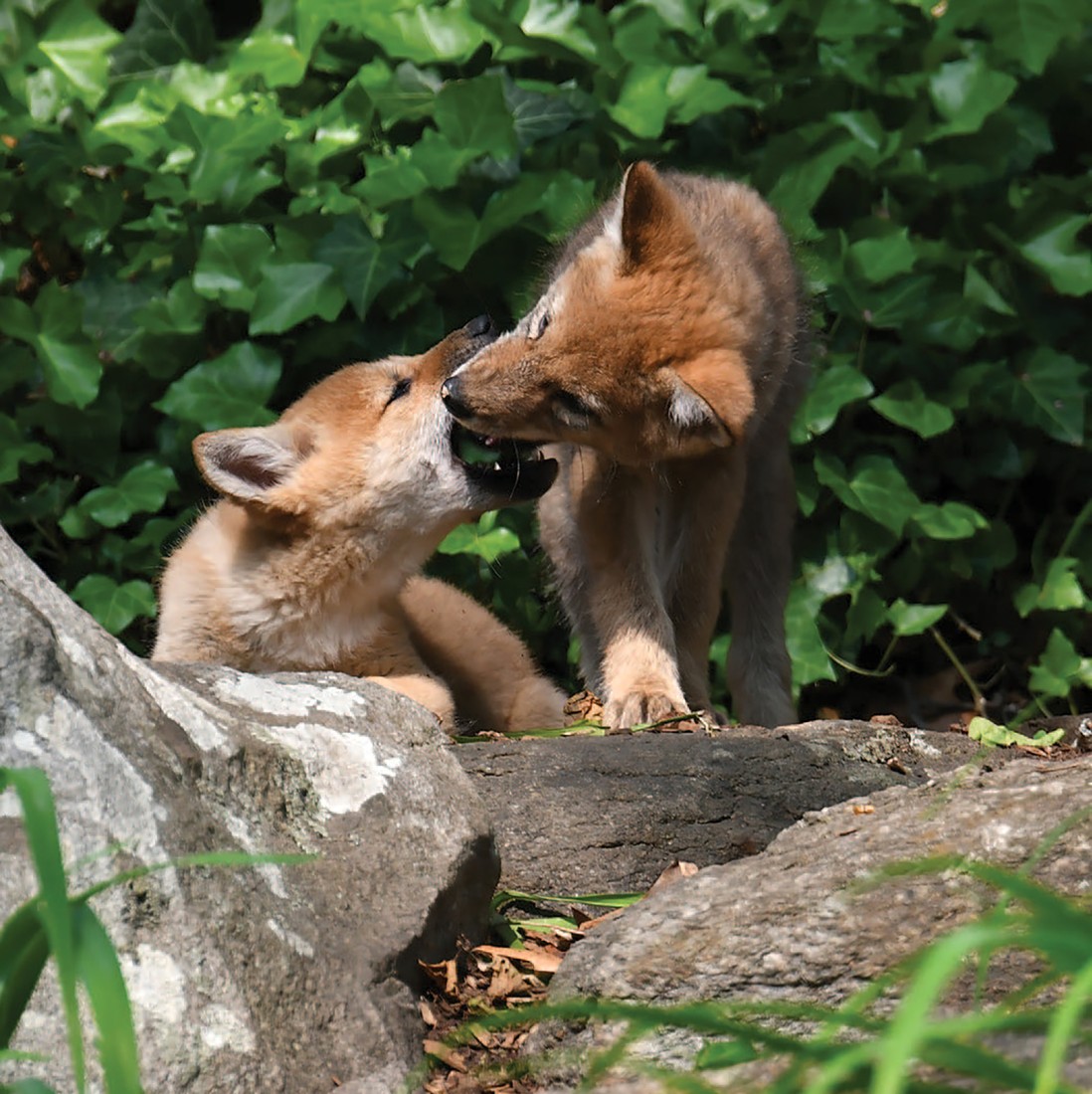
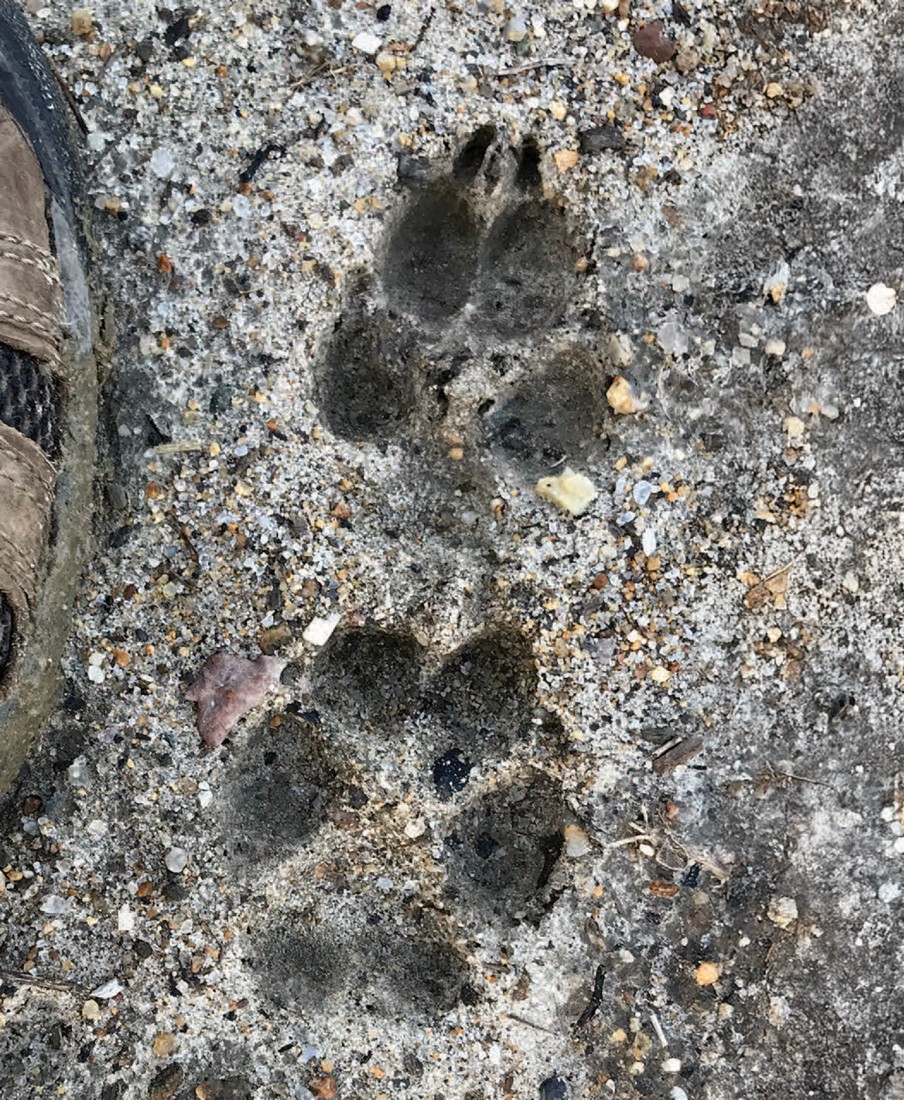
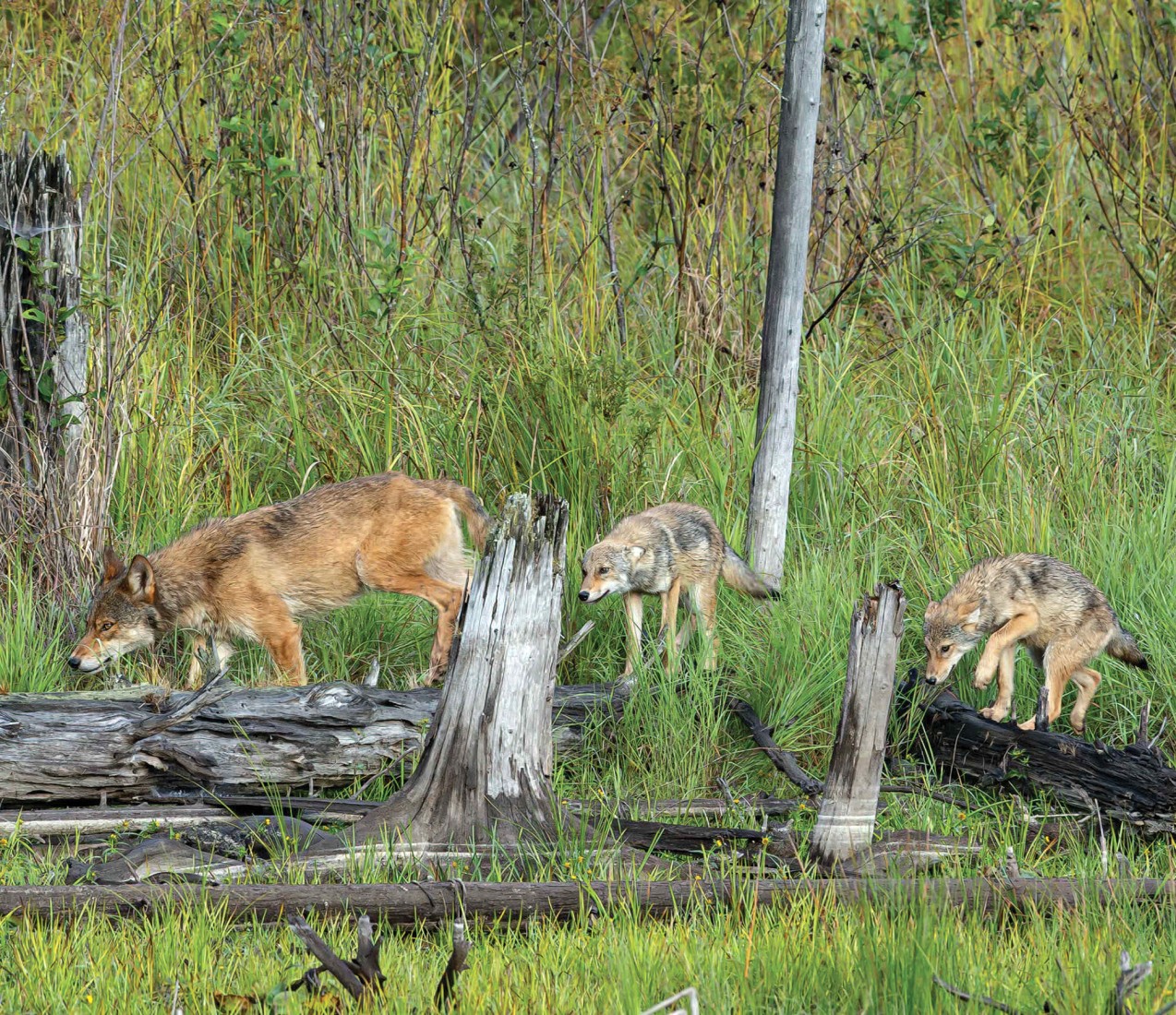
Eastern coyotes weigh 36 percent more than western coyotes on average, with females weighing around 32 pounds and males around 36 pounds. Their paws are up to an inch larger than western coyotes, and they have broader skulls, longer legs, and thicker coats. Wolf and dog genes have influenced eastern coyotes’ larger size. Domestic dog genes can result in greater variation in coat color and markings, rounder or floppier ears, and the presence of rear dewclaws. These extra digits are higher up on the hindlegs and have largely disappeared from wild coyotes over time, while many dog breeds still have them; although these vestigial toes – and other traits – may indicate mixed ancestry, scientists emphasize genetic testing is always needed for confirmation.
In addition to morphology, the ecology and behavior of eastern coyotes is influenced by their wolf and dog genetics. Eastern coyotes are more likely to stay in small family packs, the young sticking with parents for longer on average than more solitary western coyotes. Jon Way, an eastern coyote researcher, has tracked family groups of up to seven individuals; most are around three to four individuals. Monzón’s 2013 study proposes that dog ancestry may have made eastern coyotes more adaptable to human-dominated environments. Wolf DNA makes eastern coyotes better able to survive in dense forests and deep snow and to hunt larger prey than their western coyote kin. Monzón’s team also found wolflike traits are naturally selected for in areas where deer are an important prey source. While western coyotes almost exclusively eat small mammals, eastern coyotes also hunt beavers and deer; Way has even seen them hunting young seals on Cape Cod. A 2017 study published in Ecological Applications found that while eastern coyotes are effective predators of deer, their ineffective hunting of moose and varied diet means they do not fully replace the niche left empty by wolves.
However, coyotes are still ecologically important for northeastern forests, both through hunting prey populations and through creating a “landscape of fear,” where prey shift foraging routines and locations more frequently to stay vigilant. Eastern coyotes also regulate populations of smaller carnivores including red and gray foxes, skunks, and opossums – through similarly direct and indirect measures – which in turn can limit predation on birds and their eggs, as well as small mammals. “We can’t have healthy ecosystems without an apex predator, either wolves, or coyotes when wolves aren’t there – even if they don’t fit into a box,” vonHoldt said.
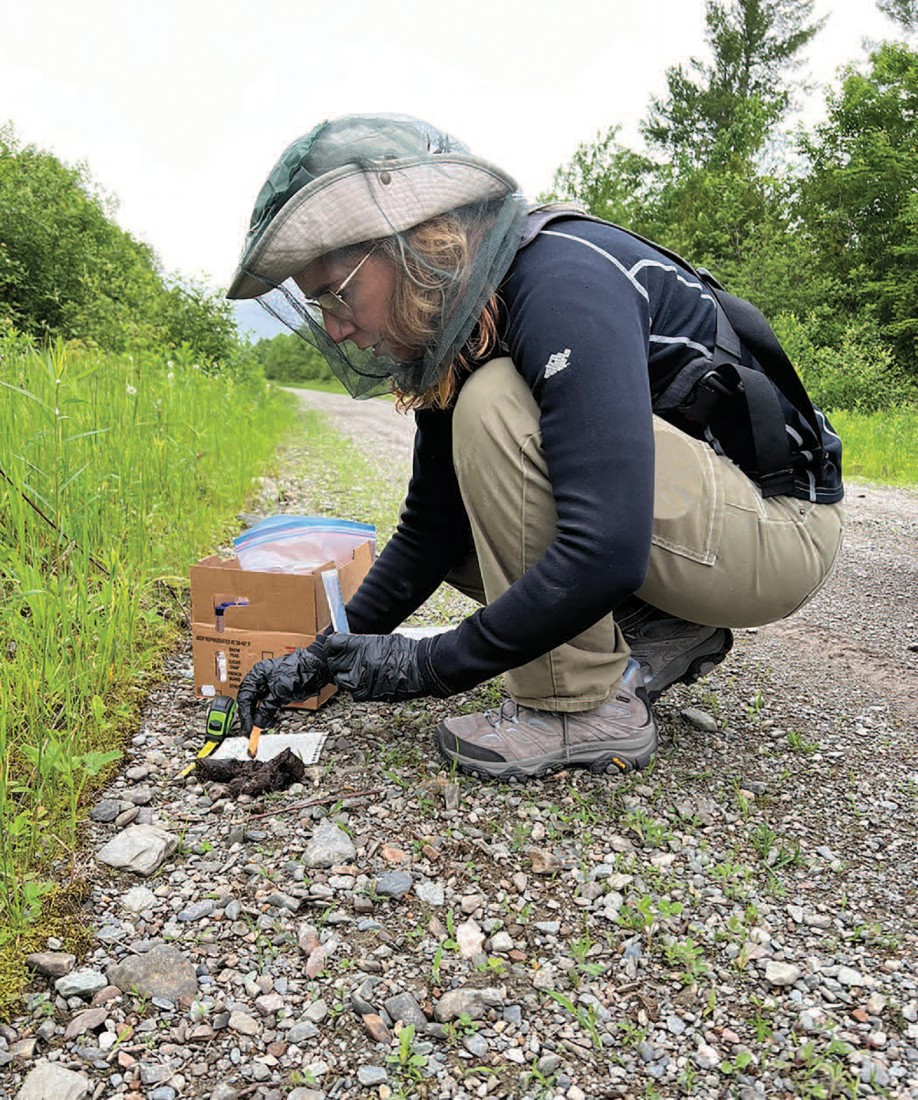
Way used to be adamant about the need to recognize eastern coyotes as a distinct species. In 2016, he wrote a paper with fellow researcher Bill Lynn, proposing naming them Canis oriens. He feels less strongly about the idea now. “They’re for sure a unique group of canids,” Way said, “but the problem is they still hybridize on different ends of their range – with western coyotes in the west and with eastern wolves in Ontario.” Way runs a research project in northern Maine, called Maine Howls, where he and a team of volunteers deploy acoustic recorders and camera traps, and collect canid scat. He believes active hybridization is happening in this region; in 2020, scat collected from near the Maine-Canada border tested at approximately 85 percent wolf DNA. Over the past few summers, he has caught numerous eastern canines on camera; given the enormous range in both size and coloration, he believes some of the individuals have more wolf DNA than coyote. Other researchers are more reluctant to speculate about ongoing hybridization or believe that these mating events were isolated to the early 1900s and have never happened in recent times. VonHoldt lands somewhere in the middle. “Is it happening every year? I doubt it,” she said. “A wolf might come into the Northeast, but whether they stay and live long enough to have pups with a local coyote – there’s so much that’s unknown.”
Managing Eastern Canines
In 2021, a hunter in Cooperstown, New York, shot a canid thinking it was a large coyote. When he realized it was 85 pounds, he submitted it for further genetic testing. New York State Department of Environmental Conservation (NYSDEC) found it to be 65 percent wolf, while follow-up testing by Princeton University determined the animal to be 96 percent wolf. The Cooperstown wolf was not the first case of mistaken canine identity in the Northeast. A small handful of confirmed wolves have been killed, as have a smattering of unconfirmed admixtures. Since 2000, another two canids later confirmed as wolves were shot in New York. It’s a similar story for the 92-pound canid shot in Troy, Vermont, in 2006, and the 85-pound canid shot after preying on lambs in Shelburne, Massachusetts, in 2007.
These situations have called attention to large carnivore protections in the Northeast – notably the disparity between how we handle coyotes and wolves, and how hard it can be to tell them apart. New York and Massachusetts allow coyote hunting from October through March, with no bag limit. The closed season protects coyotes during mating and pup-rearing. The rest of the New England states allow year-round hunting on private land with no bag limits. Coyote and wolf advocates would like to see stricter regulations.
“All states should have closed seasons with scientifically based numerical limits,” said Nadia Steinzor, carnivore conservation director for Project Coyote, an organization with the mission of protecting carnivores and fostering human-wildlife coexistence. She’s particularly concerned that hunters prefer to harvest the largest coyotes they encounter, and these are the most likely to be wolves – or at least to have higher amounts of wolf genetics. This summer (2026), New York legislators are slated to vote on a bill that would require all wild canid harvests to be reported to NYSDEC, and those weighing more than 50 pounds to be submitted for further genetic analysis. “We need these measures so we can start to get at the question of if we have wolves on the ground,” Steinzor said. “With the genetic and behavioral convergence [of coyotes and wolves] in the Northeast, the fates of the two species are now completely intertwined.”
Bruce McGowan, executive director of New York State Conservation Council (NYSCC), which represents sportsmen and -women, disagrees with the bill. “It’s not that we don’t agree with the science, it’s just that it’s arbitrary. Why not 45 or 60 pounds? What’s the justification?” McGowan said. NYSCC supports a closed season, one that McGowan emphasizes should be balanced and scientifically based. But the bill, if passed, would require more time and money to be devoted to monitoring coyote harvests and introduces an option for NYSDEC to put a moratorium on coyote hunting if DNA analysis confirms a wolf was harvested. McGowan worries about the cascading ecological impacts of that. “If there’s no hunting, and then there’s a population boom [of coyotes], you’re going to see an impact on sport species, such as wild game birds,” he said.
Wild canine advocates argue that limiting hunting and trapping can result in stabilized – or even decreased – eastern coyote populations. They note coyotes’ compensatory reproduction strategy – to have larger litters if numbers are down and resources are available – is less likely to kick in if families stay together longer and older males maintain well-established territories. Steinzor argues that this would lead to greater ecological balance, as well as create circumstances for wolves to come back to the Northeast. “We probably don’t need to think about [wolf] reintroduction anymore,” Steinzor said. “It’s more about enabling them to come back by not persecuting coyotes as hard.”
Way agrees. “By better protecting any large carnivores, we’d be better protecting wolves in the process,” he said. “Wolves are effectively not protected in the Northeast right now unless they look very different than an eastern coyote. There’s no way that somebody hunting at dawn or dusk, from far away, is going to be able to tell the difference.”
Accepting Gray Areas
In a 2017 paper on canine genome sequencing, Trent University researchers noted, “The realm of Canis taxonomy is likely to remain controversial and confusing for some time.” Although we may hope to fit creatures into neat species categories, admixtures resist that tidiness. Some researchers believe we need to relax our standards of classification. When the ESA was written in the early 1970s, scientists considered hybridization rare, and taxonomy was based primarily on morphology, not genetics. The next 20 years brought updates – mainly the inclusion of a category for “distinct population segments” as a way to address how a federally secure species may have geographically unique populations that are of ecological or evolutionary value. This provides a pathway to protection without listing an entire species, although there are critics on both ends of the spectrum; some find it too lax and inconsistent, and others find it still too rigid.
“I have concerns about how we define species as a human culture,” vonHoldt said. “The biological species concept falls apart when we look at most of the canines in North America.” Red wolves, on which vonHoldt is an expert, also have a convoluted ancestry and have dwindled to fewer than 20 wild individuals, all in eastern North Carolina. U.S. Fish & Wildlife Service (USFWS) noted in a species assessment that the greatest threat to red wolves’ survival is hybridization with coyotes. Beginning in 1999, USFWS killed or sterilized hundreds of canid admixtures in order to protect red wolf genes from dilution due to interbreeding. “There can be a subconscious mentality of genetic purity, of wanting things in separate boxes,” vonHoldt said. “But if there’s an animal that’s half red wolf and half coyote, I’m thinking, ‘That’s 50 percent of an endangered animal’s genome.’”
Some scientists advocate for protecting species from hybridization, arguing that efforts such as the USFWS’s in North Carolina are important to safeguard genetic diversity. Hybridization eventually “swamps” the gene pool, and locally adapted gene complexes may disappear forever; when hard-earned evolutionary fitness is lost, it can impact survival and reproductive success. At other times, the opposite is true, with new genes allowing faster adaptation. “A traditional population geneticist might argue that mutation is the way animals get new genetic diversity, which happens at an incredibly slow pace,” vonHoldt said. “Gene flow hybridization is really quick, which might be important today, since we are changing the world at a rate that’s faster than evolution has faced in the recent past.”
An increase in fitness or vigor through hybridization – known as heterosis – can help animals adapt to new or changing environments. Canids with more wolf DNA may be better equipped to fulfill the ecological role of wolves, even if defining them as a species is difficult. Because of this, some ecologists advocate for a “functional” or “trait-based” approach, prioritizing ecological function of an animal on the landscape, rather than its ancestry or taxonomic status – focusing on what an animal does instead of what an animal is.
The wily canines of North America are not the only organisms hybridizing or admixing: black-capped and Carolina chickadees hybridize where their ranges overlap, a zone that is moving northward with climate change, and biologists have documented Canada lynx-bobcat hybrids in northern Maine. VonHoldt notes that fish and birds have high rates of admixture and hybridization. Habitat alteration, introduction of non-native species, and climate change have led to higher rates of hybridization as ranges shift and reproductive barriers break down between closely related species and admixtures. Combined with more powerful genetic analysis techniques being pioneered today, biologists expect we will see more, not less, in the way of organisms that don’t fit species definitions neatly.
Knowing this, how do we define a species’ survival? Is the gold standard long-term genetic integrity or the continuity of a lineage, however admixed? What do we lose when we prioritize the persistence of an intact genome above ecological resilience – or the other way around? The values we land on will ultimately shape our management and therefore these species’ futures. Human interference has already undeniably altered the evolutionary trajectories of eastern canids, and in doing so, led to eastern coyotes. Who knows what other hybridized animals we will see in our lifetime?
“Life is complicated, and the struggle that every organism faces is to live and reproduce,” vonHoldt said. “Admixture and hybridization are solutions to that.”
Discussion *