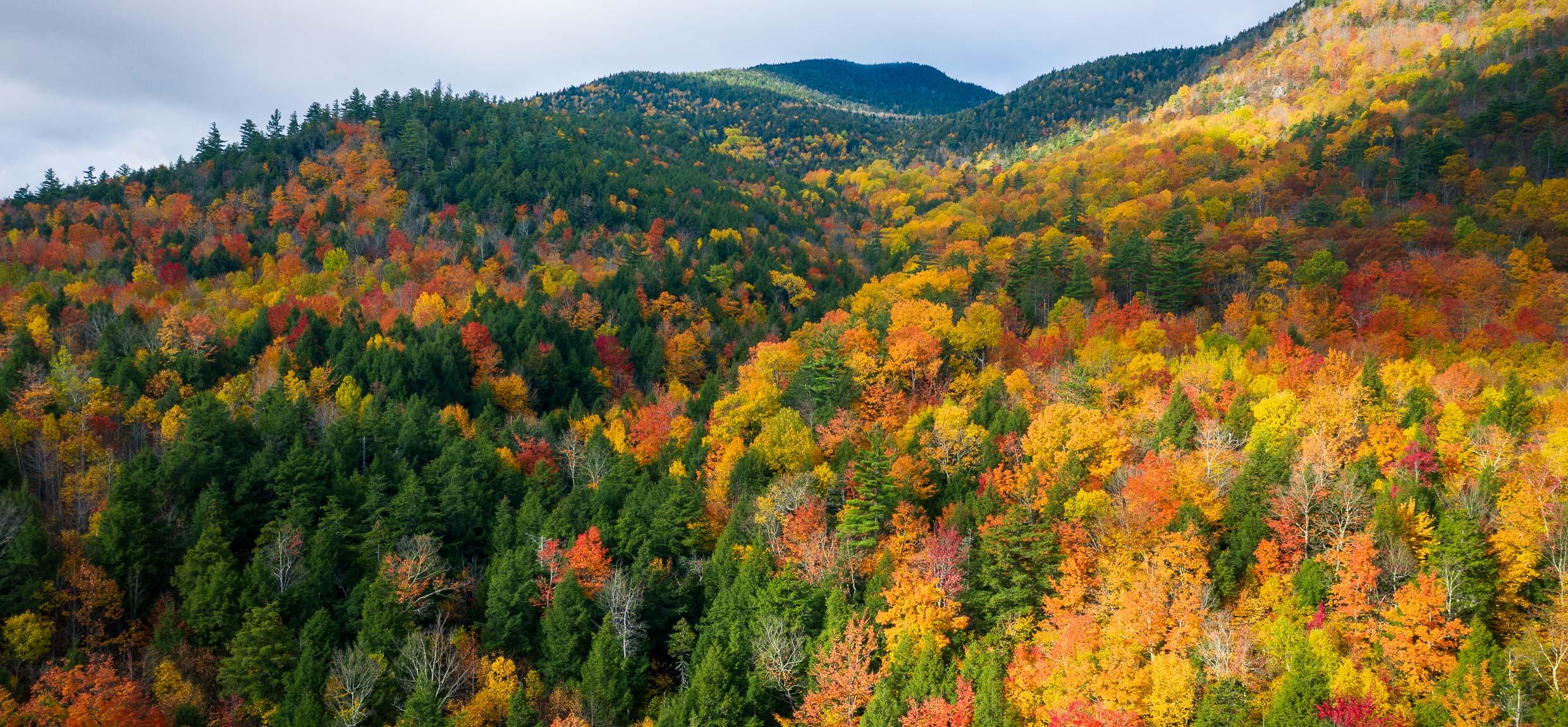

While shopping for her first home, my niece phoned me concerned about large numbers of insects she encountered at an open house. Because it was early autumn, I asked, “Were they black with red markings?” They were, and I told her she had likely witnessed an accumulation of boxelder bugs (Boisea trivittata) on the sunny side of the house.
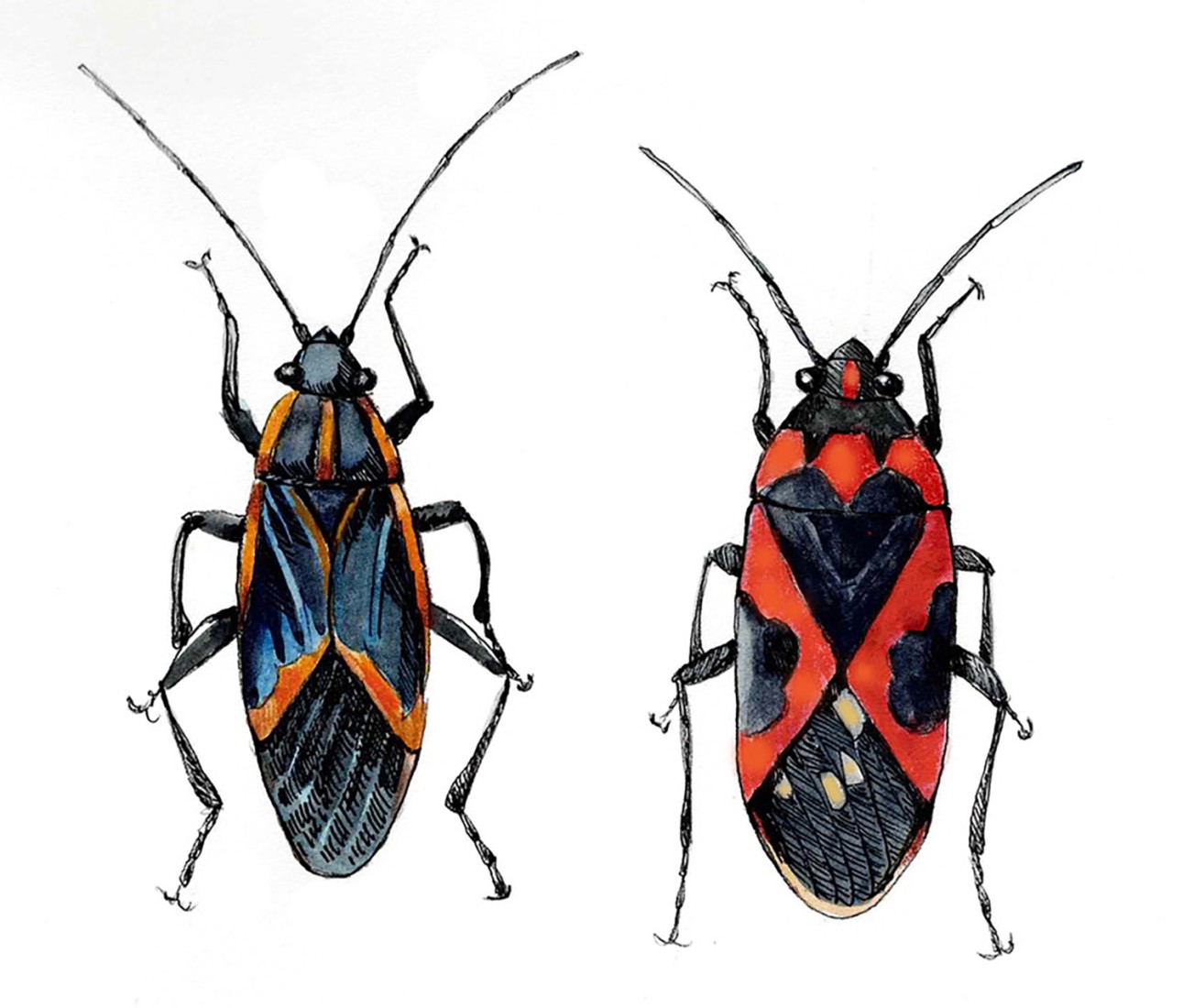
These oblong true bugs (order Hemiptera) are about the length of my thumbnail and are mostly black with orange-red margins around the body, a central orange-red line behind the head, and divergent orange-red lines marking the edges of the elytra (wing covers). It’s easy to confuse the boxelder bug with the small milkweed bug (Lygaeus kalmii), although the latter lacks the red margin at the back end and has a side-to-side red band behind its head rather than a central line.
Boxelder bugs usually get their nutrition from their namesake boxelder trees (Acer negundo), a common maple species. And although boxelder bugs typically live in the woods, many of us encounter them in autumn as they move indoors for hibernation. In natural habitats, boxelder bugs overwinter in bark crevices, hollow tree spaces, and fallen tree trunks. But the space behind your siding works just as well.
The life cycle of this bug begins as boxelder buds open in spring. Boxelder bugs emerge from hibernation and lay straw-colored eggs in bark crevices, on rocks, and on vegetation near their preferred host species. Gradually, the translucent egg casings reveal the red insects developing inside. Once hatched, nymphs have a strong preference for dining on boxelder seeds but will also eat leaves. The nymphs’ feeding distorts and discolors boxelder leaves; however, because these species have coevolved, the trees are resilient to the bugs’ feeding and suffer little damage.
Boxelder trees are dioecious; female trees produce all the seeds, and male trees produce only pollen. Boxelder bugs therefore tend to congregate on and under the female trees where seeds grow and accumulate. Even as the seeds ripen in late summer, boxelder bugs may still be feasting on seeds left on the ground from the previous season.
If there are not enough boxelder trees in a given neighborhood to satisfy the local boxelder bug appetite, the bugs will stray onto silver maple and ash and may even nosh on fruit trees or lilacs. One detailed study showed that boxelder bug diets can range beyond their preferred hosts to include 23 plant species, along with dead insects, bird droppings, and even other boxelder bugs.
Host trees and shrubs are unlikely to suffer permanent damage from the black-and-red horde unless already weakened by drought, fungal disease, or attacks by other herbivores.
Boxelder trees use a complex brew of chemicals to deter herbivores, and boxelder bugs have evolved to defeat the trees’ defenses. Some species, including the monarch butterfly, actually accumulate their host plants’ defensive chemicals and use those chemicals to defend themselves from predators. While scientists have not confirmed this is the case with boxelder bugs, one study has found that the bugs contain monoterpenes. Terpenes are volatile compounds responsible for the scents in many plants, including citrus fruits and pines. Terpenes can deter herbivory by repelling some insects and interfering with development and digestion in others.
Brightly colored insects – from monarch butterflies to hornets – suggest toxicity, a stinger, or at least a foul taste to would-be predators. Some completely harmless and potentially tasty insects, however, use bright colors to imitate toxic or unpalatable species and falsely advertise distastefulness, a process called Batesian mimicry. Boxelder bugs may well be mimics, but there has been little research to thoroughly investigate these common bugs as prey. They do not show up in dietary studies of birds, mammals, or invertebrates, although some field guides suggest spiders, preying mantids, and rodents eat boxelder bugs. One investigator reported that when cats try to eat the bugs, they end up spitting them out. (Interestingly, some authors cite work by Denson McLain and Donald Shure from Emory University as evidence that lizards find boxelder bugs unpalatable, but boxelder bugs are not even mentioned in McLain and Shure’s original paper, which focused on the superficially similar and apparently unpalatable white-crossed seed bug, Neacoryphus bicrucis. This seems to be a case of one article misquoting a study and other authors then repeating that mistaken information.)
Palatability aside, some sources suggest that boxelder bugs have a foul smell, despite belonging to the scentless plant bugs family (Rhopalidae). I had never noticed an odor, so one day in February I collected a dozen insects awakened by warmth in a Saint Michael’s College hallway where they fell victim to foot traffic. I ground the dead bugs in a mortar and asked colleagues and students to describe what if any smell emanated from them. The descriptors mentioned included leaves, woods, moss, earth, and pine, the latter scent likely explained by the previously mentioned terpenes. All described the odor as pleasant. I’d like to repeat the experiment with fresher, less dehydrated specimens to better assess the possibility of a stinky outcome.
Boxelder bugs, however, are little cause for concern. When they show up in my home, I use the glass-and-envelope approach to quickly capture the bugs and liberate them outside, preferably near a boxelder tree. As for my niece, I reassured her that she could expect twice annual visits from these colorful bugs as they enter in fall and emerge in spring – and no harm would come to her or her new home as a result.