
Black raspberries, along with raspberries and blackberries, are among the berries that grow on brambles in the Northeast. Also called blackcaps, black raspberries are the most shade tolerant and earliest ripening of the bunch. While wild raspberries are tart and jammy, and blackberries are bold and aromatic, black raspberries offer the best of both worlds, ranging from mouth-puckeringly sour to delightfully honeyed depending on their ripeness, genetics, and sun exposure. Too perishable for most supermarkets, black raspberries thrive in unmanaged thickets and neglected, liminal spaces throughout the Northeast.
Black raspberries (Rubus occidentalis) offer layered flavors with tangy notes of lemon balm, anise, and clove. They can be an acquired taste and tend toward the seedier, less domesticated side of the bramble spectrum. The mouth-puckering acidity of some black raspberries, akin to wild Sour Patch gummy candies, might appeal only to the berry connoisseur. But the darkest, ripest blackcaps balance that zingy flavor with a syrupy sweetness.
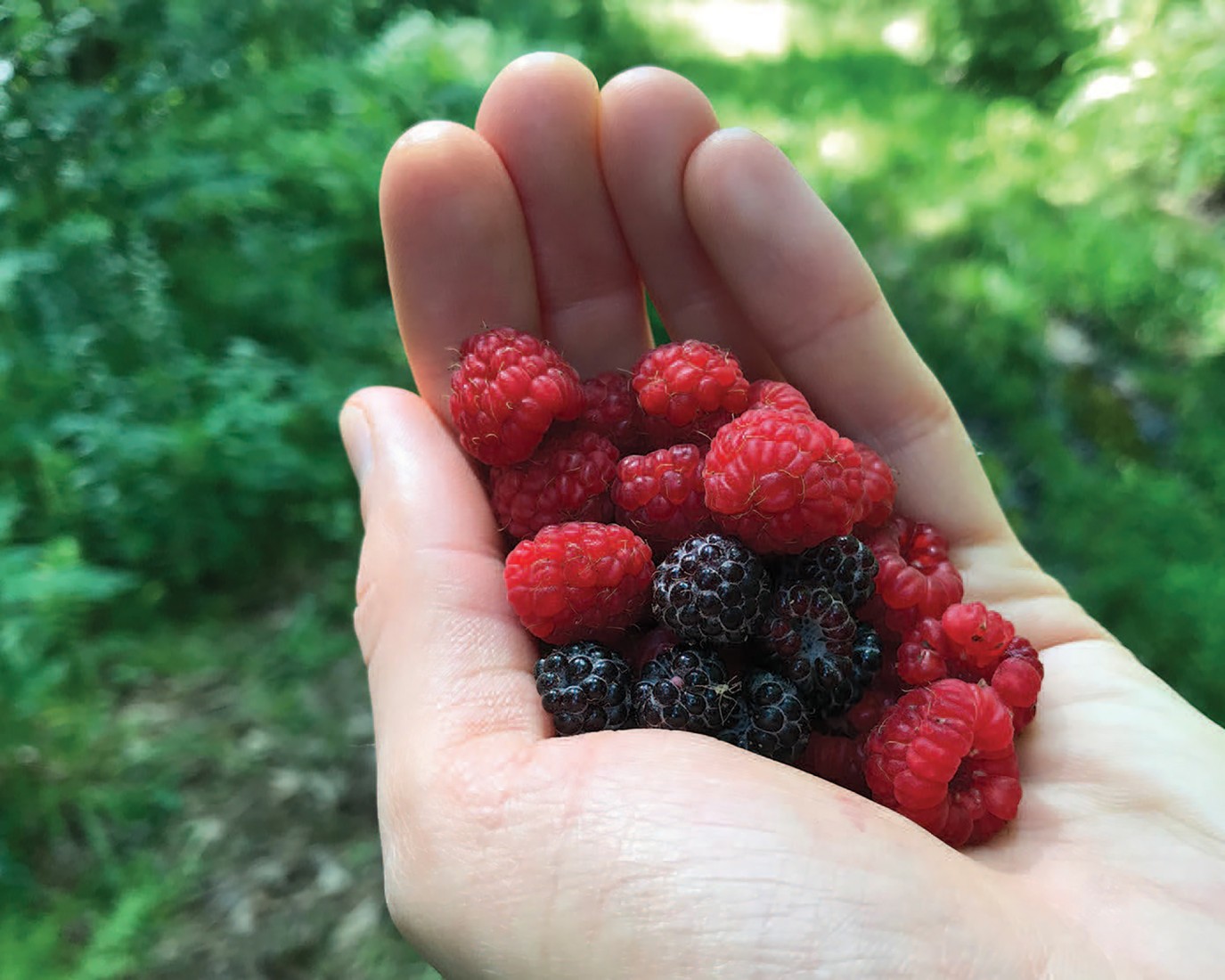
Black raspberries transition from leaf green to lipstick pink to ruby red before finally developing the deep purple to black hue that lends them their common names. When picked, the berries separate cleanly from the stem, leaving the white core, called a receptacle, on the bush. Harvested blackcaps, true to their name, have a hollow, stemless interior that makes it possible to adorn your fingertips with the fruit like miniature caps. In this way, they are similar to raspberries (R. idaeus), which are also hollow and easily squished.
By contrast, blackberries (R. allegheniensis) – black raspberry’s closest look-alike – retain the white to light green receptacle when picked, giving them a firmer, more solid texture and enhanced shelf life. Blackberries also tend to be longer and more robust than blackcaps, but shape and size can vary.
Near my home in northern Vermont, blackcaps reliably ripen in time for Independence Day. They are typically ready to pick at least a week before red raspberries and approximately a month before blackberries. In warmer summers, or more southerly parts of the Northeast, blackcaps may be mature by the summer solstice.
Like all true bramble berries (genus Rubus), black raspberries are composed of myriad drupelets, juicy bubbles that are miniature fruits in their own right. Each rounded, squishy drupelet contains a distinct seed. If conditions are suboptimal, some black raspberry drupelets may become white (often due to stifling heat or drought) or a stunted brown (a sign of excessive moisture or anthracnose fungal infection) and will likely taste bland or bitter.
Black raspberries grow on distinctive, thorny canes that arch elegantly downward toward the end of the season, sending new roots into the soil and expanding the perimeter of the patch. The canes have a whitish bloom, and primocanes – the first-year growths – start out a powdery blue-green before displaying striking purple hues to complement the fruit in their second year. Even after the fruits have passed, foragers can locate patches by these canes – and return the following summer in search of berries. Whether harvesting or simply scouting, long pants and sleeves help foragers avoid scratches from the sharp prickers that adorn most Rubus species.
Black raspberries are delicate and will quickly bruise and mold without careful handling and prompt refrigeration. Nothing beats the burst of flavor in a freshly picked blackcap, but for more than a few pints, the freezer is your friend. To freeze, rinse the berries and lay them in a single layer on a baking sheet with parchment for a quick initial freeze to avoid clumping. Once the black raspberries start to firm up (roughly an hour), and before freezer burn sets in, transfer your harvest to a freezer bag, seal well, and label for future use in smoothies, ice cream, jam, or simmered into your morning oatmeal.
Last July, my daughter and I stumbled upon an enormous patch of blackcaps behind her elementary school. We filled our bellies and baskets until the growls of a fast-moving thunderstorm sent us racing back to the car, our fingers sticky and wine-colored, the taste of summer lingering like candy on our tongues.
There are poisonous wild plants and mushrooms in the region, and foragers should only eat wild food they are able to identify with certainty.