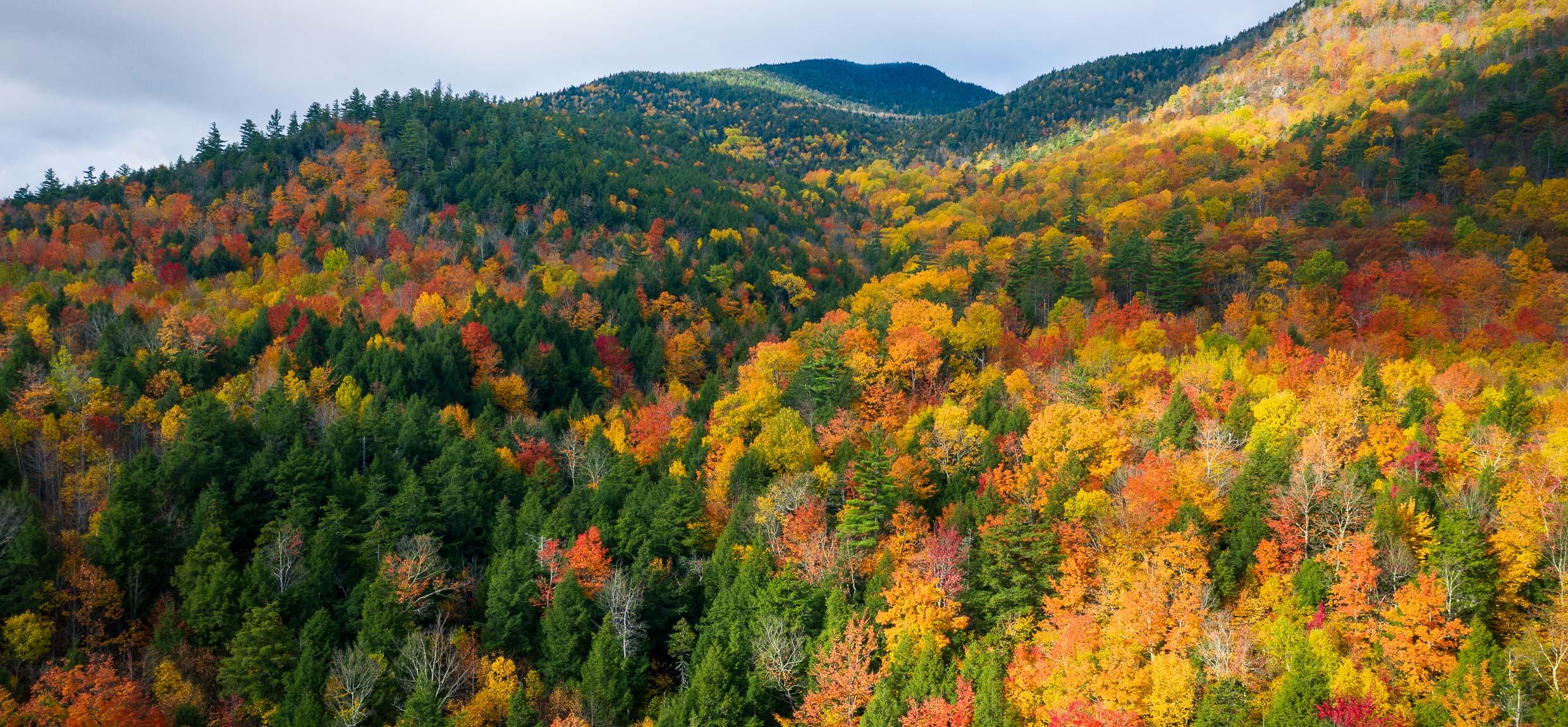

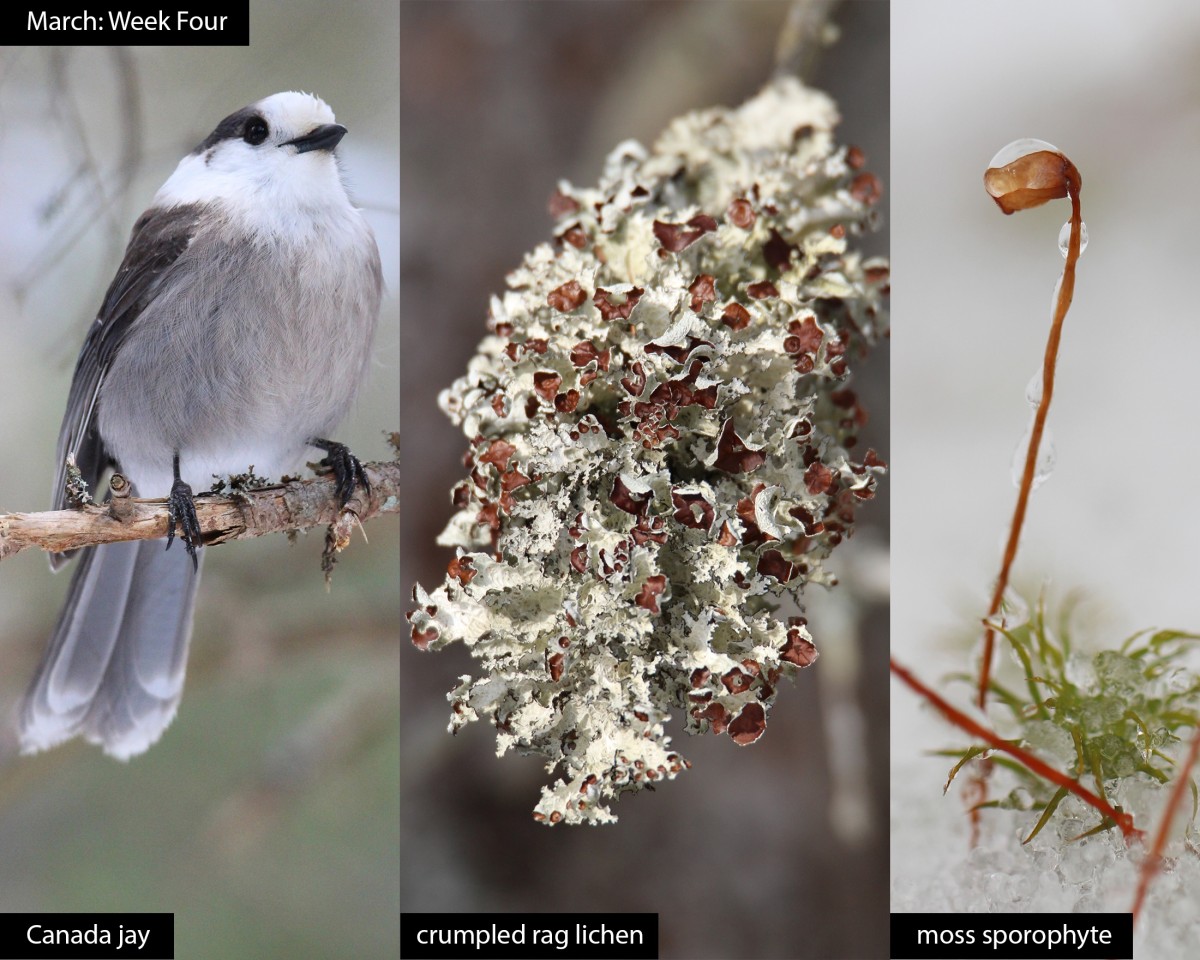
This week in the woods marks the middle of the breeding season for the gray jay, or Canada jay, which we find nearby in the Northeast Kingdom and White Mountains, including Mount Moosilauke. These corvids can nest so much earlier than many of our other songbirds and remain in their spruce-fir habitat through harsh winters in large part because of their practice of scatter caching. Using a specialized saliva that acts as both adhesive and preservative, gray jays store food in thousands of locations beneath bark and moss throughout their territory. Their omnivorous, opportunistic diet includes seeds, berries, insects, small animals (nestling birds among them), carrion, and even ticks engorged with moose blood. Humans have long known gray jays for their friendliness, inquisitiveness, and tameness. Also called whiskey jacks (an anglicization of the Algonquin or Cree Wisakedjak, meaning “prankster”), gorbies (derived from the Scots-Irish gorb, meaning “glutton” or “greedy animal”), and camp robbers, the bold birds often associate people with food and can feed out of open hands – or steal from campsites. Already at the southern edge of its range in northern Vermont and New Hampshire, the gray jay may retreat northward with climate change, as warmer temperatures cause food hoarded for winter to spoil more readily.
The bark- and wood-dwelling crumpled rag lichen shares the gray jay’s coniferous forest habitat and much of the bird’s northeastern range. Its lobes give it a rounded, “crumpled” appearance. Just as this lichen itself has an irregular and complex surface, so, too, does the bark that so many lichens reside upon, making for a microhabitat with many opportunities for attachment. The research of lichenologist Trevor Goward and others suggests that the diversity of lichens on any given tree can be expected to increase over time, with a disproportionate number of rare species restricted to very old trees. A single spruce can host more than twenty different lichen species, each occupying a different part of the tree.
Like the impending spring flowers, mosses do most of their growing between when the snow melts and before the forest canopy closes and blocks off sunlight and rainfall. As the spring melt continues, old moss sporophytes may jut above the sinking snow line – as with this one. (It likely belongs to a haircap moss species, one of multiple our region has in the Polytrichum genus.) Made up of a slender stalk (or seta) and capsule, the fruiting bodies develop each summer upon fertilization. Common haircap moss spore capsules contain an average of 65 million spores and can have pressure close to that of truck tires. This capsule has long since released its cap and sent its spores to the wind.
What have you noticed in the woods this week? Submit a recent photo for possible inclusion in our monthly online Reader Photo Gallery.
Discussion *