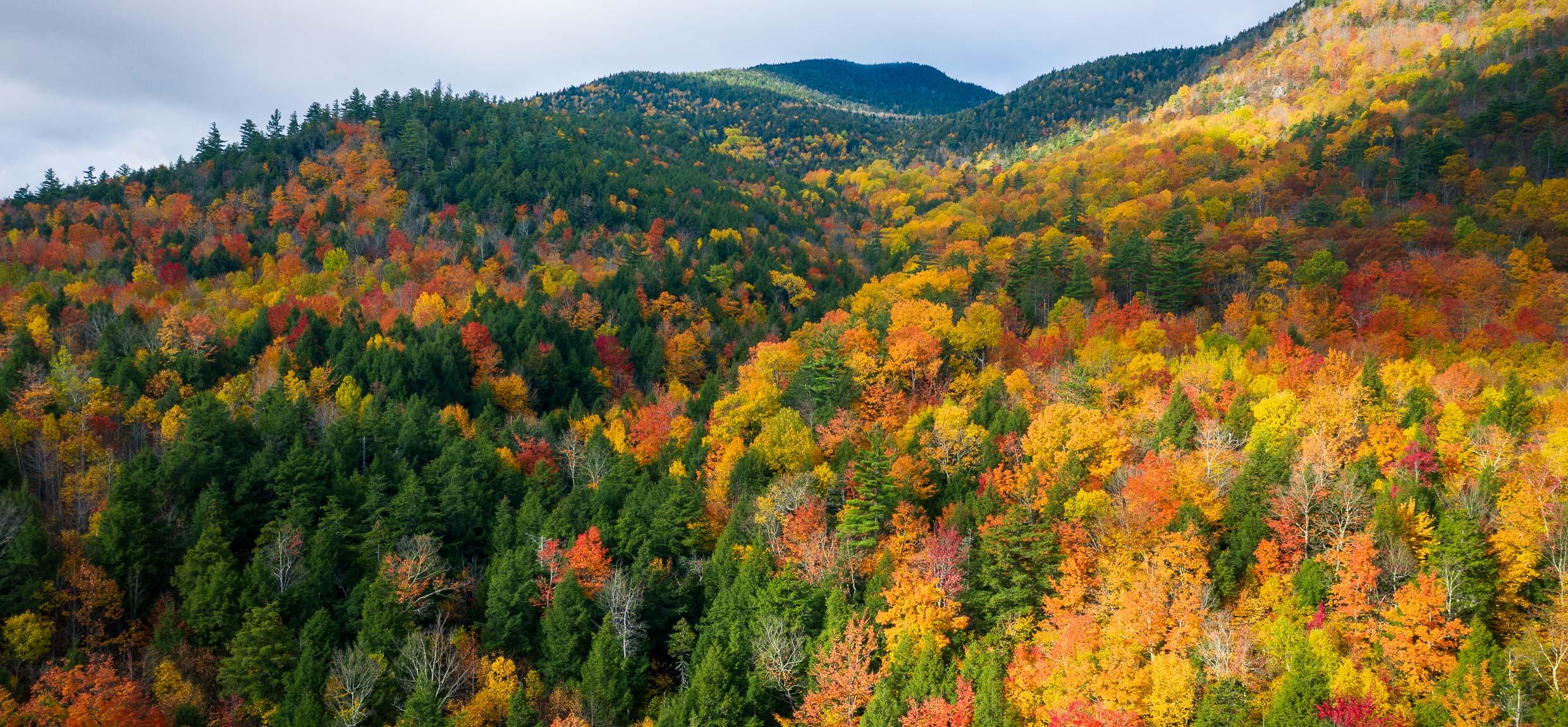

In previous issues, we have explained the origins of scientific names behind pine and spruce species. Here, we offer a look behind the monikers of balsam fir, eastern hemlock, and eastern larch (also called tamarack) – all members of the family Pinaceae – and northern white-cedar, of the family Cupressaceae.
English botanist Philip Miller (1691–1771) strongly disagreed with renowned taxonomist Carl Linnaeus’s decision to combine pines, spruces, firs, hemlocks, and larches under a single genus name: Pinus. This was too much lumping for Miller, and in his 1768 edition of The Gardeners Dictionary, he divided these conifers into three genera: Pinus for pines; Abies for spruces, firs, and hemlocks; and Larix for larches. He noted that “Tournefort [French botanist, 1656–1708] and all former botanists have separated them by the form of their leaves, those of Abies coming out single from the branches, those of the Pine coming out by two, three, or five out of each sheath, and those of this genus [Larix] arising in clusters in the bottom, but are spread above like a painter’s pencil.”
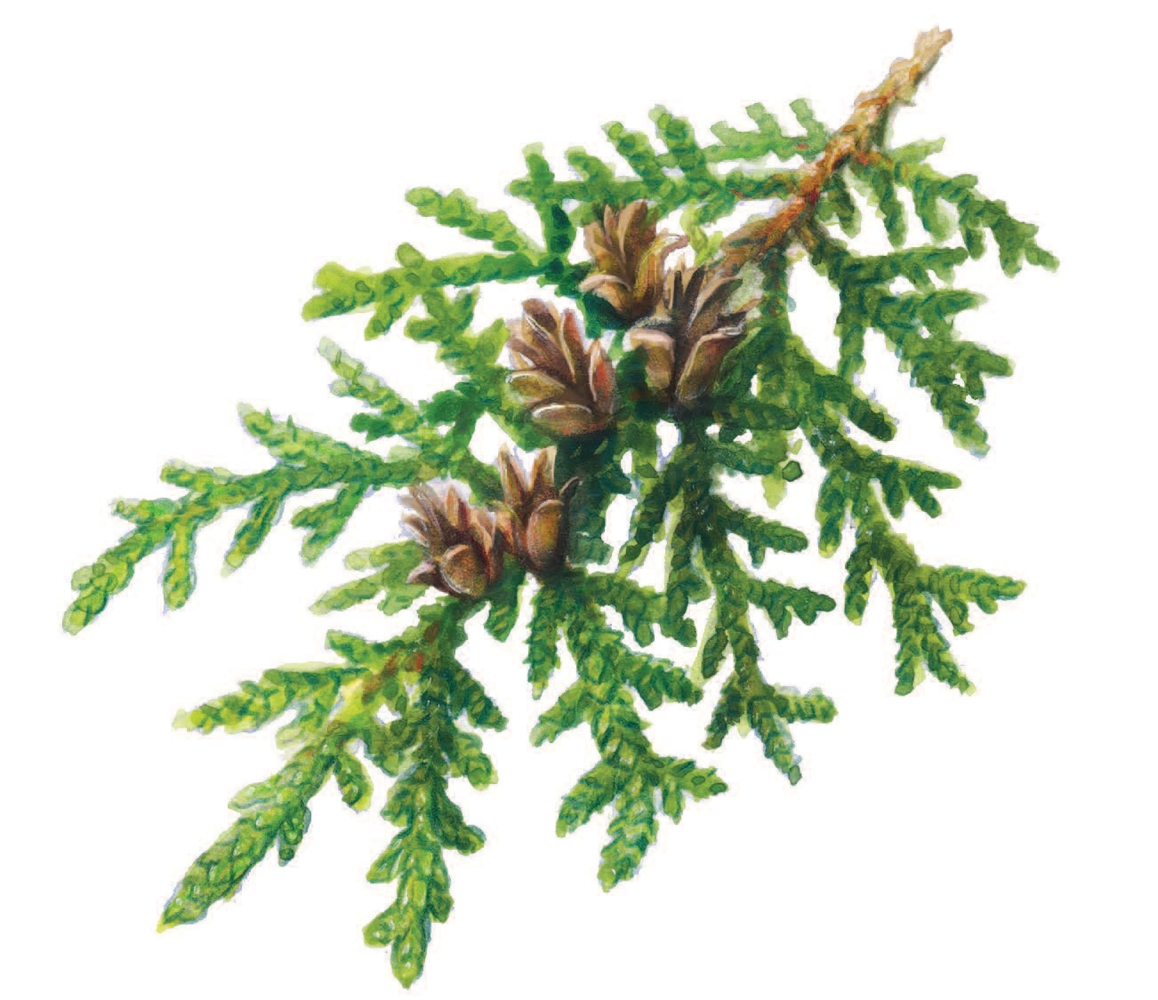
Northern White-cedar (Thuja occidentalis)
Northern white-cedar, also called arborvitae (“tree of life”), falls not within the Pinaceae family, but is a member of the Cupressaceae, or cypress, family. The genus name Thuja is a Latin term derived from a Greek name for a resinous, fragrant-wooded tree. This Greek name is attributed to Greek philosopher-botanist Theophrastus, a successor of Aristotle. Occidentalis means “western” or “of the west” (relative to the continent of Europe, referring to species found in the Americas). Linnaeus receives recognition for both names, because the northern white-cedar appears as Thuja occidentalis as early as the 1753 edition of Species Plantarum. Despite Linnaeus’s early work, during the past few centuries, this species has had more than 30 other Latin binomial names attached to it. These include Cupressus arborvitae, a name given to this species in 1810 by the Italian botanist and physician Ottaviano Targioni Tozzetti (1755–1829), which references both the tree’s family name and one of the common names for the white-cedar. However, Linnaeus remains the first to provide a Latin binomial for this species, and so the name Thuja occidentalis abides.
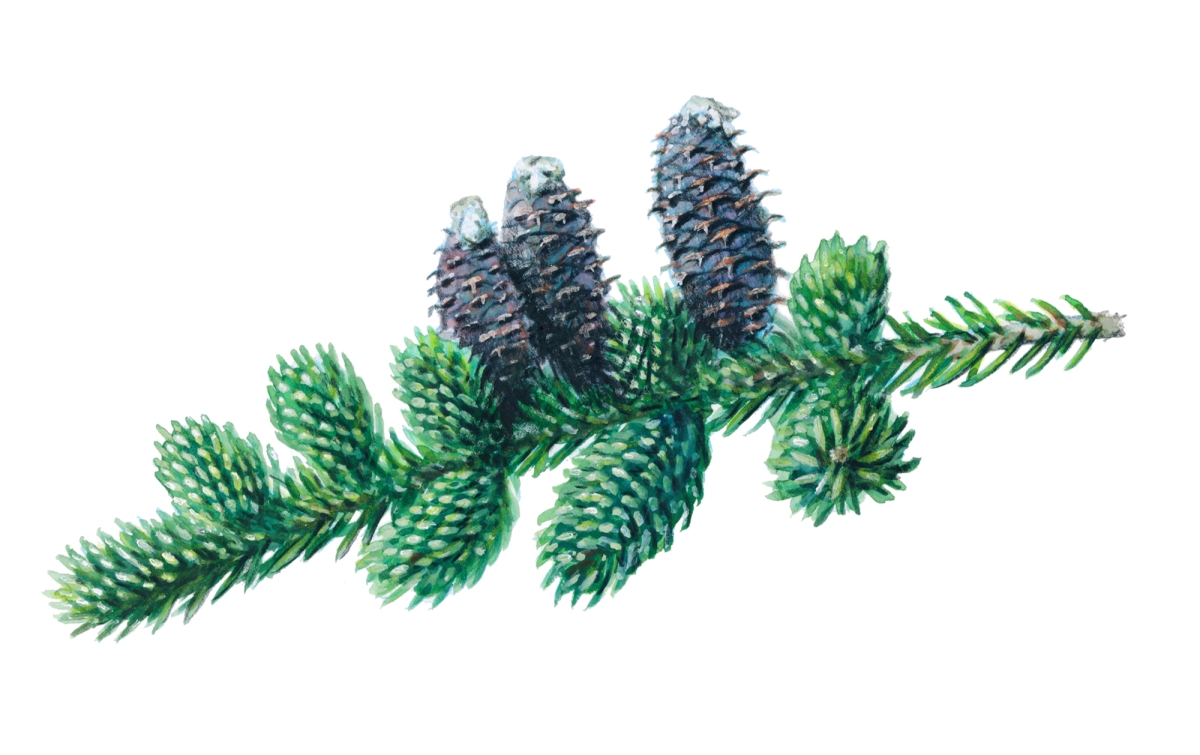
Balsam Fir (Abies balsamea)
The genus name for fir species, Abies, is a classic Latin name for European fir trees used by Pliny the Elder around 77 A.D. In his 1768 edition of The Gardeners Dictionary, Miller noted that Abies was derived from the Latin word abeo, which he translated as “to extend or advance.” He noted that “others say it is derived from abeo, [meaning] to go away, because the bark splits, and … falls away, or is broken off easily.”
Miller had established Abies as a genus name in his 1754 edition of The Gardeners Dictionary. He described Abies species as being “Fir-trees,” and noted, “The Characters of the Tree are: It is ever-green; the Leaves are single…
The Difference between these and the Pines is, the latter having two or more Leaves produced out of each Sheath or Cover.” He was not yet using Latin binomials in 1754, but he listed several Abies species using polynomial phrases for each. His entry for balsam fir reads “ABIES taxi foliis, odora, Basami Gileadensis,” which translates to “Fir-tree with yew-like leaves, fragrant, Balm of Gilead.”
Linnaeus, the father of modern taxonomy and instigator of the binomial naming system, gets the credit for the specific epithet balsamea because that name appears in print in his 1753 edition of Species Plantarum. Like the word balsam in the tree’s common name, balsamea refers to the tree’s resin. As noted earlier, Linnaeus combined the pines, firs, spruces, and hemlocks under the genus name Pinus, and so balsamea debuted in the binomial for balsam fir under the name Pinus balsamea.
It would be up to Miller to assemble balsam fir’s final scientific name, Abies balsamea, which he did in the 1768 edition of The Gardeners Dictionary. He pulled balsam fir and its specific epithet highlighting the fragrant resin out of Linnaeus’s overstuffed Pinus genus and put it into his genus for single-needled firs, spruces, and hemlocks, listing the species as ABIES (Balsamea), that is, Abies balsamea.
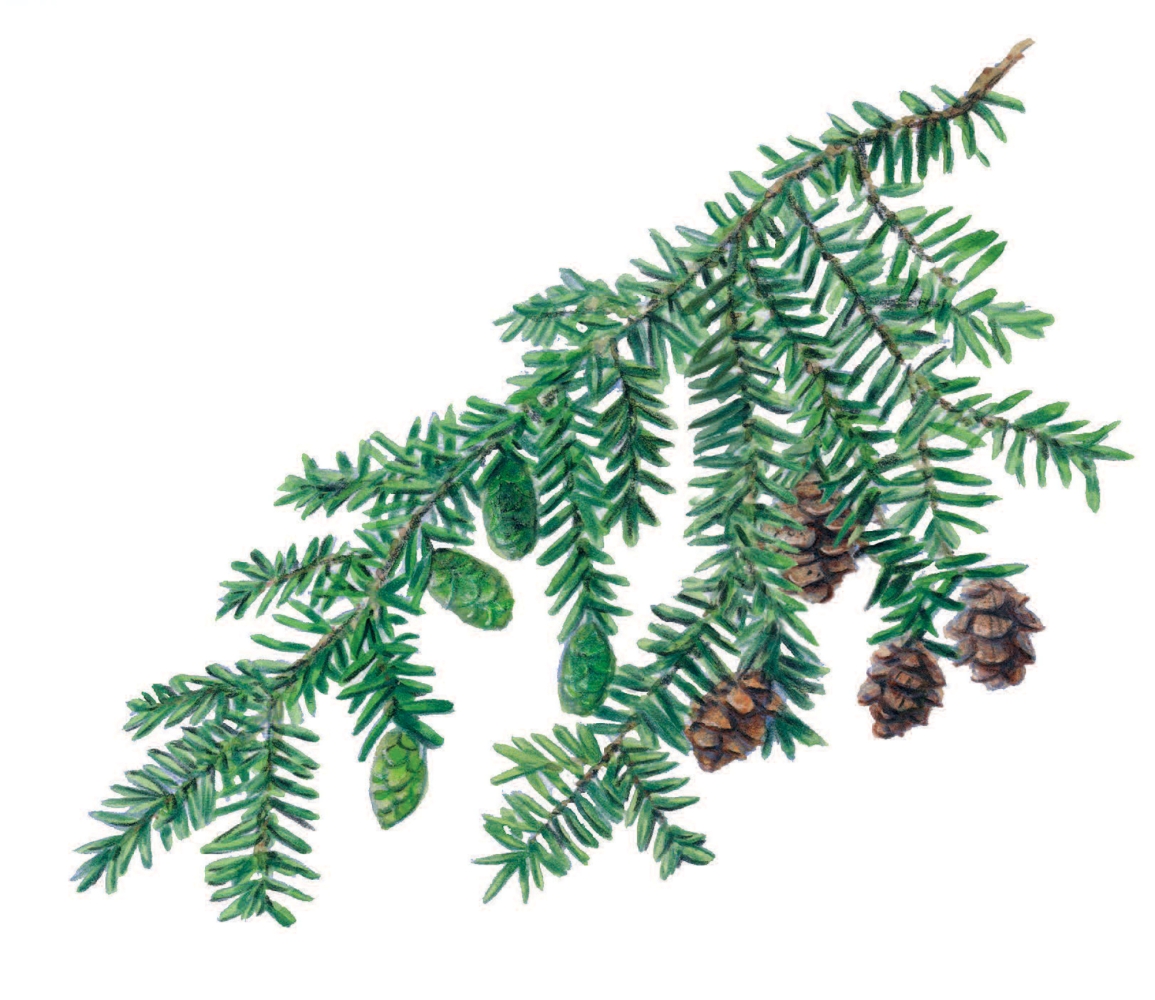
Eastern Hemlock (Tsuga canadensis)
When it comes to the history of its genus names, the eastern hemlock’s taxonomic passport is well stamped. Linnaeus classified this species as a pine (Pinus) in 1763, Miller named it a fir (Abies) in 1768, and German naturalist Johann Link considered it a spruce (Picea) in 1842. Finally, in 1847, Austrian botanist Stephan Ladislaus Endlicher (1804–1849), director of the Botanical Garden at the University of Vienna, applied the name Tsuga to hemlocks in his text, Synopsis Coniferarum. Tsuga is derived from the Japanese common name for “hemlock.” Endlicher was a serious lumper at the genus level, placing pines, spruces, firs, hemlocks, and larches (tamaracks) in the genus Pinus. But he then subdivided the genus into sectio, or subgenera, and he split the hemlocks from the firs and spruces by placing the eastern hemlock in “Sectio 1. TSUGA,” the firs in “Sectio II. ABIES,” and the spruces in “Section III. PICEA.”
In 1855, French botanist and conifer specialist Élie-Abel Carrière (1818–1896) completed the taxonomic task of separating the hemlocks from the firs and spruces. He elevated hemlocks from subgenus to genus in his Traité Géneral des Coniferes (General Treaty of Conifers), creating the genus Tsuga.
Charles Jenkins (1865–1951), founder of the Hemlock Arboretum in Germantown, Pennsylvania, summed up the international nature of taxonomy in 1933 in his Hemlock Arboretum Bulletin Number 3: “Thus, this important section of our North American conifers bears a Japanese name, given by an Austrian, confirmed by a Frenchman, and now accepted by scientists generally.”
The specific epithet for hemlock, canadensis, means “of Canada,” although more than half of the species’ range lies in today’s northeastern United States. It is likely that at the time of its naming, the extent of the hemlock’s distribution was not known to European taxonomists.
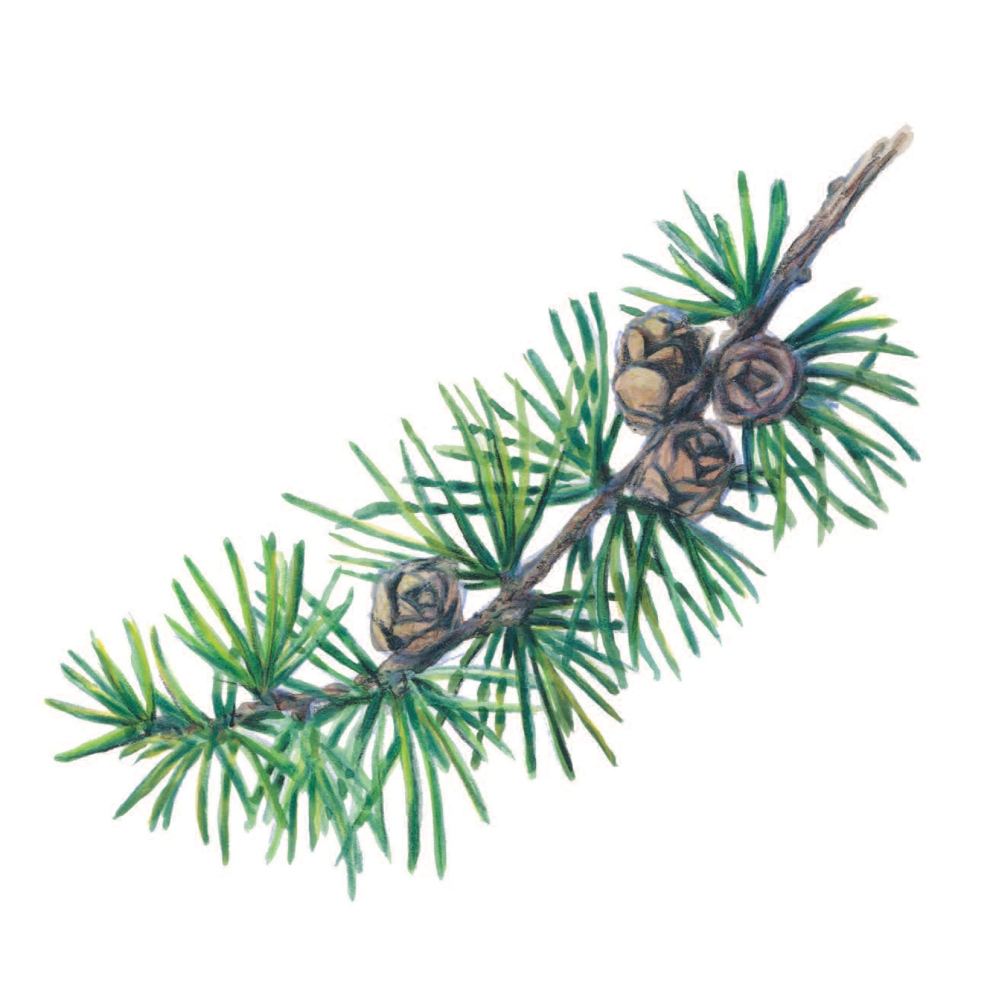
Eastern Larch or Tamarack (Larix laricina)
Larix is the classical Latin name for larch, and its use as a genus name is attributed to Miller. In his description of the “Larch-tree” in the 1754 edition of his Gardeners Dictionary, Miller distinguished the larches from other conifers by foliage characteristics, noting that the “leaves (which are long and narrow) are produced out of little Tubercles, in the form of a Painter’s Pencil.”
Miller knew about America’s eastern larch, or tamarack, but viewed it as a “Variet[y]… from North America” and not as a separate species distinct from the European larch; he listed it in his Gardeners Dictionary under the name LARIX Orientalis. German botanist Johann Philipp Du Roi (1741–1785) gets credit for differentiating eastern larch as its own species, giving it the specific epithet laricina, meaning “larch-like.” This label seems to show a lack of imagination, as the Latin binomial Larix laricina would translate as “larch-like larch.” However, the name was less redundant when Du Roi first used it in his 1771 dissertation, Observationes Botanica, as he followed Linnaeus’s lumping inclinations, mashing the pines and the larches together in the same genus. Du Roi described a distinct eastern larch species as “PINUS (Laricina),” a name meaning “larch-like pine.” (His English common name for this tree was “New-Foundland black Larch Tree.”)
Despite Du Roi’s placement of tamarack in the pine genus, it was clear to many botanists that it did not belong there, and it did not remain a Pinus species for very long. In 1803, French botanist André Michaux followed Miller’s lead and listed the eastern larch as a Larix species in his Flora Boreali-americana (Plants of Northern America). It made sense to move the species out of the Pinus genus, but perhaps Michaux was not aware of Du Roi’s work because he provided a new specific epithet, americana, to go with the placement of the species in the Larix genus. Although Larix laricina replaced Larix americana, due to the rules of priority, the common name of “American larch” persists.