
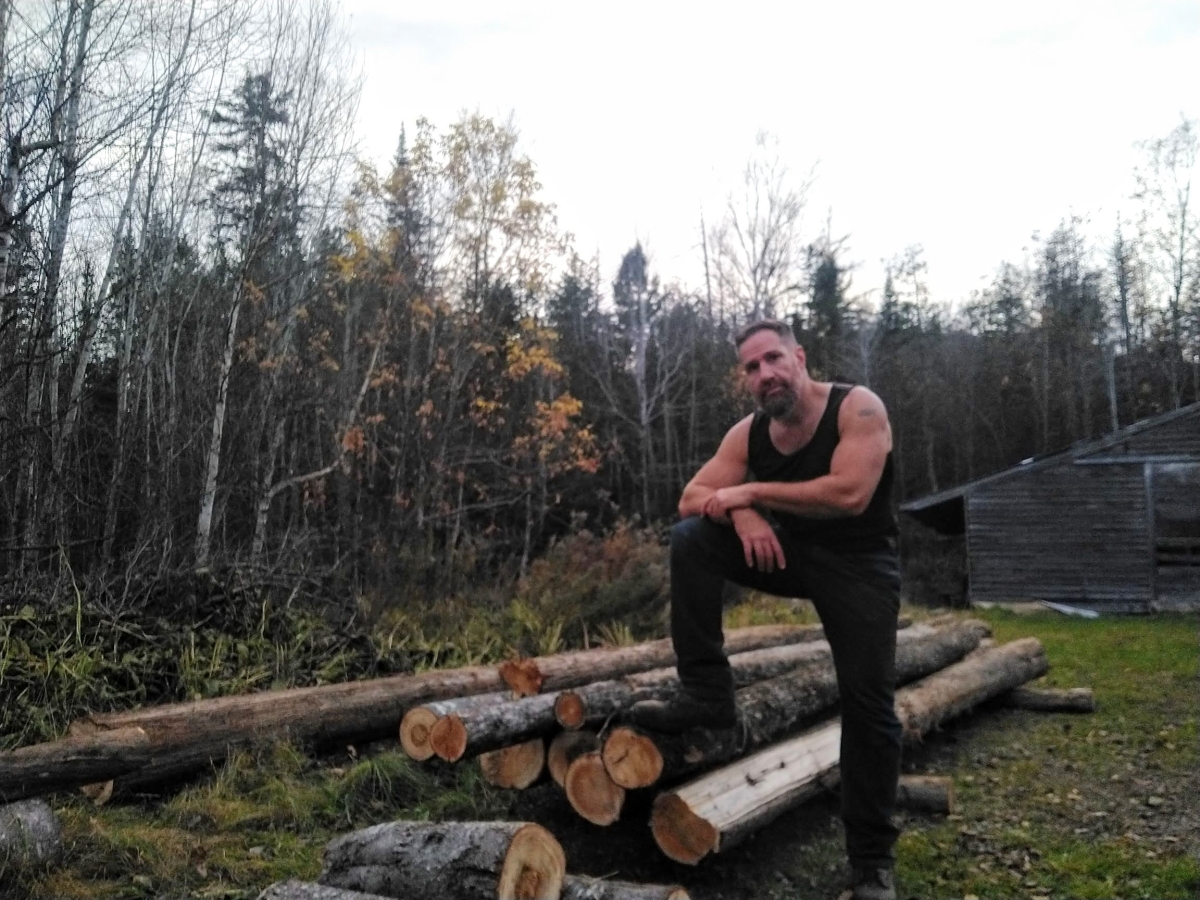
Ralph DiCosimo never imagined he’d move so far north. He spent his childhood in an apartment in the Bronx, and another two decades on a suburban lot on Long Island, but he always dreamed of owning a property in the woods. When he learned about homesteading in his 30s, he realized that was what he wanted to do. DiCosimo wanted land, and he wanted a lot of it. In 2013, Ralph and his wife, Jillian, began looking for a woodlot in mid-coast Maine, but they couldn’t find the amount of acreage they wanted there for a price they could afford. Their attention moved north, all the way to Maine’s northernmost Aroostook County, and in 2014, they bought 117 acres in Oakfield, about 100 miles north of Bangor.
Over the course of the next five years, the DiCosimos purchased contiguous property, and they now own 290 acres – a fact that sometimes seems unbelievable to DiCosimo. “Still, when I go out to the top of the knoll and look over the woods, I have to pinch myself,” he said. “Growing up as a city kid, I thought only the richest of the rich could have land like this. It is beyond anything I thought could be achieved – it feels like I’ve done the impossible.”
DiCosimo served four years in the Marine Corps, then went to work for the New York Police Department in Manhattan for seven years. After 9/11 he was ready to retreat from the city, so he relocated to Long Island and a smaller police department where he spent 19 years. He and his family – Jillian and their 10 children – weathered the beginning of the pandemic from Long Island. In 2021, he retired from police work at the age of 50. DiCosimo had visited the Maine property regularly since purchasing it, but the year he retired, he and Jillian packed up their lives and their children – then between the ages of 7 months and 20 years old – and made the move up to Oakfield. “It was quite something when we left,” he said, laughing. “We had a U-Haul and a 15-passenger van, and a whole procession of cars leaving New York – everything packed full of kids, dogs, all our things.”
Red Bridge Farm is down in the valley on the eastern branch of the Mattawamkeag River. The namesake bridge was replaced with a concrete-and-steel one in the 1960s, but locals still know the property by this name, and DiCosimo was partial to keeping it. There are 47 acres of low wetlands that steeply rise to rocky uplands. In addition to the riverside wetlands, there’s a slowly expanding and constantly changing beaver meadow, currently about 9 acres. “You just can’t outwork them,” DiCosimo said. “I used to see [beavers] as an intrusion and now I just try to be like, ‘They’re a part of God’s creation, and they’ll do what they do’ and make peace with it.”
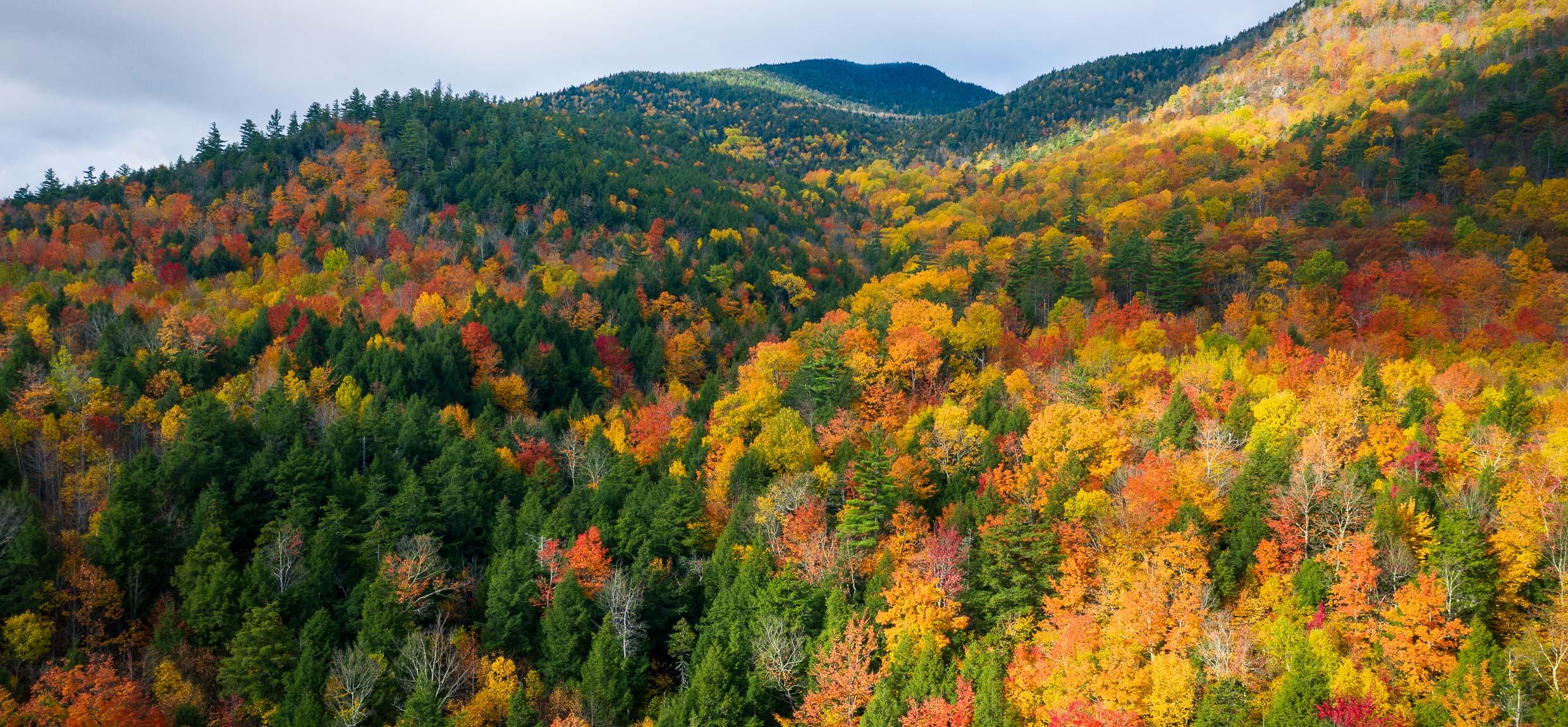
The uplands are almost entirely forested, with 112 acres of hardwoods, 107 acres of mixed woods, and about 3 acres of mature softwoods on a rocky hilltop. Another 10 acres were kept as hayfield by the previous owners and are now growing in with black cherry, poplar, and other early successional species. Much of the woods were cut in the past 10 to 20 years, which helped bring down the cost of the land but means that DiCosimo will be waiting a while before his next harvest. He’s fine with that, as it gives him time to learn.
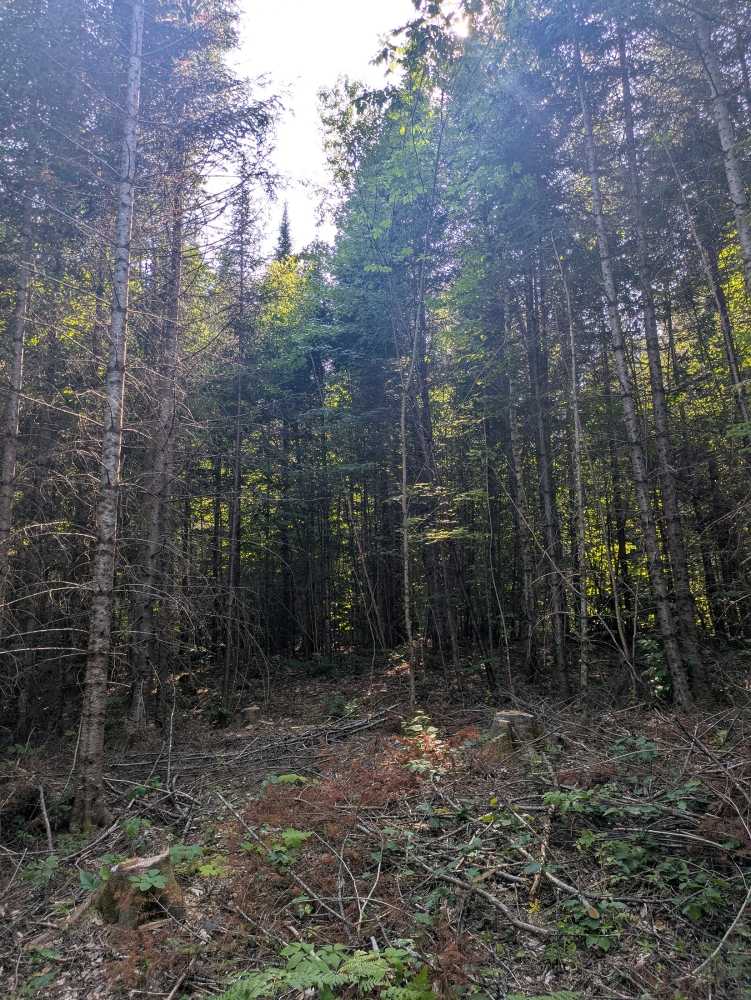
“One of the first things I did was hire a forester and develop a forest management plan,” DiCosimo said. The plan includes management recommendations for each stand type on the property. For most spots on the property, these include crop tree releases for the healthier and favored hardwoods, precommercial thinnings, and waiting 5 to 10 years before considering a commercial harvest.
DiCosimo’s priority is the diversity, health, and beauty of the land, and he eventually hopes to make some income from it by selling sawlogs and potentially getting into specialty milling down the line. He’s currently focused on the growth and regeneration of trees that he wants – especially red oak, sugar maple, and yellow birch – by removing dying beech and old cedars and thinning out species such as balsam fir and poplar. He’s also working on reclaiming old skid trails and getting them in working condition – both for recreational use and for future harvests. Some neighbors ride horses on the trails, and Jillian would like to do this in the future, too. Ralph has planned crop tree releases around approximately a dozen red oaks to open the canopy and give them a better shot at success. He also has started some white oaks from acorns; there are now about 50 1-foot-high white oak saplings that he’s excited to watch grow.
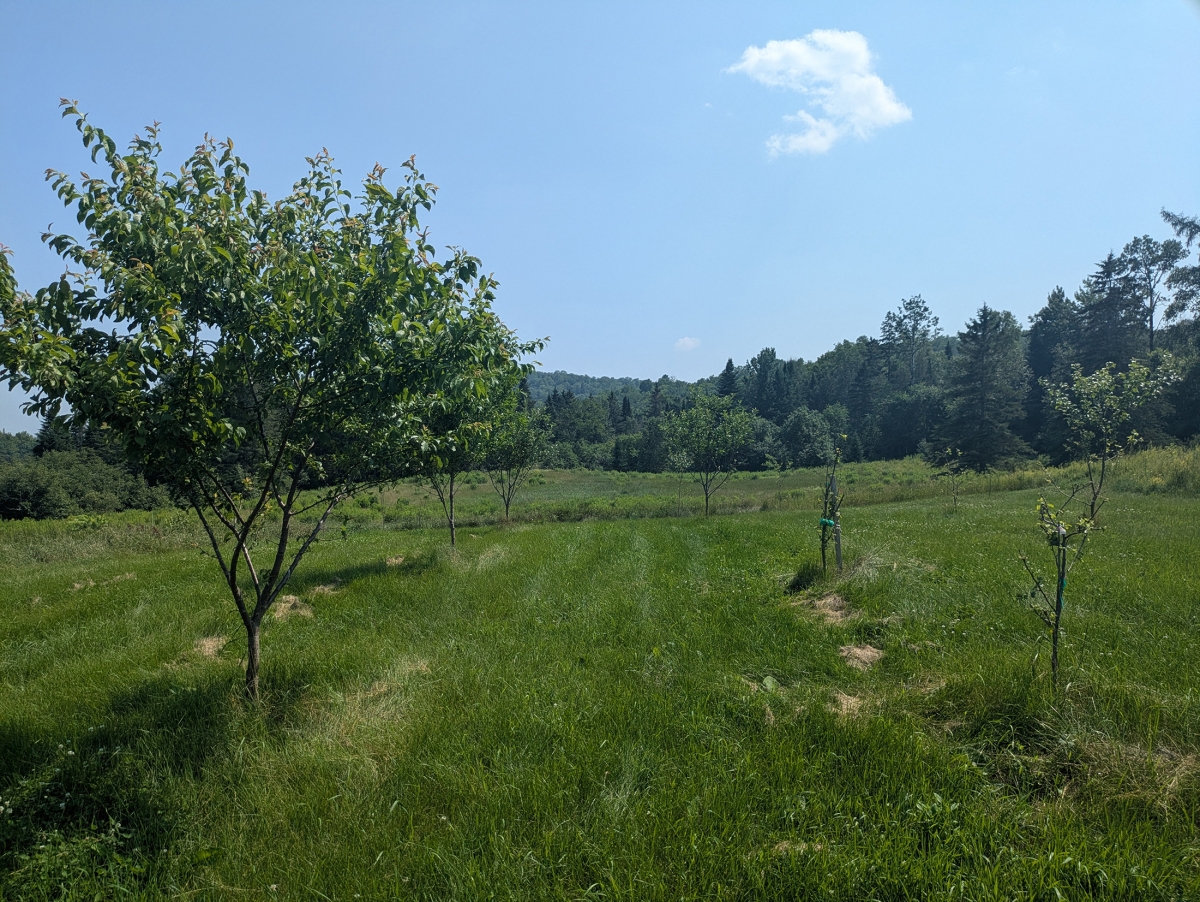
The family dabbled in keeping chickens and maintaining a garden during their first years in Maine but has since decided to focus on the woodlot and an old apple orchard on the land. Last year, DiCosimo released the apple trees from the forest that had grown up around the orchard, hoping with more space they’ll produce more fruit. During the past several years, he’s added about 40 fruit and nut trees to the existing apple trees in the orchard: a mix of apple, pear, plum, and black walnut trees, and a few hybrid chestnuts to see how they fare. The pears died in the deep cold this past winter, despite supposedly being hardy enough for zone 4, but DiCosimo has noticed a colder microclimate on his property. All his other plantings are still hanging on, and he looks forward to the trial-and-error process of seeing what is best suited to grow on this land.
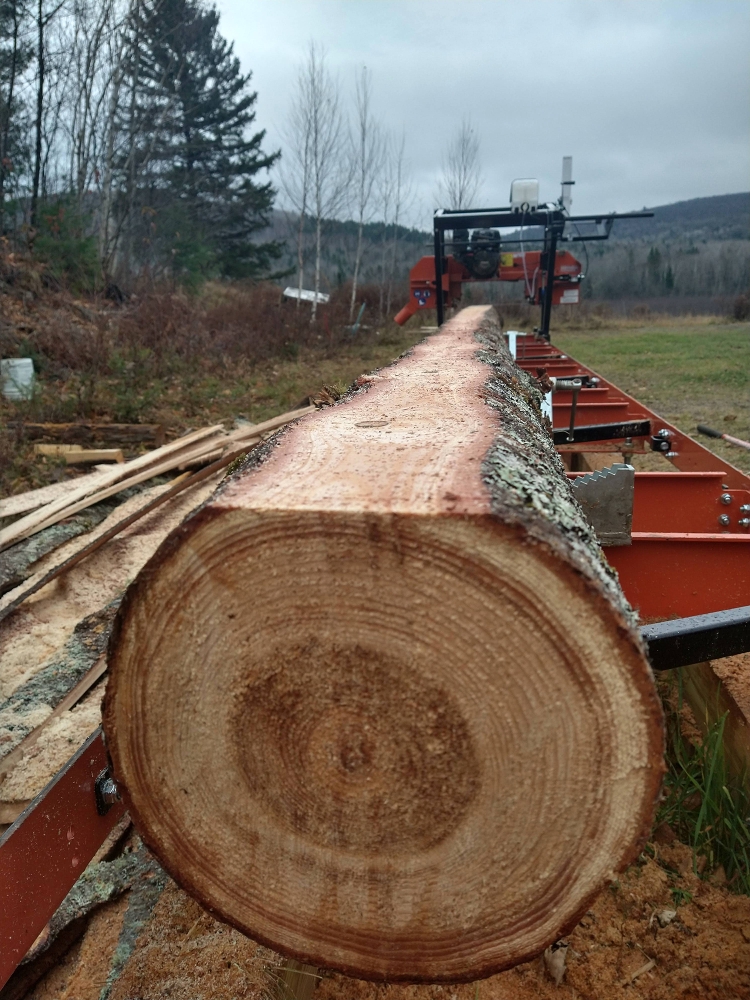
In 2024, DiCosimo bought a portable sawmill. Much of the fir and cedar he’s removing is large enough to mill; he’s built two woodsheds, an accessible ramp for his elderly mother who lives with the family, and he’s currently working on an art studio for one of his daughters. Anything too small becomes firewood for the wood boiler and two woodstoves they use to heat the house. He wants time to develop his milling skills before selling lumber but is interested in eventually generating income from the mill. “Until moving up here, I never even knew that a regular person could own and operate a sawmill,” DiCosimo said. “I’m still just a rookie.”
He has learned by being involved in his community and is an active member of Maine Woodland Owners. He particularly likes the forestry fireside chats hosted by Bob Seymour and Jess Leahy and the annual Forestry Field Days held each September. He’s also taken landowner classes with his district forester, Lauren Ouellette. He meets people, asks questions, and watches any lectures he can find online. “I really just listen to other people who have been at this a lot longer than me,” DiCosimo said. “I think the most important thing is having a teachable spirit.” Part of his learning process, he said, has been reading Northern Woodlands magazines, and he follows a few foresters who have an online presence; he particularly likes Ethan Tapper’s and Zach Lowry’s (The Timberland Investor) YouTube platforms.
DiCosimo isn’t shy about his journey to learn more, sharing that he used to think a healthy forest meant no understory and huge trees, evenly spaced and parklike. Now, he manages for age class diversity, leaves snags and deadwood, and thinks about the habitat value that comes with creating complexity. There’s no shortage of wildlife on the property, including moose, deer, foxes, fishers, and an occasional coyote. He accesses hard-to-reach areas of his property with his Argo, an amphibious ATV made in Canada that has eight wheels and allows him to get through densely overgrown skid trails. Since clearing the brush from several of these trails, he has noticed more animal sign on them – even bear scat recently – and is amazed to see wildlife also using trails to access distant reaches of the land.
With eight kids still at home and his mother to care for, DiCosimo is happy to take managing his family’s nearly 300 acres one day at a time and to learn as much as he can as he plans for the future. Eventually he’d like to see his orchard and timber resources grow and to be able to hand down the land to his children. “I want to see the continued health and beauty of the land – and do my part to be able to share that with my family,” DiCosimo said. “I love how the trees and their lifespans remind us that we’re on the earth for a relatively short time. Despite being such a small part, we can still do big things to make life better for the next generation. I feel like it’s on my watch to care for these woods and that is a great blessing and privilege.”