
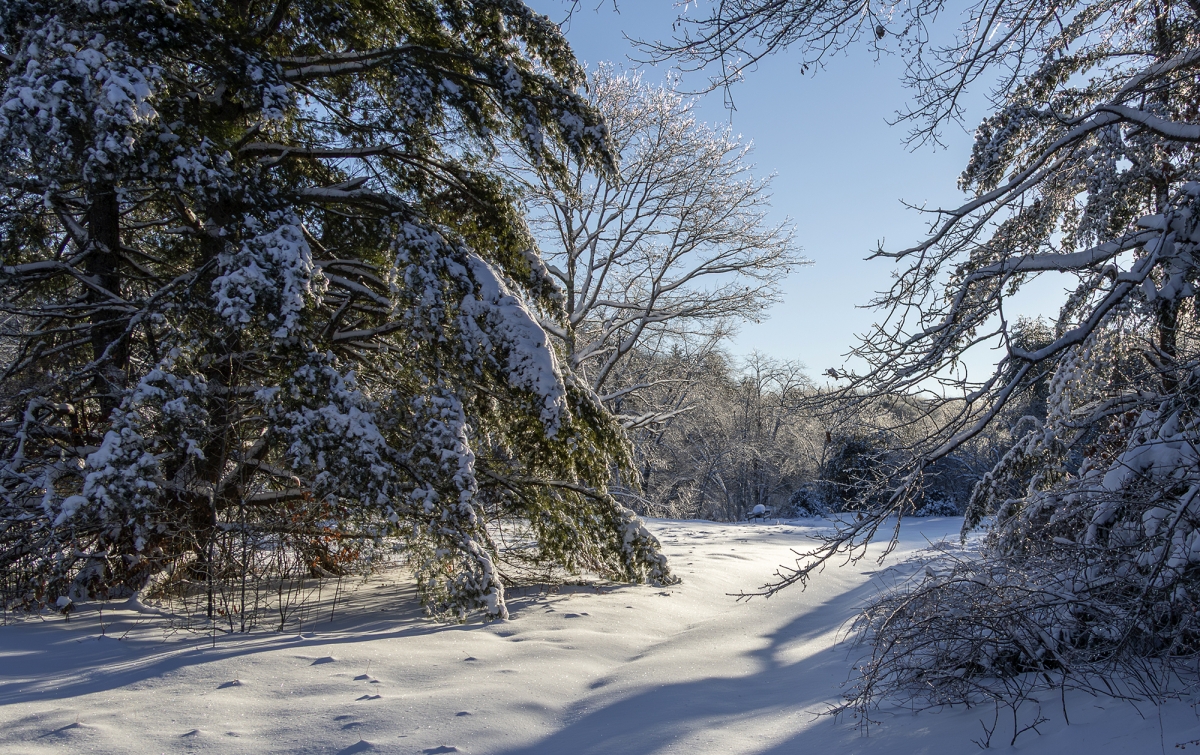
The winter snowpack – defined as the accumulation of snow on the ground that persists through winter – plays important climatological, ecological, and economic roles in northern temperate regions of North America. Widespread snow cover can cool local and regional areas as the white surface of the snow reflects solar radiation. The snowpack also provides an insulating layer that protects plant roots, seedlings, and shallow subterranean animals and can keep soil water in its liquid (and available) form. Additionally, the snowpack is important for numerous snow-adapted animals such as Canada lynx and snowshoe hare and, on the human side, can be essential for winter recreation and rural economies. Warming winters have led to reduced snow cover, shorter snow seasons, and more winter precipitation falling as rain instead of snow. These shifts disrupt water cycles, reduce snow-dependent habitat, and increase vulnerability to soil freezing, root death, and erosion.
An article published in July in the journal Ecosphere explores how forest management can help protect snow cover in the face of climate change, particularly in temperate forests of the northeastern United States. The authors of the article, titled “Snow refugia: Managing temperate forest canopies to maintain winter conditions,” posit that variation in forest canopy structure can significantly influence snowpack conditions – including how much snow accumulates, how long it lasts, and its quality (texture and density) – and that management practices could help create “snow refugia,” or areas where snow cover is buffered from warming trends.
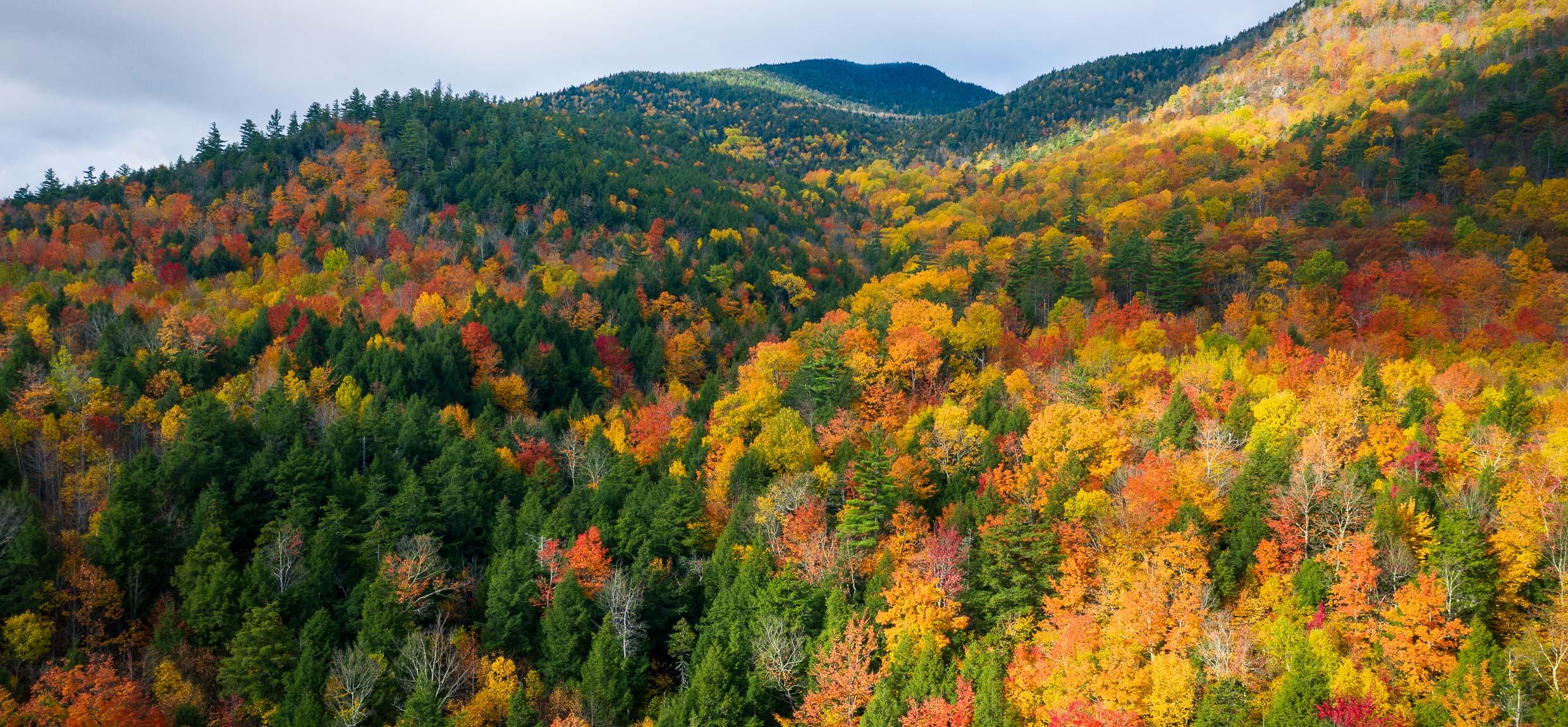
To guide their work, the authors generated a conceptual model examining the ways in which a forest’s dormant season canopy cover (DSCC) can impact snowpack. Forests with closed dormant season (winter) canopies, including those in pine or spruce forests, may effectively protect an existing snowpack from solar radiation and wind-driven sublimation, but they also reduce the total snowpack depth by intercepting snow before it hits the ground. Deciduous forests, with their open DSCC, generally allow more snow to reach the ground, but offer less protection of the snowpack.
The authors proposed that there is a “sweet spot” in canopy cover – an intermediate range, or “medium DSCC” – that provides optimal balance by allowing sufficient snow to accumulate while still offering some protection against melting. These medium DSCC areas are typically found in mixed coniferous/deciduous forests.
To test their idea, the researchers studied snowpack at 44 sites in three forested regions across Maine and New Hampshire. They categorized sites into low, medium, and high DSCC and measured snow depth and persistence.
Their findings supported the prediction that medium DSCC sites consistently had the deepest and most persistent snowpacks. In contrast, low DSCC sites (open or recently harvested areas) accumulated snow quickly but lost it fast, while high DSCC sites (dense conifer forests) had less snow accumulation due to interception, although they generally retained snow longer. In one study area (Old Town, Maine), however, medium DSCC areas delayed the timing of peak snowpack by up to a month compared to high DSCC forests, likely offering more stable soil conditions and better wildlife habitat.
Forest managers can potentially enhance snow refugia by promoting or maintaining medium DSCC structures. This might include silvicultural practices, such as selective harvesting or shelter-wood cuts, that balance tree density and species composition. The authors stress that these interventions are especially feasible in the Northeast, where mixed forests are widespread and land stewards are already managing for a warming climate.
The authors call for more detailed monitoring, experimentation, and collaboration between scientists and forest managers. A better understanding of the link between canopy structure and snowpack can inform more resilient forest management strategies as the climate continues to warm.