
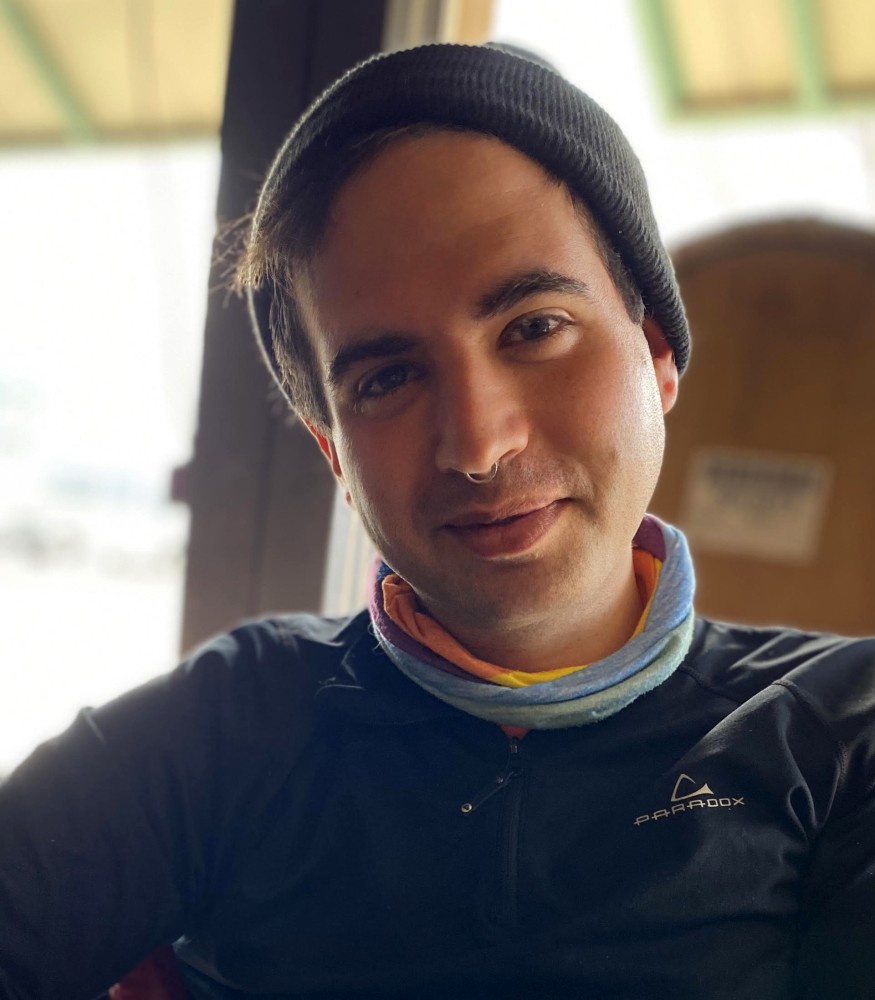
Ryan Mandelbaum is a science writer, naturalist, and birder living in New York City. They write a monthly newsletter dedicated to birds and wildlife in the city and wrote the book Wild NYC, a guide to the unexpected wildlife found there. Ryan is also an educator with New York City Bird Alliance. Outside of work on IBM’s quantum computing team and birding, Ryan enjoys cooking beans, collecting trinkets, and belting out ’80s hits at karaoke.
I grew up near the city and my experience of nature was limited to going to the beach with my parents. When I went away to summer camp, I fell in love with canoe trips. I stayed in New York City for college and graduated in 2013 with a degree in physics. Having stayed in New York my whole life, I was like, “Well, what if I just try something else?” I got a job doing healthcare software implementation that brought me to Wisconsin. I was there for two years, and I became attuned to the outdoors in a way that I hadn’t been before. I kept my camping equipment in the back of my Subaru and went hiking a lot. I actually traveled back to New York too, because a lot of my clients were located there. But I started burning out on the job. My friend was like, “You always wanted to be a science communicator, so why don’t you just find a science writing program to apply to?”
In 2015, I got my master’s from NYU Journalism’s Science, Health, & Environmental Reporting Program. I was focused on physics and advanced technology, but I learned that the New York City Bird Alliance was painting lawn flamingos white to try to attract herons and egrets back to islands in the New York Harbor. The silliness aspect of that made me really want to do a story on it, so I got in touch with this forester who worked for the city to help me try to find heron nests. I wanted to film a video – there were lots of trials and tribulations to try to get footage of herons and egrets in New York City – but ultimately I had this incredible moment watching a great blue heron get out of a nest in Staten Island, and I was like, “Wow, this thing lives here in the city.” It got me really excited about birds and nature and wildlife in the city. I feel like all of the pieces started falling into place after that.
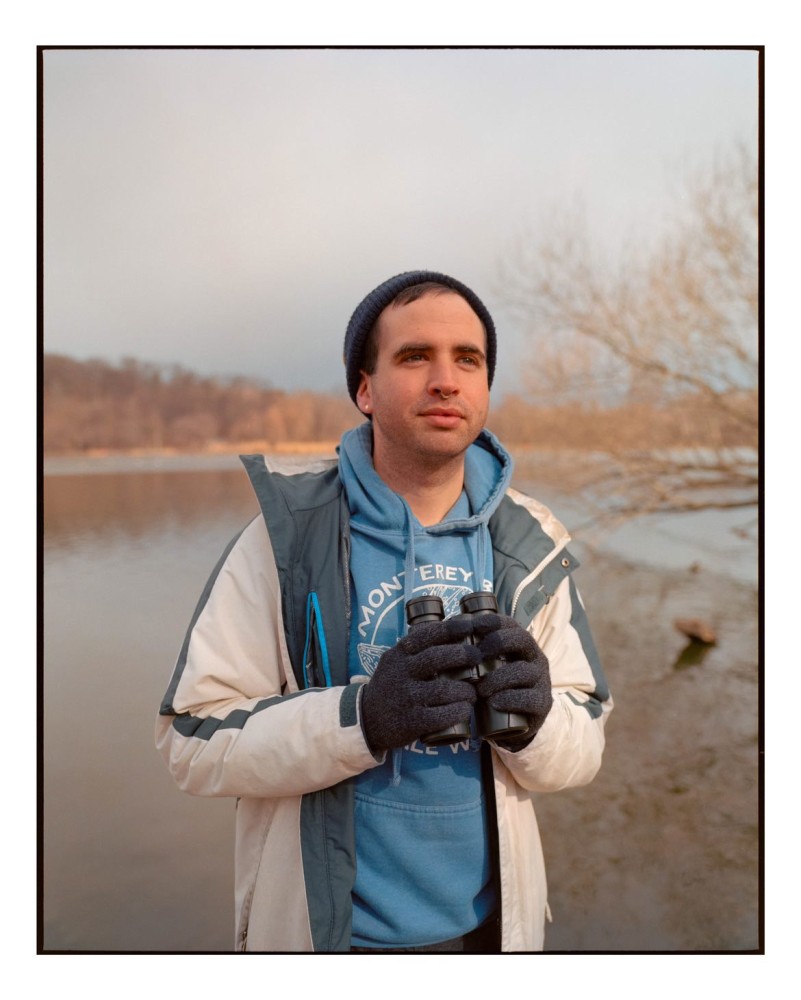
Starting in late 2016, I worked as a journalist for a blog called Gizmodo. I was hired to write about advanced technology, especially physics, particle physics, and quantum computing, but I also had started taking up birdwatching as a pretty serious passion. Me and my now spouse Brittany got really into birdwatching together. I realized that I really wanted to write about birding, too. It got to the point where I was writing 50 percent nature stories, 50 percent physics stories.
In 2020, I took on a full-time opportunity to write about quantum computing, and I realized that I could focus the rest of my time on writing about urban wildlife and the nature of New York City. In my 9 to 5, I wrote about quantum computers, and in my 5 to 9 – and on weekends – I wrote about nature. I feel like I was able to create a life where I could do both. That’s when I took on writing Wild NYC. In 2018, my friend Chelsea and I hosted a birdwatching walk and a talk, and we made a zine for it called “Big City Birding.” After, I wondered, “What if this was a bigger project?” I put together a proposal for an urban wildlife guide. But people weren’t that excited about it in 2018.
But then when COVID happened, Timber Press had just started publishing a series of urban nature guides, which perfectly aligned with our proposal. So that led to Wild NYC. Pretty early on, I realized all of these cities in the series are so different. While they all have the same format, the books really celebrate what makes their cities unique. I wrote Wild NYC during early mornings, nights, and weekends for a year or two. It was like I had a second full-time job. I have more ideas, but it’s about finding something that I’m really ready to do because a book is a lot to take on.
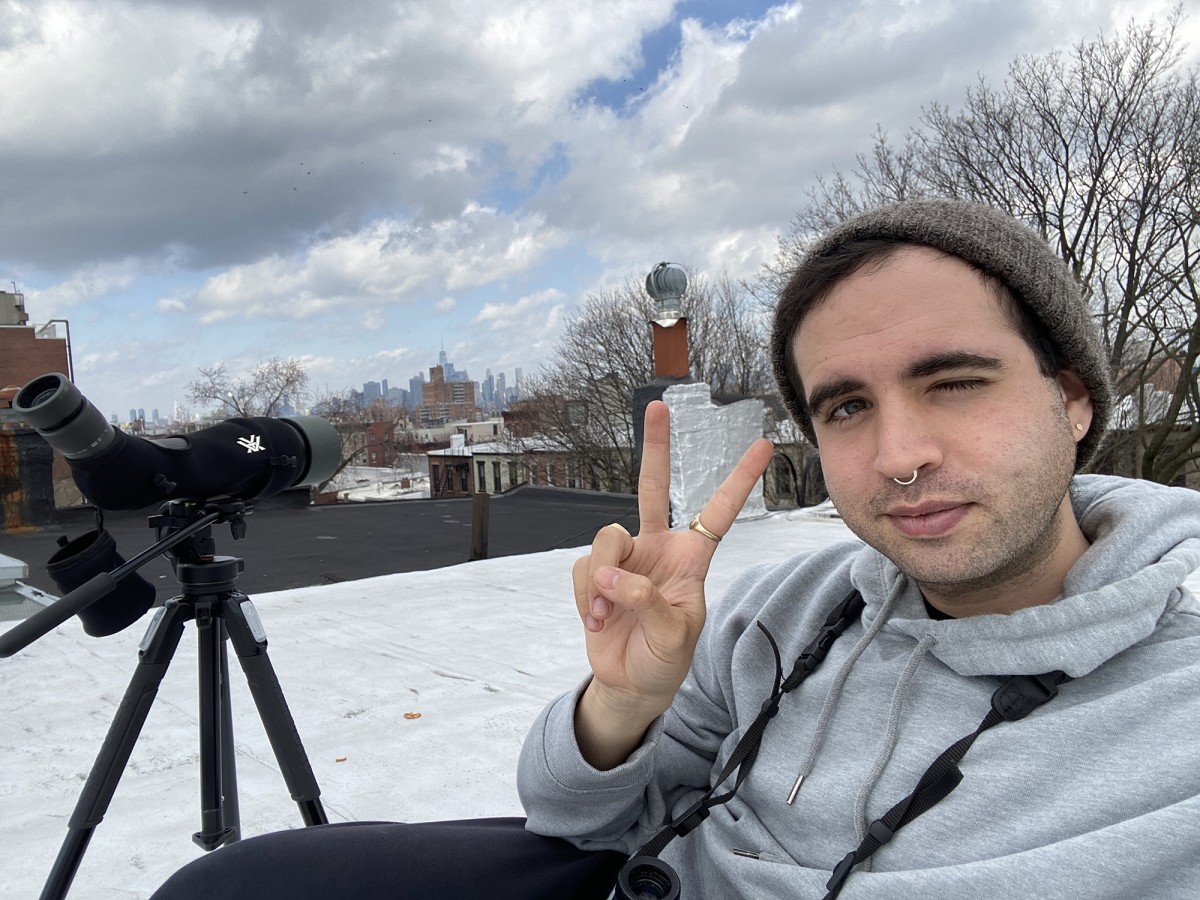
In 2022, I started a newsletter about nature in New York City. It really started while I was writing the book; I had all these little tidbits and stories that I wanted to include, but my editor was like, “You can’t submit a 200,000-page book.” But I had these things I wanted to write, and I didn’t have a place to publish them, so I started putting them in this monthly newsletter. I mostly write about the intersection of wildlife and urban life: how animals are using urban habitats, human interactions with wildlife, how wildlife responds to humans altering the landscape. A lot of it is focused on birds, but not all of it.
I’m also an educator for the New York City Bird Alliance now. I lead tours throughout the city. New York City Bird Alliance does amazing work. They offer endless free programming led by a really wonderful and diverse set of naturalists from all over the city; they do community outreach and lead walks for the New York City Housing Authority; they lobby and do policy work to make the city better for wildlife. They advocated for a bill that has since passed to require bird-safe glass on the first 75 feet of new buildings. They work with the Tribute in Light Memorial, which commemorates 9/11, to monitor how much the lights there are impacting birds, and turn it off when necessary, so migrating birds can reorient themselves.
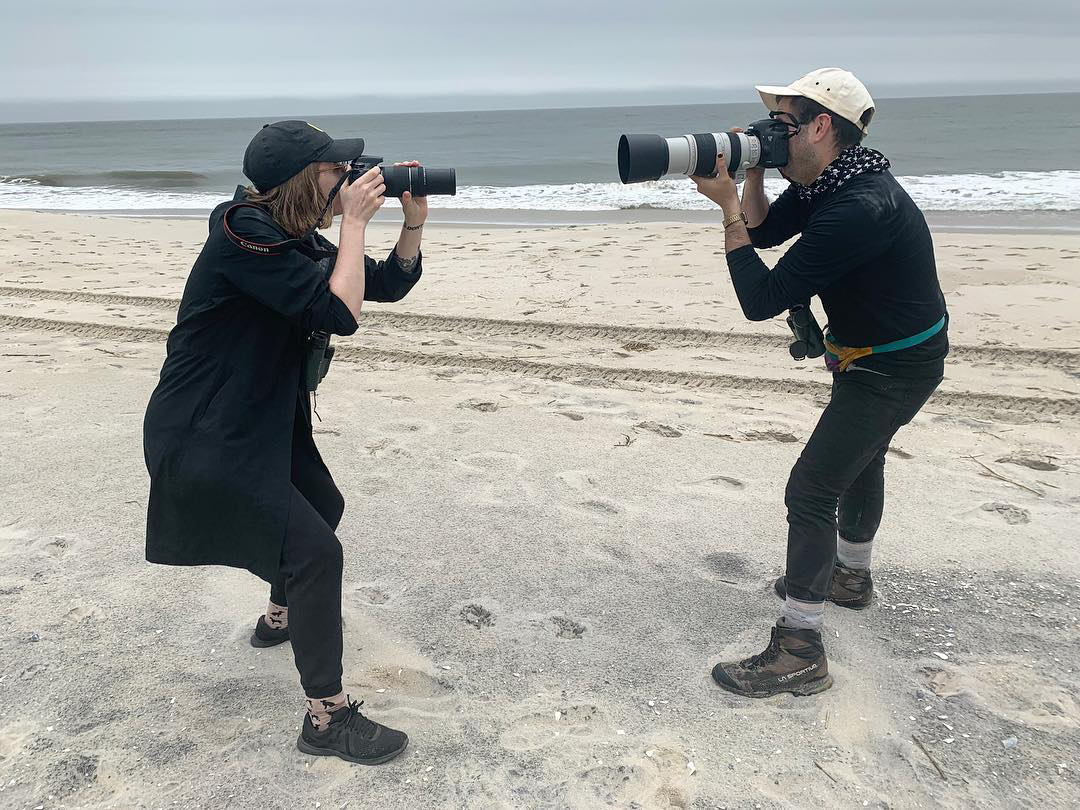
Organizing educational offerings is really important to me. I’m organizing a moth night for the High Line this year, which I’m really excited about. And I led a dragonfly walk a couple years ago that was really fun. One of my favorites is the annual Valentine’s Day walk a friend and I organize with the Feminist Bird Club to look at seagulls; we call it Gull-entine’s Day. Gulls are actually very challenging to tell apart and there can be upwards of 10 species in New York City. I’m also on the board of the Finch Research Network and write the newsletter for that.
I feel like I’m the steward and documenter of nature at the IBM Research office in Yorktown Heights, New York, just north of the city. It’s on a couple hundred acres of deciduous forest with a big mowed lawn in the middle and a wetland on the edge of the campus. I always bring my binoculars and camera, and over the years I’ve put a lot of stuff on eBird and iNaturalist. In this random patch of woods, I’ve now spotted at least 100 bird species, including some rare ones like a swallow-tailed kite and a tundra swan. I’ve always wanted to see this dragonfly called the dragonhunter, and I saw one last summer on the campus. MIT researchers reached out to me about an open science project they’re doing on the IBM campus, and it’s been exciting, because now I’m involved in doing some conservation work there.
New York City is one of the most vibrant places for wildlife; I think a lot of people don’t understand just how much biodiversity is there. The people really make it amazing, though. I learned so much from mentors like Rob Jett, the birder and naturalist of Greenwood Cemetery, who taught me that it’s not just about the birds, but the plants and the moths and everything else, too. I met Martha Harbison early in my birding career; they’re non-binary like me and they have introduced me to so much amazing diversity in the city, both of the wildlife and of the people. There’s this artist Jer Thorp, who does amazing data science work and has opened up a lot of doors for me. The list goes on and on. I would be totally lost if not for all the communities I’m involved in and people I’ve met.