
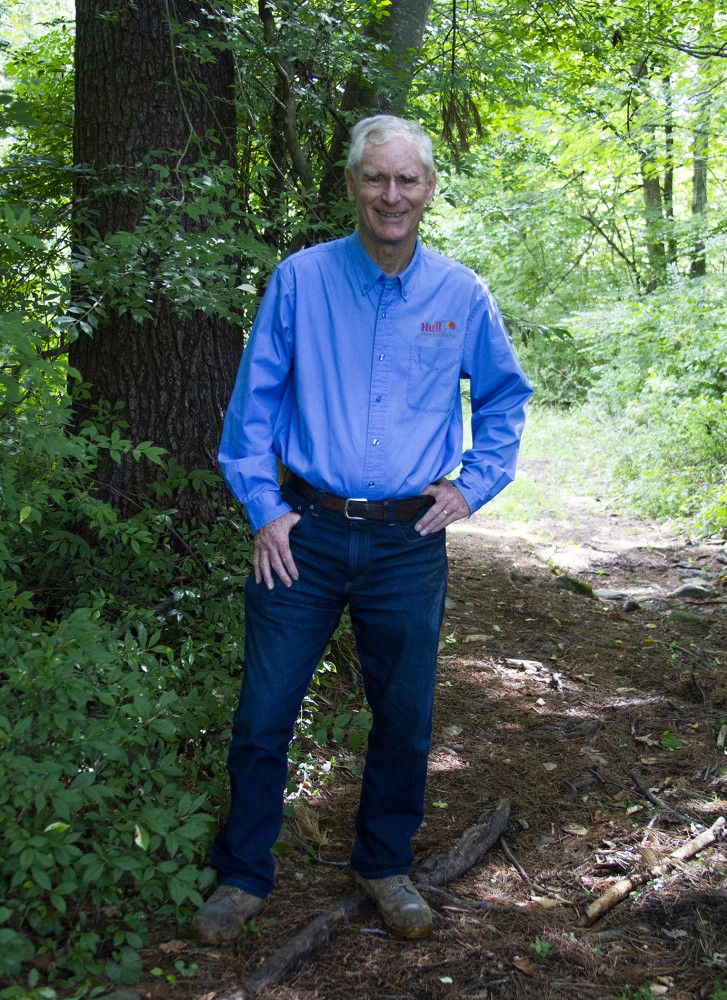
Bill Hull is the founder of Hull Forest Products in Connecticut, a forestry and milling business that he incorporated in 1970. Starting out at the small sawmill in his father’s backyard, Hull Forest Products now manufactures more than 10 million board feet of lumber each year and employs 80 people. In 2019, Hull received the Aldo Leopold Conservation Award from Sand County Foundation for his dedication to the stewardship of northeastern forestland. Hull’s three children – Sam, Ben, and Mary – are all involved in the business now, and Hull continues to serve as an advisor.
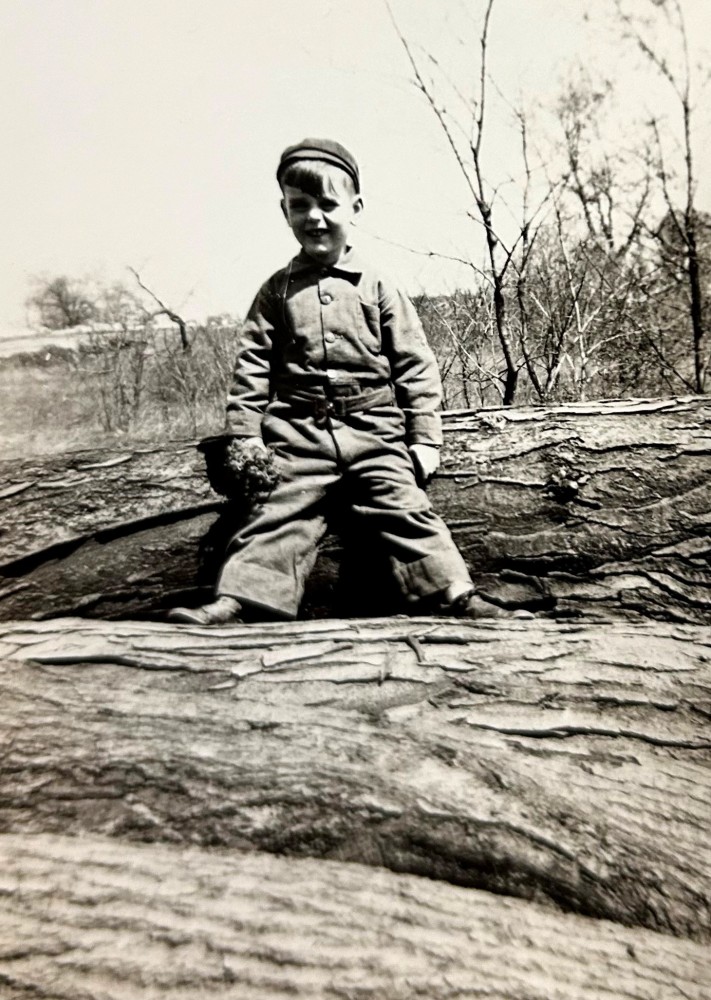
I was born in Providence, Rhode Island, and when I was 9, we moved out to Scituate, which is a very rural area. As a kid, I got involved planting seedlings through a program called the Agricultural Conservation Program. I planted seedlings all through the woods as a way to make some money. My father had a little sawmill behind the garage, and he got trees from blowdowns after the ’38 hurricane and sawed them up. I like to tell people that I used to play in the sawdust and so I got it in my blood and I never veered from that path.
I knew I wanted to go to forestry school, but my grades weren’t good enough to go to University of New Hampshire or University of Maine. I attended University of Rhode Island for one year instead. I studied a lot because I wanted to transfer. I got into UNH and I managed to get out in three and a half years. I was the class of 1964.
When I graduated, there was still a draft, and I wasn’t particularly interested in joining the military. What a lot of the fellows would do as college graduates was join a National Guard unit so they wouldn’t get drafted; I joined the 107th Signal Company at Cranston Street Armory in Rhode Island. I went to Fort Gordon, Georgia, and did my six-month basic training there. After training, once a month there was an overnighter, where we all went to some National Guard armory on a Saturday, slept on the concrete floor Saturday night, and then on Sunday afternoon they’d let you go. In the summertime, we went up to Camp Drum in New York for a couple of weeks. I did that for three years. My unit got activated, so we went to Fort Devens in Massachusetts for six months of retraining.
In the time that I wasn’t training, I was cutting wood for a pulp mill in East Providence, now long since gone. They made a heavy paper that was the base paper for Bird & Son asphalt roofing shingles. I did work in the Scituate Reservoir watershed, too, thinning out red pine plantations. I started providing woodland management services in 1965. I got married in August of 1968 and I shipped out to Vietnam in September. I came back the following September in 1969, and I went back to cutting pulpwood. I started taking some of the red pine to a place called New England Pole and Wood Treating in New Hampshire, where they made red pine guardrail posts. That paid twice as much as pulpwood, so I started doing more saw logs, and I needed more equipment. I took over my dad’s backyard sawmill and started sawing white oak lumber for whiskey barrel staves for J.H. Hamlen & Son, a company in started in Maine, but also down in Little Rock, Arkansas. I probably got the name out of an ad in Northern Logger or something.
I needed more machinery, and I wound up buying a Pettibone forwarder, four-wheeler with a Barko hydraulic loader. They didn’t have any east of the Mississippi River, so they flew me out to Michigan to see one being built, which was quite an exciting trip for me. I got a little bit bigger then: I’d be on the forwarder, I had a truck driver, and I had a chopper, so the three of us could get a lot done.
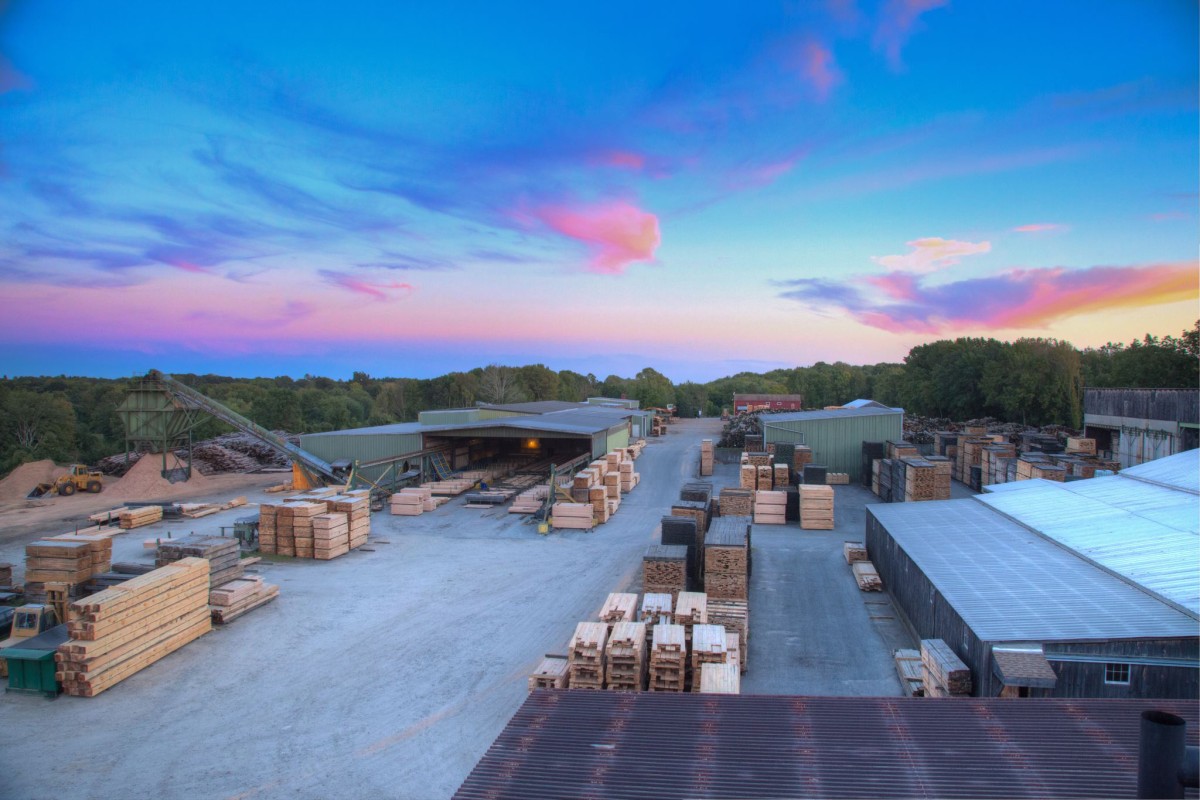
My wife and I moved to Pomfret, Connecticut, and started to build a sawmill there in 1970, primarily for processing oak barrel staves. I bought a new Lane all steel #1 sawmill carriage, track, top saw, and Glover feed. We would save up our white oak logs, accumulate them through fall and winter, and when mud season came, we’d saw them all up. I lost both my employees to other jobs one spring, and I decided to pivot to graded hardwood lumber. Eventually I needed a separate logging crew because I needed to run the mill.
In the early ’70s, we trucked all our chips to S.D. Warren in Westbrook, Maine, but then they stopped accepting chips. But I met a fellow named Charlie Zeager from Pennsylvania at Northern Loggers Congress in North Conway, New Hampshire, who had a product idea called “wood carpet” that would use the chips. So, we joined forces and I started shipping him wood carpet made from our wood chip, and we still do that now, although direct and at a lower volume than we did 25 years ago. As that market trended downward, we got involved in biomass-fired heating plants and things like that. We’ve been the primary wood chip supplier to Mount Wachusett Community College, which heats by wood-fired boiler, for decades now. When wood pellets came along, we sold a lot of chips to what used to be New England Wood Pellet in Jaffrey, New Hampshire. Now there’s biochar to consider. The markets keep changing, and we just evolve with them.
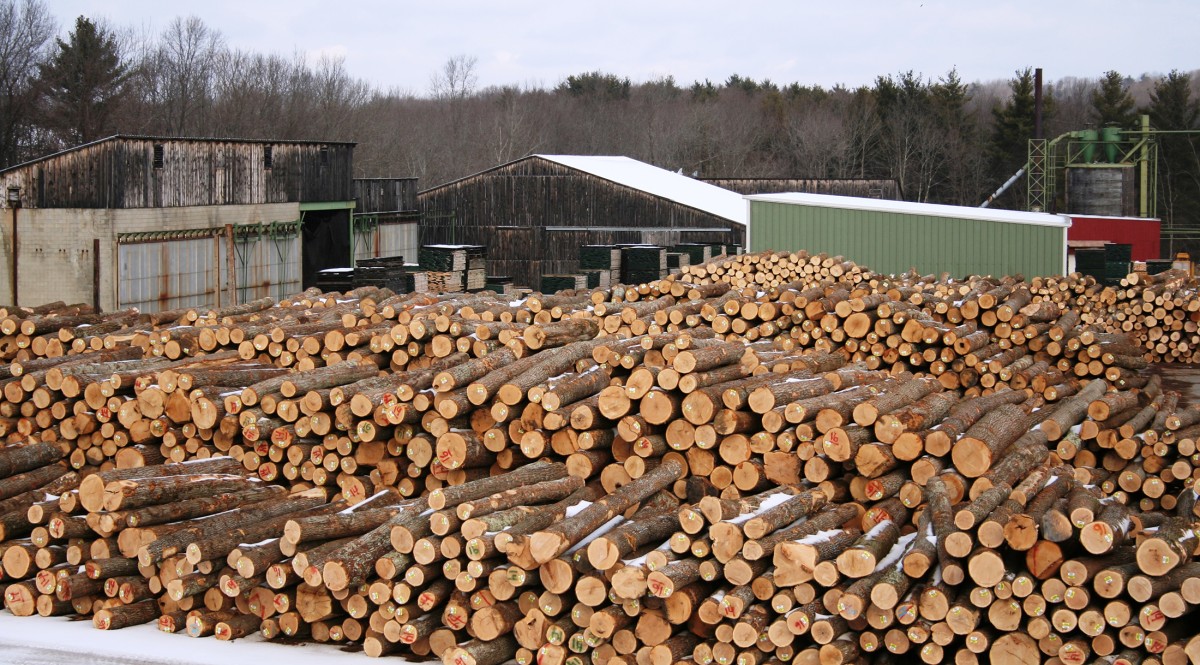
Fifty years ago, we produced for local markets – everything was within a few hundred miles. But now it’s a worldwide market, so we’re competing with the world. When you think about it like that, the United States is a very high-cost producer. So, our company growth has not been so much in the increased manufacture of lumber, but in the increased trading of logs. We’ve lost a lot of industries that use wood in this country – they’ve gone to Indonesia, China, Vietnam, and Canada.
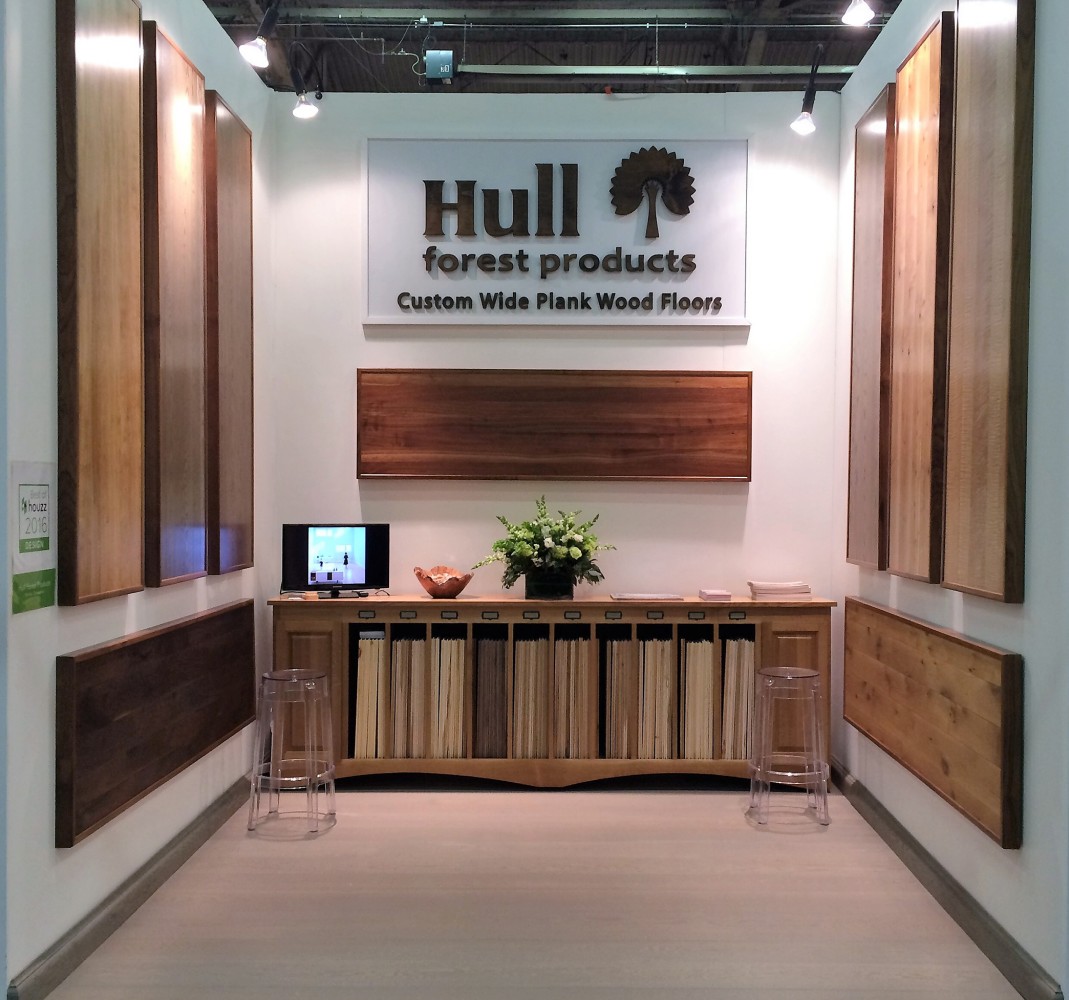
Ultimately, the only constant in our lives is change. Change can be good or it can be bad, but change will occur whether we want it to or not. We have to get used to it and expect it and make the best of it. The wood business in this country is changing a lot. I think about how I used to work for a dairy farmer as a kid, mostly haying, and he gave me a bunch of stuff that was all made out of wood, including a couple of clocks. I was looking at these clocks, thinking, “Holy moly, this is made entirely out of wood except for a few metal springs.” This country doesn’t make clocks out of wood, or spoons, or even flooring really. At Hull Forest Products, we still make high-end flooring, but most of the market is plastic – just made to look like wood!
We work with woodlot owners around New England and New York to help them keep their forests as forests. The forestry and logging division works with clients with more than 20 acres who are looking to make some income from their woods while stewarding it. We have designed management plans for more than 30,000 acres of woods for clients with all different goals and priorities.
I’ve always liked land and always acquired land. I bought my first piece of land from a woodcutter when I was 15 years old. It was 12 acres, and I planted pines there. Once we got the mill set up in Pomfret, I started to be out in the community more. I’d come to hear that so-and-so was going to move to Florida and wants to sell – that kind of thing. We started accumulating more land, but then we’d hit a rough spot and sell some to liquify. Currently, our business owns about 28,000 acres between Connecticut, Massachusetts, and Maine. As we’ve grown, we’ve separated the manufacturing side of things – Hull Forest Products – from the landowning entities: Hull Forestlands Limited Partnership (for southern New England) and Hull Forestlands Maine LLC.
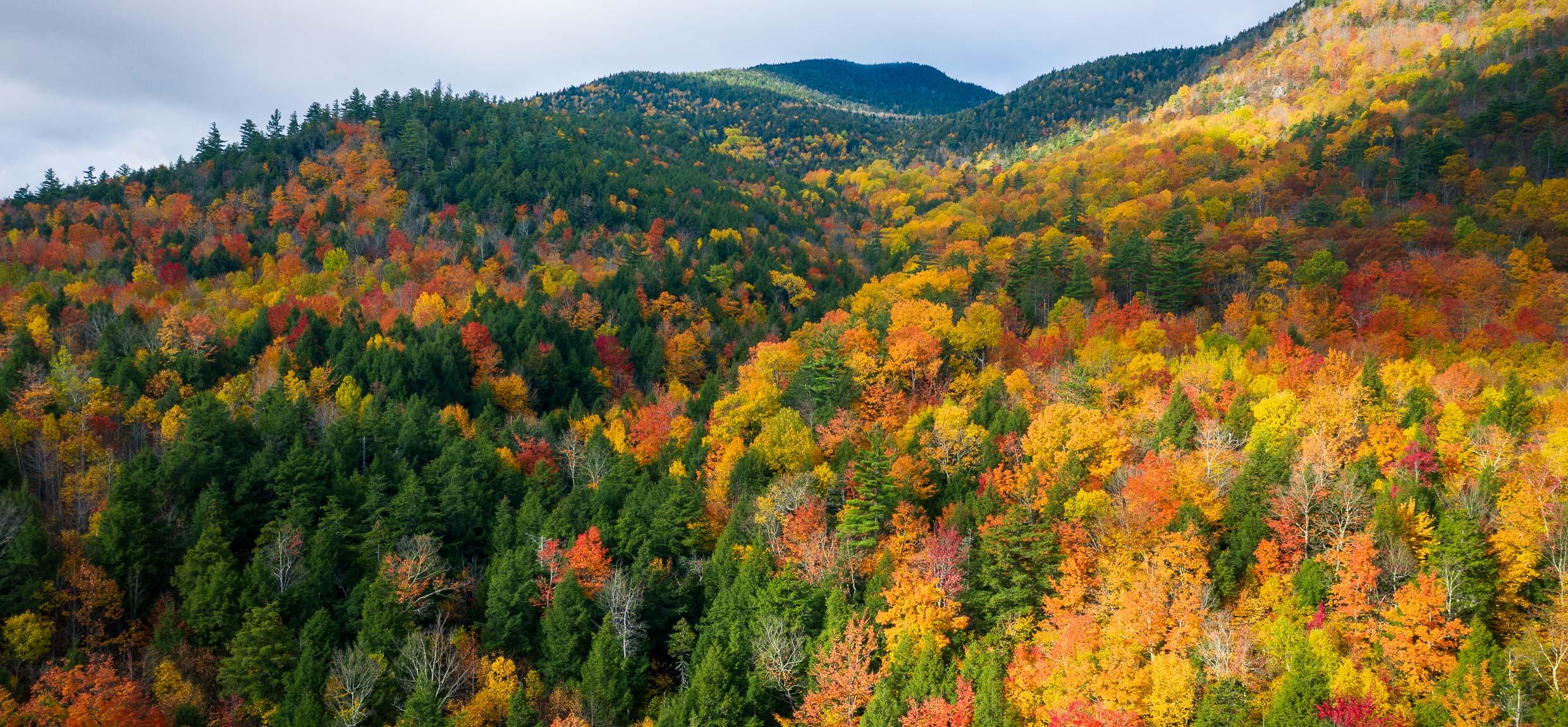
We have a woodlot in Ashfield, Massachusetts, with late-successional white pine on it. Some of the trees are probably 5 feet in diameter. It’s 2 or 3 acres like that, where we plan on never cutting or doing anything to it. And in Maine, that’s a different type of forest; I really like the spruce-fir. We’ve got 16,000 acres up there, north of Baxter State Park. There are 40 miles of all-weather roads on that property. There’s something beautiful about when you’re on a piece of this dirt road that has a long-distance view – when you’re up on a hill and you can look down the valley and back up the other side just after you have bush-hogged the middle and both sides of the road.
We have a program of recreational leases for the landowning side of the business. Growing timber is great. I love to see trees grow, and I love to weed them out and tend them; that’s the forester in me. But the income from it is pretty sporadic. And the taxes come due every year and the upkeep – in terms of delineating boundaries, building roads, maintaining roads – is constant. We decided that if we could lease some of the land for recreational purposes – for hunting or hiking or horseback riding – that would provide another source of income. Our ability to lease is restricted to properties that don’t already have mandated public access through conservation restrictions; we have a lot of our land under conservation restrictions, so it leaves us with about 4,000 acres in the recreational lease program. Organizations or families typically lease it for a one-to-five-year term. We found that having a small cabin on it makes it much more attractive. This is almost embarrassing, because we’re in the sawmill business, but we have bought a lot of cabin kits from Jamaica Cottage Shop in Vermont. We’ve put up 10 or 12 of those and built a few others ourselves, so now we have 16 or 18. The income from that outweighs the timber income. I want to grow trees, but as time goes on, I’ve found that, in southern New England at least, the land’s much more valuable for recreation than it is for growing trees. When you put it all together, it’s a doable package.
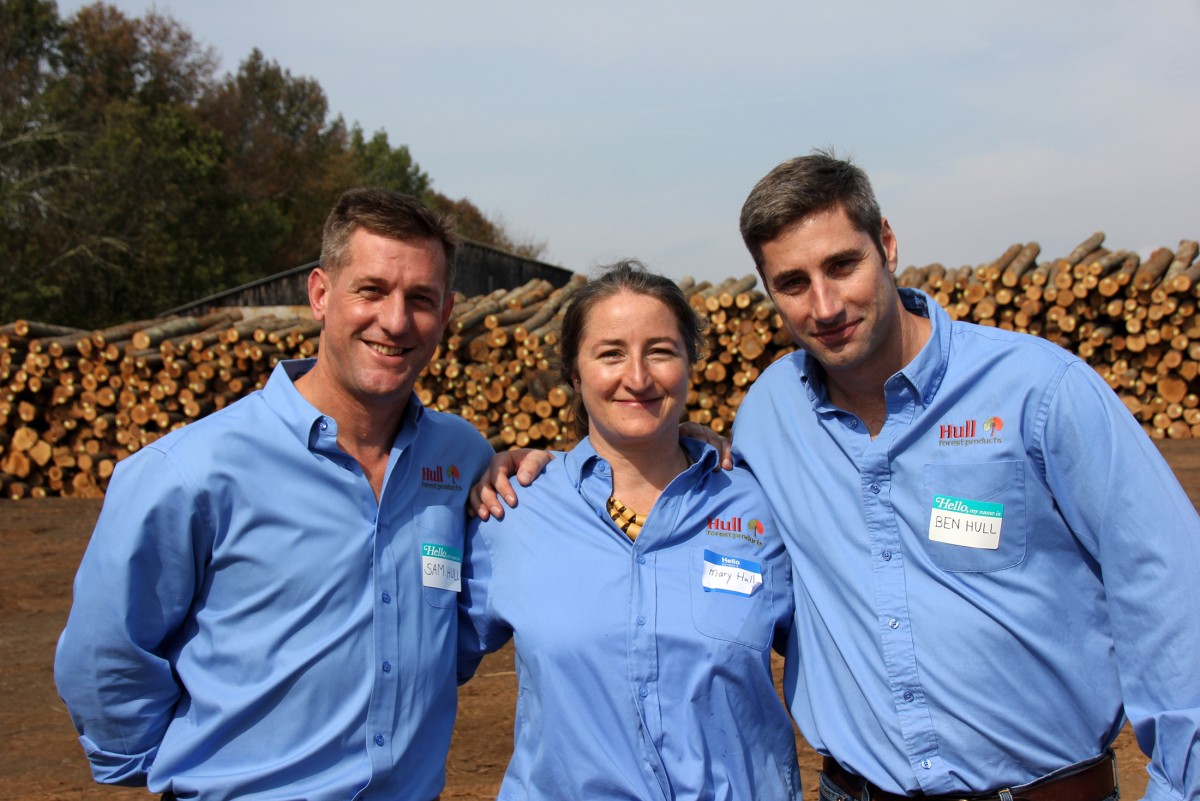
All three of my kids are involved in the business now. My son Sam has a business degree and is the president of Hull Forest Products now. My daughter Mary studied English and history and did quite well as a writer, and my son Ben, who is vice president, studied ag economics. Ben was always asking Mary to help with the website, or write some promotional material, and eventually she came on full time in the flooring division. I’m 83, so I guess I would say I’m mostly a senior advisor now. I’m still working full time with no plans to quit. In the wintertime, I’m in the office a lot, and in the summer months, I try to spend two or three days a week in the woods, building roads or helping with the cabins or whatever.
My favorite part of the work is growing trees. It’s the land. Sometimes a leaseholder will send me a picture of their kid enjoying the property or a relative who’s gotten their first deer. That gives me great pleasure, to see people become acquainted with and connected to the natural world. Most people are so disconnected from it nowadays. Other than a few northern parts, New England is really an urban society now. But every place in the woods is special.
Discussion *