
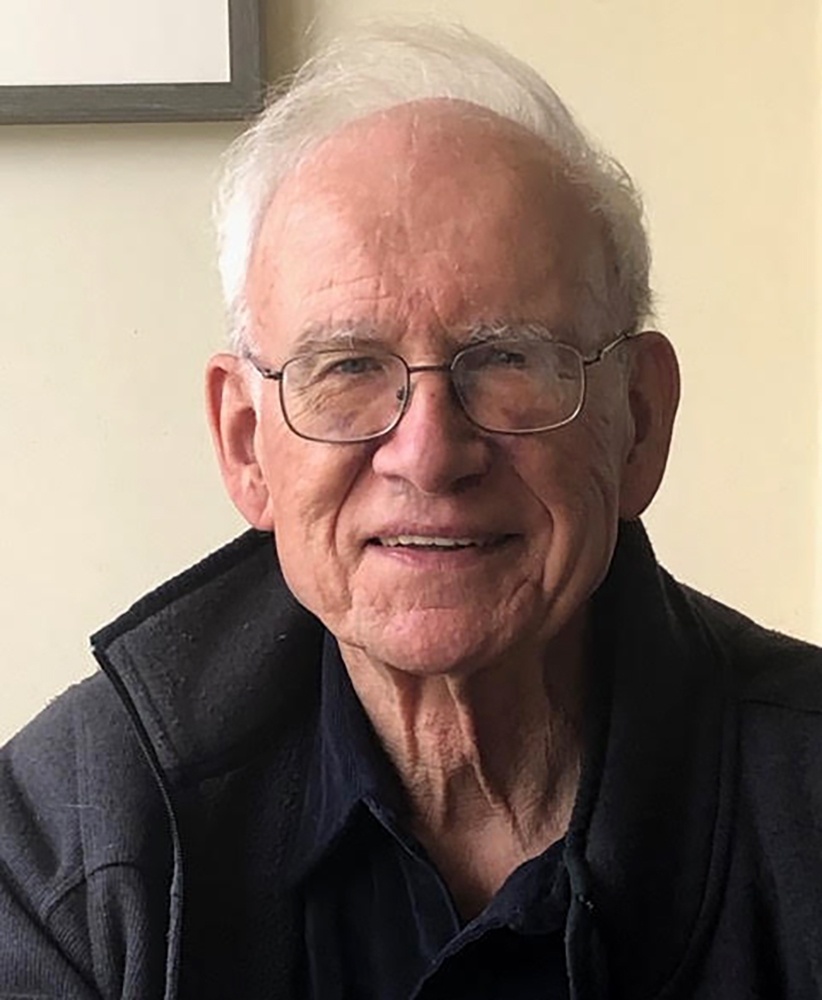
Uldis Roze is a professor emeritus at Queens College of City University of New York, where he taught biology for 39 years. His primary research interest is the North American porcupine, which he has studied since the early 1970s. Uldis is the author of numerous scientific articles about porcupines and of the book North American Porcupine. Uldis splits his time between Queens and a cabin in the Catskills of New York.
I was born in Riga, the capital city of Latvia. My father was a forestry professor at the University of Latvia. Latvia suffered three occupations during World War II. The first, in 1939, by the Soviet Union, brought waves of deportations to Siberia that included my mother’s sister and her high-school-age daughter. The second, in 1941, by Nazi Germany, brought the Holocaust to Latvia’s Jewish citizens. The third, in 1944, by a returning Soviet Union, lasted for 47 years until the collapse of the Soviet Union in 1991 and the return of Latvian independence.
We fled Latvia in 1944 and spent time in displaced persons camps in Germany, and then we left Germany in 1950 and came to the United States. I was 12 when we settled in Chicago. I got a degree in chemistry from University of Chicago in 1959 and then went on to Washington University in St. Louis for a PhD in biochemistry. I studied the mode of action of an antibiotic. It’s not a normal mammalogist’s background, but it didn’t know I would go on to do that, and it has allowed me to ask questions that the traditional education in mammalogy doesn’t expose you to, such as showing that porcupine quills carry antibiotics.
I finished my PhD in 1964 and was hired to teach biology at Queens College of the City University of New York. My initial teaching assignment was teaching basic biology, a field I had had little exposure to. I was trying to stay a week ahead of the students, reading the assigned texts and finding amplification in the library. The outcome was a happy one – I felt the same pleasure in discovery that I hoped the students would feel. I still remember my surprise and delight on reading that the pectoral fins of fish, the wings of birds, and the arms of a human all have the same evolutionary origin.
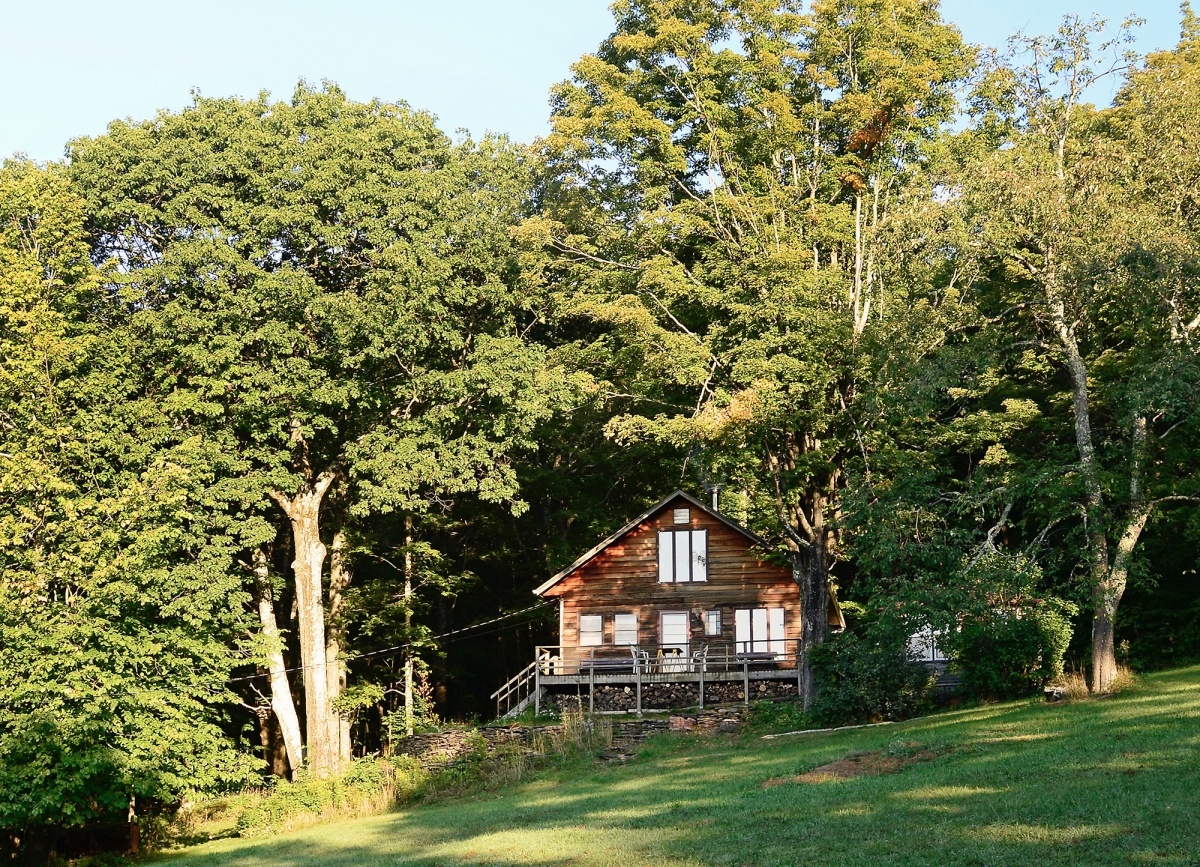
My wife and I married in 1966 and were living in Manhattan then, in a five-story walk-up. When I’d go out on the street, there was no tree within sight. We wanted to start a family but did not want to raise a child in an environment divorced from nature. In 1969, we bought 80 acres in the Catskills and built a cabin there. We still were working full-time but would go up on weekends. I was excited by the wildlife all around me and was exploring possibilities of study: firefly larvae, red eft salamanders, wood thrushes, chipmunks, grass snakes, and much else, but I wound up studying porcupines. I did not seek out the porcupines – they came to me.
One night there was a big rasping noise outside, and I came out in the night to see a porcupine eating our new house. I chased it off, but I began to wonder: where does it live? What is its family like? Does it have a den? Does it have a circle of acquaintances? This was in 1970; there was no Google, so I went to the library and read up on porcupines. There was a fair amount known, but it was the kind of thing you learned from laboratories. People studied things like their gestation period, their anatomy, their digestive process – all in a lab – but nothing about how they live. This is what I wanted to find out.
Porcupines are forest animals, so they pulled me into the forest. I learned about the forest through porcupines. I wanted to capture animals, identify them, and follow them. I wanted to know what specific animals were doing. With radio telemetry, it’s great that you can find a radio-collared animal five miles away, but I wanted to see what it was doing up in a tree. Our land is on Vly Mountain, one of the high peaks of the Catskills – just over 3,500 feet. So I built something that I knew would attract porcupines: a 10 by 14 foot house with plywood siding with salted 2-by-2s installed outside. Porcupines need salt – their plant diet is deficient in sodium, which they need to live. Salt has no smell, no color, and yet a porcupine has a sense – still undescribed – for finding salt from far away because it is essential. Within a week, the porcupines found the salt house. They came from miles away.
I would bring a folding chair out to the salt house, or a cot if I wanted to stay all night. When a porcupine arrived outside, I would immediately wake up from the loud gnawing. I wanted to take measurements, so I needed to capture them – at first, I didn’t know how, so I got a lot of quills. Probably hundreds of quills in my body. Once I got one in my upper arm and it disappeared under the skin. I couldn’t pull it out. It emerged from my lower arm about three days later. I had no infection, and it prompted me to study the antibiotics present on quills. It’s important for porcupines not to infect themselves, because they’ll quill themselves falling out of trees. It’s a real danger for them.
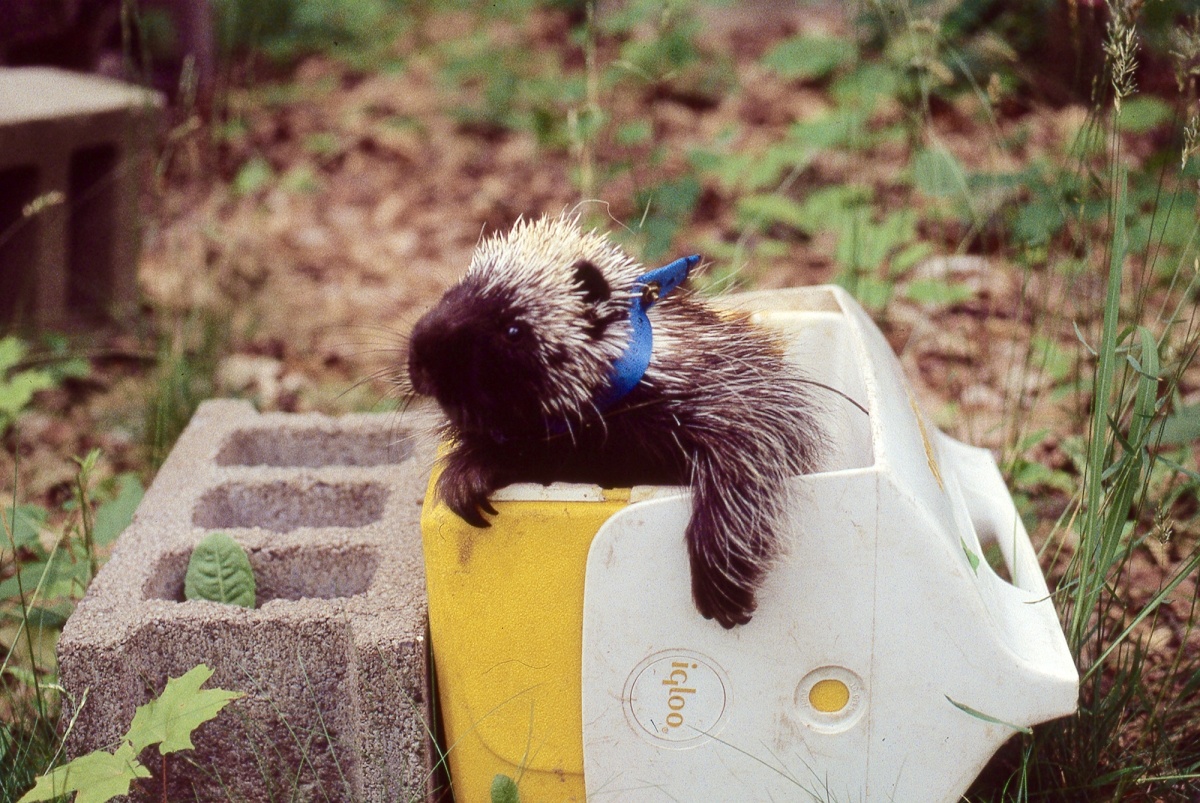
I learned the best way to capture them was in an Igloo cooler with a closable top. I would place the open Igloo over the porcupine and close the top. I would give them a physical exam, check sex, weigh them, give them a groin tattoo to identify them, and see where they are in the reproductive cycle. I’d check for battle scars that males get when they battle each other to have access to females. I would track them to where they live. Sometimes miles away on the mountain.
They need a big home range because they only eat a few trees in the forest, because most trees defend themselves. Porcupines leave well-defended trees, like oaks and maples, alone. And these are the most common trees in the forest. Try eating an oak leaf, try eating a maple leaf – it’s really awful, you want to spit it right out, because it’s full of chemicals to protect itself. But porcupines love a linden (basswood) tree. And beech and ash trees in the spring, because it takes the trees a season to build up defense compounds.
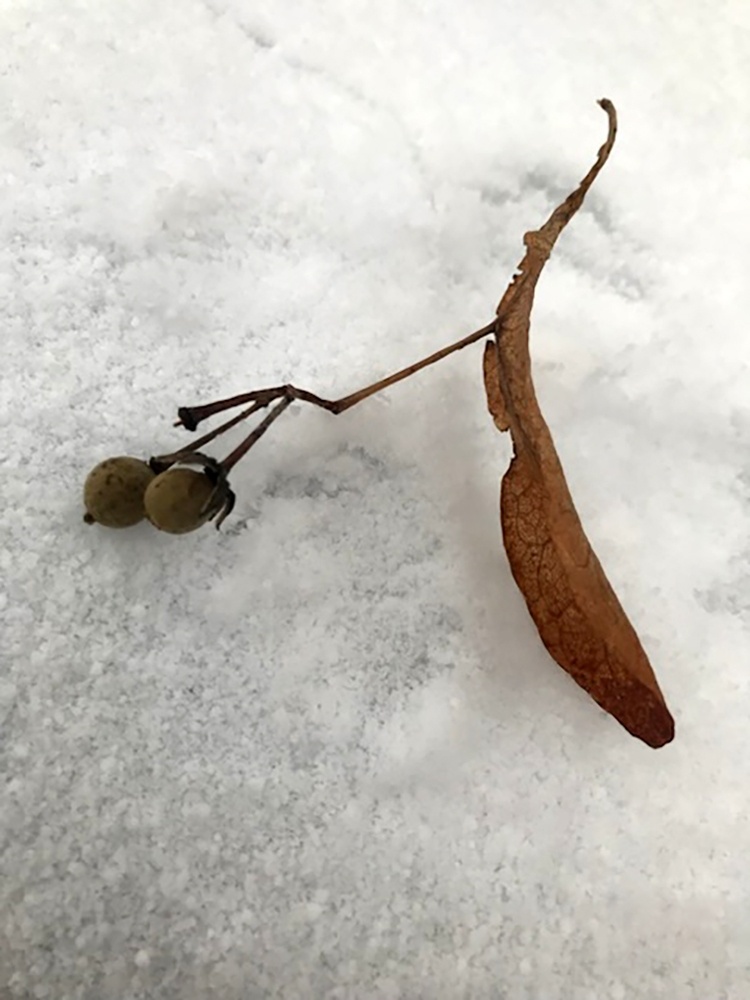
I began to ask questions about the linden tree, and how it got into the forest. It needs sunlight, so there needs to be a fallen tree, or some other kind of opening. Porcupines promote openings by eating the inner bark of trees in winter. At the top of a tree, the outer layer of bark is very thin, so this is where porcupines can get through to the inner bark more easily. So these trees become warped and strange; I call them witch trees. They have a distorted canopy, one that lets a lot of light through – this is where a linden seed can germinate and grow in the sun. And lindens release their seeds in the winter. The diaspore – the seed and the dispersal agent, which is shaped kind of like a wind sail – can travel very far. I’ve followed them. Porcupines opened up all this other research to me, it made me more aware of the forest.
I found a baby porcupine once because its mother had been killed on the road, and I realized if I didn’t take it in, it would die, so I became a father to this little porcupine. That porcupine taught me things that I had never read about in literature and never expected. One of the things we used to do was go for walks in the forest. I taught it climbing, since a baby porcupine doesn’t know how to climb a tree. When it’s young, the mother hides it; its best defense is being invisible. There was one spot where the baby stopped every time and ate the clay soil. Clay binds with the defense compounds of the plants.
We spent the summer together and it became more independent, and we would walk longer distances. In the winter, porcupines find dens, and I knew a wonderful porcupine den that I wanted to introduce this baby to, and I let it go in. The baby went into the den and then came out and ate a porcupine dropping outside. That’s called coprophagy – a bunch of animals do that, but it had never been described in porcupines before. It’s hard to digest their diet of plant foods, and to digest the specific trees by the den, it needs the right microflora in its cecum (a pouch off the large intense that ferments wood).
I gave the baby a radio collar and released it. She left the den I introduced her to and went on the other side of the ridge and made her own choice. I found her there one time in a low bush and photographed her. She must have lost a lot of weight in the winter because the radio collar dropped off. I worried about her. I’ve caught a lot of porcupines – over a hundred. The longest one I tracked was for 21 years. She is the oldest wild porcupine recorded by a scientist, and she produced 13 babies in her life. I called her Squirrel, and her babies scattered over the hills from where she spent her life. I followed one that crossed a river. It crossed the highway. It climbed a hill, a mountain on the other side, and wound up there. Her babies traveled all around – it’s like a village around her.
I was teaching biology through all of it, and of course, gradually, porcupines infiltrated my lectures. I showed students how to capture a porcupine. I would bring students out to monitor porcupines – they would do a project where they had to track one for 24 hours and everyone would have an 8-hour shift. We learned a lot about porcupines this way, because we were there for every moment: if it had a baby, if it was nursing, we would see when and what it was eating, when it went up in a tree or came to the ground.
I taught biology for 39 years. Science is collaborative, and it was great to have co-workers with very different interests and build an approach that is more subtle than what one person can accomplish, because you can look at something from different angles. I could work with a chemist, David Locke, who had a coupled gas chromatograph-mass spectrometer, and it allowed me to identify the antibiotics that porcupine quills carry. And I worked with David Chapman who was an electron microscopist, and we could discuss and investigate quill ultrastructure and erection mechanisms. I owe great thanks to all my collaborators.
Scientific papers have a small focus, and I wrote my share, but my porcupine discoveries were so intertwined that I wanted to put them all together in a book. The North American Porcupine, 2nd edition tries to put together the science and adventure of the porcupine world. It’s been a great pleasure over the years to meet readers and share stories.
Porcupine research requires great physical stamina, which dissipates with age. But I still try to do research. In October, I presented a 37-year study of the interaction between Catskill porcupines and the fisher, which is a porcupine-specialized predator. The conclusion was that porcupines in the Catskills do much better in defense against fishers than porcupines studied elsewhere.
I think the most rewarding thing about science is that there are always questions left. There are dozens of questions that can lead to rewarding scientific discovery. You never get to the end of understanding. I could be starting all over in a career studying porcupines and I’d be discovering new things. If you want to learn about porcupines, there is no substitute for experience. Live with them. Follow them into the woods. You’ll be surprised, and you’ll learn things you were not expecting.
Discussion *